
Georg Feuerstein (1947–2012)
Author of Yoga For Dummies
About the Author
Georg Feuerstein, Ph.D., is the president of the Yoga Research and Education Center
Works by Georg Feuerstein
Holy Madness: The Shock Tactics and Radical Teachings of Crazy-Wise Adepts, Holy Fools and Rascal Gurus (1990) 106 copies, 2 reviews
Yoga Gems: A Treasury of Practical and Spiritual Wisdom from Ancient and Modern Masters (2002) 57 copies
The Essence of Yoga: Essays on the Development of Yogic Philosophy from the Vedas to Modern Times (1974) 42 copies, 1 review
Structures of Consciousness: The Genius of Jean Gebser: An Introduction and Critique (1987) 28 copies
The Psychology of Yoga: Integrating Eastern and Western Approaches for Understanding the Mind (2014) 27 copies, 1 review
The Encyclopedia of Yoga and Tantra: Over 2,500 Entries on the History, Philosophy, and Practice (1997) 25 copies, 1 review
Simon & Schuster The Yoga Sutra Of Patanjali [Paperback] [Jan 01, 1989] Georg Feuerstein (1989) 5 copies
Humor Suddenly Returns: Essays on the Spiritual Teaching of Master Da Free John : A Scholarly Tribute (1984) 3 copies
Manual de ioga 1 copy
Yoga: A Beginner's Guide 1 copy
Das Geheimnis des Lichts. 1 copy
Associated Works
Self Realization of Noble Wisdom: The Lankavatara Sutra (1932) — Introduction, some editions — 70 copies
Inspired Lives: The Best of Real Life Yoga from Ascent Magazine (2005) — Contributor, some editions — 12 copies
Yoga Unveiled:Evolution and Essence of a Spiritual Tradition (DVD) (2004) — Contributor, some editions — 2 copies
Tagged
Common Knowledge
- Canonical name
- Feuerstein, Georg
- Birthdate
- 1947-05-27
- Date of death
- 2012-08-25
- Gender
- male
- Education
- Durham University (postgraduate)
- Occupations
- scholar
author
translator - Organizations
- Traditional Yoga Studies
- Relationships
- Feuerstein, Brenda (wife)
- Short biography
- Dr. Georg Feuerstein (born 1947) is a German-Canadian Indologist specializing on Yoga. Feuerstein has authored over 30 books on mysticism, Yoga, Tantra, and Hinduism. He has translated, among other traditional texts, the Yoga Sutras of Patanjali and the Bhagavad Gita.
- Cause of death
- diabetes (complications)
- Nationality
- Germany (birth)
Canada (naturalized 2012) - Birthplace
- Würzburg, Germany
- Places of residence
- USA
England, UK
Saskatchewan, Canada - Place of death
- Eastend, Saskatchewan, Canada
Members
Reviews
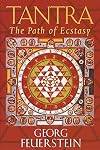
Tantra—often associated with Kundalini Yoga—is a fundamental dimension of Hinduism, emphasizing the cultivation of "divine power" (shakti) as a path to infinite bliss. Tantra has been widely misunderstood in the West, however, where its practices are often confused with eroticism and licentious morality. Tantra: The Path of Ecstasy dispels many common misconceptions, providing an accessible introduction to the history, philosophy, and practice of this extraordinary spiritual show more tradition.
The Tantric teachings are geared toward the attainment of enlightenment as well as spiritual power and are present not only in Hinduism but also Jainism and Vajrayana Buddhism. In this book, Georg Feuerstein offers readers a clear understanding of authentic Tantra, as well as appropriate guidance for spiritual practice and the attainment of higher consciousness. show less
The Tantric teachings are geared toward the attainment of enlightenment as well as spiritual power and are present not only in Hinduism but also Jainism and Vajrayana Buddhism. In this book, Georg Feuerstein offers readers a clear understanding of authentic Tantra, as well as appropriate guidance for spiritual practice and the attainment of higher consciousness. show less
The Bhagavad-Gita is an ancient masterpiece of India. It focuses only on one part of a larger whole, wherein the God-man Krishna lectures Prince Arjuna on the righteousness of the battle that he is to take part in. The battle pitted his former friends and teachers against him, and they were on the opposing side for various reasons. Krishna offers his godly wisdom and sage advice in this matter, telling Arjuna that it is correct to fight since that is his duty, given the caste that he was show more born into.
As I mentioned, the Bhagavad-Gita is a part of a longer work called the Mahabharata, composed beyond the mists of time. It is ostensibly based upon a true series of events, namely the Bharata War. In that sense, it is similar to The Iliad and The Odyssey, which were formulated so long ago that it is attributed to someone who may not have existed. I am pretty sure that people argue about the existence of Homer, but I don’t know if they do the same for Vyasa, the guy who wrote the Mahabharata. According to Wikipedia, Vyasa has reached mythological status, so I suppose it is somewhat the same.
Going into this book, I was only familiar with the quote that J. Robert Oppenheimer said when the first Atomic Bomb was set off in Los Alamos back in 1945; “If the radiance of a thousand suns / were to burst into the sky / that would be like / the splendor of the Mighty One and I am become Death, the shatterer of worlds.” This is only because I played a lot of Civilization IV back in the day.
This book exceeded my expectations. When I got it, I didn’t realize that it would have the original Sanskrit Text, a Romanized transliteration, and a translation into English. This made the book seem longer than it actually is. Along with all of that are several references in order to put the work in context and to discuss things like how to read Sanskrit. A full table is devoted to each letter of the alphabet and how to pronounce it. The book also contains essays to further explain the historical and cultural context of this work.
I haven’t read any of the other translations of this, and I can’t read Sanskrit, so I am unable to determine how accurate the book is to the original piece. However, I did have a lot of things that I liked about it. There are some things that I skimmed over, to be sure, but this is mainly because I am not really trying to learn Sanskrit. I think this book would be a fantastic resource for scholars, but I am sure they probably have their own books that they are fans of. show less
As I mentioned, the Bhagavad-Gita is a part of a longer work called the Mahabharata, composed beyond the mists of time. It is ostensibly based upon a true series of events, namely the Bharata War. In that sense, it is similar to The Iliad and The Odyssey, which were formulated so long ago that it is attributed to someone who may not have existed. I am pretty sure that people argue about the existence of Homer, but I don’t know if they do the same for Vyasa, the guy who wrote the Mahabharata. According to Wikipedia, Vyasa has reached mythological status, so I suppose it is somewhat the same.
Going into this book, I was only familiar with the quote that J. Robert Oppenheimer said when the first Atomic Bomb was set off in Los Alamos back in 1945; “If the radiance of a thousand suns / were to burst into the sky / that would be like / the splendor of the Mighty One and I am become Death, the shatterer of worlds.” This is only because I played a lot of Civilization IV back in the day.
This book exceeded my expectations. When I got it, I didn’t realize that it would have the original Sanskrit Text, a Romanized transliteration, and a translation into English. This made the book seem longer than it actually is. Along with all of that are several references in order to put the work in context and to discuss things like how to read Sanskrit. A full table is devoted to each letter of the alphabet and how to pronounce it. The book also contains essays to further explain the historical and cultural context of this work.
I haven’t read any of the other translations of this, and I can’t read Sanskrit, so I am unable to determine how accurate the book is to the original piece. However, I did have a lot of things that I liked about it. There are some things that I skimmed over, to be sure, but this is mainly because I am not really trying to learn Sanskrit. I think this book would be a fantastic resource for scholars, but I am sure they probably have their own books that they are fans of. show less
3.75
This book is mostly designed as a reference where you can open at any chapter and not feel left out. As such, reading from cover to cover was redundant. However, what makes this book great are the broad array of beginner-adapted yoga exercises, advice for designing a program, and (my favorite) are the conceptual chapters in the front third of the book. I don't think many other books in the same niche properly address the mental aspects of yoga like its history and philosophies (just from show more the first chapters I would rate this 4.5).
Basically, this is a well-rounded, better-than-most beginner yoga book. show less
This book is mostly designed as a reference where you can open at any chapter and not feel left out. As such, reading from cover to cover was redundant. However, what makes this book great are the broad array of beginner-adapted yoga exercises, advice for designing a program, and (my favorite) are the conceptual chapters in the front third of the book. I don't think many other books in the same niche properly address the mental aspects of yoga like its history and philosophies (just from show more the first chapters I would rate this 4.5).
Basically, this is a well-rounded, better-than-most beginner yoga book. show less
There can be little doubt as to the overall health benefits of practising yoga. This substantial Dummies Guide (nearly 400 pages) is an introduction and a beginner's reference guide to anyone wanting to take it up, either at home or in a class with others. Like all Dummies guides, exceptional thought has gone into the layout and design: apart from an overview of the yoga philosophy, there are exercises for one person or doubled up with a partner, during and after pregnancy, yoga especially show more for women, children, teenagers, midlifers and older adults, floor exercises and exercises against a wall, breathing exercises and exercises to improve balance, basic postures and more advanced ones, postures to relieve stress and chronic pain, and that's by no means all. Among others, it gives advice on how to use props, and how to customise your own personalised yoga programme. If anything, there is maybe a little too much information, and I found the degree of choice and variation slightly bewildering, having had no previous experience apart from the odd posture here and there.
The actual exercises are well explained and feature step-by-step instructions and loads of photographs of the various postures. There is even some bonus content online that can be accessed with this book.
So, the good intention to incorporate some yoga exercises into my life is there, but how will I find the time?
(This review was written as part of Amazon's Vine programme.) show less
The actual exercises are well explained and feature step-by-step instructions and loads of photographs of the various postures. There is even some bonus content online that can be accessed with this book.
So, the good intention to incorporate some yoga exercises into my life is there, but how will I find the time?
(This review was written as part of Amazon's Vine programme.) show less
Lists
You May Also Like


Associated Authors
Statistics
- Works
- 55
- Also by
- 7
- Members
- 2,322
- Popularity
- #11,052
- Rating
- 3.9
- Reviews
- 33
- ISBNs
- 171
- Languages
- 8
- Favorited
- 2
