
Elizabeth Winthrop
Author of The Castle in the Attic
About the Author
Author Elizabeth Winthrop grew up in Washington, D. C., and has written over 50 works of fiction for all ages. She has won numerous awards including the Dorothy Canfield Fisher Award, the Pen Syndicated Fiction Award, the California Young Readers Medal and the Jane Addams Peace Prize Honor Book. show more Many of her children's books are based on her childhood memories and the experiences of her children and other children she has talked to. Her book Belinda's Hurricane is based on the time she lived through a hurricane with her grandmother on an island off the coast of Connecticut. I Think He Likes Me is based on her daughter's reaction to her younger brother when he was brought home from the hospital. Her most popular books are The Castle in the Attic and The Battle for the Castle. (Bowker Author Biography) show less
Series
Works by Elizabeth Winthrop
Associated Works
Tagged
Common Knowledge
- Other names
- Alsop, Elizabeth Winthrop
- Birthdate
- 1948-09-14
- Gender
- female
- Relationships
- Alsop, Stewart (father)
- Nationality
- USA
- Birthplace
- Washington, D.C., USA
- Places of residence
- New York, New York, USA
- Associated Place (for map)
- USA
Members
Reviews

The Castle in the Attic and its sequel, The Battle for the Castle, were two books I very much enjoyed as a child, but for some reason I never numbered them among my very favorite fantasy novels. How delightful it is to come back to them now and find that, if anything, my regard for them has grown over the years. This is probably due to the illuminating power of hindsight; I don't think it was until this recent reread that I realized how much the Castle books influenced my early novel-writing show more attempts—or, for that matter, how much I have in common with its protagonist. But more on that later.
At its most basic level, the story is deceptively simple. Mrs. Phillips, the Lawrences' housekeeper and nanny, is leaving. As a parting gift, she gives William a model castle with a little lead knight, both of which have been passed down through her family for generations. What neither Mrs. Phillips nor William knows is that the castle is magical, so it is quite a surprise when the knight comes alive at William's touch and introduces himself as Sir Simon, the Silver Knight. He has been turned into lead by an evil sorcerer and transported out of his kingdom, bringing with him one of the conjurer's magic tokens, a token that can shrink living things down to the knight's own size. Once William sees it, he hatches a scheme to prevent Mrs. Phillips' departure ... and from his selfish action there emerges a dangerous adventure that will test the strength and courage of knight, squire, and lady.
When summarized thus, the story appears more than a little cliché, and it could very well have turned out that way. Indeed, it is a tribute to Winthrop's art that it did not. Her attention to detail is a strong point, both in the "real world" and the fantasy land Sir Simon comes from. It simply wouldn't be the same novel without William's struggle to land that Arabian dive roll at the end of his floor routine, Mrs. Phillips' treasured picture and pin, Mr. Lawrence's unfinished projects, or even the overview of the castle's architecture. All of the characters are intensely human; there is not a single one that I do not believe is real.
In William, Winthrop has created a character I can not only relate to, but one that so thoroughly resembles me, it is almost scary. Obviously there are surface differences: I was never a gymnast, both of my parents were around more than his are, and I never had a nanny. But at the age of ten we were very much the same sort of people. I too was small, I too was sensitive, and I too was quite a bit more in tune with the etiquette of bygone eras than the contemporary social concerns of my peers. Also, I must admit that if someone I loved as much as William loved Mrs. Phillips were to leave me, I would have been intensely jealous and possessive as well. All of this may seem superfluously subjective, for I realize that not all ten-year-old boys were like William and I, but I think it once again points to the strength of Winthrop's art, for she was able to create a character unnervingly like a real person, full of flaws and insecurities and little virtues mixed in.
Morally the book is quite strong as well. As the author has said in interviews, part of The Castle in the Attic's appeal is that "without being didactic or moralistic, there is a strong sense of right and wrong in the book.... I think kids (and adults) are looking for that." Personally, I could have done without the statement (made, I think, by Mrs. Phillips near the book's finale) that William just had to look into himself to find all the answers; aside from the fact that it isn't true—he needed help from others in order to accomplish his quest—it is painfully cliché, and sticks out like a sore thumb in a story that is otherwise notable for its freshness. On the other hand, I love the code Sir Simon runs over as he makes William his squire:
"Be compassionate to the needy. Neither squander wealth nor hoard it. Never lose your sense of shame. If questions are asked of you, answer them frankly but do not ask too many yourself. Be manly and of good cheer. Never kill a foe who is begging for mercy.... Be ever loyal in love."
If there is one criticism I have of the book, it's that it should be longer. The dramatic situation involving Mrs. Phillips and William in our world is so thoroughly explored that the adventure in Sir Simon's medieval fantasy-land seems rather rushed in comparison, although what we have is still quite brilliant.
Although not everyone may have quite the personal connection I do to The Castle of the Attic, I do think it has numerous qualities aside from my own sympathy and nostalgia. Well-written, with wonderful detail, poignant human drama, and an exciting quest story, it is a book I recommend for all lovers of children's fantasy. show less
At its most basic level, the story is deceptively simple. Mrs. Phillips, the Lawrences' housekeeper and nanny, is leaving. As a parting gift, she gives William a model castle with a little lead knight, both of which have been passed down through her family for generations. What neither Mrs. Phillips nor William knows is that the castle is magical, so it is quite a surprise when the knight comes alive at William's touch and introduces himself as Sir Simon, the Silver Knight. He has been turned into lead by an evil sorcerer and transported out of his kingdom, bringing with him one of the conjurer's magic tokens, a token that can shrink living things down to the knight's own size. Once William sees it, he hatches a scheme to prevent Mrs. Phillips' departure ... and from his selfish action there emerges a dangerous adventure that will test the strength and courage of knight, squire, and lady.
When summarized thus, the story appears more than a little cliché, and it could very well have turned out that way. Indeed, it is a tribute to Winthrop's art that it did not. Her attention to detail is a strong point, both in the "real world" and the fantasy land Sir Simon comes from. It simply wouldn't be the same novel without William's struggle to land that Arabian dive roll at the end of his floor routine, Mrs. Phillips' treasured picture and pin, Mr. Lawrence's unfinished projects, or even the overview of the castle's architecture. All of the characters are intensely human; there is not a single one that I do not believe is real.
In William, Winthrop has created a character I can not only relate to, but one that so thoroughly resembles me, it is almost scary. Obviously there are surface differences: I was never a gymnast, both of my parents were around more than his are, and I never had a nanny. But at the age of ten we were very much the same sort of people. I too was small, I too was sensitive, and I too was quite a bit more in tune with the etiquette of bygone eras than the contemporary social concerns of my peers. Also, I must admit that if someone I loved as much as William loved Mrs. Phillips were to leave me, I would have been intensely jealous and possessive as well. All of this may seem superfluously subjective, for I realize that not all ten-year-old boys were like William and I, but I think it once again points to the strength of Winthrop's art, for she was able to create a character unnervingly like a real person, full of flaws and insecurities and little virtues mixed in.
Morally the book is quite strong as well. As the author has said in interviews, part of The Castle in the Attic's appeal is that "without being didactic or moralistic, there is a strong sense of right and wrong in the book.... I think kids (and adults) are looking for that." Personally, I could have done without the statement (made, I think, by Mrs. Phillips near the book's finale) that William just had to look into himself to find all the answers; aside from the fact that it isn't true—he needed help from others in order to accomplish his quest—it is painfully cliché, and sticks out like a sore thumb in a story that is otherwise notable for its freshness. On the other hand, I love the code Sir Simon runs over as he makes William his squire:
"Be compassionate to the needy. Neither squander wealth nor hoard it. Never lose your sense of shame. If questions are asked of you, answer them frankly but do not ask too many yourself. Be manly and of good cheer. Never kill a foe who is begging for mercy.... Be ever loyal in love."
If there is one criticism I have of the book, it's that it should be longer. The dramatic situation involving Mrs. Phillips and William in our world is so thoroughly explored that the adventure in Sir Simon's medieval fantasy-land seems rather rushed in comparison, although what we have is still quite brilliant.
Although not everyone may have quite the personal connection I do to The Castle of the Attic, I do think it has numerous qualities aside from my own sympathy and nostalgia. Well-written, with wonderful detail, poignant human drama, and an exciting quest story, it is a book I recommend for all lovers of children's fantasy. show less

Author/illustrator team Elizabeth Winthrop and Charles Mikolaycak, who also collaborated on A Child Is Born: The Christmas Story, turn here to the story of Easter. Winthrop adapts texts from the Gospel of Matthew and the Gospel of Luke in her telling, which begins with the Passover feast, and continues on through the betrayal of Jesus, the trial before Pilate, and the Crucifixion, before culminating with the Resurrection...
I read He Is Risen: The Easter Story directly after Brian Wildsmith's show more gorgeous The Easter Story, and the two books present an interesting contrast, when it comes to how to approach this tale, when retelling it for children. Winthrop's text here is far more Biblical than the Wildsmith telling, which is much simpler, and imagines the story from a donkey's perspective. Textually, I think this one would work far better for somewhat older children, who are ready for the more advanced vocabulary and sentence structure. The sepia-toned artwork here from Mikolaycak is more historical than the stylized Wildsmith paintings, and beautiful in its own right, although I found that I preferred the latter. I think my ideal Easter story picture-book would pair Wildsmith's artwork with a slightly simplified version of the text here. I like the idea of staying as faithful to the Bible accounts as possible, but somehow the text felt a little too advanced for a picture-book of this kind. Still, many parents and Sunday School teachers specifically looking for more Biblical Easter retellings, should find this one of interest, and it is to them that I would recommend it, as well as to fans of Charles Mikolaycak's artwork. show less
I read He Is Risen: The Easter Story directly after Brian Wildsmith's show more gorgeous The Easter Story, and the two books present an interesting contrast, when it comes to how to approach this tale, when retelling it for children. Winthrop's text here is far more Biblical than the Wildsmith telling, which is much simpler, and imagines the story from a donkey's perspective. Textually, I think this one would work far better for somewhat older children, who are ready for the more advanced vocabulary and sentence structure. The sepia-toned artwork here from Mikolaycak is more historical than the stylized Wildsmith paintings, and beautiful in its own right, although I found that I preferred the latter. I think my ideal Easter story picture-book would pair Wildsmith's artwork with a slightly simplified version of the text here. I like the idea of staying as faithful to the Bible accounts as possible, but somehow the text felt a little too advanced for a picture-book of this kind. Still, many parents and Sunday School teachers specifically looking for more Biblical Easter retellings, should find this one of interest, and it is to them that I would recommend it, as well as to fans of Charles Mikolaycak's artwork. show less
3.5 stars. I started out thinking this would be a medieval version of the Indian in the Cupboard, but it was a lot better than that.
William is a boy desperate to keep things the way they are. He loves his nanny and doesn’t want her to leave. Unfortunately, he doesn’t have a lot of say in the matter. He’s a bit of a spoiled kid to be honest, refusing to accept that his favorite person’s world doesn’t revolve around him, as well as refusing to see how his parents (especially his show more dad) are trying to be more a part of his life. When he finds a magical knight in the castle his nanny gives him, he hatches an idea that only a young child could conceive of and actually consider worth completing.
This decision immediately causes regret, which leads to the biggest adventure William could possibly imagine. To save his nanny, he has join her in the trouble that he’s caused, and undo a curse he didn’t cause.
The quest and the action happens pretty quickly and is of typical fairy tale fare, but the point is made well. He listens to the wisdom given to him by the silver knight and his beloved nanny, and learns to trust in his ability to do what seems impossible, ultimately saving the day.
What irks me about this story, and others like it, is the multiple times it explicitly states that William was able to do this huge thing “by himself.” There is a measure of the resolution of the story that couldn’t have happened without William’s choice to take action and move forward on his own, even when he was expecting to have help. It’s an essential part of growing up, learning self-reliance and that you won’t always have adults or others to rely on, perhaps even in difficult and dangerous times. The tricky thing here is to not conflate this with thinking that he got to this place of maturity on his own and was able to rely on himself entirely throughout. The only thing that he was able to do 100% on his own was to come up with the crazy idea that led to the need for a quest in the first place. It was because of the training and wisdom given to him by people who are grown and have the experience needed to guide him in his path that he ultimately felt able to do what he needed to do. He learned a lot along the way, but it was with the help and by the design of those who had come before him.
There is a lot to like about this book - it’s fun and full of good life lessons, but I think I would only give or read it to my kids with the intent of discussing the ideas of self-reliance and interdependence. show less
William is a boy desperate to keep things the way they are. He loves his nanny and doesn’t want her to leave. Unfortunately, he doesn’t have a lot of say in the matter. He’s a bit of a spoiled kid to be honest, refusing to accept that his favorite person’s world doesn’t revolve around him, as well as refusing to see how his parents (especially his show more dad) are trying to be more a part of his life. When he finds a magical knight in the castle his nanny gives him, he hatches an idea that only a young child could conceive of and actually consider worth completing.
This decision immediately causes regret, which leads to the biggest adventure William could possibly imagine. To save his nanny, he has join her in the trouble that he’s caused, and undo a curse he didn’t cause.
The quest and the action happens pretty quickly and is of typical fairy tale fare, but the point is made well. He listens to the wisdom given to him by the silver knight and his beloved nanny, and learns to trust in his ability to do what seems impossible, ultimately saving the day.
What irks me about this story, and others like it, is the multiple times it explicitly states that William was able to do this huge thing “by himself.” There is a measure of the resolution of the story that couldn’t have happened without William’s choice to take action and move forward on his own, even when he was expecting to have help. It’s an essential part of growing up, learning self-reliance and that you won’t always have adults or others to rely on, perhaps even in difficult and dangerous times. The tricky thing here is to not conflate this with thinking that he got to this place of maturity on his own and was able to rely on himself entirely throughout. The only thing that he was able to do 100% on his own was to come up with the crazy idea that led to the need for a quest in the first place. It was because of the training and wisdom given to him by people who are grown and have the experience needed to guide him in his path that he ultimately felt able to do what he needed to do. He learned a lot along the way, but it was with the help and by the design of those who had come before him.
There is a lot to like about this book - it’s fun and full of good life lessons, but I think I would only give or read it to my kids with the intent of discussing the ideas of self-reliance and interdependence. show less
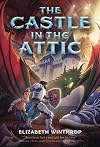
The Castle in the Attic by Elizabeth Winthrop is a book I should have read in my childhood. With whiffs of Narnia and the Indian in the Cupboard series, this story evokes the rich fantasy tradition in children's literature. When William's nanny Mrs. Phillips announces she must leave him to go live with her brother in England, William tries to think of a way to make her stay. As a going-away present, she gives him a model castle and a little leaden knight to go with it. But the knight doesn't show more stay leaden, and the magical coin he carries soon becomes part of William's plan to prevent Mrs. Phillips' departure. But his choices have unexpected consequences and William must enter the knight's castle himself to defeat the evil magician Alastor.
Early on, I thought this was going to be overly similar to the Indian in the Cupboard books, the first of which was published in 1980 (The Castle in the Attic came out in 1986). Many of the elements are the same: the protagonist is a young boy who is not overly popular among his peers, whose small toy figure comes alive, perfect and miniature, through the agency of a magical object; the best friend character, whom the protagonist isn't sure he can trust with the secret; the loving but slightly detached parents; and even the dangers posed by rodents who are larger than the miniature person. But Winthrop's story quickly takes a different turn and becomes distinct from others of a similar cast.
Nor did I find the similarities to C. S. Lewis' Narnia books too close for comfort. In both series, the young hero(es) must undertake a mission in the fantasy world, usually a quest to overthrow a cruel ruler. Also, as with Narnia, once you are transported to the medieval world of the castle, time doesn't pass for you in the real world (well, unless you go against your will — then you lose your time in the real world). Alastor and the White Witch can both turn their enemies into inanimate objects (lead and stone, respectively). Winthrop's poem of prophecy could be reminiscent of the rhymes the Beavers quote about Aslan's return and how evil will be conquered. But despite the points of likeness, the stories feel very different. There is no Aslan-figure in Winthrop's world, and that changes everything.
One thing I was fascinated to notice was the subtle commentary on William's relationship with his parents. They both worked full-time jobs outside the home and often did not have time to spend with him. William's father is always starting projects with him, but they never get finished. Winthrop clearly has strong views on the problem of working parents, but the book isn't overtaken by them. The story is always foremost, and indeed in fantasy stories like these, the children must always enter the fantasy world by themselves — no parents allowed! Lynne Reid Banks tries to change this by bringing Omri's father into the action in the last book, and though I initially liked that choice, I must admit that it's probably the reason that book is the weakest of the series by far.
I liked Winthrop's writing, which is unobtrusively graceful. For example, "She poured some honey into her tea. The floating spirals of gold slipped underneath the surface, one little circle after another" — doesn't that just make you want some?
I've already moved on to the sequel, The Battle for the Castle. Though I think I would have loved this book more had I read it at a younger age, I did find it an imaginative story that I'm sure my children will enjoy. show less
Early on, I thought this was going to be overly similar to the Indian in the Cupboard books, the first of which was published in 1980 (The Castle in the Attic came out in 1986). Many of the elements are the same: the protagonist is a young boy who is not overly popular among his peers, whose small toy figure comes alive, perfect and miniature, through the agency of a magical object; the best friend character, whom the protagonist isn't sure he can trust with the secret; the loving but slightly detached parents; and even the dangers posed by rodents who are larger than the miniature person. But Winthrop's story quickly takes a different turn and becomes distinct from others of a similar cast.
Nor did I find the similarities to C. S. Lewis' Narnia books too close for comfort. In both series, the young hero(es) must undertake a mission in the fantasy world, usually a quest to overthrow a cruel ruler. Also, as with Narnia, once you are transported to the medieval world of the castle, time doesn't pass for you in the real world (well, unless you go against your will — then you lose your time in the real world). Alastor and the White Witch can both turn their enemies into inanimate objects (lead and stone, respectively). Winthrop's poem of prophecy could be reminiscent of the rhymes the Beavers quote about Aslan's return and how evil will be conquered. But despite the points of likeness, the stories feel very different. There is no Aslan-figure in Winthrop's world, and that changes everything.
One thing I was fascinated to notice was the subtle commentary on William's relationship with his parents. They both worked full-time jobs outside the home and often did not have time to spend with him. William's father is always starting projects with him, but they never get finished. Winthrop clearly has strong views on the problem of working parents, but the book isn't overtaken by them. The story is always foremost, and indeed in fantasy stories like these, the children must always enter the fantasy world by themselves — no parents allowed! Lynne Reid Banks tries to change this by bringing Omri's father into the action in the last book, and though I initially liked that choice, I must admit that it's probably the reason that book is the weakest of the series by far.
I liked Winthrop's writing, which is unobtrusively graceful. For example, "She poured some honey into her tea. The floating spirals of gold slipped underneath the surface, one little circle after another" — doesn't that just make you want some?
I've already moved on to the sequel, The Battle for the Castle. Though I think I would have loved this book more had I read it at a younger age, I did find it an imaginative story that I'm sure my children will enjoy. show less
Lists
Awards


You May Also Like


Associated Authors
Statistics
- Works
- 64
- Also by
- 4
- Members
- 9,729
- Popularity
- #2,452
- Rating
- 3.8
- Reviews
- 218
- ISBNs
- 236
- Languages
- 3
- Favorited
- 3