

Eric A. Havelock (1903–1988)
Author of Preface to Plato
About the Author
Image credit: Office of Public Affairs, Yale University
Series
Works by Eric A. Havelock
The Muse Learns to Write: Reflections on Orality and Literacy from Antiquity to the Present (1986) 209 copies, 3 reviews
The Greek Concept of Justice: From Its Shadow in Homer to Its Substance in Plato (1978) 30 copies, 1 review
Communication Arts in the Ancient World (Humanistic Studies in the Communication Arts) (1978) — Editor; Editor — 12 copies
The crucifixion of intellectual man, incorporating a fresh translation into English verse of the Prometheus bound of Aeschylus. (1950) 7 copies
Prologue to Greek literacy 4 copies
Associated Works
Language and Thought in Early Greek Philosophy (Monist Library of Philosophy) (1983) — Contributor — 11 copies
Tagged
Common Knowledge
- Birthdate
- 1903-06-03
- Date of death
- 1988-04-04
- Gender
- male
- Nationality
- UK
- Associated Place (for map)
- UK
Members
Reviews
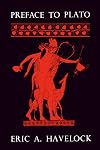
Plato's Republic has been the source of great consternation, especially in literary circles, for its attack on the poets. Socrates in fact asserts that they should have no place in the ideal state. Eric Havelock suggests that there are several misunderstandings in this regard, and in his Preface to Plato he identifies the issues, explains the historical context and — voila! — all becomes clear.
Havelock opens his discussion by suggesting that the very title of the Republic is the source show more of much confusion. The book is commonly understood to be a treatise on the ideal political entity, but even a casual analysis will show that only one-third of the text is concerned with statecraft. The other two-thirds cover a variety of subjects, but the thrust of Plato's argument amounts to an attack on the traditional Greek approach to education.
The educational methods still in use in the 4th century BC had their origins in what has been called the Greek Dark Age beginning around 1200 BC when the Mycenaean era collapsed. Very little is known about the whys and wherefores of this collapse, but it wasn't until around 700 BC that the Phoenician alphabet began to be adapted and used in the Greek-speaking world. During the intervening centuries, all knowledge concerning Greek history, culture, mores and laws were orally transmitted down through the generations. There was no writing at all. The most effective device in aid of memorizing vast amounts of information was rhyme. The epic form we see in Homer's Iliad grew out of the need to preserve the Greek cultural memory. Havelock takes the reader through Book 1 of The Iliad and dissects it in detail to show how this cultural, historical and ethical heritage was conveyed. The Iliad takes on new and significant meaning to the reader of this minute examination.
The Iliad and presumably other poetic vehicles were taught to children from an early age. The whole of the Greek-speaking world was immersed in the project of memorizing, and out of the masses arose those individuals with superior memories and theatrical skills who became the next generation of minstrels and teachers. Education was thus comprised of memorization and rote learning, and the people enjoyed constant reminders through public readings and festivals.
Plato's focus in the Republic and elsewhere is on Homer and Hesiod and to some extent the dramatists which at the time were the centerpieces of the educational regime. Their works presented gods and heroes as fundamentally immoral and thus bad examples for youth.
The overall result is that the Greek adolescent is continually conditioned to an attitude which at bottom is cynical. It is more important to keep up appearances than to practice the reality. Decorum and decent behavior are not obviously violated, but the inner principle of morality is.
Once the Republic is viewed as a critique of the educational regime, Havelock says that "the logic of its total organization becomes clear."
What Plato was railing against was an "oral state of mind" which seems to have persisted even though the alphabet and written documentation had been in use for three centuries. Illiteracy was thus still a widespread problem in Plato's time, and the poetic state of mind was the main obstacle to scientific rationalism and analysis. This is why Plato regarded the poetic or oral state of mind as the arch-enemy. In his teachings he did the opposite. He asked his students to "think about what they were saying instead of just saying it."
The epic had become, in Plato's view, not "an act of creation but an act of reminder and recall" and contributed to what Havelock terms "the Homeric state of mind."
It was Socrates' project (and by extension Plato's) to reform Greek education to encourage thinking and analysis. Thus all the ranting and railing about the "poets" in Plato's Republic was limited basically to Homer and Hesiod because of what he viewed as a wholly inadequate approach to education of which these particular poets were an integral part.
Unfortunately, Western culture has misconstrued what Plato and Socrates meant by "the poets." And because we view poetry as a highly creative and elevated form of expression, our critics have failed to recognize that Plato's diatribe had a very specific and limited target which had nothing to do with high-minded creativity, of which there is plenty, by the way, in the proscribed poets. It wasn't really the poets who were the problem; it was the use of them that was deemed unacceptable.
Post-Havelock, we can now read the Republic with the scales lifted from our eyes and see it for what it really was: an indictment of an antiquated educational regime which had no place in a democratic society. show less
Havelock opens his discussion by suggesting that the very title of the Republic is the source show more of much confusion. The book is commonly understood to be a treatise on the ideal political entity, but even a casual analysis will show that only one-third of the text is concerned with statecraft. The other two-thirds cover a variety of subjects, but the thrust of Plato's argument amounts to an attack on the traditional Greek approach to education.
The educational methods still in use in the 4th century BC had their origins in what has been called the Greek Dark Age beginning around 1200 BC when the Mycenaean era collapsed. Very little is known about the whys and wherefores of this collapse, but it wasn't until around 700 BC that the Phoenician alphabet began to be adapted and used in the Greek-speaking world. During the intervening centuries, all knowledge concerning Greek history, culture, mores and laws were orally transmitted down through the generations. There was no writing at all. The most effective device in aid of memorizing vast amounts of information was rhyme. The epic form we see in Homer's Iliad grew out of the need to preserve the Greek cultural memory. Havelock takes the reader through Book 1 of The Iliad and dissects it in detail to show how this cultural, historical and ethical heritage was conveyed. The Iliad takes on new and significant meaning to the reader of this minute examination.
The Iliad and presumably other poetic vehicles were taught to children from an early age. The whole of the Greek-speaking world was immersed in the project of memorizing, and out of the masses arose those individuals with superior memories and theatrical skills who became the next generation of minstrels and teachers. Education was thus comprised of memorization and rote learning, and the people enjoyed constant reminders through public readings and festivals.
Plato's focus in the Republic and elsewhere is on Homer and Hesiod and to some extent the dramatists which at the time were the centerpieces of the educational regime. Their works presented gods and heroes as fundamentally immoral and thus bad examples for youth.
The overall result is that the Greek adolescent is continually conditioned to an attitude which at bottom is cynical. It is more important to keep up appearances than to practice the reality. Decorum and decent behavior are not obviously violated, but the inner principle of morality is.
Once the Republic is viewed as a critique of the educational regime, Havelock says that "the logic of its total organization becomes clear."
What Plato was railing against was an "oral state of mind" which seems to have persisted even though the alphabet and written documentation had been in use for three centuries. Illiteracy was thus still a widespread problem in Plato's time, and the poetic state of mind was the main obstacle to scientific rationalism and analysis. This is why Plato regarded the poetic or oral state of mind as the arch-enemy. In his teachings he did the opposite. He asked his students to "think about what they were saying instead of just saying it."
The epic had become, in Plato's view, not "an act of creation but an act of reminder and recall" and contributed to what Havelock terms "the Homeric state of mind."
It was Socrates' project (and by extension Plato's) to reform Greek education to encourage thinking and analysis. Thus all the ranting and railing about the "poets" in Plato's Republic was limited basically to Homer and Hesiod because of what he viewed as a wholly inadequate approach to education of which these particular poets were an integral part.
Unfortunately, Western culture has misconstrued what Plato and Socrates meant by "the poets." And because we view poetry as a highly creative and elevated form of expression, our critics have failed to recognize that Plato's diatribe had a very specific and limited target which had nothing to do with high-minded creativity, of which there is plenty, by the way, in the proscribed poets. It wasn't really the poets who were the problem; it was the use of them that was deemed unacceptable.
Post-Havelock, we can now read the Republic with the scales lifted from our eyes and see it for what it really was: an indictment of an antiquated educational regime which had no place in a democratic society. show less
For those billions of you loosing sleep each night trying to figure out why Plato was so hostile to poetry in the Republic, this book will give you sweet dreamless sleep, whiter teeth, and shrink your waistline while you feast on chocolate and pork rinds. And it might even be half true!
The Muse Learns to Write: Reflections on Orality and Literacy from Antiquity to the Present by Eric A. Havelock
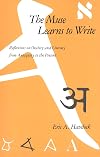
About 28 centuries ago, one of the most importance occurrences in what would eventually become Europe took place: the sudden evolution of the Phoenician syllabary into the full Greek alphabet we know today. Before this time, absolutely all information had to be transmitted orally: from contracts between parties to how to become a Greek citizen to knowledge of everything from your complex family genealogy to how to engage on the battlefield. Two scholars, Milman Parry and Albert Lord, show more together proposed an idea which would have allowed all pre-literate poets (like Homer) to improvise their poetry; it also gives a cohesive set of explanations concerning why Homeric poetry looks the way it does. Their thesis, later picked up by the likes of Walter Ong and Eric Havelock, is called the Parry-Lord thesis. “The Muse Learns to Write” is Havelock’s last major work and mostly a book-length meditation on the Parry-Lord thesis. It is also a summa which tries to recapitulate an entire career’s worth of ideas while tying up loose ends. Because of this, its length – under 130 pages – it seem like a short, precursory introduction into the idea of orality. It is far more complex than its length would initially lead you to assume.
Havelock, for many years a Sterling Professor of the classics at Yale, is interested not so much in the shape of Homeric poetry, but rather the forms that occurred in human consciousness that were caused by the shift from orality to literacy. Also, how does this important transition inflict itself also upon the texts themselves, deforming or reshaping their meaning and content?
Some questions are so important that they may be almost counted to be scandalous: “One of the difficulties of thinking about language is that you have to use language to think about it. A linguistic act has to be directed upon itself. Once written down, the act could be visualized and this visual this could be separated from the act of speaking and laid out in a kind of visual map. But what was the nature and significance of the speaking act itself? What has been its role in man’s history?” (Havelock, 34). According to Havelock, not even the emergence of Greek philosophy escaped the influence of the orality-literacy transition. He cites the unique character of Plato, whose denunciation of poetry as a form of rhetorical decadence marks a sharp break from his own written prose (a prose which, should be noted, is highly indicative of his own background as a dramatist). Since so much of philosophy was born of Plato’s dramatic dialogues involving Socrates, we have to ask ourselves whether even the most basic presuppositions of philosophy – ideas of freedom, individuality, and what it means to know could not have gone untransformed by the orality-literacy transition.
Havelock goes on to present both a general and specific theory of Greek orality, as well as looking at the work of people whose work is closely related to his own, like Marshall McLuhan and Harold McInnis. For a one-stop précis of Havelock’s work, this is a wonderful place to start. As I said above, this is a summa, so it touches on many ideas, especially the ones on the orality-literacy break, which is most fully set forward in his earlier and more scholarly book “Preface to Plato” (1963). show less
Havelock, for many years a Sterling Professor of the classics at Yale, is interested not so much in the shape of Homeric poetry, but rather the forms that occurred in human consciousness that were caused by the shift from orality to literacy. Also, how does this important transition inflict itself also upon the texts themselves, deforming or reshaping their meaning and content?
Some questions are so important that they may be almost counted to be scandalous: “One of the difficulties of thinking about language is that you have to use language to think about it. A linguistic act has to be directed upon itself. Once written down, the act could be visualized and this visual this could be separated from the act of speaking and laid out in a kind of visual map. But what was the nature and significance of the speaking act itself? What has been its role in man’s history?” (Havelock, 34). According to Havelock, not even the emergence of Greek philosophy escaped the influence of the orality-literacy transition. He cites the unique character of Plato, whose denunciation of poetry as a form of rhetorical decadence marks a sharp break from his own written prose (a prose which, should be noted, is highly indicative of his own background as a dramatist). Since so much of philosophy was born of Plato’s dramatic dialogues involving Socrates, we have to ask ourselves whether even the most basic presuppositions of philosophy – ideas of freedom, individuality, and what it means to know could not have gone untransformed by the orality-literacy transition.
Havelock goes on to present both a general and specific theory of Greek orality, as well as looking at the work of people whose work is closely related to his own, like Marshall McLuhan and Harold McInnis. For a one-stop précis of Havelock’s work, this is a wonderful place to start. As I said above, this is a summa, so it touches on many ideas, especially the ones on the orality-literacy break, which is most fully set forward in his earlier and more scholarly book “Preface to Plato” (1963). show less
Simply excellent. Makes sense of the transition involved in thinking by memorized narratives versus writing -- that is, abstraction. I'd say "page turner" but that'd be way too strong. Still, many juicy bits like the singing Turkish soldiers of W W 1 who, still part of the narrative epic culture, spoke in near rhyme.
Lists
You May Also Like


Associated Authors
Statistics
- Works
- 15
- Also by
- 4
- Members
- 672
- Popularity
- #37,564
- Rating
- 4.0
- Reviews
- 12
- ISBNs
- 41
- Languages
- 8
- Favorited
- 1