
Elmore Leonard (1925–2013)
Author of Get Shorty
About the Author
Elmore John Leonard, Jr. 10/11/25 -- 8/20/13 Elmore John Leonard, Jr., popularly known as mystery and western writer Elmore Leonard, was born in New Orleans, Louisiana on October 11, 1925. He served in the United States Naval Reserve from 1943 to 1946. He received a Ph.D. in English from the show more University of Detroit in 1950. After graduating, he wrote short stories and western novels as well as advertising and education film scripts. In 1967, he began to write full-time and received several awards including the 1977 Western Writers of America award and the 1984 Writers of America Edgar Allan Poe award. His other works include Get Shorty, Out of Sight, Hombre, Mr. Majestyk, 3:10 to Yuma, and Rum Punch. Many of his works were adapted into movies. Library of America recently announced plans to publish the first of a three-volume collection of his books beginning in the Fall of 2014. Leonard died on August 20, 2013 from complications of a stroke he had earlier. He was 87 years old. (Bowker Author Biography) show less
Series
Works by Elmore Leonard
Four Novels of the 1970s: Fifty-Two Pickup / Swag / Unknown Man No. 89 / The Switch (2014) 166 copies, 2 reviews
Elmore Leonard: Four Novels of the 1980s: City Primeval / LaBrava / Glitz / Freaky Deaky (Library of America) (2015) 117 copies, 1 review
Elmore Leonard: Four Later Novels (LOA #280): Get Shorty / Rum Punch / Out of Sight / Tishomingo Blues (Library of America Elmore Leonard Edition) (2016) 115 copies, 2 reviews
Elmore Leonard: Westerns (LOA #308): Last Stand at Saber River / Hombre / Valdez is Coming / Forty Lashes Less One / stories (Library of America Elmore Leonard Edition) (2018) 106 copies, 3 reviews
Elmore Leonard's Double Dutch Treat: Three Novels: The Moonshine War, Gold Coast, City Primevil (1986) 54 copies, 1 review
Elmore Leonard Raylan Givens 3-Book Collection: Pronto, Riding the Rap, Fire in the Hole (2012) 48 copies
Elmore Leonard's Western Roundup #1: Bounty Hunters; Forty Lashes Less One; Gunsights (1998) 41 copies
Elmore Leonard's Western Roundup #2: Escape from Five Shadows; Last Stand at Saber River; The Law at Randado (1998) 39 copies, 2 reviews
Elmore Leonard Classic 3-Book Collection: Get Shorty, Tishomingo Blues, Killshot (2012) 24 copies, 2 reviews
Duelo Final 2 copies
Spel om annans liv 2 copies
Get Shorty (Season 1-2) 2 copies
Hot Shot 1 copy
Os Caçadores de Recompensas 1 copy
Último Posto no Rio Sabre 1 copy
Notebooks 1 copy
Fuga de Cinco Sombras 1 copy
Un tipo implacable (13/20) 1 copy
Brillo 1 copy
Elmore Leonard, The Colonel's Lady and No Man's Gun : Unabridged Stories from The Tonto Woman and Other Western Stories (1999) 1 copy
Unkown Man #89 1 copy
Halálos lövés 1 copy
Um Bom Argumento 1 copy
Jack Foley #2 - Road Dogs 1 copy
The Apache Trail 1 copy
No title 1 copy
Leonard Elmore 1 copy
סחיטה 1 copy
For Something to Do 1 copy
Thriller. Florida- Fieber / Im Schutz des hellichten Tages / Lone Star. Drei ungekürzte Romane. (1997) — Contributor — 1 copy
The Kid 1 copy
Line of Sight 1 copy
Karen Sisco (Season 1) 1 copy
Crianças pagãs 1 copy
Four Novels of the 1980s 1 copy
D'un coup, d'un seul : roman 1 copy
צייד החתולים 1 copy
The Hard Way 1 copy
שודדים 1 copy
Nepoznati br. 89 1 copy
El Blues del Misisipí 1 copy
Louly and Pretty Boy 1 copy
Associated Works
For the Love of Books: 115 Celebrated Writers on the Books They Love Most (1999) — Contributor — 478 copies, 4 reviews
Writers on Writing, 2: More Collected Essays from the New York Times (2003) — Contributor — 199 copies, 3 reviews
Who's Writing This? Notations on the Authorial I, with Self-Portraits {not Antæus} (1995) — Contributor — 76 copies
The Best of the Best American Mystery Stories: The First Ten Years (2014) — Contributor — 39 copies, 1 review
Time-Life Book Digest: Get Shorty | Four Past Midnight | Wings of the Morning | The Langoliers (1992) — Contributor — 36 copies
Rediscoveries II: Important Writers Select Their Favorite Works of Neglected Fiction (1988) — Contributor — 31 copies, 1 review
Five Tall Tales: Budd Boetticher & Randolph Scott At Columbia, 1957-1960 (1957) — Author — 11 copies
Tagged
Common Knowledge
- Canonical name
- Leonard, Elmore
- Legal name
- Leonard Jr., Elmore John
- Other names
- Leonard, Elmore John, Jr. (birth name)
- Birthdate
- 1925-10-11
- Date of death
- 2013-08-20
- Gender
- male
- Education
- University of Detroit (BA|1950)
- Occupations
- copywriter
short story writer
novelist
screenwriter - Organizations
- Chevrolet
Campbell-Ewald Advertising Agency
United States Navy (WWII) - Awards and honors
- MWA Grand Master (1992)
Cartier Diamond Dagger (2006)
Louisiana Writer Award (2006)
Owen Wister Award (2009)
Michigan Author Award (1996)
F. Scott Fitzgerald Award for Outstanding Achievement in American Fiction (2008) (show all 7)
National Book Award (2012) - Agent
- Andrew Wylie (The Wylie Agency)
- Relationships
- Leonard, Peter A. (son)
- Short biography
- Elmore John Leonard Jr. (October 11, 1925 – August 20, 2013) was an American novelist, short story writer, and screenwriter. Leonard was born in New Orleans, Louisiana; the family moved frequently for several years. In 1934, the family settled in Detroit.
He graduated from the University of Detroit Jesuit High School in 1943 and joined the Navy. He graduated from the University of Detroit in 1950 with a bachelor's degree in English and philosophy. A year before he graduated, he got a job as a copy writer with Campbell-Ewald Advertising Agency, a position he kept for several years, writing on the side. - Cause of death
- stroke (complications)
- Nationality
- USA
- Birthplace
- New Orleans, Louisiana, USA
- Places of residence
- Birmingham, Michigan, USA
Bloomfield Village, Michigan, USA - Place of death
- Bloomfield Hills, Michigan, USA
- Associated Place (for map)
- Michigan, USA
Members
Reviews
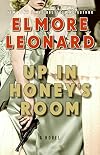
“Sieg Heil, y’all. I’m Honey Deal”
I adore Honey Deal.
This is the way our Honey addresses the gathering of weird, wannabee WWII spies. I laugh out loud. Not one of my typical giggles when something amuses me in a book. Most times, I only smile, but when it’s Elmore Leonard’s dialogue, all bets are off. And this is a novel completely carried by dialogue. No one does it better.
“My husband was in the shipping business, coastal freighters that traded among ports on the Black Sea. show more Fadey got along with the Soviets, gritting his teeth, offering bribes when his bullshit wasn’t enough. He had only complimentary things to say about Josef Stalin, that pockmarked midget. Do you know how tall he is? The Russians say five foot six. Oh, really? He wears lifts in his shoes or he’d be no taller than a five-foot pile of horseshit. It’s the reason he’s killed ten million of his own people. His mother sent him to a seminary to become a priest, but God rejected him.”
“‘I love Virgil,’ the Tulsa lieutenant said. ‘The first thing he ever said to me--we’re in that bar in the basement of the Mayo. He says, ‘You ever been in a pissing contest?’ I said no, what do you go for, height or distance? He says, ‘No, we piss on the ice in urinals and bet on whose pile of cubes gets melted down the most.’ But the thing about your dad, he didn’t piss on any kind of regular basis. He could hold it.’
‘That’s why he’s still one of the great pissers,’ Carl said, ‘he can hold it as long as he wants , which you don’t find at all in men his age. I’ve been in that bar with my dad, but I can’t say I ever pissed next to him. Go in the woods with him hunting, I don’t think I ever saw him piss, not wanting to leave his sign.’
‘That’s your dad,’ the Tulsa lieutenant said.”
“Vera said, ‘Bo, I don’t want to be in this house anymore. Please get me out of here before I become an alcoholic.’
‘You already are.’
‘I count my drinks,’ Vera said. ‘I never have more than twenty-five in a day.’” show less
I adore Honey Deal.
This is the way our Honey addresses the gathering of weird, wannabee WWII spies. I laugh out loud. Not one of my typical giggles when something amuses me in a book. Most times, I only smile, but when it’s Elmore Leonard’s dialogue, all bets are off. And this is a novel completely carried by dialogue. No one does it better.
“My husband was in the shipping business, coastal freighters that traded among ports on the Black Sea. show more Fadey got along with the Soviets, gritting his teeth, offering bribes when his bullshit wasn’t enough. He had only complimentary things to say about Josef Stalin, that pockmarked midget. Do you know how tall he is? The Russians say five foot six. Oh, really? He wears lifts in his shoes or he’d be no taller than a five-foot pile of horseshit. It’s the reason he’s killed ten million of his own people. His mother sent him to a seminary to become a priest, but God rejected him.”
“‘I love Virgil,’ the Tulsa lieutenant said. ‘The first thing he ever said to me--we’re in that bar in the basement of the Mayo. He says, ‘You ever been in a pissing contest?’ I said no, what do you go for, height or distance? He says, ‘No, we piss on the ice in urinals and bet on whose pile of cubes gets melted down the most.’ But the thing about your dad, he didn’t piss on any kind of regular basis. He could hold it.’
‘That’s why he’s still one of the great pissers,’ Carl said, ‘he can hold it as long as he wants , which you don’t find at all in men his age. I’ve been in that bar with my dad, but I can’t say I ever pissed next to him. Go in the woods with him hunting, I don’t think I ever saw him piss, not wanting to leave his sign.’
‘That’s your dad,’ the Tulsa lieutenant said.”
“Vera said, ‘Bo, I don’t want to be in this house anymore. Please get me out of here before I become an alcoholic.’
‘You already are.’
‘I count my drinks,’ Vera said. ‘I never have more than twenty-five in a day.’” show less
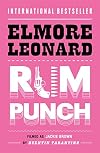
I recall someone saying how Elmore Leonard isn't old school `cause he built the school. Very true. My favorite Elmore Leonard novels are Tishomingo Blues and Pagan Babies; Rum Punch is my very favorite, thus this review. Also, in addition to reviewing the book, let me plug the audiobook read by Joe Mantegna. The voice of Joe Mantegna is pitch-perfect, his rhythm and inflections capturing each of the characters, male and female, as well as the mood and charged atmosphere of the entire show more story.
Perhaps readers know that Elmore Leonard listed his own `Rules of Writing'. You can easily find them with a quick Google search. Here is how Leonard follows his own rules in Rum Punch:
Rule: Never open the book with the weather or a prologue.
The novel's opening line: "Sunday morning, Ordell took Louis to watch the white-power demonstration in downtown Palm Beach." ----- A gripping scene right from the start; not a prologue or mention of the weather in sight.
Rule: Never use a verb other than `said' or an adverb modifying `said' to carry dialogue.
A snatch of dialogue from the first page: ""Young skinhead Nazis," Ordell said. "Look, even little Nazigirls marching down Worth Avenue. You believe it? Coming now you have the Klan, not too many here today. Some in green, must be the coneheads' new spring shade. Behind them it looks like some Bikers for Racism, better known as the Dixie Knights. We gonna move on ahead, fight through the crowd here," Ordell said, bringing Louis along.
"There's a man I want to show you. See who he reminds you of. He told me they're gonna march up South County and have their show on the steps of the fountain by city hall. You ever see so many police? Yeah, I expect you have. But not all these different uniforms at one time. They mean business too, got their helmets on, their riot ba-tons. Stay on the sidewalk or they liable to hit you over the head. They keeping the street safe for the Nazis."" ----- Right on, Elmore. No need for ornamentation here since Ordell's words speak for themselves.
Rule: Avoid using exclamation points (in other words, Leonard is telling us to let the action itself communicate power and excitement).
Vintage Elmore: "He saw the two bikers standing in kind of a crouch with their rifles, shoulders hunched, looking this way, nearer the house now than the gun range. He saw them out there in the open, cautious. Saw them both look toward the driveway at the same time and start to turn in that direction, raising their rifles. Louis heard the sound of automatic weapons, not as loud as he heard them in Ordell's gun movie or in any movie he had ever seen, and watched the two bikers drop where they were standing seem to collapse, fall without firing a shot, the sound of the automatic weapons continuing until finally it stopped. Pretty soon the jackboys appeared, the kids with their Chinese guns, curved banana clips, looking at the men on the ground and then toward the house."
Rule: Use regional dialect and jargon sparingly.
Elmore Leonard wrote to be read. When he writes dialogue, it doesn't matter if the speaker is from the inner city or the rural hinterlands, you can read it. Case in point: ""All right, go ahead," Simone said. "You find any other guns, or you find something else and you take it? The man's gonna come after you. Understand? Man that has more guns'n you ever saw in your life." ----- True to the character, in this case an older Black woman, but, again, you can read it. Every piece of dialogue in Rum Punch is equally clear.
Rule: Avoid detailed descriptions of characters and don't go into great detail describing places or things.
Here is how the author describes bail bondsman Max Cherry, one of the main characters, through the eyes of Ordell, another main character: "The man himself appeared neat, cleanshaved, had his blue shirt open, no tie, good size shoulders on him. That dark, tough-looking type of guy like Lewis, dark hair, only Max Cherry was losing his on top. Up in his fifties somewhere. He could be Eyetalian, except Ordell had never met a bail bondsman wasn't Jewish." ----- That's it-short, crisp, a few telling details.
Rule: Cut out parts the reader tend to skip.
The hardback edition of Rum Punch is 297 pages. I've read the novel three times, never skipping a page, ever. Why would I skip pages? What happens and what is said on every page drives the story.
Rule (the last and most important rule): If it sounds like writing, rewrite it.
Rum Punch does not sound like writing. That's a fact. A Victorian romance, it isn't. What Rum Punch sounds like - regarding dialogue - is a verbatim transcript from living, breathing people. And the world the characters inhabit is described in enough detail that we get a clear picture.
If you haven't read any of Elmore Leonard's 45 published novels, Rum Punch is a great place to start. show less

A few years ago, I read Elmore Leonard's Get Shorty and really enjoyed it, but when I finally got around to reading more of his stuff, I made the mistake of starting with Maximum Bob, which I thought had potential but was ultimately disappointing and kind of unpleasant. So I was a bit worried that I'd already read the one book of his I'd actually like. But I definitely wanted to give him another chance, and I'm now pleased to report that even if it wasn't quite as good as Get Shorty, I liked show more this one much better than ol' Bob.
The story features a hit man who runs into a crazy, violent bank robber and gets drawn into an ill-thought-out protection scheme he's running. Things don't go as planned, and the rest of the novel sees them trying to eliminate the witnesses. Much of it is from the POV of said witnesses, a married couple who temporarily relocate in an attempt to avoid the bad guys and end up in the "care" of a cop who isn't much better. It sort of ends up feeling like domestic litfic wrapped up in the skin of a crime thriller, as much of it involves the wife of the couple dealing with a demanding mother, a husband who means well but has trouble thinking about things other than work and deer hunting, and the unwelcome attentions of various creepy men. The two things fit together kind of oddly, and it feels like the result shouldn't be a satisfying example of either genre, but somehow it works rather better than you'd expect. show less
The story features a hit man who runs into a crazy, violent bank robber and gets drawn into an ill-thought-out protection scheme he's running. Things don't go as planned, and the rest of the novel sees them trying to eliminate the witnesses. Much of it is from the POV of said witnesses, a married couple who temporarily relocate in an attempt to avoid the bad guys and end up in the "care" of a cop who isn't much better. It sort of ends up feeling like domestic litfic wrapped up in the skin of a crime thriller, as much of it involves the wife of the couple dealing with a demanding mother, a husband who means well but has trouble thinking about things other than work and deer hunting, and the unwelcome attentions of various creepy men. The two things fit together kind of oddly, and it feels like the result shouldn't be a satisfying example of either genre, but somehow it works rather better than you'd expect. show less

A curious melange of the plot of a thriller with the delivery of reportage. It is years since I last read a Leonard novel and those that I read were so paced as to suck me in like a venturi. Here the pace has gone as we follow a documentary film maker around the piracy of the Horn of Africa. Leornard's flat clipped dialoge is as tight as ever but there is more distance from the characters. Everything is seen though glass; through the camera's lense. The film maker expresses no judgements of show more the pirates, terrorists, police, politicians, or playboys that she meets. She simply observes, records, and dithers about her work: is it to be a documentary or notes for a feature film? I imagine that this moral indecision is a conscious stance of the author — a refusal to judge complex circumstances — but it alienates the reader from the character and the story; we are observing observers. Once I appreciated that is literary fiction rather than a thriller, I began to appreciate its nuances and I would recommend it to anyone who can accept its agnomic amorality about such controversial subjects. show less
 This review was written for LibraryThing Early Reviewers.
Lists
Edgar Award (1)
Page Turners (1)
100 New Classics (1)
Read These Too (1)
Kayla (1)
Awards


You May Also Like


Associated Authors
Statistics
- Works
- 179
- Also by
- 44
- Members
- 40,537
- Popularity
- #433
- Rating
- 3.6
- Reviews
- 950
- ISBNs
- 1,663
- Languages
- 23
- Favorited
- 124


