

Leo Damrosch
Author of The Club: Johnson, Boswell, and the Friends Who Shaped an Age
About the Author
Leo Damrosch is the Ernest Bernbaum Professor of Literature Emeritus at Harvard University. His previous works include the National Book Critics Circle Award winner Jonathan Swift: His Life and His World, and Eternity's Sunrise: The Imaginative World of William Blake.
Works by Leo Damrosch
The Sorrows of the Quaker Jesus: James Nayler and the Puritan Crackdown on the Free Spirit (1996) 57 copies, 2 reviews
Books That Matter: The History of the Decline and Fall of the Roman Empire (2017) 40 copies, 1 review
God's Plot and Man's Stories: Studies in the Fictional Imagination from Milton to Fielding (1985) 10 copies
Rediscovering the Novel 1 copy
Don Quixote : A Deeper Look 1 copy
Associated Works
Rape of the Lock and Other Major Writings (2011) — Introduction, some editions — 89 copies, 2 reviews
Tagged
Common Knowledge
- Canonical name
- Damrosch, Leo
- Legal name
- Damrosch, Leopold, Jr.
- Birthdate
- 1941-09-14
- Gender
- male
- Education
- Yale University (BA|1963)
University of Cambridge (MA|1966)
Princeton University (Ph.D|1968) - Occupations
- literature scholar
professor
biographer - Organizations
- Harvard University
University of Maryland, College Park
University of Virginia - Awards and honors
- National Book Critics Circle Award (2013)
Winship/PEN New England Award for nonfiction (2005) - Relationships
- Damrosch, David (brother)
Van Dyke, Joyce (wife) - Nationality
- USA
- Birthplace
- Manila, Philippines
- Places of residence
- Philippines
Maine, USA
Newton, Massachusetts, USA - Associated Place (for map)
- USA
Members
Reviews
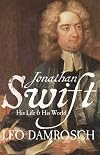
A model biography: Damrosch keeps it succinct, without skimping on details; he combines information about Swift with information about his age; he doesn't take much for granted, but also isn't condescending. Also, it's perfectly readable. You could say "it reads like a novel," except that most novels don't read so well.
Swift is the perfect subject for a biography, so that helps as well. We have a bunch of letters, but not a library's worth; there's a solid biographical tradition that isn't show more completely overwhelming; and, most importantly, his life is fascinating no matter how you present it. His birth is shrouded in mythology, as is his early family life. He worked for one of the foremost literary stylists of the previous generation, and became the foremost prose stylist of his own time. He worked for two of the most powerful men in British politics, knew royalty, and somehow managed to keep his head about the whole thing. He may or may not have been secretly married to one woman, who may or may not have been related to him, and may or may not have cheated on her with another woman--and, in general, he seems to have been a ladies man.
More important than all of this, however, is his own writing. I think there's a real distinction between people who get Swift, and people who do not. Oddly, many of those who do not write academic articles about him.
If you can't make a biography out of all that, you shouldn't be writing biographies. On the other hand, there's a large set of verbs and adverbs that mean something completely different in biographies than they do in ordinary English, and Leo isn't immune to their lure: must have, possibly, perhaps, maybe, certainly, assuredly, definitely etc etc... Biographers of a previous generation used them to cover up the biases of their own age. Damrosch points out when previous biographers have done this for Swift, which gets a little annoying (put it in footnotes, not the main text) Then he does exactly the same thing. Swift 'must have' had doubts about his religion, because he was so smart.* Swift 'must have' been sleeping with Vanessa, because he was funny and smart and funny, smart people sleep around. Well well, what are we here for, but to provide the next generation of biographers something to complain about.
My only real complaint is that Damrosch fails to put readers of the 'Disgusting Poems' in their place. The poems are a hilarious send-up of romantic love, but literary critics being professors, they must find some kind of perversion or disturbance behind them. After all, if a man uses the word 'shit' in a poem, he must be utterly immoral/anally fixated/repressing his sexuality/subversive/a space alien. He couldn't possibly, you know, find it funny to end a poem with the word 'shit'. Most poems still end with some guff about My Mistress's Eyes are Black as Dried Figs or whatever, and Swift's coruscating poems should be celebrated far more than they are simply for being funny and acidic.
Anyway, of all the anecdotes about Swift, my favorite is the Bickerstaff case. But one snippet I learned from this book is almost as good. A 'science writer' read Gulliver's Travels in 1969. He assumed it was recently released, and tried to contact Swift at St. Patrick's. The current Dean responded, "Dr. Swift departed here on 19th October, 1745. He left no forwarding address. Since that date, as far as I know, he has not communicated with friend or foe. Where he is at present, God only knows."
* This silliness reaches Olympian heights when Damrosch suggests that Swift saying (not a direct quote, but more or less) "If heaven is the reward for virtue, then my mother will certainly be there" means *he didn't believe that the virtuous go to heaven.* At another point, he suggests that the entirely conventional use of 'Jove' to refer to God indicates doubts about Christianity. show less
Swift is the perfect subject for a biography, so that helps as well. We have a bunch of letters, but not a library's worth; there's a solid biographical tradition that isn't show more completely overwhelming; and, most importantly, his life is fascinating no matter how you present it. His birth is shrouded in mythology, as is his early family life. He worked for one of the foremost literary stylists of the previous generation, and became the foremost prose stylist of his own time. He worked for two of the most powerful men in British politics, knew royalty, and somehow managed to keep his head about the whole thing. He may or may not have been secretly married to one woman, who may or may not have been related to him, and may or may not have cheated on her with another woman--and, in general, he seems to have been a ladies man.
More important than all of this, however, is his own writing. I think there's a real distinction between people who get Swift, and people who do not. Oddly, many of those who do not write academic articles about him.
If you can't make a biography out of all that, you shouldn't be writing biographies. On the other hand, there's a large set of verbs and adverbs that mean something completely different in biographies than they do in ordinary English, and Leo isn't immune to their lure: must have, possibly, perhaps, maybe, certainly, assuredly, definitely etc etc... Biographers of a previous generation used them to cover up the biases of their own age. Damrosch points out when previous biographers have done this for Swift, which gets a little annoying (put it in footnotes, not the main text) Then he does exactly the same thing. Swift 'must have' had doubts about his religion, because he was so smart.* Swift 'must have' been sleeping with Vanessa, because he was funny and smart and funny, smart people sleep around. Well well, what are we here for, but to provide the next generation of biographers something to complain about.
My only real complaint is that Damrosch fails to put readers of the 'Disgusting Poems' in their place. The poems are a hilarious send-up of romantic love, but literary critics being professors, they must find some kind of perversion or disturbance behind them. After all, if a man uses the word 'shit' in a poem, he must be utterly immoral/anally fixated/repressing his sexuality/subversive/a space alien. He couldn't possibly, you know, find it funny to end a poem with the word 'shit'. Most poems still end with some guff about My Mistress's Eyes are Black as Dried Figs or whatever, and Swift's coruscating poems should be celebrated far more than they are simply for being funny and acidic.
Anyway, of all the anecdotes about Swift, my favorite is the Bickerstaff case. But one snippet I learned from this book is almost as good. A 'science writer' read Gulliver's Travels in 1969. He assumed it was recently released, and tried to contact Swift at St. Patrick's. The current Dean responded, "Dr. Swift departed here on 19th October, 1745. He left no forwarding address. Since that date, as far as I know, he has not communicated with friend or foe. Where he is at present, God only knows."
* This silliness reaches Olympian heights when Damrosch suggests that Swift saying (not a direct quote, but more or less) "If heaven is the reward for virtue, then my mother will certainly be there" means *he didn't believe that the virtuous go to heaven.* At another point, he suggests that the entirely conventional use of 'Jove' to refer to God indicates doubts about Christianity. show less
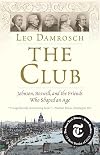
“The Club” by Leo Damrosch would seem to have an awful lot going for it. It is one of the New York Times top ten books of 2019. Reader reviews on Amazon score it a 4.4. It features two of the supposedly most interesting characters of 18th century UK, Samuel Johnson and James Boswell. And it has a great storyline – a newly established and exclusive Club (at a London pub) open only to the greatest minds of the time. “The Club” is very nicely illustrated with 30 color panels and a show more number of black and white drawings, etc. spread throughout the text. And impressive blurbs on the front and back covers. And I found it boring, very boring. It was a struggle for me to finish.
I expected a different approach by the author; his decision to develop mini-bios on several of the Club’s eventual 44 members was far different than my preference of imagined conversations by Club members on issues of the day. Obviously, the responsibility is my own for not doing a better job of researching the book ahead of time.
Some of my favorite history authors are Chernow, Meacham, Jean Smith, Goodwin. What they all have in common is that they are great storytellers, and a big part of history is the stories. I didn’t find Damrosch’s book to be very readable. I thought it was dull, and about as interesting as reading a grad student’s thesis. While much of the book focuses on Johnson and Boswell I came away feeling I didn’t really get a good grasp of their relationship. I strongly suggest that anyone considering buying the book give it a road test and read one of the early chapters beforehand. “The Club” is 2 ½ stars in my opinion, and not recommended. show less
I expected a different approach by the author; his decision to develop mini-bios on several of the Club’s eventual 44 members was far different than my preference of imagined conversations by Club members on issues of the day. Obviously, the responsibility is my own for not doing a better job of researching the book ahead of time.
Some of my favorite history authors are Chernow, Meacham, Jean Smith, Goodwin. What they all have in common is that they are great storytellers, and a big part of history is the stories. I didn’t find Damrosch’s book to be very readable. I thought it was dull, and about as interesting as reading a grad student’s thesis. While much of the book focuses on Johnson and Boswell I came away feeling I didn’t really get a good grasp of their relationship. I strongly suggest that anyone considering buying the book give it a road test and read one of the early chapters beforehand. “The Club” is 2 ½ stars in my opinion, and not recommended. show less
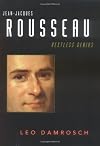
Until Damros published this 2005 National Book Award finalist, there has not been a good single-volume biography of Rousseau in the English language. This is because Rousseau's own auto-biography, "Confessions" (1782), is so well done and the number of sources for Rousseau's first 40 years are otherwise so weak, that writing a new biography is mostly a retelling of what Rousseau has already said. The strength of Damros' biography is to summarize Rousseau's life, his evolving thinking and his show more major works, including historical significance and context, while weaving in some of the best scholarship available after two centuries of reflection.
Rousseau's influences are so vital and important to so many aspects of modernity that they seem like second nature: the idea of government existing for the good of the people it governs, and not for the people to be good "subjects" of its rulers (which is why he was called the "prophet of the French Revolution"). Confessions was the first auto-biography to focus on mundane events in life, particularly childhood traumas (and adult sexual escapades), which he saw as influential in creating personality - an original idea for the time which saw childhood as a time to be forgotten. His concept of "natural man" in a natural state as the height of good, and civilization a downfall, are at the roots of Romanticism.
Rousseau's personality can best be describe as immature and "sharp at the edges". He either loved a person with all his heart, or hated them as his worst enemy. Usually, it started with the former and ended with the later, fueled by his paranoia and over-active imagination. These are traits one normally sees in a child, a black and white world view of love and hate unable to deal with the ambiguities of human weaknesses - which makes sense given Rousseau's brilliant genius combined with his abusive child-hood; lacking a mother he needed to trust someone, but at the same time could trust no one because of his abusive past. This fueled his desire for self-sufficiency and subsequent rejection of dependent relationships - thus he was naturally conflicted in an 18th C French society which was based on hierarchies of dependencies, where everyone was either the master of someone, or mastered by someone (and usually both)--Rousseau found a way to both live and preach an isolated life of self-sufficiency and inward reflection, hallmarks of the modern man. The master of no one, mastered by no one, and completely isolated from everyone. All of this is directly reflected in his works and ideas, so it is possible to fully understand Rousseau's works by understanding Rousseau the person - this biography paints the full portrait and answers many questions. show less
Rousseau's influences are so vital and important to so many aspects of modernity that they seem like second nature: the idea of government existing for the good of the people it governs, and not for the people to be good "subjects" of its rulers (which is why he was called the "prophet of the French Revolution"). Confessions was the first auto-biography to focus on mundane events in life, particularly childhood traumas (and adult sexual escapades), which he saw as influential in creating personality - an original idea for the time which saw childhood as a time to be forgotten. His concept of "natural man" in a natural state as the height of good, and civilization a downfall, are at the roots of Romanticism.
Rousseau's personality can best be describe as immature and "sharp at the edges". He either loved a person with all his heart, or hated them as his worst enemy. Usually, it started with the former and ended with the later, fueled by his paranoia and over-active imagination. These are traits one normally sees in a child, a black and white world view of love and hate unable to deal with the ambiguities of human weaknesses - which makes sense given Rousseau's brilliant genius combined with his abusive child-hood; lacking a mother he needed to trust someone, but at the same time could trust no one because of his abusive past. This fueled his desire for self-sufficiency and subsequent rejection of dependent relationships - thus he was naturally conflicted in an 18th C French society which was based on hierarchies of dependencies, where everyone was either the master of someone, or mastered by someone (and usually both)--Rousseau found a way to both live and preach an isolated life of self-sufficiency and inward reflection, hallmarks of the modern man. The master of no one, mastered by no one, and completely isolated from everyone. All of this is directly reflected in his works and ideas, so it is possible to fully understand Rousseau's works by understanding Rousseau the person - this biography paints the full portrait and answers many questions. show less
This book and I have completed a no-fault divorce. I was not the reader the book thought I was, and it was not the book I thought it was, and that's fine. We're both okay with it.
I thought I was getting more about the 'genius,' and this book really wanted to give me more about the 'restless.' Damrosch writes perfect non-fiction prose, clear and engaging. He paints (as they say) Rousseau's times and his personality, the houses he lived in and women he loved (if that's the right word), he show more pokes a bit of fun, but is generally sympathetic. I did not know, before reading this, that JJR just *was* a picaro, which makes me rethink a lot of 18th century novels. Maybe all the wanderings aren't plot devices--maybe that really was how a large number of people experienced their lives?
The book did not, however, deal with Rousseau's ideas in any depth at all. What I wanted to read about was the great contradiction in Rousseau's thought: that society ought to be a contract between a bunch of people who are unsocialized and, therefore, incapable of making contracts. This is one of the great philosophical conundrums of modernity, but this book... well, it doesn't even bring it up.
I thought we'd make it work, but this break up is probably for the best. You're pretty, "Restless Genius," but you don't really have the personality I thought you did. show less
I thought I was getting more about the 'genius,' and this book really wanted to give me more about the 'restless.' Damrosch writes perfect non-fiction prose, clear and engaging. He paints (as they say) Rousseau's times and his personality, the houses he lived in and women he loved (if that's the right word), he show more pokes a bit of fun, but is generally sympathetic. I did not know, before reading this, that JJR just *was* a picaro, which makes me rethink a lot of 18th century novels. Maybe all the wanderings aren't plot devices--maybe that really was how a large number of people experienced their lives?
The book did not, however, deal with Rousseau's ideas in any depth at all. What I wanted to read about was the great contradiction in Rousseau's thought: that society ought to be a contract between a bunch of people who are unsocialized and, therefore, incapable of making contracts. This is one of the great philosophical conundrums of modernity, but this book... well, it doesn't even bring it up.
I thought we'd make it work, but this break up is probably for the best. You're pretty, "Restless Genius," but you don't really have the personality I thought you did. show less
Lists
Awards


You May Also Like


Associated Authors
Statistics
- Works
- 46
- Also by
- 1
- Members
- 1,510
- Popularity
- #17,027
- Rating
- 4.1
- Reviews
- 24
- ISBNs
- 63
- Languages
- 3
- Favorited
- 2