
Mark R. Dunn
Author of Ella Minnow Pea
About the Author
Works by Mark R. Dunn
Tagged
Common Knowledge
- Legal name
- Dunn, Mark R.
- Birthdate
- 1956-07-12
- Gender
- male
- Education
- Memphis State University
University of Texas - Occupations
- playwright
novelist - Nationality
- USA
- Birthplace
- Memphis, Tennessee, USA
- Places of residence
- Memphis, Tennessee, USA
Albuquerque, New Mexico, USA - Associated Place (for map)
- USA
Members
Reviews
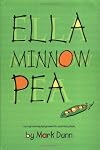
The ruling elders of the tiny island of Nollop have decreed that their deceased town founder, Nevin Nollop, is the One True God, and he lets his will be known by making letters fall off his commemorative statue. Each time a letter falls, island residents may no longer use it in speech or in writing. It does not help that Nollop is the putative originator of the sentence "The quick brown fox jumped over the lazy dog," and that this sentence appears on his memorial.
Beyond the wordplay, this show more lipogrammatic story can be read as an satire of ecclesiastical arrogance or government overreach. The gimmick gets a little strained at the end, but still this book rewards the short amount of time it takes to read it. show less
Beyond the wordplay, this show more lipogrammatic story can be read as an satire of ecclesiastical arrogance or government overreach. The gimmick gets a little strained at the end, but still this book rewards the short amount of time it takes to read it. show less
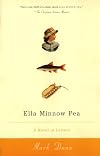
On the fictional island-nation of Nollop, just off of South Carolina, and named after founder Nevin Nollop, language reigns supreme. Nevin created the phrase “The quick brown fox jumps over the lazy dog,” used by typesetters and teletype repair technicians the world over. When letters spelling out Nollop’s famous phrase start falling off a monument, the High Island Council, thinking it’s a message from the long-dead Nollop, decides to ban them from use – forever. Neighbors turn on show more neighbors as some rush to report those caught using or possessing the newly banned letters.
The novel is written as a series of letters, which become increasingly difficult to write, and read, as more letters fall – and are subsequently banned from use.
Mark Dunn has written a highly inventive and thought-provoking about the freedom of language and what could happen if it’s tampered with. Ella Minnow Pea is being made into a musical, and I’d like to see how it turns out. show less
The novel is written as a series of letters, which become increasingly difficult to write, and read, as more letters fall – and are subsequently banned from use.
Mark Dunn has written a highly inventive and thought-provoking about the freedom of language and what could happen if it’s tampered with. Ella Minnow Pea is being made into a musical, and I’d like to see how it turns out. show less

Summary: The small island nation of Nollop, just off the coast of South Carolina, holds itself as more educated and lexically-minded than their non-islander counterparts, thanks to the influence of Nevin Nollop, their founder and the (fictitious) creater of the pangram "The quick brown fox jumps over the lazy dog." However, when letters of that sentence begin falling from the Nollop statue at town center, the High Council decrees that it is a sign from Nollop from the afterlife, and that show more these letters are no longer to be written or spoken by Nollopians - on pain of banishment. Ultimately, it's left to Ella and her family and friends to create a shorter pangram and thus prove that Nollop is no God, and that the free use of language should reign supreme.
Review: Very, very clever; very, very sharp; and yet very funny and quite easy to read. It's a short book - 200-odd pages in length, but in reality less, because even short letters between Ella and her correspondents get their own page. It's a fairly simple story, but the language is used to brutal but dazzling effect - you have to parse between real but unfamiliar vocabulary and Nollopisms, you start to train your eye to watch out for slips of "forbidden" letters, start counting letters in pangrams, and start imagining your own life where you're unable to speak without mentally spelling out each word first. In between all of the clever wordplay, though, there's a sharp satire that deals with the freedom of language and how it's related to the freedom of thought; with the dangers of oligarchy, especially when religion takes over for science and common sense; and with the reactions of ordinary people when their government no longer becomes trustworthy. The only minor things that kept this book from being perfect were that the characters seemed to struggle over-much with finding under-40-letter pangrams (Nollop's has 35, and can easily be cut to 33 by replacing one of the "the"s with an "a"), and that there were a few romantic story threads that weren't well-developed and so seemed slightly out of place. 4.5 out of 5 stars.
Recommendation: Engaging, quick, and fun book that holds some very potent points about freedom and the power of language, and makes you feel smarter just by reading it. Highly recommended. show less
Review: Very, very clever; very, very sharp; and yet very funny and quite easy to read. It's a short book - 200-odd pages in length, but in reality less, because even short letters between Ella and her correspondents get their own page. It's a fairly simple story, but the language is used to brutal but dazzling effect - you have to parse between real but unfamiliar vocabulary and Nollopisms, you start to train your eye to watch out for slips of "forbidden" letters, start counting letters in pangrams, and start imagining your own life where you're unable to speak without mentally spelling out each word first. In between all of the clever wordplay, though, there's a sharp satire that deals with the freedom of language and how it's related to the freedom of thought; with the dangers of oligarchy, especially when religion takes over for science and common sense; and with the reactions of ordinary people when their government no longer becomes trustworthy. The only minor things that kept this book from being perfect were that the characters seemed to struggle over-much with finding under-40-letter pangrams (Nollop's has 35, and can easily be cut to 33 by replacing one of the "the"s with an "a"), and that there were a few romantic story threads that weren't well-developed and so seemed slightly out of place. 4.5 out of 5 stars.
Recommendation: Engaging, quick, and fun book that holds some very potent points about freedom and the power of language, and makes you feel smarter just by reading it. Highly recommended. show less
I started this book three days ago and couldn't put it down. It's a short read, but not an easy read. I thought it was absolutely fantastic.
This book was recommended in a group of writers that I was a part of on Facebook. They were looking for books similar to this one that played games with the English language. Alas, no one commented on the post, but as I had never heard of the book in question, I was intrigued. I picked this novel up at my very next trip to the bookstore.
In this novella, show more an island nation that reveres the written word is suddenly thrown into chaos when the High Council of the island begins to systematically ban letters of the alphabet. When a letter is banned, it can neither be spoken or written. Those who break the edicts are severely sanctioned by the council. The entire novel takes place in the letters and correspondences between friends, families, and members of the community. The plot unfolds solely through these characters' writings to one another. Sometimes these writings are a letter in the mail. Sometimes it's a note left on a fridge or pushed under a door. As the novel proceeds, these correspondences become increasingly devoid of letters as the council bans letter after letter even as the citizens try desperately to continue to communicate with one another.
Deftly wound in this story that makes fun use of words is the same very dire warning Lord Acton once wrote to Bishop Mandell Creighton in 1887: "Power tends to corrupt, and absolute power corrupts absolutely." There are elements of authoritarianism about the island's High Council (which I find laughingly appropriate given that the topic of the book is letters which are being banned). And there are even elements that weave a chilling cautionary tale about the dangers -- even evils -- of religion in politics. This book is certainly a social commentary wrapped in a much lighter tale.
I loved this book very, very much. I will read it again, and probably again after that. The word-choices in this book are very intellectual, reflecting the citizens' exuberance for the English language. Being something of a lover of lexicons myself, I had no trouble understanding the prose, and indeed, I loved it.
I highly recommend this! show less
This book was recommended in a group of writers that I was a part of on Facebook. They were looking for books similar to this one that played games with the English language. Alas, no one commented on the post, but as I had never heard of the book in question, I was intrigued. I picked this novel up at my very next trip to the bookstore.
In this novella, show more an island nation that reveres the written word is suddenly thrown into chaos when the High Council of the island begins to systematically ban letters of the alphabet. When a letter is banned, it can neither be spoken or written. Those who break the edicts are severely sanctioned by the council. The entire novel takes place in the letters and correspondences between friends, families, and members of the community. The plot unfolds solely through these characters' writings to one another. Sometimes these writings are a letter in the mail. Sometimes it's a note left on a fridge or pushed under a door. As the novel proceeds, these correspondences become increasingly devoid of letters as the council bans letter after letter even as the citizens try desperately to continue to communicate with one another.
Deftly wound in this story that makes fun use of words is the same very dire warning Lord Acton once wrote to Bishop Mandell Creighton in 1887: "Power tends to corrupt, and absolute power corrupts absolutely." There are elements of authoritarianism about the island's High Council (which I find laughingly appropriate given that the topic of the book is letters which are being banned). And there are even elements that weave a chilling cautionary tale about the dangers -- even evils -- of religion in politics. This book is certainly a social commentary wrapped in a much lighter tale.
I loved this book very, very much. I will read it again, and probably again after that. The word-choices in this book are very intellectual, reflecting the citizens' exuberance for the English language. Being something of a lover of lexicons myself, I had no trouble understanding the prose, and indeed, I loved it.
I highly recommend this! show less
Lists
Epistolary Books (1)
A Novel Cure (1)
Awards


You May Also Like


Associated Authors
Statistics
- Works
- 23
- Members
- 5,384
- Popularity
- #4,627
- Rating
- 3.8
- Reviews
- 304
- ISBNs
- 61
- Languages
- 2
- Favorited
- 1