

Evelyn McDonnell
Author of Rock She Wrote: Women Write about Rock, Pop, and Rap
About the Author
Image credit: Evelyn McDonnell
Works by Evelyn McDonnell
Associated Works
A Girl's Guide to Taking Over the World: Writings from the Girl Zine Revolution (1997) — Contributor — 269 copies, 2 reviews
Tagged
Common Knowledge
- Gender
- female
- Education
- Brown University (BA|American Studies)
- Occupations
- writer
journalist - Nationality
- USA
- Places of residence
- Miami Beach, Florida, USA
- Associated Place (for map)
- Florida, USA
Members
Reviews
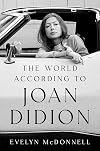
The World According to Joan Didion by Evelyn McDonnell is a wonderful overview of Didion's work (and life mostly as it impacts her writing) that is less biography and more of a biographical assessment.
Like many people who have read (and reread) her work over the years, there were a lot of things I was aware of, though they are presented here with a different perspective, so it wasn't simply reading what I knew. Add in the stuff no one (except for all of these amazing readers who claim there show more was "nothing" new here because they apparently had psychic access to the unpublished writings and the hundreds of interviews McDonnell conducted) knew because it is newly presented here and this becomes a very insightful look at Didion as both writer and human being.
As is often the case, the more we know about figures we admire for their work the less we place them on some kind of pedestal. What we have to keep in mind is that everyone has their flaws, so these people are just that, people.
It seems like an area that gets mixed reactions for this book is how McDonnell puts her own anecdotes and stories in here as well. I tend to be one of those who liked that aspect. It makes it not simply a telling of the facts, or of some people's opinions, but how one person interacted with Didion's writing and how it gave perhaps some perspective on it. I found those to be opportunities for me to reflect on where in my own life some of her writing resonated, or didn't resonate.
I would recommend this to both fans of Didion's as well as those just coming to her. That said, if you prefer a case file rather than a personal assessment, you might prefer to read an encyclopedia entry or something.
Reviewed from a copy made available by the publisher via NetGalley. show less
Like many people who have read (and reread) her work over the years, there were a lot of things I was aware of, though they are presented here with a different perspective, so it wasn't simply reading what I knew. Add in the stuff no one (except for all of these amazing readers who claim there show more was "nothing" new here because they apparently had psychic access to the unpublished writings and the hundreds of interviews McDonnell conducted) knew because it is newly presented here and this becomes a very insightful look at Didion as both writer and human being.
As is often the case, the more we know about figures we admire for their work the less we place them on some kind of pedestal. What we have to keep in mind is that everyone has their flaws, so these people are just that, people.
It seems like an area that gets mixed reactions for this book is how McDonnell puts her own anecdotes and stories in here as well. I tend to be one of those who liked that aspect. It makes it not simply a telling of the facts, or of some people's opinions, but how one person interacted with Didion's writing and how it gave perhaps some perspective on it. I found those to be opportunities for me to reflect on where in my own life some of her writing resonated, or didn't resonate.
I would recommend this to both fans of Didion's as well as those just coming to her. That said, if you prefer a case file rather than a personal assessment, you might prefer to read an encyclopedia entry or something.
Reviewed from a copy made available by the publisher via NetGalley. show less
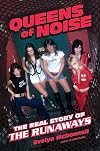
A bio of the ground-breaking all girl teenage rock band of the 70's. The Runaways were controversial in every way, from their formation by the Svengali weirdo Kim Fowley, to the way they dressed, to having to repeatedly prove that they did play their instruments, to the lawsuits over money more than a decade after breaking up. This is the band that spawned Joan Jett and Lita Ford, and made Fowley, a Hollywood fixture of decadence, into a world renown villain.
The book is written by a music show more critic who is also teaches journalism at Loyola, with interviews by nearly everyone involved who is still alive. Her researching is thorough. She even got the unpublished memoirs of drummer Sandy West, who died in 2006. I think McDonnell focuses too much on the sexuality of a couple of the girls, turning it into a platform for her personal feelings at times. The band had no political statements, and the members fought hard to be seen as musicians rather than being sexualized (they hated Cherie Currie's lingerie stage costumes). The Runaways did face a whole lot of 70's misogyny and battled through it, due to the fact that women weren't suppose to play hard rock, especially high school girls, so getting on stage made them targets. But this book does a really good job at untangling the mess and the rumors. It's a good choice if you want to read about a rock band. show less
The book is written by a music show more critic who is also teaches journalism at Loyola, with interviews by nearly everyone involved who is still alive. Her researching is thorough. She even got the unpublished memoirs of drummer Sandy West, who died in 2006. I think McDonnell focuses too much on the sexuality of a couple of the girls, turning it into a platform for her personal feelings at times. The band had no political statements, and the members fought hard to be seen as musicians rather than being sexualized (they hated Cherie Currie's lingerie stage costumes). The Runaways did face a whole lot of 70's misogyny and battled through it, due to the fact that women weren't suppose to play hard rock, especially high school girls, so getting on stage made them targets. But this book does a really good job at untangling the mess and the rumors. It's a good choice if you want to read about a rock band. show less
Writing an unbiased and 100% accurate account of The Runaways would be an impossible task; the band was divided and fraught from its inception, and all subsequent mythology reflects that. McDonnell takes on the difficult task of telling "the real story" and does an admirable job.
Other available Runaways accounts (book and film) suffer from being from being told from a particular viewpoint of a band member(s). McDonnell was never enmeshed with the band, and that is to her benefit. She show more collects as much source material as possible, quotations from band members from the 70s and from the present (including material from founding member Sandy West, who was no longer living when this book was published). The result is a more even-handed treatment than memoirs and biopics can give, and McDonnell has really done her research. The more famous and more disputed stories are presented with multiple perspectives and memories in an attempt to arrive at what is closest to the truth. McDonnell is not afraid to admit that the truth of so much about The Runaways will never be known. She does not insist on a definitive version of events where none can be found.
McDonnell also avoids the pitfall of writing this story as tabloid journalism. It is entertaining but also analytic. She discusses what it meant to form a "girl band" in the 70s, the expectations and challenges The Runaways faced in the music industry, and presents a substantial number of reviews of albums and concerts that, overall, situate the band in its historical context. She discusses sexuality and gender politics without ever turning the book into an academic platform; again, it's educational while being entertaining. The book is thus also even-handed in balancing storytelling with discussions of the music industry. There's something here for anyone who is interested. show less
Other available Runaways accounts (book and film) suffer from being from being told from a particular viewpoint of a band member(s). McDonnell was never enmeshed with the band, and that is to her benefit. She show more collects as much source material as possible, quotations from band members from the 70s and from the present (including material from founding member Sandy West, who was no longer living when this book was published). The result is a more even-handed treatment than memoirs and biopics can give, and McDonnell has really done her research. The more famous and more disputed stories are presented with multiple perspectives and memories in an attempt to arrive at what is closest to the truth. McDonnell is not afraid to admit that the truth of so much about The Runaways will never be known. She does not insist on a definitive version of events where none can be found.
McDonnell also avoids the pitfall of writing this story as tabloid journalism. It is entertaining but also analytic. She discusses what it meant to form a "girl band" in the 70s, the expectations and challenges The Runaways faced in the music industry, and presents a substantial number of reviews of albums and concerts that, overall, situate the band in its historical context. She discusses sexuality and gender politics without ever turning the book into an academic platform; again, it's educational while being entertaining. The book is thus also even-handed in balancing storytelling with discussions of the music industry. There's something here for anyone who is interested. show less
Nobody wrote like Joan Didion. Eve Babitz had some inspired social/cultural pieces, but there was always a madcap sense to her writing. Molly Ivins] knew her politics inside and out, but didn’t venture beyond her country’s borders. Didion combined politics, culture and the social scene in everything she wrote. It’s no wonder she stands alone.
This is why she has so many admirers. I am one, but it would never ever occur to me that I could write like that. Evelyn McDonnell is one too. show more However, she doesn’t stop there. She wants desperately to be Joan Didion. Recounting Didion’s life in The World According to Joan Didion, she is unable to resist comparing herself, putting herself in Didion’s footsteps psychologically and physically, travelling to many of the spots where Didion had written, and imagining herself doing the same thing. At times it’s almost creepy.
Where was the editor? This could describe a whole demographic subset.
McDonnell explains to the reader how, like Didion typing Hemingway’s sentences over and over to absorb structure, she has done that with Didion. She does, however, do a good job of relating Didion’s absolute discipline and dedication to her writing, going all the way back to her high school years. This single mindedness might appear ruthless at times, especially when it got in the way of relationships, but it is necessary if you are going to write like Didion. The old joke about “How do you get to Carnegie Hall?” came to mind; in this scenario the answer would be “write, write, write”.
Didion didn’t stop there. There was a persona that went with the writing, and McDonnell discusses how that came to be as well. There is sometimes a flippancy, as yet again she imagines herself in a conversation or at a lunch, but there is no question she knows her subject and the writing. There are more in depth books on Didion out there, but McDonnell’s research and structure makes her book a strong introduction to Didion’s body of work. It’s also a good addition to any Didion themed collection if you can just ignore McDonnell. show less
This is why she has so many admirers. I am one, but it would never ever occur to me that I could write like that. Evelyn McDonnell is one too. show more However, she doesn’t stop there. She wants desperately to be Joan Didion. Recounting Didion’s life in The World According to Joan Didion, she is unable to resist comparing herself, putting herself in Didion’s footsteps psychologically and physically, travelling to many of the spots where Didion had written, and imagining herself doing the same thing. At times it’s almost creepy.
I was born less than two years before Quintana Roo Dunne. Didion is my inspiration but her daughter is my peer. We attended Ivy League schools at the same time, worked in New York publishing for overlapping years. We could easily have been at the same concerts, shows, openings, bars. My parents also liked to throw parties and drink. We both had working mothers of a similar age: strong, intelligent, kind, and beautiful women who sometimes seemed very far away from us, even if they were in the same room.
Where was the editor? This could describe a whole demographic subset.
McDonnell explains to the reader how, like Didion typing Hemingway’s sentences over and over to absorb structure, she has done that with Didion. She does, however, do a good job of relating Didion’s absolute discipline and dedication to her writing, going all the way back to her high school years. This single mindedness might appear ruthless at times, especially when it got in the way of relationships, but it is necessary if you are going to write like Didion. The old joke about “How do you get to Carnegie Hall?” came to mind; in this scenario the answer would be “write, write, write”.
Didion didn’t stop there. There was a persona that went with the writing, and McDonnell discusses how that came to be as well. There is sometimes a flippancy, as yet again she imagines herself in a conversation or at a lunch, but there is no question she knows her subject and the writing. There are more in depth books on Didion out there, but McDonnell’s research and structure makes her book a strong introduction to Didion’s body of work. It’s also a good addition to any Didion themed collection if you can just ignore McDonnell. show less
Lists
Feminism (1)
You May Also Like


Associated Authors
Statistics
- Works
- 9
- Also by
- 3
- Members
- 314
- Popularity
- #75,176
- Rating
- 4.1
- Reviews
- 6
- ISBNs
- 30
- Languages
- 3