
Lucy O'Brien
Author of She Bop: The Definitive History of Women in Rock, Pop & Soul
About the Author
Lucy O'Brien is the author of two previous books: She has contributed to the Guardian, Sunday Times, Observer, Marie Claire, Q, New Musical Express and The Face, and worked extensively in TV and radio, as both guest pundit and producer
Works by Lucy O'Brien
Associated Works
Tagged
Common Knowledge
- Birthdate
- 1961
- Gender
- female
- Birthplace
- Catford, London, England, UK
- Associated Place (for map)
- England, UK
Members
Reviews
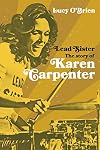
I was in middle school when the Carpenters hit their commercial and professional peak, and while I dutifully bought their Singles: 1969-73 record, a few years later I dismissed them as lame and turned to rockers like Peter Frampton and the Eagles. But I was saddened by Karen Carpenter's untimely 1983 death and vaguely heartened by later interest in her work such as If I Were a Carpenter, a 1995 alt-rock tribute album.
Lead Sister by music journalist Lucy O'Brien, engendered some renewed show more nostalgia, but the primary emotion I felt after finishing it was anger. At Karen's mother, who made no secret of her belief that Karen's brother Richard was the talented one (and her father, who passively allowed this favoritism to continue). At the patriarchal music industry that refused to let Karen play her beloved drums in concert and on most recorded songs because it wasn't "feminine." At Richard, who failed to support his sister when she recorded a solo album, and the other A&M records execs who refused to release it because it challenged the Carpenters' squeaky-clean image. At the media, whose obsession with women's bodies contributed to Karen's anorexia. And at all of the combined forces that made it impossible for Karen to live a long, authentic life, instead of dying from heart failure at only 32.
O'Brien combines older sources and new interviews with Karen's friends and colleagues to tell a riveting, devastating story, including enough historical context so the reader can appreciate the traditional sex role world of the 1960s and early 1970s. She wisely attributes Karen's anorexia to a number of factors, not just her emotionally withholding mother. And she shows Karen's strengths as a musician, singer, businesswoman, and loving friend to both the famous (Oliva Newton-John, Dionne Warwick, Petula Clark) and not. The book is occasionally repetitive but generally engrossing, with mounting dread as the reader approaches the inevitable tragedy.
Highly recommended for those who lived through the Carpenter's heyday, and for anyone interested in the struggles faced by women in the music industry. I'm off to find O'Brien's earlier book, [b:She Bop: The Definitive History of Women in Popular Music|55937597|She Bop The Definitive History of Women in Popular Music|Lucy O'Brien|https://i.gr-assets.com/images/S/compressed.photo.goodreads.com/books/1605754174l/55937597._SX50_.jpg|78657539].
ARC received from Net Galley in exchange for review. show less
Lead Sister by music journalist Lucy O'Brien, engendered some renewed show more nostalgia, but the primary emotion I felt after finishing it was anger. At Karen's mother, who made no secret of her belief that Karen's brother Richard was the talented one (and her father, who passively allowed this favoritism to continue). At the patriarchal music industry that refused to let Karen play her beloved drums in concert and on most recorded songs because it wasn't "feminine." At Richard, who failed to support his sister when she recorded a solo album, and the other A&M records execs who refused to release it because it challenged the Carpenters' squeaky-clean image. At the media, whose obsession with women's bodies contributed to Karen's anorexia. And at all of the combined forces that made it impossible for Karen to live a long, authentic life, instead of dying from heart failure at only 32.
O'Brien combines older sources and new interviews with Karen's friends and colleagues to tell a riveting, devastating story, including enough historical context so the reader can appreciate the traditional sex role world of the 1960s and early 1970s. She wisely attributes Karen's anorexia to a number of factors, not just her emotionally withholding mother. And she shows Karen's strengths as a musician, singer, businesswoman, and loving friend to both the famous (Oliva Newton-John, Dionne Warwick, Petula Clark) and not. The book is occasionally repetitive but generally engrossing, with mounting dread as the reader approaches the inevitable tragedy.
Highly recommended for those who lived through the Carpenter's heyday, and for anyone interested in the struggles faced by women in the music industry. I'm off to find O'Brien's earlier book, [b:She Bop: The Definitive History of Women in Popular Music|55937597|She Bop The Definitive History of Women in Popular Music|Lucy O'Brien|https://i.gr-assets.com/images/S/compressed.photo.goodreads.com/books/1605754174l/55937597._SX50_.jpg|78657539].
ARC received from Net Galley in exchange for review. show less
She Bop: The Definitive History of Women in Popular Music Revised and Updated 25th Anniversary Edition by Lucy O'Brien
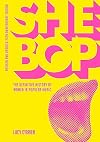
Lucy O'Brien's most recent release, [b:Lead Sister: The Story of Karen Carpenter|80505740|Lead Sister The Story of Karen Carpenter|Lucy O'Brien|https://i.gr-assets.com/images/S/compressed.photo.goodreads.com/books/1674135278l/80505740._SX50_.jpg|105439642], was an incisive and heartbreaking biography of the 1970s soft-rock superstar who died too young in part because of a sexist music industry. So I thought She Bop would be another hit. And it was, but in a very different way.
Instead of the show more intimate portrait of one woman, O'Brien takes us through 100 years, five continents, and scores of female musicians. And not just the singers/band members, but also the producers, songwriters and DJs. There are definite through lines about the creative ways women found to combat sexism, racism, homophobia, etc., and many of the interviews are fascinating. But I could only read a couple of chapters at a time to avoid overwhelming myself. I'd recommend this book as a helpful reference tool, but it may not appeal to casual readers. show less
Instead of the show more intimate portrait of one woman, O'Brien takes us through 100 years, five continents, and scores of female musicians. And not just the singers/band members, but also the producers, songwriters and DJs. There are definite through lines about the creative ways women found to combat sexism, racism, homophobia, etc., and many of the interviews are fascinating. But I could only read a couple of chapters at a time to avoid overwhelming myself. I'd recommend this book as a helpful reference tool, but it may not appeal to casual readers. show less
I was devastated after reading the first 'unauthorised' biography of Karen Carpenter, Little Girl Blue by Randy Schmidt (2010), and didn't honestly think another version could add anything new. Well, Lucy O'Brien's take is exactly that, nothing new, complete with references from 'official' biographer Ray Coleman, but the cover is stunning and I'm always ready to have my heart shattered over Karen Carpenter.
O'Brien focuses on Karen's professional and personal challenges as a female musician show more in the 1970s, relating everything to the singer's losing battle with self image and anorexia. The author attributes deeper meaning to lyrics that Karen performed but didn't write, and reports that Harold Carpenter, her henpecked father, commented in 1975: 'Well, she's not fooling me. That girl's got anorexia nervosa.' I'll take things that never happened for $500, Alex. Obviously, Karen's death at 32 from an eating disorder is going to shape her story, like biographies of Freddie Mercury are obsessed with AIDS, but I found the portentous tone of the writing a little overdone.
There are some fresh interviews, mainly from Rebecca Segal, the Carpenters' former tour manager, and a lot of musicians who worked with Karen once - and nothing new from Richard, obviously - but most of the content is recycled from earlier sources. There are no photographs, either, which I found frustrating and a bit cheap. The author claims that 'in order to tease out who Karen was as an artist and a musician, there is detective work to be done' but Randy Schmidt has already been there and done that. We all know that Richard and A&M persuaded Karen to give up her drums and be a feminine lead singer instead, taking her out of her comfort zone, and that her 'don't do disco' solo album was shelved until ten years after her death. And the 1989 biopic established what a monster mother Agnes Carpenter was, sacrificing her daughter's confidence and sabotaging her relationships with men to protect golden boy Richard.
Did there need to be another book about Karen Carpenter? No. Did I still listen to Karen's beautiful voice while reading and then cry when I got to the final chapters? Hell, yes. Thank you for the music, Karen. show less
O'Brien focuses on Karen's professional and personal challenges as a female musician show more in the 1970s, relating everything to the singer's losing battle with self image and anorexia. The author attributes deeper meaning to lyrics that Karen performed but didn't write, and reports that Harold Carpenter, her henpecked father, commented in 1975: 'Well, she's not fooling me. That girl's got anorexia nervosa.' I'll take things that never happened for $500, Alex. Obviously, Karen's death at 32 from an eating disorder is going to shape her story, like biographies of Freddie Mercury are obsessed with AIDS, but I found the portentous tone of the writing a little overdone.
There are some fresh interviews, mainly from Rebecca Segal, the Carpenters' former tour manager, and a lot of musicians who worked with Karen once - and nothing new from Richard, obviously - but most of the content is recycled from earlier sources. There are no photographs, either, which I found frustrating and a bit cheap. The author claims that 'in order to tease out who Karen was as an artist and a musician, there is detective work to be done' but Randy Schmidt has already been there and done that. We all know that Richard and A&M persuaded Karen to give up her drums and be a feminine lead singer instead, taking her out of her comfort zone, and that her 'don't do disco' solo album was shelved until ten years after her death. And the 1989 biopic established what a monster mother Agnes Carpenter was, sacrificing her daughter's confidence and sabotaging her relationships with men to protect golden boy Richard.
Did there need to be another book about Karen Carpenter? No. Did I still listen to Karen's beautiful voice while reading and then cry when I got to the final chapters? Hell, yes. Thank you for the music, Karen. show less

Lucy O' Brien är grundlig och har gjort ett bra jobb i denna bok, det är först och främst en sammanfattning av Madonnas enorma karriär som dansare, sångare, skådespelare och ikon. Eftersom det inte är en självbiografi så saknar boken personlighet och den där intimiteten som jag hoppas på få när jag läser en stjärnas biografi. Jag vill veta mer än bara hennes arbete som är offentlig. Jag vill veta små hemligheter , se människan bakom det stora namnet Madonna och det saknas show more i boken. Samtidigt så har jag inte haft de förväntningar med tanke på hur hemlig Madonna är om sitt liv och vill man få veta hela sanningen får man nog vänta tills Madonna själv skriver sin bok. Det är ändå en bra biografi som fångade mig från första sida, och är man intresserad av stora människor så är Madonna av Lucy O Brien att rekommendera. show less
Awards

You May Also Like


Associated Authors
Statistics
- Works
- 13
- Also by
- 1
- Members
- 361
- Popularity
- #66,479
- Rating
- 3.6
- Reviews
- 8
- ISBNs
- 65
- Languages
- 12