
Lauren Sandler
Author of Righteous: Dispatches from the Evangelical Youth Movement
About the Author
Lauren Sandler is the Life Editor of Salon.
Works by Lauren Sandler
One and Only: The Freedom of Having an Only Child, and the Joy of Being One (2013) 89 copies, 9 reviews
Tagged
Common Knowledge
- Gender
- female
- Occupations
- journalist
essayist
teacher - Organizations
- New York University
- Places of residence
- Brooklyn, New York, USA
- Associated Place (for map)
- New York, USA
Members
Reviews
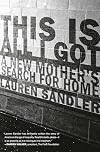
Admirers of Tara Westover’s memoir “Educated” will recognize the parallels in Lauren Sandler’s anti-heroine, Camilla Alvarez, a semi-educated single mom of Dominican heritage navigating the jungle of welfare offices in New York City.
Impoverished upbringing. Strange family. Hope for a college degree. Magical thinking.
Only the names have been changed in this true life story to protect the character and her anti-social parents. Changed more likely to protect the protagonist from show more retaliation.
Sandler started out trying to report on women living in New York’s shelters and ended up telling quite a different story, two stories.
The first story is largely what it takes to crawl out of poverty in the urban jungle when you have no education, no money, no family support system, and have a child out of wedlock.
The second story is simply about housing in New York City. It is a city of unimaginable wealth and a growing army of homeless people, many living on the streets, but even more living hand-to-mouth in shelters.
And for a variety of reasons many of the homeless avoid the shelters. Some avoid them for the very rational reason that they are unsafe. Homeless moms tend not to live on the streets for simple reason that it is unsafe for them and their children.
But people with mental disorders do not get treatment in shelters. The uneducated do not get smarter living shelters. And nobody earns enough money while living in shelters to acquire permanent housing.
In these respects, shelter living is not all that different from prison living. At least in prison you get to work out at the gym and get medical attention.
In Camilla Alvarez, Sandler found a woman who if anybody could make good of her situation it ought to have been this woman: she is talented academically; she is organized; she has a fine memory; and she is attractive.
What Alvarez has going against her: a pathological belief that somewhere there is a man (or THE man) who will share the burden of raising a child and find a steady home; that money will find a way to her; that a college degree will give her sufficient opportunity to escape poverty.
Alvarez travels miles daily by bus and subway to school, to daycare, to welfare meetings, to court paternity hearings, to medical appointments. She loses sleep, she loses her health, and eventually blows her shelter accomodation and her benefits.
Neither her mother or father are capable of caring for her, and her mother only escaped the same total destitution by being lucky enough to grow up in an era when New York really made an effort to build affordable housing.
Not today.
Along the edges of the story are themes we see in many other fine books on the urban landscape and its problems: the proximity of organized crime to the poor (Alex Kotlowitz’ “There Are No No Children Here”), the crisis of low income housing (Matthew Desmond “Evicted: Poverty and Profit in the American City”), domestic violence (Rachel Snyder “No Visible Bruises: What We Don’t Know About Domestic Violence Can Kill Us”), low wage jobs (Barbara Ehrenrich’s “Nickel and Dimed: On (Not) Getting By in America”), and the racial divide (Michelle Alexander’s classic “The New Jim Crow: Mass Incarceration in the Era of Colorblindness”).
And this book doesn’t even get into what it means to be aged and poor.
So many of these poor New Yorkers even those who have nuclear families live in overcrowded apartments. Affordable living just doesn’t apply to the thousands of wage workers in New York’s service industries.
Employees of fast food chains, WALMART stores, gig-economy workers, and Amazon warehouse workers: many of these people are on some form of social assistance. The vast majority will never be able to afford a home.
And New York’s neighbourgood’s continue to be raised to create flashy new condominium projects for the upper middle class. And for the billions being socked away away by offshore bandits.
Sandler focuses on the American urban landscape, but you and I know she is talking about a much bigger urban landscape: from Toronto and Vancouver to Mumbai, and Rio, London, and Paris.
The increasing urbanization globally makes more room for the oligarchs and less for the migrant workers.
This story does not have a happy ending. It doesn’t really have an ending, although Sandler does update the reader on Camilla’s situation after the book ends.
It also gave me further appreciation for what Jimmy and Rosalynn Carter have accomplished after Jimmy left the office of President of the United States. As builders of homes. show less
Impoverished upbringing. Strange family. Hope for a college degree. Magical thinking.
Only the names have been changed in this true life story to protect the character and her anti-social parents. Changed more likely to protect the protagonist from show more retaliation.
Sandler started out trying to report on women living in New York’s shelters and ended up telling quite a different story, two stories.
The first story is largely what it takes to crawl out of poverty in the urban jungle when you have no education, no money, no family support system, and have a child out of wedlock.
The second story is simply about housing in New York City. It is a city of unimaginable wealth and a growing army of homeless people, many living on the streets, but even more living hand-to-mouth in shelters.
And for a variety of reasons many of the homeless avoid the shelters. Some avoid them for the very rational reason that they are unsafe. Homeless moms tend not to live on the streets for simple reason that it is unsafe for them and their children.
But people with mental disorders do not get treatment in shelters. The uneducated do not get smarter living shelters. And nobody earns enough money while living in shelters to acquire permanent housing.
In these respects, shelter living is not all that different from prison living. At least in prison you get to work out at the gym and get medical attention.
In Camilla Alvarez, Sandler found a woman who if anybody could make good of her situation it ought to have been this woman: she is talented academically; she is organized; she has a fine memory; and she is attractive.
What Alvarez has going against her: a pathological belief that somewhere there is a man (or THE man) who will share the burden of raising a child and find a steady home; that money will find a way to her; that a college degree will give her sufficient opportunity to escape poverty.
Alvarez travels miles daily by bus and subway to school, to daycare, to welfare meetings, to court paternity hearings, to medical appointments. She loses sleep, she loses her health, and eventually blows her shelter accomodation and her benefits.
Neither her mother or father are capable of caring for her, and her mother only escaped the same total destitution by being lucky enough to grow up in an era when New York really made an effort to build affordable housing.
Not today.
Along the edges of the story are themes we see in many other fine books on the urban landscape and its problems: the proximity of organized crime to the poor (Alex Kotlowitz’ “There Are No No Children Here”), the crisis of low income housing (Matthew Desmond “Evicted: Poverty and Profit in the American City”), domestic violence (Rachel Snyder “No Visible Bruises: What We Don’t Know About Domestic Violence Can Kill Us”), low wage jobs (Barbara Ehrenrich’s “Nickel and Dimed: On (Not) Getting By in America”), and the racial divide (Michelle Alexander’s classic “The New Jim Crow: Mass Incarceration in the Era of Colorblindness”).
And this book doesn’t even get into what it means to be aged and poor.
So many of these poor New Yorkers even those who have nuclear families live in overcrowded apartments. Affordable living just doesn’t apply to the thousands of wage workers in New York’s service industries.
Employees of fast food chains, WALMART stores, gig-economy workers, and Amazon warehouse workers: many of these people are on some form of social assistance. The vast majority will never be able to afford a home.
And New York’s neighbourgood’s continue to be raised to create flashy new condominium projects for the upper middle class. And for the billions being socked away away by offshore bandits.
Sandler focuses on the American urban landscape, but you and I know she is talking about a much bigger urban landscape: from Toronto and Vancouver to Mumbai, and Rio, London, and Paris.
The increasing urbanization globally makes more room for the oligarchs and less for the migrant workers.
This story does not have a happy ending. It doesn’t really have an ending, although Sandler does update the reader on Camilla’s situation after the book ends.
It also gave me further appreciation for what Jimmy and Rosalynn Carter have accomplished after Jimmy left the office of President of the United States. As builders of homes. show less
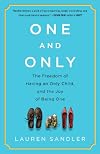
This is propaganda, pure and simple. Designed by the parent of an only child to make herself feel better about her choice by collecting countless positive (quantitative) studies to dismiss the negative only-child (qualitative) experiences of Sandler's friends and other interviewees, while debunking supposed stereotypes and replacing them with reasons why everyone should do as the Chinese do: have only one child, and in the process, shaming those that have more. In the end, I feel this is a show more biased, self-congratulatory piece of questionable value, of which I learned nothing new.
Talking about only children right now is highly relevant. Today, there's a continuing trend of having fewer children and there's a rise of only children in developed countries. This is due to high childcare costs, women deciding to have children later, lower fertility rates, the global recession, and economic pressure on families to have two working parents. This topic is in need of discussion so we can figure out how to handle a changing (decreasing) population and work out the advantages or disadvantages of being an only child in the twenty-first century. Sadly, Sandler neglects the disadvantages.
The too briefly described research Sandler refers to is troublesome as she relies upon large scale studies, one of which had 13,000 participants, leading me to question how much time was spent with each person, how accurate the data is when individual circumstances tend to be overlooked, and whether the conclusions drawn could be trusted. Few quantifiable results are quoted by Sandler, yet over and over again we're told only children are more intelligent, but when it's revealed this status only adds one to three IQ points, that assertion no longer seems quite so certain when the difference is so minimal. Are the other positive differences she quoted also as minimal?
As far as I could tell, none of these overwhelmingly positive studies actually asked the participants how they felt about being an only child, and when the author quoted interviews and asked her only-child friends, unhappy negatives start rearing their ugly heads. Some of the stereotypes Sandler has been aggressively attempting to quash are truisms among them, though she quickly whips out another positive study or two to devalue those cases. Belittling these personal negative experiences and dismissing them with positive research is unforgiveable, no matter how positive her own experiences as an only child, it denotes a lack of respect for others in favour of her own agenda. Sandler neglected to criticise the studies in the same way, which I'd expect if she was evaluating all the research fairly. By taking all of the research into consideration, one could conclude that things like intelligence and self-confidence go up (quantitative studies) while happiness goes down (qualitative interviews).
Yes, not all only children are selfish, lonely, spoilt and maladjusted - but some are, there's no point in denying it. And yes, it's more environmentally friendly to have one, and it's glaringly obvious one child will receive more resources like more money, time, space and attention from their parents than having to share with siblings. And they will benefit from those things, although how and how much they benefit will differ according to individual circumstances. However, other factors such as socialising with and being able to relate to their peers is important because spending too much time with adults can alienate them from their peer group. I'd argue attending school isn't enough, as Sandler suggests it is, proximity and access to other children outside school hours is necessary, too. Activities outside the home and exercise are other factors to consider as I'd postulate that those who do these socialise more with a variety of people, rather than with just their parents.
On and on, Sandler repeatedly preaches her 'only children are more intelligent and prosperous' mantra, and cherry picks famous onlies and cites the 1979 Chinese One-Child policy for their recent economic improvement to back up her claims, which is more than a little reductive, if you ask me. Really, Sandler's subtitle should be, 'Why You Must Have an Only Child, and Why Being One Can Make You Smart and Successful'. However, upon closer inspection those famous people and Chinese case studies all had pushy parents who provided strict educational schedules for their children lasting from the minute they woke up to bedtime, thereby surpassing the norm for the average child whether they had siblings or not. Most Chinese can't afford more than one child anyway, but rather than just a wish for their child to have it better than themselves, I started to wonder if there was an air of competition between parents to make their child successful, or whether it was to improve their retirement as it's tradition to move in with their child and care for their grandchildren when they reach that age. There's also the enormous pressure on that single child to perform and succeed so they're able to provide for both their parents when the time comes. In any case, you could argue privilege gives these children opportunities to prosper because their parents have clearly invested a substantial amount of time and effort, regardless of finances, and are able to reap the rewards.
Full disclosure here, I'm an only child, and one with negative experiences. Sandler would hate me because I don't conform to her views. As one stereotype goes, I was late to walk and talk, but my reading level was years ahead of my peers. Early schooling taught me that being an only set me apart as teachers frequently asked us to talk or write about our siblings and pets - I had neither, and that made me feel like I had and experienced less than everyone else. Despite many children living on my street, they were all a year or more younger though I made the best of it, still experiencing loneliness on the dark, cold, rainy winter days, of which there are many in the UK. Unfortunately, when I was seven we moved 100 miles away to where no children lived near me. Cue more loneliness and a growing preference for the company of older children (usually by several years) and adults. I've never been comfortable with those of a similar age to myself; school was hell - I frequently truanted in my teens, and age 18 onwards my friends have been more than 10 years older than me. I'll also confess that I'm selfish, but only children can hardly claim the monopoly on that trait. And hey, I was spoilt as far as toys, clothes and my mother's attention were concerned. I was lucky.
When I think of others I've known who are onlies, most them also had negative experiences for a variety of reasons, but one thing was very clear: they fit into two types. Some were able to cope or be happy in their own company, and others weren't and would do anything to avoid it. Before reading, I had wondered if being an only child meant there was an increased likelihood of becoming an introvert, which would feed into Susan Cain's [b:Quiet: The Power of Introverts in a World That Can't Stop Talking|8520610|Quiet The Power of Introverts in a World That Can't Stop Talking|Susan Cain|http://d.gr-assets.com/books/1328562861s/8520610.jpg|13387396], and because of this I've been comparing the two books. They don't compare. Cain, despite being an introvert, manages to confer balance when discussing her subject matter by acknowledging both positives and negatives of being such, and Sandler as an only child fails in this. Her bias is so pronounced it's impossible to draw parallels when I can't trust her interpretations of her much vaunted sociological studies.
A monumentally bad first impression was made after reading the opening chapter. I should've gone with my instincts and discontinued reading then. That chapter was the most biased, one-sided diatribe against negative stereotypes associated with being an only child, never stopping to consider that there may be some truth to them for some or allow for other aspects that, in tandem with being an only child, could produce those stereotypes. Challenging myself to read on was a mistake, and I've struggled to finish. Currently stuck @ 41%.
Only children may find they know about most of what is discussed but could find parts of it insulting. Everyone else on the other hand, may find One and Only informative and helpful, or offensive and upsetting if they've chosen to have more than one child themselves.
*eARC provided by the publisher in return for an honest review. show less
Talking about only children right now is highly relevant. Today, there's a continuing trend of having fewer children and there's a rise of only children in developed countries. This is due to high childcare costs, women deciding to have children later, lower fertility rates, the global recession, and economic pressure on families to have two working parents. This topic is in need of discussion so we can figure out how to handle a changing (decreasing) population and work out the advantages or disadvantages of being an only child in the twenty-first century. Sadly, Sandler neglects the disadvantages.
The too briefly described research Sandler refers to is troublesome as she relies upon large scale studies, one of which had 13,000 participants, leading me to question how much time was spent with each person, how accurate the data is when individual circumstances tend to be overlooked, and whether the conclusions drawn could be trusted. Few quantifiable results are quoted by Sandler, yet over and over again we're told only children are more intelligent, but when it's revealed this status only adds one to three IQ points, that assertion no longer seems quite so certain when the difference is so minimal. Are the other positive differences she quoted also as minimal?
As far as I could tell, none of these overwhelmingly positive studies actually asked the participants how they felt about being an only child, and when the author quoted interviews and asked her only-child friends, unhappy negatives start rearing their ugly heads. Some of the stereotypes Sandler has been aggressively attempting to quash are truisms among them, though she quickly whips out another positive study or two to devalue those cases. Belittling these personal negative experiences and dismissing them with positive research is unforgiveable, no matter how positive her own experiences as an only child, it denotes a lack of respect for others in favour of her own agenda. Sandler neglected to criticise the studies in the same way, which I'd expect if she was evaluating all the research fairly. By taking all of the research into consideration, one could conclude that things like intelligence and self-confidence go up (quantitative studies) while happiness goes down (qualitative interviews).
Yes, not all only children are selfish, lonely, spoilt and maladjusted - but some are, there's no point in denying it. And yes, it's more environmentally friendly to have one, and it's glaringly obvious one child will receive more resources like more money, time, space and attention from their parents than having to share with siblings. And they will benefit from those things, although how and how much they benefit will differ according to individual circumstances. However, other factors such as socialising with and being able to relate to their peers is important because spending too much time with adults can alienate them from their peer group. I'd argue attending school isn't enough, as Sandler suggests it is, proximity and access to other children outside school hours is necessary, too. Activities outside the home and exercise are other factors to consider as I'd postulate that those who do these socialise more with a variety of people, rather than with just their parents.
On and on, Sandler repeatedly preaches her 'only children are more intelligent and prosperous' mantra, and cherry picks famous onlies and cites the 1979 Chinese One-Child policy for their recent economic improvement to back up her claims, which is more than a little reductive, if you ask me. Really, Sandler's subtitle should be, 'Why You Must Have an Only Child, and Why Being One Can Make You Smart and Successful'. However, upon closer inspection those famous people and Chinese case studies all had pushy parents who provided strict educational schedules for their children lasting from the minute they woke up to bedtime, thereby surpassing the norm for the average child whether they had siblings or not. Most Chinese can't afford more than one child anyway, but rather than just a wish for their child to have it better than themselves, I started to wonder if there was an air of competition between parents to make their child successful, or whether it was to improve their retirement as it's tradition to move in with their child and care for their grandchildren when they reach that age. There's also the enormous pressure on that single child to perform and succeed so they're able to provide for both their parents when the time comes. In any case, you could argue privilege gives these children opportunities to prosper because their parents have clearly invested a substantial amount of time and effort, regardless of finances, and are able to reap the rewards.
Full disclosure here, I'm an only child, and one with negative experiences. Sandler would hate me because I don't conform to her views. As one stereotype goes, I was late to walk and talk, but my reading level was years ahead of my peers. Early schooling taught me that being an only set me apart as teachers frequently asked us to talk or write about our siblings and pets - I had neither, and that made me feel like I had and experienced less than everyone else. Despite many children living on my street, they were all a year or more younger though I made the best of it, still experiencing loneliness on the dark, cold, rainy winter days, of which there are many in the UK. Unfortunately, when I was seven we moved 100 miles away to where no children lived near me. Cue more loneliness and a growing preference for the company of older children (usually by several years) and adults. I've never been comfortable with those of a similar age to myself; school was hell - I frequently truanted in my teens, and age 18 onwards my friends have been more than 10 years older than me. I'll also confess that I'm selfish, but only children can hardly claim the monopoly on that trait. And hey, I was spoilt as far as toys, clothes and my mother's attention were concerned. I was lucky.
When I think of others I've known who are onlies, most them also had negative experiences for a variety of reasons, but one thing was very clear: they fit into two types. Some were able to cope or be happy in their own company, and others weren't and would do anything to avoid it. Before reading, I had wondered if being an only child meant there was an increased likelihood of becoming an introvert, which would feed into Susan Cain's [b:Quiet: The Power of Introverts in a World That Can't Stop Talking|8520610|Quiet The Power of Introverts in a World That Can't Stop Talking|Susan Cain|http://d.gr-assets.com/books/1328562861s/8520610.jpg|13387396], and because of this I've been comparing the two books. They don't compare. Cain, despite being an introvert, manages to confer balance when discussing her subject matter by acknowledging both positives and negatives of being such, and Sandler as an only child fails in this. Her bias is so pronounced it's impossible to draw parallels when I can't trust her interpretations of her much vaunted sociological studies.
A monumentally bad first impression was made after reading the opening chapter. I should've gone with my instincts and discontinued reading then. That chapter was the most biased, one-sided diatribe against negative stereotypes associated with being an only child, never stopping to consider that there may be some truth to them for some or allow for other aspects that, in tandem with being an only child, could produce those stereotypes. Challenging myself to read on was a mistake, and I've struggled to finish. Currently stuck @ 41%.
Only children may find they know about most of what is discussed but could find parts of it insulting. Everyone else on the other hand, may find One and Only informative and helpful, or offensive and upsetting if they've chosen to have more than one child themselves.
*eARC provided by the publisher in return for an honest review. show less
Although there were a couple of glaring errors right off the bat (the killer in We Need to Talk About Kevin is not an only child as Sandler states) I kept reading and really enjoyed this one. Some of it was memoir with Sandler recalling her own life as an only. But she also presents plenty of evidence to support her thesis that only children turn out just fine. She caught a lot of flack online, much of it from other women authors with multiple children, and I wish they would read the book to show more see where she's coming from. At one point she basically says that this isn't about forcing people to have just one, but is about letting people feel free enough to stop at one if they want to.
One of my favorite chapters was about the 2 Americas that are being created right now--the religious with their many children and the secular with their smaller families. It was fascinating. This just simply hasn't happened in other countries. Also, she talks to people from all over the world about how in nations with good health care, child care and maternity/paternity leave, such as the Scandinavian countries, parents feel that they have the resources to have more than one child. Many of them scoff at having more in the US because they simply cannot afford it (which is exactly how I feel).
All in all, a great look at choosing to stop with one. I feel more confident than ever that it's a great option for our family. show less
One of my favorite chapters was about the 2 Americas that are being created right now--the religious with their many children and the secular with their smaller families. It was fascinating. This just simply hasn't happened in other countries. Also, she talks to people from all over the world about how in nations with good health care, child care and maternity/paternity leave, such as the Scandinavian countries, parents feel that they have the resources to have more than one child. Many of them scoff at having more in the US because they simply cannot afford it (which is exactly how I feel).
All in all, a great look at choosing to stop with one. I feel more confident than ever that it's a great option for our family. show less

This is not only a story depicting Camilla’s journey, but a harsh critique on the government assistant policies put in place. More than once information wasn’t sent to Camilla and a program she depended on was thus revoked without her knowledge, she had to shuffle from office to office, she would have to reapply & wait for the program to kick in, she had to wait for hours at each place, etc. It was dizzying and maddening to me as a reader, and I can only imagine how it felt for a new show more mother. Camilla was attending school during this time as well and often was late or had to miss classes & exams.
This book is one that should be read by everyone. It’s eye opening, maddening, and heart breaking. It makes me want to pay better attention to the poverty issues here and what more I can do for my community. show less
This book is one that should be read by everyone. It’s eye opening, maddening, and heart breaking. It makes me want to pay better attention to the poverty issues here and what more I can do for my community. show less
Awards


You May Also Like


Statistics
- Works
- 4
- Members
- 299
- Popularity
- #78,482
- Rating
- 3.5
- Reviews
- 17
- ISBNs
- 14
- Languages
- 1