

Ruth Scurr
Author of Fatal Purity: Robespierre and the French Revolution
About the Author
Lecturer and fellow at Gonville Caius College, University of Cambridge, Ruth Scurr is a historian, writer, and literary critic. The author of the award-winning Fatal Purity: Robespierre and the French Revolution, she lives in Cambridge, England.
Works by Ruth Scurr
Germinal (Les Rougon-Macquart, #13) 5 copies
Associated Works
Tagged
Common Knowledge
- Birthdate
- 1971
- Gender
- female
- Education
- University of Oxford
St Bernard's Convent, Slough, England, UK
University of Cambridge
Ecole Normale Supérieure, Paris, France - Occupations
- journalist
writer
historian
literary critic - Organizations
- Cambridge University (Gonville and Caius College)
- Awards and honors
- Fellow of Gonville and Caius College, Cambridge University
British Academy Postdoctoral Fellowship (2000) - Relationships
- Dunn, John (husband, 1997-2013)
- Short biography
- Ruth Scurr was born in 1971 in London. She studied at Oxford, Cambridge and the Ecole Normale Supérieure, Paris. Her doctorate was on the political thought of the French Revolution and her first book is, Fatal Purity: Robespierre and the French Revolution (2006). Ruth Scurr began reviewing regularly for The Times and The Times Literary Supplement in 1997. Since then she has also published in The Telegraph, The Observer, The New Statesman, The London Review of Books, The New York Review of Books, The Nation and The New York Observer. As a critic, she is especially interested in contemporary literary fiction. She is a judge for the Man Booker Prize 2007. Ruth Scurr is a College lecturer and Director of Studies in Social and Political Sciences for Gonville and Caius College, Cambridge, where she is a Fellow.
http://www.rcwlitagency.com/authors/s... - Nationality
- UK
- Birthplace
- London, England, UK
- Places of residence
- London, England, UK
Paris, France - Associated Place (for map)
- UK
Members
Reviews
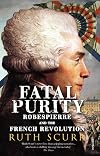
'Though Robespierre died over two hundred years ago, he still makes new friends and enemies among the living. I have tried to be his friend and to see things from his point of view.'
The road to hell is paved with good intents, right? Well, if there's an historical figure who can incarnate such a saying to perfection it's Robespierre, the man whose name ultimately became infamously associated with the Terror. Indeed, modest lawyer not foreign to philanthropic and humanitarian deeds, once his show more fervent idealism and fanatic obsession with virtue got sucked up into the turmoil of the French Revolution it's a great deal of the French revolutionary ideals themselves that went down to hell with his regime! How to make sense of all that? Utopia hand in hand with dystopia, ruled over by the same man? 'Fatal Purity', a gripping read and a surprisingly well-balanced account of the events that shaped Robespierre's life, tries and brings some sort of insight.
Ambitious and cynical, possessed by a will to serve the weakest and poorest but animated by unforgiving and blind self-righteousness, endowed with a strong reputation for being incorruptible yet playing willingly with mob violence and political dissensions to better his career and accrue his power, the man was far from easy to understand! Sadly, we don't get out of this book anymore enlightened about his motives and true character than upon opening it. Whatever your opinion about such an elusive man indeed (idealist do-gooder who lost it in trying to set an utopia in motion or, bloodthirsty tyrant at the head of a terrorist regime) chances are, 'Fatal Purity' is so well-balanced it will not challenge it much. What it does very well though, is to narrate through Robespierre's ascension to power the unstoppable and chilling descent of France into tyranny -the September massacres, the death of the king, the Law of 22 Prairial and the spreading Terror engulfing the country... This in itself makes for an enthralling read.
Now, the Terror is still an era up for debates (let alone Robespierre!) and the raging controversies, most being the products of our own contemporary political zeitgeist (e.g. Ruth Scurr is pretty clear in not seeing in him a proto-Communist…) make it difficult to navigate through such an historical minefield! Such a balanced yet straightforward account is therefore more than welcome to put things back into perspective. If you have any sort of interest in the French Revolution, you cannot miss this book! show less
The road to hell is paved with good intents, right? Well, if there's an historical figure who can incarnate such a saying to perfection it's Robespierre, the man whose name ultimately became infamously associated with the Terror. Indeed, modest lawyer not foreign to philanthropic and humanitarian deeds, once his show more fervent idealism and fanatic obsession with virtue got sucked up into the turmoil of the French Revolution it's a great deal of the French revolutionary ideals themselves that went down to hell with his regime! How to make sense of all that? Utopia hand in hand with dystopia, ruled over by the same man? 'Fatal Purity', a gripping read and a surprisingly well-balanced account of the events that shaped Robespierre's life, tries and brings some sort of insight.
Ambitious and cynical, possessed by a will to serve the weakest and poorest but animated by unforgiving and blind self-righteousness, endowed with a strong reputation for being incorruptible yet playing willingly with mob violence and political dissensions to better his career and accrue his power, the man was far from easy to understand! Sadly, we don't get out of this book anymore enlightened about his motives and true character than upon opening it. Whatever your opinion about such an elusive man indeed (idealist do-gooder who lost it in trying to set an utopia in motion or, bloodthirsty tyrant at the head of a terrorist regime) chances are, 'Fatal Purity' is so well-balanced it will not challenge it much. What it does very well though, is to narrate through Robespierre's ascension to power the unstoppable and chilling descent of France into tyranny -the September massacres, the death of the king, the Law of 22 Prairial and the spreading Terror engulfing the country... This in itself makes for an enthralling read.
Now, the Terror is still an era up for debates (let alone Robespierre!) and the raging controversies, most being the products of our own contemporary political zeitgeist (e.g. Ruth Scurr is pretty clear in not seeing in him a proto-Communist…) make it difficult to navigate through such an historical minefield! Such a balanced yet straightforward account is therefore more than welcome to put things back into perspective. If you have any sort of interest in the French Revolution, you cannot miss this book! show less
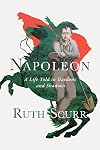
I find historical accounts far more interesting when they move beyond dates and battles and rulers. Although this book does focus on one ruler and does discuss all his battles, it also provides a more rounded picture of the man by discussing his gardens. As a result, we learn a little about his childhood, education, and his place in an age of discovery. Napoleon takes scientists, naturalists, and artists along with him to Italy and Egypt and brings home vast collections of plants, artworks, show more and the like. His interest in gardening is partially driven by his interest in new discoveries of the natural world, but it is also part of his drive to conquer, whether it be other countries or nature. He has an insatiable urge for new palaces and gardens as concrete symbols of his achievements. show less
Scurr strikes a superlative balance between explanation and flow of history as she depicts how the social justice warrior ascends to national importance only to fall into state-sponsored terror in the name of defending the republic. She brings into the narrative Marat, Danton and the other actors in the French revolution. No more a paragraph is devoted to Charlette Corday, the assassin of Marat, and even less space to an unemployed captain of the artillery who bemoans how the king might have show more saved himself if he had mounted his horse and led. This biography moves smoothly while taking the time to go into depth of situations and character. show less
Robespierre is one of the most interesting figures of the French Revolution and this biography aims to bring clarity to his shadowy reputation. Robespierre did not act in a vacuum (the French Revolution is populated with a range of idealistic and nefarious figures), but Scurr's take is that he did possess a kind of self-confidence that permitted him to believe he was morally in the right even as his policies resulted in increasing deaths. I doubt this book will be (nor should it be) the show more final word on Robespierre, but it is an interesting take on his dramatic life. show less
Lists
Awards


You May Also Like


Associated Authors
Statistics
- Works
- 10
- Also by
- 1
- Members
- 746
- Popularity
- #34,062
- Rating
- 4.1
- Reviews
- 12
- ISBNs
- 37
- Languages
- 6
- Favorited
- 1
