

David Eugene Smith (1860–1944)
Author of Number Stories of Long Ago
About the Author
Image credit: Lit2Go Beta
Series
Works by David Eugene Smith
History of Mathematics, Vol. 1: General Survey of the History of Elementary Mathematics (1925) 105 copies, 1 review
Number Stories of Long Ago 2 copies
Modern Primary Arithmetic 2 copies
Practical arithmetic 2 copies
Wentworth's Plane Geometry 1 copy
Number Stories of Long Ago 1 copy
A source book in mathematics 1 copy
A Source Book in Mathematics 1 copy
Machine-Shop Mathematics 1 copy
Computing jetons 1 copy
Grammar school arithmetic 1 copy
Associated Works
Tagged
Common Knowledge
- Other names
- SMITH, David Eugene
- Birthdate
- 1860
- Date of death
- 1944
- Gender
- male
- Nationality
- USA
- Associated Place (for map)
- USA
Members
Reviews
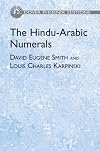
The Hindu-Arabic Numerals attempts to trace the origin of our present numbers from either the Arabs, the Hindus, or the Chinese. David E. Smith collects much of the, then known, sources for the early development in a thin scholarly tome. This is a reprint of the 1911 book.
In terms of writing, the book is, as one would expect from a 19th-century educated scholar, written with care, without flowery sentences, and with appropriate footnotes. (One note -- Smith does assume a working knowledge show more of Latin, French, and German and is happy to quote long passages in these languages mainly in his footnotes.) Smith has included many reproductions of early numbers and references to texts, both printed and manuscript, to justify his conclusions. Anyone wishing to study the history of numbers could easily draw up a long reading list from his footnotes. This is THE book to start with, if one wants a scholarly treatment.
There were two 'problems' I had with this book. First, it was published in 1911, so much of the secondary material referred to was published in the 1890's or earlier. I do wonder what, if any, new work has been done in this field.
Second, I had assumed that this book would trace the Hindu-Arabic numerals from their origin to their present form. Smith does as good a job as can be done in defending his theory of their origin. He traces the numerals to about the 12th century and then skims over any later development. I understand that history from the 13th century onward is a bit out of his normal period, but I was hoping of a bit better treatment.
Overall, this is a great starting point for studying where the numerals we use came from. I wish I had read this several years ago! show less
In terms of writing, the book is, as one would expect from a 19th-century educated scholar, written with care, without flowery sentences, and with appropriate footnotes. (One note -- Smith does assume a working knowledge show more of Latin, French, and German and is happy to quote long passages in these languages mainly in his footnotes.) Smith has included many reproductions of early numbers and references to texts, both printed and manuscript, to justify his conclusions. Anyone wishing to study the history of numbers could easily draw up a long reading list from his footnotes. This is THE book to start with, if one wants a scholarly treatment.
There were two 'problems' I had with this book. First, it was published in 1911, so much of the secondary material referred to was published in the 1890's or earlier. I do wonder what, if any, new work has been done in this field.
Second, I had assumed that this book would trace the Hindu-Arabic numerals from their origin to their present form. Smith does as good a job as can be done in defending his theory of their origin. He traces the numerals to about the 12th century and then skims over any later development. I understand that history from the 13th century onward is a bit out of his normal period, but I was hoping of a bit better treatment.
Overall, this is a great starting point for studying where the numerals we use came from. I wish I had read this several years ago! show less
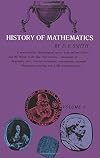
The beginning of this book was utterly fantastic, but once I hit the survey portion of Volume 1, the content dropped like a rock and I found myself back in the realm of dates and names ad nauseum. I'm looking forward to Volume 2, but I may need to take a little break first. I hope it gets away from the biographical surveys and back to the math and all its interrelations.
If any of you are curious about the book and looking for its strengths, I direct you to the section toward the start show more regarding pre-history and each culture's radix. There's such food for thought that I had to read it a paragraph at a time, savoring over each idea, letting them dissolve into my understanding. Brilliant stuff. show less
If any of you are curious about the book and looking for its strengths, I direct you to the section toward the start show more regarding pre-history and each culture's radix. There's such food for thought that I had to read it a paragraph at a time, savoring over each idea, letting them dissolve into my understanding. Brilliant stuff. show less

Edition: // Descr: x, 175 p. 19 cm. // Series: Our Debt to Greece and Rome Call No. { 950 S5m-D } Series Edited by George Depue Hadzsits and David Moore Robinson Introduction by Sir Thomas Little Heath Contains Notes, Bibliography, and Index. // //

Indeholder "Author's Preface", "III. The Field of Geometry", " Desargues on Perspective Triangles", " Translated from the French by Lao G. Simons", " Desargues on the 4-rayed Pencil", " Translated from the French by Vera Sanford", " Poncelet on Projective Geometry", " Translated from the French by Vera Sanford", " Peaucellier's Cell", " Translated from the French by Jekuthiel Ginsburg", " Pascal, 'Essay Pour Les Coniques'", " Translated from the French by Frances Marguerite Clarke", " show more Brianchon's Theorem", " Translated from the French by Nathan Altshiller-Court", " Brianchon and Poncelet on the Nine-point Circle Theorem", " Translated from the French by Morris Miller Slotnick", " Feuerbach on the Theorem Which Bears His Name", " Translated from the German by Roger A. Johnson", " The First Use of pi for the Circle Ratio", " Selection made by David Eugene Smith from the original work", " Gauss on the Division of a Circle into n Equal Parts", " Translated from the Latin by J. S. Turner", " Saccheri on Non-Euclidean Geometry", " Translated from the Latin by Henry P. Manning", " Lobachevsky on Non-Euclidean Geometry", " Translated from the French by Henry P. Manning", " Bolyai on Non-Euclidean Geometry", " Translated from the Latin by Henry P. Manning", " Fermat on Analytic Geometry", " Translated from the French by Joseph Seidlin", " Descartes on Analytic Geometry", " Translated from the French by David Eugene Smith and Marcia L. Latham", " Pohlke's Theorem", " Translated from the German by Arnold Emch", " Riemann on Surfaces and Analysis Situs", " Translated from the German by James Singer", " Riemann on the Hypotheses Which Lie at the Foundations of Geometry", " Translated from the German by Henry S. White", " Monge on the Purpose of Descriptive Geometry", " Translated from the French by Arnold Emch", " Regiomontanus on the Law of Sines for Spherical Triangles", " Translated from the Latin by Eva M. Sanford", " Regiomontanus on the Relation of the Parts of a Triangle", " Translated from the Latin by Vera Sanford", " Pitiscus on the Laws of Sines and Cosines", " Translated from the Latin by Jekuthiel Ginsburg", " Pitiscus on Burgi's Method of Trisecting an Arc", " Translated from the Latin by Jekuthiel Ginsburg", " De Moivre's Formula", " Translated from the Latin and from the French by Raymond Clare Archibald", " Clavius on Prosthaphaeresis as Applied to Trigonometry", " Translated from the Latin by Jekuthiel Ginsburg", " Clavius on Prosthaphaeresis", " Translated from the Latin by Jekuthiel Ginsburg", " Gauss on Conformal Representation", " Translated from the German by Herbert P. Evans", " Steiner on Quadratic Transformation between Two Spaces", " Translated from the German by Arnold Emch", " Cremona on Geometric Transformations of Plane Figures", " Translated from the Italian by E. Amelotti", " Lie's Memoir on a Class of Geometric Transformations", " Translated from the Norwegian by Martin A. Nordgaard", " Möbius, Cayley, Cauchy, Sylvester, and Clifford on Geometry of Four or More Dimensions", " Note by Henry P. Manning", " Möbius on Higher Space", " Translated from the German by Henry P. Manning", " Cayley on Higher Space", " Selected by Henry P. Manning", " Cauchy on Higher Space", " Translated from the French by Henry P. Manning", " Sylvester on Higher Space", " Selected by Henry P. Manning", " Clifford on Higher Space", " Selected by Henry P. Manning", "IV. The Field of Probability", " Fermat and Pascal on Probability", " Translated from the French by Vera Sanford", " De Moivre on the Law of Normal Probability", " Selected and edited by Helen M. Walker", " Legendre on Least Squares", " Translated from the French by Henry A. Ruger and Helen M. Walker", " Chebyshev (Tchebycheff) on Mean Values", " Translated from the French by Helen M. Walker", " Laplace on the Probability of Errors in the Mean Results of a Great Number of Observations, Etc", " Translated from the French by Julian L. C. A. Gÿs", "V. Field of the Calculus, Functions, Quaternions", " Cavalieri on an Approach to the Calculus", " Translated from the Latin by Evelyn Walker", " Fermat on Maxima and Minima", " Translated from the French by Vera Sanford", " Newton on Fluxions", " Translated from the Latin by Evelyn Walker", " Leibniz on the Calculus", " Translated from the Latin by Evelyn Walker", " Berkeley's 'Analyst'", " Selected and edited by Florian Cajori", " Cauchy on Derivatives and Differentials", " Translated from the French by Evelyn Walker", " Euler on Differential Equations of the Second Order", " Translated from the Latin by Florian Cajori", " Bernoulli on the Brachistochrone Problem", " Translated from the Latin by Lincoln La Paz", " Abel on Integral Equations", " Translated from the German by J. D. Tamarkin", " Bessel on His Functions", " Translated from the German by H. Bateman", " Möbius on the Barycentric Calculus", " Translated from the German by J. P. Kormes", " Hamilton on Quaternions", " Selected edited by Marguerite D. Darkow", " Grassmann on Ausdehnungslehre", " Translated from the German by Mark Kormes", "Index for Volume One and Volume Two", "Catalogue of Dover Books".
En mængde originale tekster indenfor matematik. Et skatkammer. show less
En mængde originale tekster indenfor matematik. Et skatkammer. show less
Jan 8, 2017Danish
You May Also Like


Associated Authors
Statistics
- Works
- 61
- Also by
- 6
- Members
- 822
- Popularity
- #31,033
- Rating
- 3.6
- Reviews
- 5
- ISBNs
- 45
- Languages
- 1
- Favorited
- 1