

James R. Newman (1907–1966)
Author of Gödel’s Proof
About the Author
Series
Works by James R. Newman
The World of Mathematics: A Small Library of the Literature of Mathematics from A'h-mose the Scribe to Albert Einstein (1956) 769 copies, 8 reviews
What is science? Twelve eminent scientists and philosophers explain their various fields to the layman (1961) 52 copies
The World of Mathematics - Volume 4 2 copies
the control of atomic energy 1 copy
Associated Works
An Introduction to Information Theory: Symbols, Signals, and Noise (1961) — Editor, some editions — 714 copies, 2 reviews
Tagged
Common Knowledge
- Canonical name
- Newman, James R.
- Legal name
- Newman, James Roy
- Birthdate
- 1907-08-03
- Date of death
- 1966-05-28
- Gender
- male
- Education
- Columbia University (LL.B)
City College of New York (BA) - Occupations
- lawyer
mathematician
mathematical historian
editor - Organizations
- Scientific American
New Republic
United States Government - Cause of death
- heart attack
- Nationality
- USA
- Birthplace
- New York, New York, USA
- Places of residence
- Chevy Chase, Maryland, USA
- Place of death
- Chevy Chase, Maryland, USA
- Associated Place (for map)
- Maryland, USA
Members
Reviews
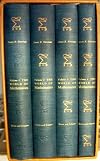
In my high school trigonometry course, I had to do a research paper on a topic in any area of mathematics that I chose. I went through dozens of library books on mathematics to decide what I wanted to write about. This was my favorite - a set - and I checked it out a second time. I loved learning about the history of mathematics. I thought it covered a wide range of mathematics, although it is primarily Eurocentric. It is also easy to read. When I went to college and spotted it at the nearby show more used books store, I bought it, even though I had a limited budget. show less

Nagel and Newman provide a nice, quick, and generally well written exposition of Godel's famous proof. This book can easily be read in an afternoon by anyone with the requisite background in logic.
They do a particularly nice job in their brief dissemination of the historical concerns that led up to the crisis in foundations in the late 19th and early 20th century. What's nice about this is that it puts Godel into context in a salient way. Godel without Hilbert is like Kant without Leibniz show more (and Wolff, I suppose). Given the narrow scope and short page count, Hilbert is covered well.
However, there are a couple of real problems with this book.
First, I do not believe that this book would really be that helpful for "the educated layman". Insofar as their target audience is concerned, the book is, perhaps, a failure. Why do I say this? Given its brevity, the authors are forced to introduce important bits of information without adequate exposition. For example, the notion of universal quantification makes its first appearance in the last twenty odd pages of the book and is explained in a sentence or two. This is fine for anyone that's had an intro logic course (and can recall what was covered) but is probably inadequate for the logical/mathematical novice. Furthermore, this example is just one case of something that occurs quite often throughout the book.
My second worry is that the actual mechanics of the proof are not presented lucidly. This is not altogether unexpected, but the fifteen pages or so that comprise the actual exposition of the proof seem to go by too quickly and sacrifice depth and clarity for readability and brevity. This may not be the authors' fault. I have doubts about whether or not one can successfully offer the sort of exegesis the authors are striving for. That is, I'm just not sure that anyone will ever pull off a lucid "Godel for Dummies". Similar problems plague Rebbecca Goldstein's attempt at this task in her recent Godel biography.
Final thought: I think this book would best serve the needs of a first year graduate student or advanced undergraduate in philosophy. For the student that has some background in logic (perhaps they've done a completeness proof for FOL or at least some proofs with quantifiers) but has yet to take a meta-logic course this book can provide a nicely structured overview of what the typical meta-logic course aims for. show less
They do a particularly nice job in their brief dissemination of the historical concerns that led up to the crisis in foundations in the late 19th and early 20th century. What's nice about this is that it puts Godel into context in a salient way. Godel without Hilbert is like Kant without Leibniz show more (and Wolff, I suppose). Given the narrow scope and short page count, Hilbert is covered well.
However, there are a couple of real problems with this book.
First, I do not believe that this book would really be that helpful for "the educated layman". Insofar as their target audience is concerned, the book is, perhaps, a failure. Why do I say this? Given its brevity, the authors are forced to introduce important bits of information without adequate exposition. For example, the notion of universal quantification makes its first appearance in the last twenty odd pages of the book and is explained in a sentence or two. This is fine for anyone that's had an intro logic course (and can recall what was covered) but is probably inadequate for the logical/mathematical novice. Furthermore, this example is just one case of something that occurs quite often throughout the book.
My second worry is that the actual mechanics of the proof are not presented lucidly. This is not altogether unexpected, but the fifteen pages or so that comprise the actual exposition of the proof seem to go by too quickly and sacrifice depth and clarity for readability and brevity. This may not be the authors' fault. I have doubts about whether or not one can successfully offer the sort of exegesis the authors are striving for. That is, I'm just not sure that anyone will ever pull off a lucid "Godel for Dummies". Similar problems plague Rebbecca Goldstein's attempt at this task in her recent Godel biography.
Final thought: I think this book would best serve the needs of a first year graduate student or advanced undergraduate in philosophy. For the student that has some background in logic (perhaps they've done a completeness proof for FOL or at least some proofs with quantifiers) but has yet to take a meta-logic course this book can provide a nicely structured overview of what the typical meta-logic course aims for. show less

The authors provide an overview of Kurt Gödel's 1931 proof regarding axiomatic demonstration in arithmetic. Gödel constructed his proof on the basis of Principia Mathematica by Whitehead and Russell, but this treatment does not presume a familiarity with that text. It does, however, place Gödel's work in the larger context of efforts to axiomatize arithmetic, an agenda notably defined by David Hilbert. The first five chapters set the stage for Gödel's proof in the history of mathematics show more and philosophy, while the fifth chapter discusses a critical idea underlying the operation of the proof. The long sixth chapter discusses the actual techniques and conclusions of the proof itself. A valuable final chapter outlines the larger implications and consequences, most especially and usefully discouraging misreadings which amount to "an invitation to despair or an excuse for mystery-mongering." (101) Interestingly, a secondary conclusion that they do support, is that algorithmic computers are unlikely ever to attain the equivalent of human consciousness. Gödel himself took his proof as support for a position of philosophical Realism, although it's not conclusive in that regard.
For anyone interested in the beauty of logic or the elegance of math, the mechanisms of Gödel's proof are impressive. This book by Nagel and Newman reads quickly--for a math book. The reader must be prepared to slow down and spend five to ten minutes on a page when getting into the thick of the mathematical concepts in use. The reward of doing so is an appreciation of an intellectual event that provided a turning-point in the philosophy of knowledge. show less
For anyone interested in the beauty of logic or the elegance of math, the mechanisms of Gödel's proof are impressive. This book by Nagel and Newman reads quickly--for a math book. The reader must be prepared to slow down and spend five to ten minutes on a page when getting into the thick of the mathematical concepts in use. The reward of doing so is an appreciation of an intellectual event that provided a turning-point in the philosophy of knowledge. show less
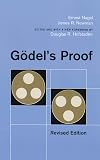
I remember my excitement when I read the first edition of this little gem back in 1999 (actually it was its Turkish translation). Being a young student of mathematics, it was impossible to resist reading a popular and clear account of maybe the most important theorem related to the fundamentals of axiomatic systems. After that came Hofstadter's "Gödel, Escher, Bach: An Eternal Golden Braid" which introduced more questions related to symbolic logical reasoning, artificial intelligence, show more cognitive science, and the consequences of Gödel's work in those ares. With that background and ten years after the second edition, it was truly an exciting second reading, a refresher that was both fun and putting lots of things into perspective. Hofstadter's foreword to this edition is a delight to read and ponder upon. On the other hand, I don't think this is a point strong enough to persuade most of the people who own the first edition anyway. But if you don't have the first edition and want a concise and clear explanation of what Gödel's work is all about then this book is definitely for you. show less
Lists
You May Also Like


Associated Authors
Statistics
- Works
- 43
- Also by
- 3
- Members
- 3,304
- Popularity
- #7,744
- Rating
- 4.0
- Reviews
- 25
- ISBNs
- 69
- Languages
- 10
