
André Alexis
Author of Fifteen Dogs: An Apologue
About the Author
André Alexis was born in Trinidad and raised in Canada, where he has lived since he was three years old. His works include Despair and Other Stories of Ottawa, Childhood, and Fifteen Dogs, which won the 2015 Scotiabank Giller Prize. His short fiction has appeared in literary journals and show more anthologies and he has also written extensively for radio and theater. Several of his plays have been produced in Vancouver and Toronto, and he has been a playwright-in-residence for the Canadian Stage Company. Alexis also writes reviews for The Globe and Mail, and he is a contributing editor to This Magazine, a bimonthly Canadian alternative journal. (Bowker Author Biography) Andre Alexis was born in Trinidad in 1957 & grew up in Canada. Alexis lives in Toronto. (Publisher Provided) show less
Image credit: Sari Ginsberg
Series
Works by André Alexis
The Journey Prize Anthology: Short Fiction from the Best of Canada's New Writers: 14 (2002) — Editor — 5 copies
Quindici cani 1 copy
Asylum 1 copy
Tagged
Common Knowledge
- Canonical name
- Alexis, André
- Birthdate
- 1957-01-15
- Gender
- male
- Occupations
- writer
- Organizations
- This Magazine
- Awards and honors
- Windham–Campbell Literature Prize (2017)
- Short biography
- Host and creator, CBC Radio’s Skylarking. Following his parents, who left Trinidad in the late 1950s, André Alexis and his younger sister immigrated to Canada in 1961. After a short stint in the southwestern Ontario town of Petrolia, Alexis and his family moved to Ottawa, where he subsequently spent most of his youth.
Alexis began his artistic career in the theater, and has held the position of playwright-in-residence at the Canadian Stage Company (CanStage) - Nationality
- Trinidad and Tobago (birth)
Canada (naturalized) - Birthplace
- Port of Spain, Trinidad and Tobago
- Places of residence
- Trinidad and Tobago
Toronto, Ontario, Canada
Ottawa, Ontario, Canada - Associated Place (for map)
- Ontario, Canada
Members
Reviews
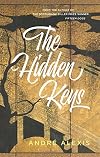
The Publisher Says: Parkdale’s Green Dolphin is a bar of ill repute, and it is there that Tancred Palmieri, a thief with elegant and erudite tastes, meets Willow Azarian, an aging heroin addict. She reveals to Tancred that her very wealthy father has recently passed away, leaving each of his five children a mysterious object that provides one clue to the whereabouts of a large inheritance. Willow enlists Tancred to steal these objects from her siblings and help her solve the puzzle.
A show more Japanese screen, a painting that plays music, a bottle of aquavit, a framed poem and a model of Frank Lloyd Wright’s Fallingwater: Tancred is lured in to this beguiling quest, and even though Willow dies before the puzzle is solved, he presses on.
As he tracks down the treasure, he must enlist the help of Alexander von Würfel, conceptual artist and taxidermist to the wealthy, and fend off Willow’s heroin dealers, a young albino named ‘Nigger’ Colby and his sidekick, Sigismund ‘Freud’ Luxemburg, a clubfooted psychopath, both of whom are eager to get their hands on this supposed pot of gold. And he must mislead Detective Daniel Mandelshtam, his most adored friend.
Inspired by a reading of Robert Louis Stevenson’s Treasure Island, The Hidden Keys questions what it means to be honourable, what it means to be faithful and what it means to sin.
I RECEIVED A DRC FROM THE PUBLISHER VIA NETGALLEY. THANK YOU.
My Review: I'm not sure how to tell you about this book. Let me tell you about honorable-thief Tancred:
This, I believe, explains Author Alexis's project nicely. He makes a mythic figure, of prodigious endowments of soul and talent, and sets him down at a nexus of Toronto's many worlds. He then seems to stand back and let 'er rip. It feels to me as though Author Alexis more or less "took dictation" when writing this story, and its immediate predecessor Fifteen Dogs (which I read almost a decade ago). The less-than-propulsive pace and the slightly meandering sense of place are, in my observation, best explained by this reality of the creative process. A more plot-driven project, one that was constructed not discovered, wouldn't keep this:
But, in this structure of discovery, Tancred's observation goes a long way towards making it plain that we are on a quest that surpasses its material goals. Part of the manifestation of this is the quite long time frame of the story...there is time, between Tancred meeting the woman on whose behalf he goes on this quest for and the time he actually begins the quest, for him to suffer an acutely painful personal tragedy...and its, politely said, abrupt ending.
It's a sad, death-haunted quest. It's a life-affirming choice for Tancred to take it on. It's amazing how much fun it is to watch a character decide to give up a past of anti-social thievery and remain a thief, only pro-social now. It's a book with a lot of good aperçus, and a few moments where one wonders what the heck Author Alexis was thinking. Tancred isn't a traditional series-mystery sleuth. The two books featuring him I've read aren't really properly series mysteries. They're no less delightful for that. The puzzle set by, and for, Tancred's client is resolved neatly at the end. Permaybehaps a bit too neatly...the source of the missing star.
But the reason it's got four of 'em is down to moments like this:
Heady stuff, philosophically in my wheelhouse, and not the only example I could've chosen. Spoiled for choice gets a book a good rating. show less
A show more Japanese screen, a painting that plays music, a bottle of aquavit, a framed poem and a model of Frank Lloyd Wright’s Fallingwater: Tancred is lured in to this beguiling quest, and even though Willow dies before the puzzle is solved, he presses on.
As he tracks down the treasure, he must enlist the help of Alexander von Würfel, conceptual artist and taxidermist to the wealthy, and fend off Willow’s heroin dealers, a young albino named ‘Nigger’ Colby and his sidekick, Sigismund ‘Freud’ Luxemburg, a clubfooted psychopath, both of whom are eager to get their hands on this supposed pot of gold. And he must mislead Detective Daniel Mandelshtam, his most adored friend.
Inspired by a reading of Robert Louis Stevenson’s Treasure Island, The Hidden Keys questions what it means to be honourable, what it means to be faithful and what it means to sin.
I RECEIVED A DRC FROM THE PUBLISHER VIA NETGALLEY. THANK YOU.
My Review: I'm not sure how to tell you about this book. Let me tell you about honorable-thief Tancred:
Tancred was a tall and physically imposing black man, but he was also approachable. He could not sit anywhere for long without someone starting a conversation. This was, his friends liked to say, because his blue eyes were startling and his voice deep and avuncular. So, when he wanted to be alone without necessarily being alone, Tancred answered in French—his maternal tongue—when spoken to by strangers. Few who came into the Dolphin knew the language.
This, I believe, explains Author Alexis's project nicely. He makes a mythic figure, of prodigious endowments of soul and talent, and sets him down at a nexus of Toronto's many worlds. He then seems to stand back and let 'er rip. It feels to me as though Author Alexis more or less "took dictation" when writing this story, and its immediate predecessor Fifteen Dogs (which I read almost a decade ago). The less-than-propulsive pace and the slightly meandering sense of place are, in my observation, best explained by this reality of the creative process. A more plot-driven project, one that was constructed not discovered, wouldn't keep this:
The city had been built by people from innumerable elsewheres. It was a chaos of cultures ordered only by its long streets. It belonged to no one and never would, or maybe it was a million cities in one, unique to each of its inhabitants, belonging to whoever walked its streets.
But, in this structure of discovery, Tancred's observation goes a long way towards making it plain that we are on a quest that surpasses its material goals. Part of the manifestation of this is the quite long time frame of the story...there is time, between Tancred meeting the woman on whose behalf he goes on this quest for and the time he actually begins the quest, for him to suffer an acutely painful personal tragedy...and its, politely said, abrupt ending.
It's a sad, death-haunted quest. It's a life-affirming choice for Tancred to take it on. It's amazing how much fun it is to watch a character decide to give up a past of anti-social thievery and remain a thief, only pro-social now. It's a book with a lot of good aperçus, and a few moments where one wonders what the heck Author Alexis was thinking. Tancred isn't a traditional series-mystery sleuth. The two books featuring him I've read aren't really properly series mysteries. They're no less delightful for that. The puzzle set by, and for, Tancred's client is resolved neatly at the end. Permaybehaps a bit too neatly...the source of the missing star.
But the reason it's got four of 'em is down to moments like this:
“I believe God is an impediment to good. All those people acting in his name don’t bother to think their actions through. They’re incapable of good...No, that’s not right...There are any number of them who accidentally do good. ... What I mean is it’s more difficult to do good with God in the equation.”
Heady stuff, philosophically in my wheelhouse, and not the only example I could've chosen. Spoiled for choice gets a book a good rating. show less
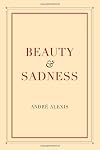
As the subtitle, “Or the Intermingling of Life and Literature,” suggests, this is not a mere collection of fictions and essays. The fictions, themselves set off in a section entitled, “Echoes,” are highly personal pastiches, of a sort, of such luminaries as Maupassant, Cocteau, Henry James and Carlos Fuentes, and Kawabata. Some are tours de force as Alexis captures the essence of an earlier writer’s style. But each are also very clearly Alexis-stories. Here you find the calm, show more poised prose, the delicate turn of phrase, the artful exercise. And ghosts. Because each of these writers with whom Alexis chooses to engage have themselves also peopled their prose with spirits. And the state of ghostliness, Alexis notes in his introduction, is not unlike his own state as an immigrant in Canada, not entirely present, but rather haunting the present.
The second part of the collection consists in two essays or engagements or reconciliations with Tolstoy’s Ivan Illych and the works of Samuel Beckett, plus a loose memoir of Alexis’ writing life from the time he moved to Toronto to what was the present at the time of writing. In these, as in the fiction pieces, Alexis is very present. And to some extent we gain an impression of André Alexis, the writer.
The writing throughout is never less than clear and concise, and characteristically distanced from emotion even in emotional scenes (both fictive and real). Alexis is a thinking writer, as you might expect for someone who aligns himself with the Oulipo group. He is also, perhaps surprisingly, harshly critical of some other writers and critics in the Canadian literary establishment. But he often undercuts his own harsh opinions, at times second-guessing himself. I found the whole to be interesting and well worth reading even if not wholly persuasive.
Gently recommended. show less
The second part of the collection consists in two essays or engagements or reconciliations with Tolstoy’s Ivan Illych and the works of Samuel Beckett, plus a loose memoir of Alexis’ writing life from the time he moved to Toronto to what was the present at the time of writing. In these, as in the fiction pieces, Alexis is very present. And to some extent we gain an impression of André Alexis, the writer.
The writing throughout is never less than clear and concise, and characteristically distanced from emotion even in emotional scenes (both fictive and real). Alexis is a thinking writer, as you might expect for someone who aligns himself with the Oulipo group. He is also, perhaps surprisingly, harshly critical of some other writers and critics in the Canadian literary establishment. But he often undercuts his own harsh opinions, at times second-guessing himself. I found the whole to be interesting and well worth reading even if not wholly persuasive.
Gently recommended. show less
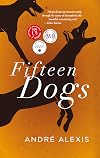
This book keeps showing up on book prize lists, so I figured there's gotta be something good about it. I knew I was going to like it at least a little, since it's basically an AI story - dogs gain consciousness through divine intervention. It felt like a spin-off of [b:Mort e |22181034|Mort e |Robert Repino|https://d.gr-assets.com/books/1416178734s/22181034.jpg|41529181] actually, in a non-apocalyptic setting. 15 dogs suddenly find themselves with a new awareness of the world, and I found show more myself hoping desperately for their happiness. This has come about because of a bet between Apollo and Hermes, who've wagered a year of servitude against the happiness or lack thereof of the dogs at the time of their death (so, yes, dogs die in this book - keep that in mind if you're sensitive about this!). There's some goddish bickering in the background of the story that affects the lives of the dogs in different ways, but really it's about how the dogs deal with knowing. They quickly create a new language among themselves, and some embrace it quickly by creating puns and poetry, while others try to cling to their essential "dogness", whatever that is, and struggle to reconcile what they see as their fundamental being with a new-found intelligence and knowledge. But they're different...they don't fit in the human world, but not in the dog world either. I can't help but call the gods' wager unfair, as they've created self-aware outcasts and expect to compare their level of unhappiness with humans who were born into a world expecting their self-awareness. How happy can you be to suddenly know the extent to which humans condescend to you? But it's only condescending if you have the knowledge to understand why. Baby talk is condescending to adults but for babies it's perfectly acceptable (and helps them understand language faster). Is it fair to be angry that someone spoke to you in a way you perceive as condescending if it wouldn't have been condescending before you could perceive condescension? And if the someone isn't aware that you can perceive condescension now? That was kind of confusing but the dogs weren't really thinking too much about how humans see regular dogs. They did a lot of reacting, and the nature of their reactions were different from before, and it scared and intrigued them. Anyway, I liked this book. I hope it wins one of the awards it was nominated for. show less
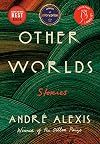
André Alexis is such a fine writer, full of subtlety and insight, that it is not surprising to find the stories collected here to be models of the story-telling art. They are also a touch eerie, sometimes frightening, and, when he wishes, can evoke almost any era. There is something almost 19th century about his style. You may also, like me, encounter diction that is new to you, despite never having experienced that in years of reading. It almost makes you feel young again.
I especially show more liked “Contrition: An Isekai,” and “Houyhnhnm.” The first finds a 70-year-old magic man from old Trinidad awakening in the body of a 7-year-old boy in Petrolia, Ontario. Somehow Alexis makes such a transformation utterly believable. In the latter story, a father and later his son talk to a horse who loves bad dad-jokes. Is it strange that such a story could also be filled with sentiment and longing?
All of the stories here are excellent and the elegy that ends the collection is especially worth reading as it gives an insight into Alexis’ development as a writer, reader, and linguist.
Warmly recommended. show less
I especially show more liked “Contrition: An Isekai,” and “Houyhnhnm.” The first finds a 70-year-old magic man from old Trinidad awakening in the body of a 7-year-old boy in Petrolia, Ontario. Somehow Alexis makes such a transformation utterly believable. In the latter story, a father and later his son talk to a horse who loves bad dad-jokes. Is it strange that such a story could also be filled with sentiment and longing?
All of the stories here are excellent and the elegy that ends the collection is especially worth reading as it gives an insight into Alexis’ development as a writer, reader, and linguist.
Warmly recommended. show less
Lists
Awards


You May Also Like


Statistics
- Works
- 21
- Members
- 1,856
- Popularity
- #13,864
- Rating
- 3.8
- Reviews
- 101
- ISBNs
- 86
- Languages
- 6
- Favorited
- 5
