

Kevin Costner
Author of Dances with Wolves [1990 film]
About the Author
Image credit: Kevin Costner
Works by Kevin Costner
Dances With Wolves: The Illustrated Story of the Epic Film (Newmarket Pictorial Moviebooks) (1990) — Author — 97 copies, 1 review
4 Movie Marathon: Post-Apocalyptic Collection (Waterworld / Skyline / Children of Men / Doomsday) (2016) 11 copies
4 Film Favorites: Kevin Costner (Robin Hood: Prince of Thieves, Wyatt Earp, The Postman, JFK) (2013) — Director — 10 copies
4 Film Favorites: Kevin Costner (The Bodyguard: Special Edition, Rumor Has It, Tin Cup, Upside of Anger) (2010) 8 copies
Master and Commander / Braveheart / Dances With Wolves (Triple Feature Video) — Director — 2 copies
Das Baumhaus 1 copy
Silverado [DVD] 1 copy
Horizon BD [Blu-ray] 1 copy
Senza Via Di Scampo 1 copy
Sens Unique 1 copy
Bodyguard 1 copy
Jusqu'au bout du rêve 1 copy
Associated Works
Yellowstone: Season Two — Actor — 55 copies
Yellowstone: Season Four — Actor — 34 copies
Yellowstone: Season Five — Actor — 20 copies
Yellowstone: Seasons 1 & 2 — Actor — 1 copy
Stacy’s Knights [1983 film] — Actor — 1 copy
500 Nations: Vol. 8 Attack on Culture [VHS] — Narrator — 1 copy
500 Nations: Vol. 6 Removal [VHS] — Narrator — 1 copy
Tagged
Common Knowledge
- Canonical name
- Costner, Kevin
- Legal name
- Costner, Kevin Michael
- Birthdate
- 1955-01-18
- Gender
- male
- Education
- California State University, Fullerton
- Occupations
- actor
film producer
film director
musician
screenwriter - Awards and honors
- Academy Award (Best Directory, 1991, "Dances with Wolves")
- Nationality
- USA
- Birthplace
- Lynwood, California, USA
- Associated Place (for map)
- California, USA
Members
Reviews
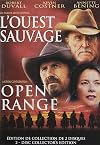
Every decade or so, either Clint Eastwood or Kevin Costner makes an artistic and entertaining western in an attempt to revive the genre. Open Range was Costner's turn, and what he did was absolutely astonishing. He wanted to return to the simple and bare-bones idea of the West and what it was, both in reality and in our minds. He succeeded on a grand scale, but in doing so may have gone even further. In many respects, the film Costner made is so fundamental, so spare and lean, it holds more show more in common with films of the silent era than those made when sound came along. That is probably, in my opinion, why some critics didn’t like it.
The story of two saddle pals grazing their cattle on free range until a rancher holding court over a town attempts to stop them, is a staple of the genre. These circumstances will always force a confrontation between good and evil, as it does here. Costner's character, Charley Waite, has a deadly past he would just as soon forget. It is a side buried so deep that he has not even shown it to his traveling companion of ten years, Boss Spearman (Robert Duvall).
Duvall gives another magnificent performance as the seasoned cowpoke who has ridden with Charley for years, but knows very little about him. There is something mythic about these omissions, showing the West as it was; men sizing each other up without need of further questions. Boss is a tough cowboy who has always suspected the gun on Charley's hip had many stories to tell, but respected the man wearing it enough not to ask. In addition, the image of the soft-spoken cowboy whose dog means as much to him as any man, is shown not once, but twice during this film. It was the one attachment a man could have without worry because his dog was a loyal friend who could never be turned.
Open Range takes on mythic proportions because it remains simple, emphasizing the values of loyalty and goodness we associate with our image of the West and those values. Costner’s film does not shy away from pointedly showing that good men sometimes had to do bad things in order to enforce those values. It was the willingness and courage of men like Charley and Boss that would shape the West into a place where people could live free. Costner's homage to the American cowboy and gunfighter also highlights the old-fasioned side of men who spent long hours together but were flustered at the sight of a pretty woman — having seen one so seldom. This aspect is highlighted when Charley is reluctant to engage in a romance with the pretty sister ( Annette Bening) of the town's doctor; this is not due to shyness, but Charley’s shame at some of the killing he has done. Charley feels she would look at him in disgust if she knew what real violence was like, and learned that no man was more capable of it than he. The scenes between Charley and Sue are tender and sweet, reminiscent of a silent film romance, shot in soft-focus.
The climatic gunfight is one of the finest ever filmed. It is long and ugly, rather than quick and well-staged, just as they really were. Charley’s speech to Boss as he preps the tough cowboy on what to expect, explaining how each man will react, is one of the great moments in western film. It is not the gunfight itself, however, which adds meaning to the outcome. It is Charley’s loneliness, shown by his picking out a pattern for a gift to Sue should he not survive. You truly get the sense he would almost prefer he did not, so he would not have to face her once the violence of which he is most capable is brought to light. But Costner shows the women of the West to be something special also. Bening's character, Sue, may own some good china, but she can drink from a tin cup and tend to the wounded as well. She is strong, as women who went West had to be, yet she does not lose her femininity.
Fine performances from Costner, Duvall, and Annette Bening, and a supporting cast that includes Michael Jeter in his final film, Michael Gambon, Diego Luna, Abraham Benrubi, and Dean McDermott round out this tale of the West’s changing landscape. Breathtaking shots of open prairie are augmented by a timeless cowboy saga. Some failed to see this film’s great virtue at the time of its release, but there is a timeless feel to the storytelling here. One thinks of silent westerns made from old-fashioned books like Riders of the Purple Sage when watching this beautifully filmed homage to the West. Films with sound and those without are two very different art forms with a strong connection to each other. Costner deftly managed to bridge the gap between those two art forms in Open Range, and the results are unforgettable. show less
The story of two saddle pals grazing their cattle on free range until a rancher holding court over a town attempts to stop them, is a staple of the genre. These circumstances will always force a confrontation between good and evil, as it does here. Costner's character, Charley Waite, has a deadly past he would just as soon forget. It is a side buried so deep that he has not even shown it to his traveling companion of ten years, Boss Spearman (Robert Duvall).
Duvall gives another magnificent performance as the seasoned cowpoke who has ridden with Charley for years, but knows very little about him. There is something mythic about these omissions, showing the West as it was; men sizing each other up without need of further questions. Boss is a tough cowboy who has always suspected the gun on Charley's hip had many stories to tell, but respected the man wearing it enough not to ask. In addition, the image of the soft-spoken cowboy whose dog means as much to him as any man, is shown not once, but twice during this film. It was the one attachment a man could have without worry because his dog was a loyal friend who could never be turned.
Open Range takes on mythic proportions because it remains simple, emphasizing the values of loyalty and goodness we associate with our image of the West and those values. Costner’s film does not shy away from pointedly showing that good men sometimes had to do bad things in order to enforce those values. It was the willingness and courage of men like Charley and Boss that would shape the West into a place where people could live free. Costner's homage to the American cowboy and gunfighter also highlights the old-fasioned side of men who spent long hours together but were flustered at the sight of a pretty woman — having seen one so seldom. This aspect is highlighted when Charley is reluctant to engage in a romance with the pretty sister ( Annette Bening) of the town's doctor; this is not due to shyness, but Charley’s shame at some of the killing he has done. Charley feels she would look at him in disgust if she knew what real violence was like, and learned that no man was more capable of it than he. The scenes between Charley and Sue are tender and sweet, reminiscent of a silent film romance, shot in soft-focus.
The climatic gunfight is one of the finest ever filmed. It is long and ugly, rather than quick and well-staged, just as they really were. Charley’s speech to Boss as he preps the tough cowboy on what to expect, explaining how each man will react, is one of the great moments in western film. It is not the gunfight itself, however, which adds meaning to the outcome. It is Charley’s loneliness, shown by his picking out a pattern for a gift to Sue should he not survive. You truly get the sense he would almost prefer he did not, so he would not have to face her once the violence of which he is most capable is brought to light. But Costner shows the women of the West to be something special also. Bening's character, Sue, may own some good china, but she can drink from a tin cup and tend to the wounded as well. She is strong, as women who went West had to be, yet she does not lose her femininity.
Fine performances from Costner, Duvall, and Annette Bening, and a supporting cast that includes Michael Jeter in his final film, Michael Gambon, Diego Luna, Abraham Benrubi, and Dean McDermott round out this tale of the West’s changing landscape. Breathtaking shots of open prairie are augmented by a timeless cowboy saga. Some failed to see this film’s great virtue at the time of its release, but there is a timeless feel to the storytelling here. One thinks of silent westerns made from old-fashioned books like Riders of the Purple Sage when watching this beautifully filmed homage to the West. Films with sound and those without are two very different art forms with a strong connection to each other. Costner deftly managed to bridge the gap between those two art forms in Open Range, and the results are unforgettable. show less
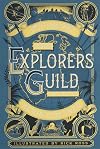
The Explorer's Guild caught my eye back in October as I was browsing one of my favorite bookstores in Alaska, Fireside Books in Palmer. It is a beauty to look at and it is filled with pages and pages of fine illustrations including colored plates. They aren't real colored plates, but they are inserted into the book to be reminiscent of colored plates. Which gets me to the main point to be made about this book. If you don't know what colored plates are or you simply aren't curious about what show more those might be, then its a good sign you are not going to enjoy this book.
This is not exactly an easy story, much less a graphic novel, to just pick up and digest easily. It is written in a dense long form style reminiscent of late 1800's adventure writing (HG Wells, Conrad, ect). Baird has done a great job of replicating that style of writing. In fact, I would wager that the whole point of this book is to show that a book can still be written in that style. There are strange and interesting things going on in the story but you have to be patient. If you are expecting a fast paced pulp fiction adventure, this is not it. It also helps tremendously if one has more than a passing knowledge of World War I era events. There are 784 pages and things don't start really making a whole of sense until page 500 or so. In fact, the last 50 pages were incredibly interesting and made the previous 700 quite meaningful. I found myself flipping back to previous chapters and having those "aha" moments. I love these types of books. I savor them. Neal Stephenson's writing style comes to mind, but with a half graphic novel style.
Again, this graphic novel/traditional narrative split isn't for everyone, much less the writing style. But, I for one look forward to any follow up volumes. Hopefully they won't take 10 more years to materialize. show less
This is not exactly an easy story, much less a graphic novel, to just pick up and digest easily. It is written in a dense long form style reminiscent of late 1800's adventure writing (HG Wells, Conrad, ect). Baird has done a great job of replicating that style of writing. In fact, I would wager that the whole point of this book is to show that a book can still be written in that style. There are strange and interesting things going on in the story but you have to be patient. If you are expecting a fast paced pulp fiction adventure, this is not it. It also helps tremendously if one has more than a passing knowledge of World War I era events. There are 784 pages and things don't start really making a whole of sense until page 500 or so. In fact, the last 50 pages were incredibly interesting and made the previous 700 quite meaningful. I found myself flipping back to previous chapters and having those "aha" moments. I love these types of books. I savor them. Neal Stephenson's writing style comes to mind, but with a half graphic novel style.
Again, this graphic novel/traditional narrative split isn't for everyone, much less the writing style. But, I for one look forward to any follow up volumes. Hopefully they won't take 10 more years to materialize. show less
I'm going to be truthful, some of the time I felt this story was jilted and went back and forth between characters a bit much and didn't follow at first and was confusing, that said I still really, really liked it. One of the best books I read in 2015. It's a long one and you need to concentrate on what you're reading or you'll be lost in no time, but I still enjoyed the book. I liked the writing, I thought the graphic novel part of it was very well done. I liked the characters, I was even show more surprised a few times. What more could you ask for, really? Awesome book. 4.5 out of 5 stars. I would recommend this to any adult interested in adventure books. show less
I loved everything about this book. Well written, if in stylized/retro-genre-prose; lots of fun characters to care about; entertainingly and unapologetically derivative of Kiplingesque adventures; beautiful to look at and hold...it's all great. I also really enjoyed doing some background work on the book itself, watching many interviews with the authors on the many year journey it took to get the story told. In addition, I was dubious at first of Costner's involvement, but it appears that he show more did actual writing and story/character development here. Good stuff. show less
Lists
Awards


You May Also Like


Associated Authors
Statistics
- Works
- 33
- Also by
- 62
- Members
- 2,015
- Popularity
- #12,775
- Rating
- 3.8
- Reviews
- 24
- ISBNs
- 38
- Languages
- 1
