
Michael Blake (2) (1945–2015)
Author of Dances with Wolves
For other authors named Michael Blake, see the disambiguation page.
About the Author
Michael Blake was born Michael Lennox Webb in Fort Bragg, North Carolina on July 5, 1945. He joined the Air Force and was assigned to the public information office and began writing for the base newspaper. He attended the University of New Mexico before going to film school at the University of show more California, Berkeley. One of his first screenplays, Stacy's Knights, was produced in 1983 and starred Kevin Costner. He continued to write scripts for the next several years, but nothing he wrote made it to the screen. After reading Bury My Heart at Wounded Knee by Dee Brown, Blake had the idea for Dances with Wolves. Costner suggested he write a book instead of a screenplay. The book was published in 1988. Blake had just lost his job as a dishwasher when Costner asked him to adapt his own novel into a screenplay. The Dances with Wolves film was released in 1990. Blake received an Academy Award for Best Adapted Screenplay. His other novels included Airman Mortensen and The Holy Road. He died from heart failure on May 2, 2015 at the age of 69. (Bowker Author Biography) show less
Image credit: The Agency Group
Series
Works by Michael Blake
Dances With Wolves: The Illustrated Story of the Epic Film (Newmarket Pictorial Moviebooks) (1990) — Author; Author — 97 copies, 1 review
Words of Love: A Collection of Winning Short Stories, Essays, and Poems by America's Young Writers (1992) 1 copy
Vahalla 1 copy
La danza dell'ultimo bisonte 1 copy
Associated Works
Dances With Wolves: The Illustrated Screenplay and Story Behind the Film (1991) — Comments — 45 copies, 1 review
Reader's Digest Auswahlbücher 185 : Der mit dem Wolf tanzt/ Waldfeuer/ Der Weg zurück ins Licht/ Der Adler ist entkommen (1992) 4 copies
Reader's Digest Auswahlbücher Bestseller-Sonderband: Die Firma / Und Gäbe es Hoffnung Nicht / Der Mit dem Wolf Tanzt (1995) — Author — 4 copies
Het Beste Boek 151: Vlucht in het verleden / De dans van de wolf / De Cock en de smekende dood / Een waaier van geluk (1991) — Author — 2 copies, 1 review
Tagged
Common Knowledge
- Canonical name
- Blake, Michael
- Legal name
- Blake, Michael Lennox
- Other names
- Webb, Michael Lennox (birth name)
- Birthdate
- 1945-07-05
- Date of death
- 2015-05-02
- Gender
- male
- Education
- University of New Mexico
- Occupations
- novelist
screenwriter
memoirist
non-fiction author - Organizations
- United States Air Force
- Awards and honors
- Academy Award (Best Adapted Screenplay, 1990)
Golden Globe Award for Best Screenplay (1990)
Writers Guild of America, Best Screenplay Based on Material from Another Medium (1991) - Relationships
- Mortensen, Marianne (spouse)
- Cause of death
- heart failure
Hodgkin's disease - Nationality
- USA
- Birthplace
- Fort Bragg, North Carolina, USA
- Places of residence
- Los Angeles, California, USA
Tucson, Arizona, USA - Place of death
- Tucson, Arizona, USA
- Associated Place (for map)
- USA
Members
Reviews
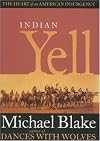
In the afterword of his book, Michael Blake makes a statement that sums up what has been germinating in my mind as I’ve been read three books on the Native Americans in a row. He states that
“…All this from the “greatest nation on earth,” which adopted the actions it took toward American Indians in the nineteenth century as a model of behavior toward people of different beliefs in the twentieth century and beyond.
The United States will never live up to its glorified billing as a show more beacon for humanity so long as it refuses to legitimately recognize and respect other cultures, starting with the Indian citizens living within its borders today.”
And it’s true that as I read of the callous disregard for, or direct targeting of, “civilians”, it seemed eerily familiar to America’s wars in the late 20th and present centuries. The imprisonment of Indian leaders and tribesmen without formal charges or a declaration of war that would make them a POW sounds eerily like Guantanamo. Oh, and the rampant corruption of the military contractors (military-industrial complex, anyone?) is evident throughout the pages.
Maybe it also exposes a hole in our constitutional government as well. The checks and balances supposed to keep our government from abusing power definitely seems to get in the way of upholding treaties. How can you have a treaty with guaranteed annuities that is subject to Congress’ penchant for politically motivated budget cutting? It’s hard to blame the Native Americans for not being able to stay on a reservation when they are starving.
I read Indian Yell after reading Mari Sandoz’ “Cheyenne Autumn” and Thomas Powers “The Killing of Crazy Horse”. While those books are more specific in their focus, Blake touches quickly on many of the tribes of the western plains, from the Apache, Comanche, and Kiowa in the south to the Cheyenne and Lakota(Sioux) in the north. No romanticizing or glossing over the behavior of the government here. For those interested in more details, Blake provides recommended reading at the end of each chapter. This is a great overview of the destruction of the greatest tribes of the western plains and would be a good book to start gaining a more balance view of the settlement of the American west. show less
“…All this from the “greatest nation on earth,” which adopted the actions it took toward American Indians in the nineteenth century as a model of behavior toward people of different beliefs in the twentieth century and beyond.
The United States will never live up to its glorified billing as a show more beacon for humanity so long as it refuses to legitimately recognize and respect other cultures, starting with the Indian citizens living within its borders today.”
And it’s true that as I read of the callous disregard for, or direct targeting of, “civilians”, it seemed eerily familiar to America’s wars in the late 20th and present centuries. The imprisonment of Indian leaders and tribesmen without formal charges or a declaration of war that would make them a POW sounds eerily like Guantanamo. Oh, and the rampant corruption of the military contractors (military-industrial complex, anyone?) is evident throughout the pages.
Maybe it also exposes a hole in our constitutional government as well. The checks and balances supposed to keep our government from abusing power definitely seems to get in the way of upholding treaties. How can you have a treaty with guaranteed annuities that is subject to Congress’ penchant for politically motivated budget cutting? It’s hard to blame the Native Americans for not being able to stay on a reservation when they are starving.
I read Indian Yell after reading Mari Sandoz’ “Cheyenne Autumn” and Thomas Powers “The Killing of Crazy Horse”. While those books are more specific in their focus, Blake touches quickly on many of the tribes of the western plains, from the Apache, Comanche, and Kiowa in the south to the Cheyenne and Lakota(Sioux) in the north. No romanticizing or glossing over the behavior of the government here. For those interested in more details, Blake provides recommended reading at the end of each chapter. This is a great overview of the destruction of the greatest tribes of the western plains and would be a good book to start gaining a more balance view of the settlement of the American west. show less
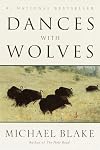
I have conflicting ideas about this novel. It is a fast, dramatic, and perhaps even provides a well intentioned perspective on how Native America has been treated. At the same time, this work is deeply problematic. While the entire work is a fantasy, I marvel at the arrogance at the heart of the novel--that a regular army solider would rise up in one season to become one of the most respected Comanche--a person on the same standing as shaman and chief. The ideas about assimilation are show more complex and the novel does more than the film, but this central premise of the novel is disturbing. To be more charitable, maybe the mass audience needed a white person to be the savior and to tell the story in order to make it interesting and relatable. For drawing attention to one of America's darkest histories, the novel does well--to imply that an average outsider can integrate and then lead the tribe is absurd. Can we imagine a novel where a Native American wonders into an American camp, and then in the matter of months is advising Washington and leading the war against the British? Very worth reading, but absolutely essential that the reader unpacks the message more deeply. I hope this is the entry point for others to learn the history of how Native America was cheated and plundered. show less

Lieutenant John J. Dunbar is posted to Fort Sedgewick but arrives to find it empty and abandoned. Deciding to obey his orders, Dunbar makes himself as useful as possible while waiting for his situation to change. He spends his days and nights doing chores alone except for the company of a wolf that occasionally stops by to watch. Then one day Dunbar spies an Indian scout. Convinced that he is about to be raided, he buries the Fort's weapons, intent that the only bounty the natives will gain show more is his own death. A party does come back for Dunbar and takes him to their camp, wanting to learn the white man's weaknesses from him. Dunbar, eventually renamed Dances With Wolves, becomes completely assimilated into the tribe and with them his deep loneliness is cured. Army or not, he is Comanche now.
Like most families from Appalachia, mine has Cherokee blood on both sides, and I've always had a fascination for films and books with Native American characters (especially in their interactions with Caucasians). But while I do enjoy the genre, it's always difficult for me not to feel, even in the smallest measure, the guilt of being part of the culture who assaulted the Great Plains and the Native American people. While reading this book I had the sensation that Blake feels a little of that too. The story of Dunbar falling in love with the Comanches and their way of life mirrors something similar in Blake. His passion and great admiration make this a very engaging read - it goes very quickly and it left me wanting more. show less
Like most families from Appalachia, mine has Cherokee blood on both sides, and I've always had a fascination for films and books with Native American characters (especially in their interactions with Caucasians). But while I do enjoy the genre, it's always difficult for me not to feel, even in the smallest measure, the guilt of being part of the culture who assaulted the Great Plains and the Native American people. While reading this book I had the sensation that Blake feels a little of that too. The story of Dunbar falling in love with the Comanches and their way of life mirrors something similar in Blake. His passion and great admiration make this a very engaging read - it goes very quickly and it left me wanting more. show less
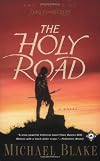
The Holy Road by Michael Blake is the sequel to Dances With Wolves and further explores the downfall of the North American Plain Indians, in this case, the Comanche. The Plain Indians were located in a very unfortunate place for them. Originally bypassed as the white people travelled through on their way to the gold fields of California and rich farmlands of Oregon, eventually these vast grasslands attracted settlers who wished to set their roots in the prairie heartlands. At the same time show more the government in Washington was planning on expanding to the Pacific Ocean. The best way to bind the country together was to build a railroad that would connect from sea to sea.
As the Comanche hear about other Indians that are being forced onto reservations, they fear what is coming for them and dread the possibility that their way of life will be stripped from them and they will be forced to live according to the white man’s rules. The Comanche nation was a very distinct community ruled by it’s own conventions, customs and societies that, unfortunately was neither understood by or meshed with white people’s idea of government. In those days both sides felt that what could not be understood must change or be wiped out.
In the Holy Road, Blake once again tells the story of the man who came to be known as Dances With Wolves and his wife, captured as a child, Stands With Fist. More than any other Comanche, he knows what the coming of the railroad and the influx of settlers will do to the Indians. Unfortunately, time is not on their side and while he and his two elder children are out hunting, their village is hit by Texas Rangers. The Rangers realize that Stands With Fist is a white woman and take her and her young daughter with them. Dances With Wolves is faced with the difficult task of reuniting his family.
Michael Blake tells an excellent story while at the same time, filling in with broad strokes the bigger picture of one nation crumbing as it must make way for a newer, stronger power. An emotional read but without the closer, personal feel of Dances With Wolves. I do, however, highly recommend both these books to anyone interested in this time period in American history. show less
As the Comanche hear about other Indians that are being forced onto reservations, they fear what is coming for them and dread the possibility that their way of life will be stripped from them and they will be forced to live according to the white man’s rules. The Comanche nation was a very distinct community ruled by it’s own conventions, customs and societies that, unfortunately was neither understood by or meshed with white people’s idea of government. In those days both sides felt that what could not be understood must change or be wiped out.
In the Holy Road, Blake once again tells the story of the man who came to be known as Dances With Wolves and his wife, captured as a child, Stands With Fist. More than any other Comanche, he knows what the coming of the railroad and the influx of settlers will do to the Indians. Unfortunately, time is not on their side and while he and his two elder children are out hunting, their village is hit by Texas Rangers. The Rangers realize that Stands With Fist is a white woman and take her and her young daughter with them. Dances With Wolves is faced with the difficult task of reuniting his family.
Michael Blake tells an excellent story while at the same time, filling in with broad strokes the bigger picture of one nation crumbing as it must make way for a newer, stronger power. An emotional read but without the closer, personal feel of Dances With Wolves. I do, however, highly recommend both these books to anyone interested in this time period in American history. show less
Lists
Awards


You May Also Like


Associated Authors
Statistics
- Works
- 13
- Also by
- 4
- Members
- 3,274
- Popularity
- #7,815
- Rating
- 4.0
- Reviews
- 62
- ISBNs
- 173
- Languages
- 13
