
CBC / Canadian Broadcasting Corporation
Author of Canada: A People's History: Volume One
About the Author
Image credit: cbc.ca
Series
Works by CBC / Canadian Broadcasting Corporation
The Lost Massey Lectures: Recovered Classics from Five Great Thinkers (CBC Massey Lecture) (2007) 112 copies, 2 reviews
More Lost Massey Lectures: Recovered Classics from Five Great Thinkers (CBC Massey Lecture) (2008) 59 copies, 1 review
Way of the Cross ...In the Heart of the City (meditations and prayers by Pope John Paul II). (2003) 2 copies
Ideas: A Myth in Time 2 copies
Medicine River 1 copy
Thirty-four biographies of Canadian composers. Trente-quatre biographies de compositeurs canadiens (1964) 1 copy
THE ETHICS OF CHANGE 1 copy
Coat of Many Colours {video} — Author — 1 copy
Ideas 1 copy
Encounter World Religions 1 copy
Forget Me Not 1 copy
CBC Interview with Myra 1 copy
2010 California Building Code (California Code of Regulations Title 24, Part 2 Volume 1 of 2) (2011) 1 copy
Northern Dancer 1 copy
The Ontario Gardener's Handbook: A Digest of the CBC's Sunday Morning Broadcasts on Gardening in Ontario (1947) 1 copy
Catholic Bishops Conference of Papua New Guinea and Solomon Islands : 32, Annual general meeting 1 copy
Front Burner 1 copy
Iolanthe (CBC) 1 copy
Associated Works
Tagged
Common Knowledge
- Canonical name
- CBC / Canadian Broadcasting Corporation
- Gender
- n/a
- Nationality
- Canada
- Associated Place (for map)
- Canada
Members
Reviews
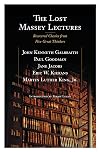
The Lost Massey Lectures: Recovered Classics from Five Great Thinkers (CBC Massey Lecture) by CBC / Canadian Broadcasting Corporation
Mandatory Reading
From the bastions of higher learning in Canada and the CBC, this collection of "Lost" Massey Lectures from the 60s to the 80s is as relevant today as it was to the individual scholars in their time.
The lectures that stand above the others are those from Martin Luther King Jr., if not necessarily for the content but more so given the fact that a black man has made the final cut in the audition for residency at the White House. MLK's growing disenfranchisement following the show more landmark rulings of '64 are evident here (in '67) and one can only imagine what the world would be like had his life not come to a premature end in '68.
That is not to say that John Kenneth Galbraith or Paul Goodman, both from the US as well, fall short on their lectures. Both are incredibly insightful in their own right. Galbraith's analysis of the "Underdeveloped Country" is still relevant today if not more considering the exaggerated consequences of globalization. Goodman, the self-described anarchist, provides one of the most nuanced arguments that I have read on the topic of American liberalism and its relevance amidst the tumult of the 60s protest movements.
Last but not least are a couple of great lectures on the identity of Canada. In the "Tale of Two Cities", Jane Jacobs compares and contrasts the rise of Toronto and Montreal post-WWII and juxtaposes it with the overall theme of centralization versus rising nationalisms especially in French Quebec. Meanwhile, Eric W. Kierans contextualizes integration between Canada and the US through an analysis of the consequences of the Williamsburg summit of '83.
In this "ahistorical age" as Bernie Lucht states, knowledge of the past is easily forgotten, lost in the clutter of our complicated lives. These great lectures remind us what it means to be a citizen in this global community, where the challenges ahead should not appear so difficult in light of what has come before us. Somewhere in the higher learning institutions of this great land, this book should be required reading.
o add a comment show less
From the bastions of higher learning in Canada and the CBC, this collection of "Lost" Massey Lectures from the 60s to the 80s is as relevant today as it was to the individual scholars in their time.
The lectures that stand above the others are those from Martin Luther King Jr., if not necessarily for the content but more so given the fact that a black man has made the final cut in the audition for residency at the White House. MLK's growing disenfranchisement following the show more landmark rulings of '64 are evident here (in '67) and one can only imagine what the world would be like had his life not come to a premature end in '68.
That is not to say that John Kenneth Galbraith or Paul Goodman, both from the US as well, fall short on their lectures. Both are incredibly insightful in their own right. Galbraith's analysis of the "Underdeveloped Country" is still relevant today if not more considering the exaggerated consequences of globalization. Goodman, the self-described anarchist, provides one of the most nuanced arguments that I have read on the topic of American liberalism and its relevance amidst the tumult of the 60s protest movements.
Last but not least are a couple of great lectures on the identity of Canada. In the "Tale of Two Cities", Jane Jacobs compares and contrasts the rise of Toronto and Montreal post-WWII and juxtaposes it with the overall theme of centralization versus rising nationalisms especially in French Quebec. Meanwhile, Eric W. Kierans contextualizes integration between Canada and the US through an analysis of the consequences of the Williamsburg summit of '83.
In this "ahistorical age" as Bernie Lucht states, knowledge of the past is easily forgotten, lost in the clutter of our complicated lives. These great lectures remind us what it means to be a citizen in this global community, where the challenges ahead should not appear so difficult in light of what has come before us. Somewhere in the higher learning institutions of this great land, this book should be required reading.
o add a comment show less

A TV series starring Paul Sun-Hyung Lee (CBC, Sep. 2017 - Dec. 2017).
The daily lives of a Korean family with a convenience store.
C+ (Okay).
Most of the character development has stalled out, making everyone steadily increasingly unsympathetic throughout the season - except for Kimchee, who should be the star of the show.
(Oct. 2022)
The daily lives of a Korean family with a convenience store.
C+ (Okay).
Most of the character development has stalled out, making everyone steadily increasingly unsympathetic throughout the season - except for Kimchee, who should be the star of the show.
(Oct. 2022)
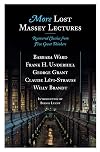
More Lost Massey Lectures: Recovered Classics from Five Great Thinkers by CBC / Canadian Broadcasting Corporation
Good, But not as Good as Original Lost Massey Lectures
This latest publication of "lost" Massey Lectures, following on last year's "Lost Massey Lectures" that featured such thinkers as John Kenneth Galbraith, Paul Goodman, Jane Jacobs, Eric W. Kierans, and last but not least Martin Luther King Jr. Compared to this one with Barbara Ward, Frank, H. Underhill, George Grant, Claude Levi-Strauss, and Willy Brandt.
Barbara Ward's lecture is titled, "The Rich Nations and the Poor Nations." Her show more central thesis is that four revolutions have enabled the West to surpass the once great civilizations of the East. These revolutions are: equality, this-worldliness, rising birth-rates, and scientific change. Published in the 1960s, Ward herself admits to having been influenced by W.W. Rostow. Reading it now in 2008, her Rostovian modernization theories come across as thoroughly antiquated by the various post-modernisms published since. One of her philosophies I do agree with, however, is regarding conservation and savings as capital growth. This last economic crisis has at least shown the limits to positivist theories of the consumption economy.
Frank H. Underhill's "Image of Confederation" is a perpetually relevant historical analysis of Canada's identity crisis. After all, our nationalism was borne more out of political and economic interests and rather uninspired compared to the Revolutionary Republicans of the south. Very Bismarckian as Underhill describes. And while Canada's nationalism may not have the romantic and patriotic undertones of the many nation-states throughout the world, Underhill argues that Canada's nationalism is unique due its relative peace. Yes, there have been antagonisms from within such as Quebec nationalism, First Nations. But Canada's nationalism is a symbol of what the rest of the world should strive for, as close to Kant's perpetual peace as we'll ever get.
George Grant's "Time as History" is probably the most academically engaging, but intellectually difficult lecture to read due to the philosophical nature of the material. Grant analyzes the philosophy of Nietzsche with respect to the study of history. Unlike Marx's dialectical method to history, Grant uses Nietzsche to show that beyond the duality of reason and empericism, beyond the morality of religion, the human experience is as Nietzsche argues is man-made. As such, we as humans must strive towards "amor fati" or the discovery of redemption, when time as history reaches its peak.
Claude Levi-Strauss' "Myth and Meaning" is an anthropological analysis of mythology as it relates to history. Can history be used to validate mythology? How are myths made and unmade? I didn't find much of the lecture terribly engaging, though some of the myths about twins and delivering babies feet first were interesting.
Willy Brandt, former Chancellor to West Germany, is the author of the last lecture titled "Dangers and Options." Most of the lecture is a summary of political science theory, mostly from the normative tradition of the liberal internationalist view through state cooperation, global governance, and humanitarian intervention. Interesting and ironic because Brandt is mostly remembered as a realist, for his ostpolitik, which was a pragmatic policy of small steps in the rapprochement between the East and West.
There is an introduction like the previous "Lost Massey Lectures" by Bernie Lucht. I honestly don't think there will be a More More publication, as I think this one was even a stretch. Still, the lectures themselves were thoroughly engaging and given the period when they were originally written, are still very relevant today.
Overall, I recommend "More Lost Massey Lectures", mostly because as an academic, I find the historical, philosophical, and sociological information fascinating. If none of the five names jumps out at you though, you'll probably find this book nothing more than an unintersting academic adventure. show less
This latest publication of "lost" Massey Lectures, following on last year's "Lost Massey Lectures" that featured such thinkers as John Kenneth Galbraith, Paul Goodman, Jane Jacobs, Eric W. Kierans, and last but not least Martin Luther King Jr. Compared to this one with Barbara Ward, Frank, H. Underhill, George Grant, Claude Levi-Strauss, and Willy Brandt.
Barbara Ward's lecture is titled, "The Rich Nations and the Poor Nations." Her show more central thesis is that four revolutions have enabled the West to surpass the once great civilizations of the East. These revolutions are: equality, this-worldliness, rising birth-rates, and scientific change. Published in the 1960s, Ward herself admits to having been influenced by W.W. Rostow. Reading it now in 2008, her Rostovian modernization theories come across as thoroughly antiquated by the various post-modernisms published since. One of her philosophies I do agree with, however, is regarding conservation and savings as capital growth. This last economic crisis has at least shown the limits to positivist theories of the consumption economy.
Frank H. Underhill's "Image of Confederation" is a perpetually relevant historical analysis of Canada's identity crisis. After all, our nationalism was borne more out of political and economic interests and rather uninspired compared to the Revolutionary Republicans of the south. Very Bismarckian as Underhill describes. And while Canada's nationalism may not have the romantic and patriotic undertones of the many nation-states throughout the world, Underhill argues that Canada's nationalism is unique due its relative peace. Yes, there have been antagonisms from within such as Quebec nationalism, First Nations. But Canada's nationalism is a symbol of what the rest of the world should strive for, as close to Kant's perpetual peace as we'll ever get.
George Grant's "Time as History" is probably the most academically engaging, but intellectually difficult lecture to read due to the philosophical nature of the material. Grant analyzes the philosophy of Nietzsche with respect to the study of history. Unlike Marx's dialectical method to history, Grant uses Nietzsche to show that beyond the duality of reason and empericism, beyond the morality of religion, the human experience is as Nietzsche argues is man-made. As such, we as humans must strive towards "amor fati" or the discovery of redemption, when time as history reaches its peak.
Claude Levi-Strauss' "Myth and Meaning" is an anthropological analysis of mythology as it relates to history. Can history be used to validate mythology? How are myths made and unmade? I didn't find much of the lecture terribly engaging, though some of the myths about twins and delivering babies feet first were interesting.
Willy Brandt, former Chancellor to West Germany, is the author of the last lecture titled "Dangers and Options." Most of the lecture is a summary of political science theory, mostly from the normative tradition of the liberal internationalist view through state cooperation, global governance, and humanitarian intervention. Interesting and ironic because Brandt is mostly remembered as a realist, for his ostpolitik, which was a pragmatic policy of small steps in the rapprochement between the East and West.
There is an introduction like the previous "Lost Massey Lectures" by Bernie Lucht. I honestly don't think there will be a More More publication, as I think this one was even a stretch. Still, the lectures themselves were thoroughly engaging and given the period when they were originally written, are still very relevant today.
Overall, I recommend "More Lost Massey Lectures", mostly because as an academic, I find the historical, philosophical, and sociological information fascinating. If none of the five names jumps out at you though, you'll probably find this book nothing more than an unintersting academic adventure. show less

The daily lives of a Korean family with a convenience store.
3/4 (Good).
Wholesome and funny, but often cringe-y.
3/4 (Good).
Wholesome and funny, but often cringe-y.
Awards

You May Also Like


Associated Authors
Statistics
- Works
- 83
- Also by
- 1
- Members
- 649
- Popularity
- #38,890
- Rating
- 3.8
- Reviews
- 20
- ISBNs
- 38
- Languages
- 1