
Jay Ingram
Author of The Barmaid's Brain: And Other Strange Tales from Science
About the Author
Jay Ingram was the host of Discovery Channel Canada's Daily Planet for sixteen years, and before that hosted CBC Radio's national science show, Quirks Quarks. He has written seventeen books.
Disambiguation Notice:
(1)Jay Ingram (b. 1945) - Canadian science writer and broadcaster
Image credit: sciencemedia.ca
Series
Works by Jay Ingram
Fatal Flaws: How a Misfolded Protein Baffled Scientists and Changed the Way We Look at the Brain (2012) 48 copies, 2 reviews
The Science of Why: Answers to Questions About the World Around Us (1) (The Science of Why series) (2016) 42 copies, 1 review
Daily Planet Book of Cool Ideas: Global Warming And What People Are Doing About It (2008) 23 copies, 1 review
The Science of Why 2: Answers to Questions About the Universe, the Unknown, and Ourselves (2) (The Science of Why series) (2017) 17 copies
Why Do Onions Make Me Cry?: Answers to Everyday Science Questions You've Always Wanted to Ask (2019) 13 copies, 1 review
The Science of Why, Volume 3: Answers to Questions About Science Myths, Mysteries, and Marvels (Volume 3) (2018) 11 copies
The Science of Why, Volume 4: Answers to Questions About Science Facts, Fables, and Phenomena (4) (The Science of Why series) (2019) 8 copies
The Science of Why, Volume 5: Answers to Questions About the Ordinary, the Odd, and the Outlandish (Volume 5) (2020) 6 copies
Seletav teadus 1 copy
Bellegin Tükenisi 1 copy
Tagged
Common Knowledge
- Birthdate
- 1945-03-20
- Gender
- male
- Education
- University of Alberta
University of Toronto - Occupations
- television host
science writer - Awards and honors
- Order of Canada (Member, 2009)
- Nationality
- Canada
- Places of residence
- Toronto, Ontario, Canada
- Disambiguation notice
- (1)Jay Ingram (b. 1945) - Canadian science writer and broadcaster
- Associated Place (for map)
- Ontario, Canada
Members
Reviews
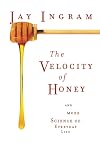
I've read a lot of more serious, meaty popular science books, but I've not often had the joy of learning from them as I did from this. Lots of accessible brief chapters, perfect for a curious layperson to dip into (get it?) at random.
Ok, that lame joke was more Ingram's style than mine. And his humor would get old if one were to try to just read this straight through. But I do recommend it to everyone who is curious about the (supposedly) 'mundane.'
I especially recommend it to folks who show more think that scientists have, or profess to have, 'the answers.' Lots of these chapters analyze things we *still* don't understand. Many of them even would inspire students who need a project for their school Science Fair. show less
Ok, that lame joke was more Ingram's style than mine. And his humor would get old if one were to try to just read this straight through. But I do recommend it to everyone who is curious about the (supposedly) 'mundane.'
I especially recommend it to folks who show more think that scientists have, or profess to have, 'the answers.' Lots of these chapters analyze things we *still* don't understand. Many of them even would inspire students who need a project for their school Science Fair. show less
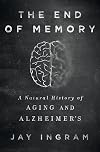
Very interesting and informative, and written in Jay Ingram's distinctive style--I could imagine his voice as I read the book. Jay has a talent for presenting complex facts in a digestible way.
Fatal flaws : how a misfolded protein baffled scientists and changed the way we look at the brain by Jay Ingram
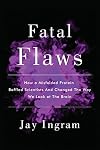
This is an interesting look at how scientists discovered the existence of prions: misfolded proteins that somehow manage to cause horrific brain diseases despite not following the "traditional" means of spreading disease (e.g. a virus or a bacterium). Ingram discusses kuru, mad cow disease (and the human equivalent, CJD), and scrapie, as well as the implications that prion research may have on other brain diseases such as Parkinson's and Alzheimer's.
The book is structured well, with short show more chapters, and the narrative flow is adequately explained and signposted. It may have benefitted from one final read-through from start to finish, however, because there are many instances of the phrase "invariably fatal" (it would make a good drinking game while reading this book) and one red-alert homophone error (the "seeds were sewn", when it should be "sown"). But these are minor drawbacks. The book is still recommended if the science of the brain, medical science, or the personal aspect of scientific debate interest you. show less
The book is structured well, with short show more chapters, and the narrative flow is adequately explained and signposted. It may have benefitted from one final read-through from start to finish, however, because there are many instances of the phrase "invariably fatal" (it would make a good drinking game while reading this book) and one red-alert homophone error (the "seeds were sewn", when it should be "sown"). But these are minor drawbacks. The book is still recommended if the science of the brain, medical science, or the personal aspect of scientific debate interest you. show less
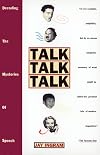
Ok, finally I have had a decent introduction to the whole Noam Chomsky language controversy, and I didn't have to read His big dense output to get it. Instead, it was simply part of this quick but rich overview of lots of different investigations into language and communication.
Accessible enough for novice lay readers, with a conversational & lightly humorous tone. Just enough of stuff like Here of course (do I have to say it again?) there's considerable disagreement..."
Just a little dated, show more but that's ok, as Ingram points to expected areas of research and now I know precisely where to look for more recent developments.
I've read a lot of books about the history of language, and the Washoe, Kanzi, and Nim experiments, and neuro-biology, and I'm very happy with how much I learned here.
Too bad Ingram is listed as 'a radio personality' in the description. He understands science a lot better than most journalists who pretend to be experts. I'd much rather read more of his work than any more of, say, that by [a:Malcolm Gladwell|1439|Malcolm Gladwell|http://d.gr-assets.com/authors/1224601838p2/1439.jpg].
In fact, I will. And I will read some of that listed in the annotated bibliography, too.
ETA - the only other reviewer says 'it's not about language history' - well, actually two chapters really are and much of the rest of the book incorporates ideas from the field. It's also about much more than the mechanics of language, though that topic, too, is included.
And the very first chapter was a bit difficult for me, as it's written to set the stage, and therefore the author's bias shows through insufficient acknowledgement of the conditional. That is to say, it's all about how easy conversation is, and some of us, even those of us who are not Aspergian, have difficulty with the cues Ingram claims are automatic. But get past that and the rest of the book is cool." show less
Accessible enough for novice lay readers, with a conversational & lightly humorous tone. Just enough of stuff like Here of course (do I have to say it again?) there's considerable disagreement..."
Just a little dated, show more but that's ok, as Ingram points to expected areas of research and now I know precisely where to look for more recent developments.
I've read a lot of books about the history of language, and the Washoe, Kanzi, and Nim experiments, and neuro-biology, and I'm very happy with how much I learned here.
Too bad Ingram is listed as 'a radio personality' in the description. He understands science a lot better than most journalists who pretend to be experts. I'd much rather read more of his work than any more of, say, that by [a:Malcolm Gladwell|1439|Malcolm Gladwell|http://d.gr-assets.com/authors/1224601838p2/1439.jpg].
In fact, I will. And I will read some of that listed in the annotated bibliography, too.
ETA - the only other reviewer says 'it's not about language history' - well, actually two chapters really are and much of the rest of the book incorporates ideas from the field. It's also about much more than the mechanics of language, though that topic, too, is included.
And the very first chapter was a bit difficult for me, as it's written to set the stage, and therefore the author's bias shows through insufficient acknowledgement of the conditional. That is to say, it's all about how easy conversation is, and some of us, even those of us who are not Aspergian, have difficulty with the cues Ingram claims are automatic. But get past that and the rest of the book is cool." show less
Lists
Awards


You May Also Like


Statistics
- Works
- 28
- Members
- 1,363
- Popularity
- #18,858
- Rating
- 3.6
- Reviews
- 24
- ISBNs
- 98
- Languages
- 8
- Favorited
- 2