

Rajmohan Gandhi
Author of Gandhi: The Man, His People, and the Empire
About the Author
Works by Rajmohan Gandhi
Tagged
Common Knowledge
- Birthdate
- 1935
- Gender
- male
- Awards and honors
- honorary doctorate of law from the University of Calgary
International Humanitarian Award (Human Rights) - Relationships
- Gandhi, Mohandas K. (grandfather)
Rajagopalachari, C. (grandfather) - Nationality
- India
- Birthplace
- New Delhi, India
- Associated Place (for map)
- New Delhi, India
Members
Reviews
Ghaffar Khan: Non Violent Badshah of the Pakhtuns illustrated edition by Gandhi, Rajmohan (2004) Hardcover by Rajmohan Gandhi
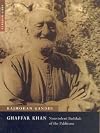
We’ve forgotten Khan Abdul Ghaffar Khan, sometimes called ‘The Frontier Gandhi,’ for adhering to and promoting non-violence in life and a means for protest. The events of the freedom struggle are distant memories, and most people have forgotten them. I doubt the young generation knows much about the events leading to our independence and the Partition of India.
The land of the Pakhtuns is far away, and it is good to read a book that reminds us that this territory could have been part show more of India if not for the Partition. Rajmohan Gandhi’s book is short and sweet, and he does an admirable job telling us Ghaffar Khan’s story.
The book starts by creating a foundation and then tells us about the Pakhtuns (or the Pathans, as we call them in India).
The book follows a chronological path from 1890 until Badshah Khan’s death and ends with a final chapter assessing Badshah Khan’s legacy, putting it into a modern context. Ghaffar Khan supported Hindu-Muslim unity and supported the Indian National Congress. After the Partition, he supported the Pakistani government but fought for self-dominion for his people.
The Pathans, Pashtuns, or Pakhtuns are proud people, loyal to a fault, unforgiving of insults or betrayal, and willing to repay an insult with violence. Badshah Khan converted many to his philosophy of non-violence, and his success in achieving this transformation is a testament to his personality and the strength of his conviction.
Writing Badshah Khan’s story is challenging because of the tale’s complexity and remoteness. Rajmohan Gandhi must be complimented for creating an enjoyable book, taking only the relevant parts of those distant and turbulent decades and presenting us with a short, pleasant, illuminating book. show less
The land of the Pakhtuns is far away, and it is good to read a book that reminds us that this territory could have been part show more of India if not for the Partition. Rajmohan Gandhi’s book is short and sweet, and he does an admirable job telling us Ghaffar Khan’s story.
The book starts by creating a foundation and then tells us about the Pakhtuns (or the Pathans, as we call them in India).
The book follows a chronological path from 1890 until Badshah Khan’s death and ends with a final chapter assessing Badshah Khan’s legacy, putting it into a modern context. Ghaffar Khan supported Hindu-Muslim unity and supported the Indian National Congress. After the Partition, he supported the Pakistani government but fought for self-dominion for his people.
The Pathans, Pashtuns, or Pakhtuns are proud people, loyal to a fault, unforgiving of insults or betrayal, and willing to repay an insult with violence. Badshah Khan converted many to his philosophy of non-violence, and his success in achieving this transformation is a testament to his personality and the strength of his conviction.
Writing Badshah Khan’s story is challenging because of the tale’s complexity and remoteness. Rajmohan Gandhi must be complimented for creating an enjoyable book, taking only the relevant parts of those distant and turbulent decades and presenting us with a short, pleasant, illuminating book. show less
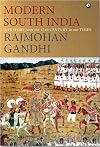
Most North Indians are familiar with the history of North India, especially the Mughals and The East India Company. We are unfamiliar with the Delhi Sultanate or the period before Muslim rule. We are also unfamiliar with the history of other parts of India, especially East or South India.
Rajmohan Gandhi's book is an excellent place to start, especially for those who wish to gain a first understanding. However, the book is not perfect. The sections on the 20th and 21st centuries are show more confusing.
It is intriguing to note South India's more passive role during the British Raj. After Tipu Sultan's death, resistance to The East India Company almost died in South India.
A welcome aspect of the book is its focus on the role of a few Britishers in studying and preserving South Indian texts.
He could have done better. For instance, he quotes John Wilks widely while acknowledging the gentleman's negative bias against Tipu Sultan. Why didn't he research and quote other authors to deliver a balanced and nuanced perspective on Tipu Sultan (among others)? show less
Rajmohan Gandhi's book is an excellent place to start, especially for those who wish to gain a first understanding. However, the book is not perfect. The sections on the 20th and 21st centuries are show more confusing.
It is intriguing to note South India's more passive role during the British Raj. After Tipu Sultan's death, resistance to The East India Company almost died in South India.
A welcome aspect of the book is its focus on the role of a few Britishers in studying and preserving South Indian texts.
He could have done better. For instance, he quotes John Wilks widely while acknowledging the gentleman's negative bias against Tipu Sultan. Why didn't he research and quote other authors to deliver a balanced and nuanced perspective on Tipu Sultan (among others)? show less
I am giving this book a two star rating, because I believe that it is built on the wrong premise. While it is written in a pacy manner, it does not do justice to the promise. What I like, from my perspective, is the introduction to William Howard Russell.
First off, I do not see a connection between the Indian Mutiny and the American Civil War, except that they were fought at approximately the same time in history. A few years divides them both. However, the Civil War is that - a Civil War. show more If the blacks had mutinied, I would have seen a connection. A parallel to the American War of Independence would have been better.
The fact that Russell covered both to an extent, is not enough to connect the two.
Two, the "connections" at the end of the book are tenuous at best, barring the estimable Mr Hume who founded the Indian National Congress and Mohammed Sayyid. I fail to see the relevance of Bakim Chandra, Tolstoy and Karl Marx in the larger picture of these two wars. How do they connect the two wars?
What are the lessons of each war that make them similar? I fail to see this. The analysis of both wars is, in my opinion, superficial. There is no real analysis of their connection, barring the fact that Russell was present during both, and the fact that they both took place in the 1850's.
Not a book to invest your time on. show less
First off, I do not see a connection between the Indian Mutiny and the American Civil War, except that they were fought at approximately the same time in history. A few years divides them both. However, the Civil War is that - a Civil War. show more If the blacks had mutinied, I would have seen a connection. A parallel to the American War of Independence would have been better.
The fact that Russell covered both to an extent, is not enough to connect the two.
Two, the "connections" at the end of the book are tenuous at best, barring the estimable Mr Hume who founded the Indian National Congress and Mohammed Sayyid. I fail to see the relevance of Bakim Chandra, Tolstoy and Karl Marx in the larger picture of these two wars. How do they connect the two wars?
What are the lessons of each war that make them similar? I fail to see this. The analysis of both wars is, in my opinion, superficial. There is no real analysis of their connection, barring the fact that Russell was present during both, and the fact that they both took place in the 1850's.
Not a book to invest your time on. show less
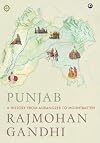
This is an excellent book. Rajmohan Gandhi does an exceedingly good job of putting together a story of Punjab in one volume.
There is much to commend this book. Early history is not always easy and often seems confusing when seen from the perspective of the modern-day world. However, he has done admirably and presents the sweep of history with a deft hand.
We get an idea of some of the early conflicts and realise how they have been aggrandised by later day political leaders.
I would have show more liked some more detail on some of the recent events in Punjab, especially the Khalistani movement, but that may be in the scope of the next edition. show less
There is much to commend this book. Early history is not always easy and often seems confusing when seen from the perspective of the modern-day world. However, he has done admirably and presents the sweep of history with a deft hand.
We get an idea of some of the early conflicts and realise how they have been aggrandised by later day political leaders.
I would have show more liked some more detail on some of the recent events in Punjab, especially the Khalistani movement, but that may be in the scope of the next edition. show less
Awards


You May Also Like


Statistics
- Works
- 21
- Members
- 436
- Popularity
- #56,113
- Rating
- 4.0
- Reviews
- 7
- ISBNs
- 35
- Languages
- 1