
Mahasweta Devi (1926–2016)
Author of Imaginary Maps
About the Author
Mahasweta Devi was born in what is now in Bangladesh on January 14, 1926. She received a B.A. in English from Vishvabharati University and an M.A. in English from Calcutta University. Before becoming a full-time author, she worked as a journalist and an English professor. During her lifetime, she show more wrote almost 100 novels and over 20 short story collections, primarily written in Bengali. Her first book, Jhansi'r Rani (The Queen of Jhansi), was published in 1956. Her other novels included Mother of 1084 and The Occupation of the Forest. She was the author behind the Hindi films Rudaali and Hazaar Chaurasi Ki Maa. She was also an activist who immersed herself in the lives of India's poor and marginalized as she chronicled their lives in fiction. In 1997, she received the Ramon Magsaysay Award for her writing and activism on behalf of tribal communities. She died from a heart attack and multiple organ failure on July 28, 2016 at the age of 90. (Bowker Author Biography) show less
Works by Mahasweta Devi
হাজার চুরাশির মা 6 copies
Tarasankar Bandyopadhyay 2 copies
Baniya-Bahu 1 copy
Aranyer Adhikar 1 copy
HERO-EK BLOO PRINT 1 copy
Dust on the Road 1 copy
[ The Queen of Jhansi [ THE QUEEN OF JHANSI ] By Devi, Mahasweta ( Author )Jul-15-2010 Hardcover (2010) 1 copy
নীল ছবি 1 copy
aya mawak viya ... ankayaka 1 copy
মহাশ্বেতা দেবী রচনা সমগ্র 1 copy
"Breast-Giver" 1 copy
Hajar Churashir Maa 1 copy
জাতক কাহিনী 1 copy
Associated Works
Other Voices, Other Vistas: Short Stories from Africa, China, India, Japan, and Latin America (1992) — Contributor — 212 copies, 2 reviews
Tagged
Common Knowledge
- Legal name
- মহাশ্বেতা ভট্টাচার্য
- Birthdate
- 1926-01-14
- Date of death
- 2016-07-28
- Gender
- female
- Occupations
- writer
social activist - Awards and honors
- Ramon Magsaysay Award (1997)
- Cause of death
- heart attack
- Nationality
- Bengal
- Birthplace
- Dhaka, Bangladesh
- Place of death
- Kolkata, West Bengal, India
- Associated Place (for map)
- Kolkata, West Bengal, India
Members
Reviews
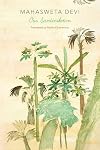
I picked this memoir up off of a "women in translation" shelf at an independent bookstore when I was traveling a few years back. It's a nice enough memoir written by Mahasweta Devi in her old age about the years when she was 10-12 and living at a boarding school called Santiniketan. This school, which was more than a school - a way of life and sprawling nature preserve as well - was developed and run by Rabindranath Tagore. Devi reminisces about many things regarding life there - her show more education, the food, the nature around her. She also admits to not remembering clearly all the details; she is in her late 70s when she writes this memoir.
So I have to admit that I had to look up Devi and Tagore to ground myself in this brief memoir. Both were writers and activists who tried reform India's politics and society. I'm glad to have bought this, read it, and done a little extra research into the main players and the time period in India. Though the memoir itself wasn't that interesting to me, it did open up many avenues that I would like to explore. show less
So I have to admit that I had to look up Devi and Tagore to ground myself in this brief memoir. Both were writers and activists who tried reform India's politics and society. I'm glad to have bought this, read it, and done a little extra research into the main players and the time period in India. Though the memoir itself wasn't that interesting to me, it did open up many avenues that I would like to explore. show less

This is a collection of strange, terse, angry stories about ordinary people caught in the criminal underworld of Calcutta and its surroundings in the '60s - '80s, an underworld that is very much in league with politicians and businessmen. Devi, who is a well known and respected writer and political activist in India (her work involves so-called "tribal" communities), writes in an almost telegraphic style, with little description, focusing on the actions and the thoughts of the characters. show more Because of their work -- as killers, "fishers" of bodies from water tanks, prostitutes, etc. -- the characters are not sympathetic, but the reader sees them as partly unwilling cogs in a larger system, people dehumanized by their work. While most of the stories deal with men, the women in them are particularly oppressed.
The stories are not easy to follow because of the terse style, and I found the lengthy introduction by journalist and translator Sumanta Banerjee helpful in explaining their political and historical context. The book is part of its Indian publisher's "What Was Communism?" series, but the only connection I see to communism is that, according to Banerjee's introduction, some of the victims of killing in the stories were Naxalites (and he himself was jailed for being one); according to Wikipedia, the Naxalites were/are a Maoist group. show less
The stories are not easy to follow because of the terse style, and I found the lengthy introduction by journalist and translator Sumanta Banerjee helpful in explaining their political and historical context. The book is part of its Indian publisher's "What Was Communism?" series, but the only connection I see to communism is that, according to Banerjee's introduction, some of the victims of killing in the stories were Naxalites (and he himself was jailed for being one); according to Wikipedia, the Naxalites were/are a Maoist group. show less

The story of women Dopdi Mejhen, a Santhal, a tribal and part of the insurgency group that the state forces have to subdue, is captured and raped repeatedly. The attempts to 'make her' or subjugate her fail. Her violators can only mutilate her body but cannot subdue her spirit…show more content…
This points to male realities that are made to superimpose upon the woman's reality, which anyway is never written or articulated. she became a bandit with her husband as they are Robinhood , in show more order to take revenge she make a group of rebel dacoits who will work for lower caste oppression and avenge them with loot of Money they share with thr people, many upper caste were killed for the crime so in order to get rid of her, upper caste take police help with bribing them and make a fake encounter for her and her group but luckily she survived with her sensibility and they were cornered by forces before dead they avenge many. Her laughter and her blood challenge the Senanayak, daring him to do his worst, communicating her refusal to be shamed into submission. Her challenge inverts the dynamic of power and renders the Senanayak powerless. As she bursts into language, the Senanayak find himself bereft of language, too scared to speak at the end – ‘and for the first time Senanayak is afraid to stand before an unarmed target, terribly afraid. show less
This points to male realities that are made to superimpose upon the woman's reality, which anyway is never written or articulated. she became a bandit with her husband as they are Robinhood , in show more order to take revenge she make a group of rebel dacoits who will work for lower caste oppression and avenge them with loot of Money they share with thr people, many upper caste were killed for the crime so in order to get rid of her, upper caste take police help with bribing them and make a fake encounter for her and her group but luckily she survived with her sensibility and they were cornered by forces before dead they avenge many. Her laughter and her blood challenge the Senanayak, daring him to do his worst, communicating her refusal to be shamed into submission. Her challenge inverts the dynamic of power and renders the Senanayak powerless. As she bursts into language, the Senanayak find himself bereft of language, too scared to speak at the end – ‘and for the first time Senanayak is afraid to stand before an unarmed target, terribly afraid. show less
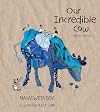
The book was about Nyadosh a cow that was adopted by Mahasweta Devi's family from rural Bengal. Given the Bengalis’ reputation as cultured, well-informed, liberal minded people, Nyadosh was expected to be a docile, domestic creature. But she was far from all that - she broke the rules, bent beliefs, questioned things and took particular satisfaction in trying different cuisines including meat, seafood and all items blue.
This was a starting point for me - I began to question as to what show more really qualifies as a medium to illustrate? Inspired by the assemblages of Arcimboldo and the philosophy that ‘we are what we eat’, I decided to illustrate Nyadosh with everything she ate in the story. I adopted a different technique for each page owing to the changing materials - fabric was folded, onions were cut, banana leaves were arranged and books were balanced to achieve the correct anatomy and perspective of Nyadosh. show less
This was a starting point for me - I began to question as to what show more really qualifies as a medium to illustrate? Inspired by the assemblages of Arcimboldo and the philosophy that ‘we are what we eat’, I decided to illustrate Nyadosh with everything she ate in the story. I adopted a different technique for each page owing to the changing materials - fabric was folded, onions were cut, banana leaves were arranged and books were balanced to achieve the correct anatomy and perspective of Nyadosh. show less
Lists
Awards


You May Also Like


Associated Authors
Statistics
- Works
- 60
- Also by
- 4
- Members
- 508
- Popularity
- #48,805
- Rating
- 3.8
- Reviews
- 10
- ISBNs
- 65
- Languages
- 7
- Favorited
- 2