
Donald B. Kuspit
Author of Chihuly
About the Author
Donald Kuspit is one of America's most distinguished art critics. Winner of the prestigious Frank Jewett Mather Award for Distinction in Art Criticism, given by the College Art Association, he is a contributing editor to Artforum, Sculpture, New Art Examiner, and Tema Celeste magazines, as well as show more editor of Art Criticism. Professor of Art History and Philosophy at the State University of New York, Stony Brook, he also holds honorary degrees from Davidson College, the San Francisco Institute of Arts, and the University of Illinois at Urbana-Champaign show less
Works by Donald B. Kuspit
An Expressionist in Paris: The Paintings of Chaim Soutine (1998) — Contributor — 36 copies, 1 review
Signs of Psyche in Modern and Postmodern Art (Contemporary Artists and their Critics) (1993) 11 copies, 1 review
Idiosyncratic Identities: Artists at the End of the Avant-Garde (Contemporary Artists & Their Critics) (1996) 5 copies
Robert Rauschenberg: Scenarios & Short Stories / Darryl Pottorf: A Perspective / Christopher Rauschenberg (2005) 5 copies
The Regina Billboard Project 3 copies
Ilan Averbuch 2 copies
Critical Essays 2 copies
Chihuly Venetians 1 copy
On the Gathering Emptiness 1 copy
Art Criticism vol. 2 no. 2 1 copy
Izbor tekstova 1 copy
J. Steven Manolis 1 copy
Self-Refraction (Poems) 1 copy
Joan Nelson 1 copy
Shimon Okshteyn: Nostalgia 1 copy
Robert Grosvenor 1 copy
Donald Lipski 1 copy
Hans van de Bovenkamp. 1 copy
Associated Works
Theories and Documents of Contemporary Art: A Sourcebook of Artists' Writings (1995) — Contributor — 415 copies, 1 review
American Art in the 20th Century: Painting and Sculpture 1913-1993 (Art & Design) (1993) — Contributor — 57 copies
Tagged
Common Knowledge
- Legal name
- Kuspit, Donald Burton
- Birthdate
- 1935
- Gender
- male
- Occupations
- art historian
philosopher - Nationality
- USA
- Associated Place (for map)
- USA
Members
Reviews
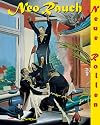
In a lakeside scene, a man leans on a graphic of an arrow as if it were a rake handle in the garden; tentacles rise from the shoreline and rectangular speech bubbles hang empty in the yellow sky. In a Dali-esque interior, the corner of a comforter drips off a bed. This major new overview of the work of the Leipzig painter Neo Rauch makes, once again, the case that he is one of the most important artists of his generation. He remains committed to putting brush on canvas in an age when digital show more media are gaining ground, and among a crowd of similarly dedicated colleagues, he stands out at the forefront. While his work of the 1980s was influenced by Expressionism, his more recent portfolio revels in a new take on Socialist Realism, clearly shaped by the experience of growing up in the former East Germany. Rauch riffs on the once-mandated styles of his youth and on western abstraction from the second half of the twentieth century, all in coloration and figuration that directly allude to the Socialist past. Between cartoon styling and historic technique, he has found a distinctive style, palette and concept. These dreamlike sequences feel both timeless and deeply rooted: Rauch gathers figures from the past in surreal landscapes and interiors to tell enigmatic stories about the present. show less
Signs of Psyche in Modern and Postmodern Art (Contemporary Artists and their Critics) by Donald Kuspit

Signs of Psyche in Modern and Post-Modern Art examines the psychological dimension of visual culture in the twentieth century. Analysing the ways in which psychoanalysis can be used to understand art and culture, Donald Kuspit argues that modern art affirms subjectivity, whereas postmodern art, which is characterised as cynical and glamorous, denies it while, paradoxically, being unable to escape it. Assessing the depth-psychological implications of works by, among others, Paul Gauguin, show more Henri Matisse, André Breton, Anselm Kiefer, and Gerhard Richter, this study persuasively demonstrates how the methods of psychoanalysis can be used to probe art works created at critical junctures of this century show less
This review refers to the second edition (revised and expanded).
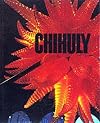
Glass artist Dale Chihuly has been creating singular works of art since the late 1960's. This book is the definitive retrospective of that work through 1997. Kuspit begins with an extensive 16 page heavily footnoted (92 citations) essay on the artist and his work entitled "Delirious Glass: Dale Chihuly's Sculpture." The essay is critical, analytical, and biographical.
Hundreds of high quality photographs illustrate Chihuly's show more individual works, as well as several of his extensive multi-piece installations in Venice (Italy), Nuutajarvi (Finland), etc. The pictorial aspect of this book is its strength. Granted, Chihuly's work is best seen in person; it is, after all, three dimensional art. However, having seen several of his museum exhibitions, as well as multi-piece garden installations, these brilliant color photographs are the best I've seen representing his artistry. Most of the photographs are single and two page spreads on the large (24 x 29 cm) format pages.
The last major part of this book includes a photo-chronology of the artist's life from 1941 through 1998. Forty-two black and white photographs of the artist, family, and friends, further illustrate his life. These photos show: the young man as an artist blowing glass in Murano; teaching glass blowing to friends; and a particularly odd photo of his scarred face following an automobile accident in 1976 where he permanently lost sight in one eye.
I do not hesitate to recommend this singular work to those who are Chihuly afficionados and those who are not. The quality of the publication is high, the subject matter is sublime. show less
Glass artist Dale Chihuly has been creating singular works of art since the late 1960's. This book is the definitive retrospective of that work through 1997. Kuspit begins with an extensive 16 page heavily footnoted (92 citations) essay on the artist and his work entitled "Delirious Glass: Dale Chihuly's Sculpture." The essay is critical, analytical, and biographical.
Hundreds of high quality photographs illustrate Chihuly's show more individual works, as well as several of his extensive multi-piece installations in Venice (Italy), Nuutajarvi (Finland), etc. The pictorial aspect of this book is its strength. Granted, Chihuly's work is best seen in person; it is, after all, three dimensional art. However, having seen several of his museum exhibitions, as well as multi-piece garden installations, these brilliant color photographs are the best I've seen representing his artistry. Most of the photographs are single and two page spreads on the large (24 x 29 cm) format pages.
The last major part of this book includes a photo-chronology of the artist's life from 1941 through 1998. Forty-two black and white photographs of the artist, family, and friends, further illustrate his life. These photos show: the young man as an artist blowing glass in Murano; teaching glass blowing to friends; and a particularly odd photo of his scarred face following an automobile accident in 1976 where he permanently lost sight in one eye.
I do not hesitate to recommend this singular work to those who are Chihuly afficionados and those who are not. The quality of the publication is high, the subject matter is sublime. show less
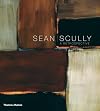
A complete retrospective of Sean Scully's work in all media, from the early 1970s to the present, published to accompany a European exhibition tour.
"If there is such a thing as an 'advance' in transcendental abstraction...then Scully's paintings, simultaneously gestural and geometrical, are that advance. They breathe new spiritual life and subtlety into transcendental abstraction, showing that it not only remains possible and viable, but that it is necessary in these spiritually dark art show more times."—Donald Kuspit
Over more than thirty years, Sean Scully has produced a vibrant, compelling, and constantly inventive body of work that is widely collected and internationally exhibited. His familiar signature style of lines or bands of color alluding to architectural elements such as portals, windows, and walls is instantly recognizable. His recent "Walls of Light" exhibition at the Metropolitan Museum of Art drew almost 100,000 visitors and received widespread critical acclaim. show less
"If there is such a thing as an 'advance' in transcendental abstraction...then Scully's paintings, simultaneously gestural and geometrical, are that advance. They breathe new spiritual life and subtlety into transcendental abstraction, showing that it not only remains possible and viable, but that it is necessary in these spiritually dark art show more times."—Donald Kuspit
Over more than thirty years, Sean Scully has produced a vibrant, compelling, and constantly inventive body of work that is widely collected and internationally exhibited. His familiar signature style of lines or bands of color alluding to architectural elements such as portals, windows, and walls is instantly recognizable. His recent "Walls of Light" exhibition at the Metropolitan Museum of Art drew almost 100,000 visitors and received widespread critical acclaim. show less
Awards

You May Also Like


Associated Authors
Statistics
- Works
- 141
- Also by
- 8
- Members
- 1,112
- Popularity
- #23,103
- Rating
- 3.9
- Reviews
- 16
- ISBNs
- 125
- Languages
- 5