

Suzannah Lipscomb
Author of A Visitor's Companion to Tudor England
About the Author
Suzannah Lipscomb, PhD, co-presented Inside the World of Henry VIII on the History Channel. Her new three-part series on the Tower of London aired on National Geographic Channel. She is the author of 1536: The Year that Changed Henry VIII, and writes frequently for BBC History Magazine and History show more Today. She lives in London. show less
Image credit: Suzannah Lipscomb, author and Professor of History, speaks to the British Library.
Works by Suzannah Lipscomb
History's Lost Speeches 1 copy
Associated Works
Tagged
Common Knowledge
- Canonical name
- Lipscomb, Suzannah
- Legal name
- Lipscomb, Suzannah Rebecca Gabriella
- Other names
- Lipscomb, Suzannah Rebecca Gabriella
- Birthdate
- 1978-12-07
- Gender
- female
- Education
- University of Oxford (Balliol College) (DPhil|History)
- Occupations
- historian
university professor
broadcaster - Organizations
- University of Roehampton
- Awards and honors
- Royal Historical Society (Fellow)
Higher Education Academy (Fellow) - Nationality
- UK
- Places of residence
- Surrey, England, UK
- Associated Place (for map)
- England, UK
Members
Reviews
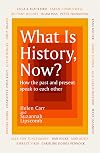
What is History, Now? is in a sense What is History IV?: it follows on from the highly influential What is History? (1961), and two previous follow-up collections, What is History Today? (1985) and What is History Now? (2002). Editors Helen Carr and Suzannah Lipscomb have produced a broad array of essays with their eye firmly on accessibilty. I could see many of these—such as Jaipreet Virdi’s on the history of disability—working really well in the undergraduate classroom. There are a show more small number of fairly flimsy contributions that I didn’t think said much that was new or striking, although perhaps they might find an appreciative reader in someone very new to a particular subject. Equally, while this is a collection that aims for an understanding of the importance of global history, it is one written with its feet very firmly planted in Britain. show less
What is History Now? – An interesting discussion of where history is today.
What is History Now? Is the 21st century answer to the original text What is History? From EH Carr. I have seen some reviews which complain about this excellent book because it does not give examples of what Carr meant all of them years ago. I think they must have missed a word in the title, now rather than back in the 1960s. Carr’s book was very much a book of the mid-20th century, and the world has changed since show more then. We have women that are now professors in their own right rather than being administrative support as they were then.
There are nineteen excellent chapters that discuss the state if history in the 21st century and reflects the many differences that have helped moved the subject forward. Carr himself stated that history needs a consistent interrogation and reinterpretation and that there should be ‘a continuous process of interaction between the historian and his [her] facts.’ It also raises the question that if the government is so concerned with history and heritage then it should fund research, rather than allow it to fester and rot, while allowing the populist to mis-quote history.
I do not have much argument with many of the chapter in this book as an academic historian it is always interesting to see areas where research is growing. The only disappointment for me was Simon Schama writing about History and Nature. This is probably a generational point for me. As while Professor Schama’s writing is beautiful he takes the classists view of natural and environmental history. While engaging, it is very much a twentieth century view of the subject. Talking about nature and man’s interaction with the world. Today the elephant in the room is the urban part of nature, you cannot remove urban from natural history. Anyone studying this area knows that some of the best work on natural and environmental history is happening in America. Whereas here in Britain we are playing catch up, because the classists mistakes with standing on the rock and not looking underneath it.
To me Leila K. Blackbird sums up the current state of history, not only in the USA but here in the UK where we have mythologised accounts of colonisation and challenging the narrative is seen as woke. She quite rightly states that history has been come a crucible in modern politics. Rather like the German’s we British seem to think we have our own Sonderweg (special path) especially how we use the Second World War to colour our discussion. Pity most of those that actually lived through it are either dead or their final destination is getting close. But the modern day we cannot get away from the ‘blitz’ spirit’, Dunkirk resistance, or when we ‘stood alone’, when we did not.
This really is an excellent collection of essays, raising some very wide topics, whether it be on queer history, how film and movie history are all important parts of our culture. Carr said that history should reflect one’s age – and this collection certainly does that. show less
What is History Now? Is the 21st century answer to the original text What is History? From EH Carr. I have seen some reviews which complain about this excellent book because it does not give examples of what Carr meant all of them years ago. I think they must have missed a word in the title, now rather than back in the 1960s. Carr’s book was very much a book of the mid-20th century, and the world has changed since show more then. We have women that are now professors in their own right rather than being administrative support as they were then.
There are nineteen excellent chapters that discuss the state if history in the 21st century and reflects the many differences that have helped moved the subject forward. Carr himself stated that history needs a consistent interrogation and reinterpretation and that there should be ‘a continuous process of interaction between the historian and his [her] facts.’ It also raises the question that if the government is so concerned with history and heritage then it should fund research, rather than allow it to fester and rot, while allowing the populist to mis-quote history.
I do not have much argument with many of the chapter in this book as an academic historian it is always interesting to see areas where research is growing. The only disappointment for me was Simon Schama writing about History and Nature. This is probably a generational point for me. As while Professor Schama’s writing is beautiful he takes the classists view of natural and environmental history. While engaging, it is very much a twentieth century view of the subject. Talking about nature and man’s interaction with the world. Today the elephant in the room is the urban part of nature, you cannot remove urban from natural history. Anyone studying this area knows that some of the best work on natural and environmental history is happening in America. Whereas here in Britain we are playing catch up, because the classists mistakes with standing on the rock and not looking underneath it.
To me Leila K. Blackbird sums up the current state of history, not only in the USA but here in the UK where we have mythologised accounts of colonisation and challenging the narrative is seen as woke. She quite rightly states that history has been come a crucible in modern politics. Rather like the German’s we British seem to think we have our own Sonderweg (special path) especially how we use the Second World War to colour our discussion. Pity most of those that actually lived through it are either dead or their final destination is getting close. But the modern day we cannot get away from the ‘blitz’ spirit’, Dunkirk resistance, or when we ‘stood alone’, when we did not.
This really is an excellent collection of essays, raising some very wide topics, whether it be on queer history, how film and movie history are all important parts of our culture. Carr said that history should reflect one’s age – and this collection certainly does that. show less
Thorough and well organized — I especially liked the structure, how well the conclusions summarized the preceding sections. It helped solidify the information I'd just read (and there was a lot of it). Of particular nIt's extensively footnoted in a way that makes my academic side happy, but the general reader doesn't need to worry about missing anything. I wouldn't call this the zippiest read on the planet, but it does satisfy if you're looking for some meaty scholarship. It's guaranteed show more to teach you something, not only about the women that are the focus of this book, but also the history of the area in general and other studies into similar periods. Lipscomb would compare and contrast other studies with her own to highlight where people have done research, where the research correlates and where more research needs to be done. I thought that just as fascinating as Lipscomb's study itself. show less
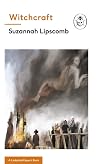
Witchcraft – A Ladybird Expert Book
There was a witch in my life as a teenager, she taught English, brought the three witches in Macbeth to life, and was even more shocked when I did pass my O levels in English and English Literature! Where Suzannah Lipscomb in this Ladybird Expert book has mentioned those mentioned those in fiction (there always is a sensible grown-up).
Across the fifty pages of this wonderful little book, with its brilliant illustrations it is so engrossing, and as it is show more not my area of history, very informative. Dr Lipscomb breaks down some of the myths of witches in earlier times. Yes, ducking stools do get a mention, but you will have to find out whether they were a myth. Was Dan Brown correct in the Da Vinci Code?
Throughout history witches have made an appearance when people are trying to define wrong doing or did not understand science as we know it today. The height of the fear of witches usually correlated at times of poor harvests, plague and war. This book teaches you or reminds you of something on every page.
A book with fifty pages on which you can learn something new, well that would be the Ladybird expert books. The one on Witchcraft is very informative, written by a leading historian, Suzannah Lipscomb knows how to get the facts across without boring the tears off you, and makes this such an interesting and fun read. show less
There was a witch in my life as a teenager, she taught English, brought the three witches in Macbeth to life, and was even more shocked when I did pass my O levels in English and English Literature! Where Suzannah Lipscomb in this Ladybird Expert book has mentioned those mentioned those in fiction (there always is a sensible grown-up).
Across the fifty pages of this wonderful little book, with its brilliant illustrations it is so engrossing, and as it is show more not my area of history, very informative. Dr Lipscomb breaks down some of the myths of witches in earlier times. Yes, ducking stools do get a mention, but you will have to find out whether they were a myth. Was Dan Brown correct in the Da Vinci Code?
Throughout history witches have made an appearance when people are trying to define wrong doing or did not understand science as we know it today. The height of the fear of witches usually correlated at times of poor harvests, plague and war. This book teaches you or reminds you of something on every page.
A book with fifty pages on which you can learn something new, well that would be the Ladybird expert books. The one on Witchcraft is very informative, written by a leading historian, Suzannah Lipscomb knows how to get the facts across without boring the tears off you, and makes this such an interesting and fun read. show less
Lists
You May Also Like


Associated Authors
Statistics
- Works
- 11
- Also by
- 1
- Members
- 564
- Popularity
- #44,321
- Rating
- 3.7
- Reviews
- 13
- ISBNs
- 39
- Languages
- 1
- Favorited
- 2