
George Orwell (1903–1950)
Author of Nineteen Eighty-Four
About the Author
George Orwell was born Eric Arthur Blair on June 25, 1903 in Motihari in Bengal, India and later studied at Eton College for four years. He was an assistant superintendent with the Indian Imperial Police in Burma. He left that position after five years and moved to Paris, where he wrote his first show more two books: Burmese Days and Down and Out in Paris and London. He then moved to Spain to write but decided to join the United Workers Marxist Party Militia. After being decidedly opposed to communism, he served in the British Home Guard and with the Indian Service of the BBC during World War II. After the war, he wrote for the Observer and was literary editor for the Tribune. His best known works are Animal Farm and 1984. His other works include A Clergyman's Daughter, Keep the Aspidistra Flying, The Road to Wigan Pier, Homage to Catalonia, and Coming Up for Air. He died on January 21, 1950 at the age of 46. (Bowker Author Biography) show less
Disambiguation Notice:
George Orwell is the pen name used by Eric Arthur Blair.
Do NOT combine this page with "Orwell". There are other authors who share that surname. Thank you.
Image credit: Photographie d'Orwell sur sa carte de membre du Syndicat national des journalistes (National Union of Journalists (en)) en 1943
Series
Works by George Orwell
The Collected Essays, Journalism and Letters of George Orwell [4-volume set] (1968) 1,288 copies, 78 reviews
The Collected Essays, Journalism and Letters of George Orwell, Volume 2: My Country Right or Left, 1940-1943 (1968) 557 copies, 3 reviews
The Collected Essays, Journalism and Letters of George Orwell, Volume 1: An Age Like This, 1920-1940 (1968) 553 copies, 7 reviews
The Collected Essays, Journalism and Letters of George Orwell, Volume 4: In Front of Your Nose, 1945-1950 (1968) 517 copies, 3 reviews
The Collected Essays, Journalism and Letters of George Orwell, Volume 3: As I Please, 1943-1945 (1968) 507 copies, 3 reviews
Orwell and Politics: Animal Farm in the Context of Essays, Reviews and Letters (2001) 76 copies, 1 review
Seeing Things as They Are: Selected Journalism and Other Writings (Penguin Modern Classics) (2014) 62 copies
Orwell's England: The Road to Wigan Pier in the Context of Essays, Reviews, Letters and Poems (2001) 60 copies
Selected Works: Down and Out in Paris and London, Homage to Catalonia, The Road to Wigan Pier, Selections from Essays and Journalism, 1931-1949 (1933) 55 copies
Fahrenheit 451,Brave New World and 1984 Nineteen Eighty-Four 3 Books Bundle Collection (2016) 55 copies
Orwell and the Dispossessed: Down and Out in Paris and London in the Context of Essays, Reviews and Letters (2001) 48 copies
Animal Farm, Burmese Days, A Clergyman's Daughter & Ninteen Eight-Four (4 titles) (1986) 43 copies, 1 review
Reportage : (Funny, But Not Vulgar; Down & Out in Paris & London; Homage to Catalonia; My Country Right Or Left; The Road to Wigan Pier) (1998) 27 copies
El poder y la palabra / Power and Words: 10 ensayos sobre lenguaje, politica y verdad (Spanish Edition) (2017) 19 copies
On Reading: Bookshop Memories, Good Bad Books, Nonsense Poetry, Books vs. Cigarettes, and Confessions of a Book Reviewer (2022) 14 copies, 2 reviews
Opresión y resistencia (edición definitiva avalada por The Orwell Estate): Escritos contra el totalitarismo 1937-1949 (2021) 9 copies
Ecrits politiques (1928-1949) : Sur le socialisme, les intellectuels et la démocratie (2009) 9 copies
Escritor en guerra (edición definitiva avalada por The Orwell Estate): Correspondencia y diarios (1936-1943) (Spanish Edition) (2014) 8 copies
George Orwell, Die großen Werke. Farm der Tiere, 1984, Die großen Essays. Im Schuber: Dystopie, Fabel und kluge, zeitlose politische Aufsätze (2023) 7 copies
The Selected Essays (Everyman's Library Classics) (Everyman’s Library Contemporary Classics) 6 copies
George Orwell 6 copies
Tra sdegno e passione 6 copies
Lear, Tolstoy and the Fool 5 copies
George Orwell 5 copies
Letteratura palestra di libertà. Saggi su libri, librerie, scrittori e sigarette (2013) 4 copies, 1 review
194 4 copies
The Scarlet Internet 3 copies
Czy naprawdę schamieliśmy? 2 copies
British pamphleteers 2 copies
Gerechtigkeit und Freiheit - Gedanken über Selbstverwirklichung, Kreativität und Lebensqualität (1996) 2 copies
Notes on Dali 2 copies
Los desplazados 2 copies
Moja wojna 2 copies
"Spilling the Spanish Beans" 2 copies
By George Orwell New Paperback Book 2 copies
Ruins: Orwell’s Reports as War Correspondent in France, Germany and Austria from February until June 1945 (2021) 2 copies, 1 review
I capolavori: La fattoria degli animali-1984-Senza un soldo a Parigi e a Londra-Giorni in Birmania-Omaggio alla Catalogna (2021) 2 copies
1984. Studiehandledning 2 copies
Matar um elefante 1 copy
Homage to Catalunia 1 copy
1984: Mil Novecentos e Oitenta e Quatro. Edição Integral (Coleção Orwelliana) (Portuguese Edition) 1 copy
La liberté de parole 1 copy
Oxford Bookworms Library: Level 3:: Animal Farm: Graded readers for secondary and adult learners 1 copy
Ensayos 1928-1949 1 copy
"Future of a Ruined Germany" 1 copy
NDERIM KATALONJËS 1 copy
1984 : regňy 1 copy
La politique et la langue 1 copy
George Orwell (Fiction) 1 copy
George Orwell (Non-Fiction) 1 copy
George Orwell Boxed Set 1 copy
文学の禁圧 1 copy
1984: 34 (LETRAS MAESTRAS) 1 copy
DALJE PËR AJËR 1 copy
Dnevniki 1 copy
Эссе, статьи, рецензии 2 том 1 copy
Republik Hewan (Animal Farm) 1 copy
Эссе. Статьи. Рецензии Т. 2 1 copy
Da zdravstvuet fikus! 1 copy
Дочь священника 1 copy
Animal Farm - Indonesia 1 copy
Marrakech 1 copy
Dentro de la ballena 1 copy
1984 - Ilustrado 1 copy
1984 : powieść 1 copy
Politik Kandang 1 copy
Animal Farm Study Guide 1 copy
LUANI DHE NJEBRIRESHI 1 copy
Dzīvnieku farma 1 copy
Literary and Political Essays: Annotated Edition: Fully Annotated Edition with over 800 notes (2025) 1 copy
What Is Fascism? 1 copy
Talking to India 1 copy
My Sin 1 copy
Guerra cultural: Como o pós-modernismo criou uma narrativa de desconstrução do ocidente (Portuguese Edition) (2023) 1 copy
The Freedom of the Press 1 copy
George Orwell Complete Fiction: 9 Novels (Animal Farm, 1984, Burmese Days, A Clergyman's Daughter and much more) (2020) 1 copy
Kitchener 1 copy
Riding an Elephant 1 copy
"New Words" 1 copy
1985 1 copy
Poetry and the Microphone 1 copy
Animal Farm (abridged) 1 copy
La corrupción del lenguaje : ensayos sobre propaganda, mentira y manipulación en la política (2023) 1 copy
Animal House 1 copy
Pourquoi j’écris 1 copy
Chuyện ở Nông trại 1 copy
Stjórnmál og bókmenntir 1 copy
The Spike 1 copy
La fattoria degli animali + Animal farm: Ediz. integrale + Unabridged edit. (Grandi classici) (Italian Edition) (2020) 1 copy
Bergegas Mengudara 1 copy
Na livraria com Orwell 1 copy
Animal Farm - The Complete Novel with Annotations and Knowledge Organisers: for the 2025 and 2026 exams (CGP School Classics) (2022) 1 copy
The Lost Writings 1 copy
Romanzi e racconti 1 copy
1984: Orwell, George – Literaturklassiker; deutsche Übersetzung – 19611 (Reclams Universal-Bibliothek) (2021) 1 copy
George Orwell: A BBC Radio Collection: Including Nineteen Eighty-Four, Animal Farm and Other Dramas and Readings (2020) 1 copy
Niech żyje aspidistra 1 copy
ΔΟΚΙΜΙΑ 1 copy
Associated Works
Choice Cuts: A Savory Selection of Food Writing from Around the World and Throughout History (2002) — Contributor — 368 copies, 2 reviews
The Norton Anthology of English Literature, 4th Edition, Volume 2 (1979) — Contributor — 271 copies, 1 review
The Art of Fact: A Historical Anthology of Literary Journalism (1997) — Contributor — 225 copies, 1 review
The Moral Life: An Introductory Reader in Ethics and Literature (1999) — Contributor — 205 copies, 2 reviews
The Graphic Canon, Vol. 3: From Heart of Darkness to Hemingway to Infinite Jest (2013) — Contributor — 162 copies, 1 review
The Mark Twain Anthology: Great Writers on His Life and Work (2010) — Contributor — 160 copies, 1 review
Die englische Literatur 10 in Text und Darstellung. 20. Jahrhundert 2. (2001) — Contributor — 6 copies
Sylvia Plath's Tomato Soup Cake: A Compendium of Classic Authors' Favourite Recipes (2024) — Contributor — 6 copies
Die englische Literatur 09 in Text und Darstellung. 20. Jahrhundert. (2001) — Contributor — 3 copies
Horizon 21 (September 1941) — Contributor — 2 copies
Ensayistas ingleses — Contributor — 2 copies
7 Novel Dystopian Collection — Contributor — 1 copy
Dystopia Boxed Set: 18 Dystopian Classics in One Edition — Contributor — 1 copy
Contemporary British Short Stories II. George Orwell, Dylan Thomas, D. H. Lawrence, Virginia Woolf, H. E. Bates. (1998) — Author — 1 copy
Eight Modern Essayists (First Edition) — Contributor — 1 copy
Tagged
Common Knowledge
- Legal name
- Blair, Eric Arthur
- Other names
- Freeman, John
- Birthdate
- 1903-06-25
- Date of death
- 1950-01-21
- Gender
- male
- Education
- Eton College
St Cyprian's School, Eastbourne, Sussex, England - Occupations
- journalist
police officer (Indian Imperial Police)
soldier (Spanish Civil War)
dishwasher
farm labourer
teacher (show all 7)
novelist - Organizations
- Workers Party of Marxist Unification
Independent Labour Party
Confederación Nacional del Trabajo
Federacion Anarquista Iberica
Indian Imperial Police - Agent
- Leonard Moore
- Relationships
- Brownell, Sonia (second wife|1949)
Blair, Eileen Maud (née O’Shaughnessy, first wife, 1936-1945) - Short biography
- George Orwell was the pen name of Eric Blair, the English journalist and writer.
- Cause of death
- tuberculosis
- Nationality
- UK
- Birthplace
- Motihari, Bihar, Bengal Presidency, British India
- Places of residence
- Motihari, Bihar, Bengal Presidency, India
London, Middlesex, England, UK
Katha, Burma - Place of death
- Camden, London, Middlesex, England, UK
- Burial location
- All Saints Churchyard, Sutton Courtenay, Oxfordshire, England, UK
- Map Location
- England, UK
- Disambiguation notice
- George Orwell is the pen name used by Eric Arthur Blair.
Do NOT combine this page with "Orwell". There are other authors who share that surname. Thank you.
Members
Discussions
January 2026: George Orwell in Monthly Author Reads (February 4)
New LE: 1984 in Folio Society Devotees (November 2024)
Gollancz's George Orwell business files in George Orwell (August 2024)
St. James Park Press - forthcoming 1984 edition. in Fine Press Forum (May 2024)
Artist wants copies of 1984 in Book talk (January 2024)
Group Read, August 2021: Burmese Days in 1001 Books to read before you die (May 2022)
Bokcirkel om Orwells 1984 i mars in Swedish Thing (April 2022)
November 2021: George Orwell in Monthly Author Reads (December 2021)
New Suntup 1984 in Fine Press Forum (April 2021)
Reviews

Orwell delves into the uncomfortable subject of poverty, but there's few you can trust as much as him to make the journey worthwhile. Initially he dodges homelessness but eventually falls prey and descends to the tramp life, the very lowest rung on the social ladder. His life at that point becomes merely existence, consumed by daily strategizing over how to find the next meal, the next bed. More often than not the food will be insufficient, the bed hardly better than sleeping on the ground. show more Fortunately he has a lifeline, a light at the end of the tunnel, which is more hope than his fellow travelers can rely on.
It's an extremely sympathetic portrayal of his fellows, a creditable job of portraying tramps as weakened by circumstance and not weak by nature. The stories he shares of their travails bear parallel echoes of the stories of life at any level - lucky moments, tragic setbacks, funny circumstance. Discomfort and indignities are the paramount differences around which tramp life revolves. There is still nobility, morality and brotherhood. As with every echelon, this one too has its social rules. Orwell learns the hard way what perfect honesty gets him, who he owes it to and who he does not. He also learns the vital importance of who you know, and who you trust.
Society's supports may differ today, but I can imagine the experience of subsistence is largely the same as what's described here from a hundred years ago. Orwell has some suggestions for how more comfort and dignity might be provided and it always begins with acknowledging the homeless as people like anyone else, desirous of living and thinking beyond just the moment. show less
It's an extremely sympathetic portrayal of his fellows, a creditable job of portraying tramps as weakened by circumstance and not weak by nature. The stories he shares of their travails bear parallel echoes of the stories of life at any level - lucky moments, tragic setbacks, funny circumstance. Discomfort and indignities are the paramount differences around which tramp life revolves. There is still nobility, morality and brotherhood. As with every echelon, this one too has its social rules. Orwell learns the hard way what perfect honesty gets him, who he owes it to and who he does not. He also learns the vital importance of who you know, and who you trust.
Society's supports may differ today, but I can imagine the experience of subsistence is largely the same as what's described here from a hundred years ago. Orwell has some suggestions for how more comfort and dignity might be provided and it always begins with acknowledging the homeless as people like anyone else, desirous of living and thinking beyond just the moment. show less
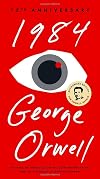
Reading this for the first time as it never came up as assigned reading in school. Figured now was as good a time as any to experience 1984. And I don’t think I could’ve been more right while simultaneously being more wrong.
Choosing this moment to read about an evil totalitarian government who changes history, erases people, rewrites facts, silences any who oppose or challenge them, and demands your love for it all… Ya I didn’t need to immerse in this right now.
I will proudly cling show more to my printed copy of this until the day BB demands I burn it (and probably for awhile after that)… but I will never ever read this on purpose again. I made annotations for reference if need be, but I hate this so much. I hate this for us. show less
Choosing this moment to read about an evil totalitarian government who changes history, erases people, rewrites facts, silences any who oppose or challenge them, and demands your love for it all… Ya I didn’t need to immerse in this right now.
I will proudly cling show more to my printed copy of this until the day BB demands I burn it (and probably for awhile after that)… but I will never ever read this on purpose again. I made annotations for reference if need be, but I hate this so much. I hate this for us. show less
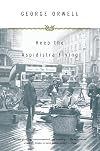
Yeesh. You know when satire is so spot-on that it becomes too uncomfortable to bear? That is what happened here with Gordon Comstock, a pretentious poet who yearns to escape money’s corrupting influence on his artistic aspirations by quitting his job and trying to live a life of “integrity.” Gordon has to learn the hard way what Maugham succinctly states in Of Human Bondage: “Money is like a sixth sense without which you cannot make a complete use of the other five.”
It turns out show more that poverty ain’t all it’s cracked up to be (it also doesn’t hurt that Gordon has no talent or work-ethic). Gordon is just the worst and reading about his spectacular screw ups made me genuinely uncomfortable. If you too hate money and have a strong stomach for unsavory characters, maybe give this one a go if; if not, don’t feel too bad about skipping out on this early Orwell experiment. show less
It turns out show more that poverty ain’t all it’s cracked up to be (it also doesn’t hurt that Gordon has no talent or work-ethic). Gordon is just the worst and reading about his spectacular screw ups made me genuinely uncomfortable. If you too hate money and have a strong stomach for unsavory characters, maybe give this one a go if; if not, don’t feel too bad about skipping out on this early Orwell experiment. show less
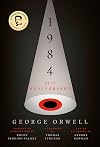
Short summary:
This book follows Winston Smith, a man living in the totalitarian state of Oceania, where every part of life is controlled by the Party and its leader, Big Brother. Citizens are constantly watched through telescreens, and even independent thoughts are considered crimes. Winston works at the Ministry of Truth, where his job is to rewrite historical records and newspaper articles so that the past always matches whatever the Party currently claims is true.
Even though he has show more lived under this system his whole life, Winston secretly hates the Party and begins committing small acts of rebellion. He starts writing in a forbidden diary and questioning the reality that the Party presents. Eventually he begins a secret relationship with Julia, a woman who also quietly resists the Party in her own way. For a while they believe they might have found small moments of freedom within a completely controlled society.
Later, an influential Party member named O’Brien pretends to be part of a secret resistance group called the Brotherhood and gives Winston a book that supposedly explains how the Party maintains its power. Winston believes there might actually be a rebellion against the system.
However, everything turns out to be a trap. Winston and Julia are arrested by the Thought Police and taken to the Ministry of Love, where Winston is tortured and psychologically broken. O’Brien reveals that the Party’s goal is not just obedience but total control over truth and reality itself. Through torture and fear, Winston eventually betrays Julia and abandons his rebellious thoughts.
By the end of the novel, Winston is released back into society as a completely changed person. The Party has successfully broken him, and he no longer questions its authority. Sitting alone in a café, he finally accepts the reality the Party has created and realizes that he truly loves Big Brother.
Review:
This book completely lived up to the hype for me. I absolutely loved it.
What immediately stood out to me is how unsettling and believable the world feels. The society in 1984 is built around total control. The Party doesn’t just control people’s actions but also their thoughts, their memories, and even the meaning of words. The idea that history can simply be rewritten whenever it becomes inconvenient is one of the most disturbing aspects of the book.
The structure of the government, especially the four ministries, really shows how extreme this control is. The names themselves are already disturbing because they mean the exact opposite of what the institutions actually do:
The Ministry of Truth is where Winston works. Despite its name, it is responsible for spreading lies. Employees constantly rewrite historical records, newspapers, and documents so that the past always matches whatever the Party currently claims is true. If the Party predicted something that didn’t happen, the records are simply changed so it looks like they were right all along. The idea that the past can be constantly rewritten like this is one of the most disturbing concepts in the book.
The Ministry of Love is probably the most terrifying one. Instead of love, it is where prisoners are tortured until they completely submit to the Party. The goal isn’t just punishment. The Party wants to break people mentally so that they truly believe in its power. By the time Winston leaves the Ministry of Love, he isn’t just pretending to obey the Party anymore. His mind has been completely reshaped.
Then there is the Ministry of Peace, which is responsible for war. Oceania is constantly fighting one of the other superstates, and the war never seems to end. The war keeps people distracted, afraid, and united against a common enemy. It’s another way the Party maintains control over society.
Finally there is the Ministry of Plenty, which supposedly manages the economy and resources. In reality it constantly announces false production numbers and claims that living conditions are improving, even though people are actually living with shortages and rationing. Just like everything else in this society, even basic facts about everyday life are manipulated.
All of these ministries together create a system where the Party controls not just people’s actions but their understanding of reality itself. History, language, information, and even personal memories are constantly shaped by those in power.
I also really loved the section with the book that O’Brien gives Winston. It explains the structure of the Party’s power and how the system is designed to keep itself in control forever. That part of the novel slows the story down a bit, but I found it fascinating because it makes the entire world of the book feel even more real and terrifying.
What really makes this book stand out to me, though, is the ending. Most dystopian stories follow a similar structure where the main character eventually fights back against the system or at least manages to escape it in some way. 1984 does something completely different. Instead of giving the reader hope, the story shows just how powerful and overwhelming the system really is.
Winston doesn’t just get punished physically. The Party slowly breaks down his entire sense of reality and identity. By the end, he isn’t just pretending to obey the Party to survive. He genuinely believes in it. That transformation is what makes the ending so disturbing and memorable.
It’s rare to read a dystopian story that fully commits to such a bleak conclusion. Instead of offering a hopeful rebellion or a chance for change, the book shows what a system of absolute control could actually look like if it truly succeeded.
Final Thoughts:
This book is one of the most powerful dystopian stories I’ve read. The world is unsettling, the ideas behind the system are deeply disturbing, and the ending is completely different from what most stories in this genre usually do. Instead of offering hope, the book shows just how terrifying total control over truth and reality could be. It’s a very intense reading experience, and I’m really glad I finally read it. show less
Even though he has
Later, an influential Party member named O’Brien pretends to be part of a secret resistance group called the Brotherhood and gives Winston a book that supposedly explains how the Party maintains its power. Winston believes there might actually be a rebellion against the system.
However, everything turns out to be a trap. Winston and Julia are arrested by the Thought Police and taken to the Ministry of Love, where Winston is tortured and psychologically broken. O’Brien reveals that the Party’s goal is not just obedience but total control over truth and reality itself. Through torture and fear, Winston eventually betrays Julia and abandons his rebellious thoughts.
By the end of the novel, Winston is released back into society as a completely changed person. The Party has successfully broken him, and he no longer questions its authority. Sitting alone in a café, he finally accepts the reality the Party has created and realizes that he truly loves Big Brother.
Review:
This book completely lived up to the hype for me. I absolutely loved it.
What immediately stood out to me is how unsettling and believable the world feels. The society in 1984 is built around total control. The Party doesn’t just control people’s actions but also their thoughts, their memories, and even the meaning of words. The idea that history can simply be rewritten whenever it becomes inconvenient is one of the most disturbing aspects of the book.
The structure of the government, especially the four ministries, really shows how extreme this control is. The names themselves are already disturbing because they mean the exact opposite of what the institutions actually do:
The Ministry of Truth is where Winston works. Despite its name, it is responsible for spreading lies. Employees constantly rewrite historical records, newspapers, and documents so that the past always matches whatever the Party currently claims is true. If the Party predicted something that didn’t happen, the records are simply changed so it looks like they were right all along. The idea that the past can be constantly rewritten like this is one of the most disturbing concepts in the book.
The Ministry of Love is probably the most terrifying one. Instead of love, it is where prisoners are tortured until they completely submit to the Party. The goal isn’t just punishment. The Party wants to break people mentally so that they truly believe in its power. By the time Winston leaves the Ministry of Love, he isn’t just pretending to obey the Party anymore. His mind has been completely reshaped.
Then there is the Ministry of Peace, which is responsible for war. Oceania is constantly fighting one of the other superstates, and the war never seems to end. The war keeps people distracted, afraid, and united against a common enemy. It’s another way the Party maintains control over society.
Finally there is the Ministry of Plenty, which supposedly manages the economy and resources. In reality it constantly announces false production numbers and claims that living conditions are improving, even though people are actually living with shortages and rationing. Just like everything else in this society, even basic facts about everyday life are manipulated.
All of these ministries together create a system where the Party controls not just people’s actions but their understanding of reality itself. History, language, information, and even personal memories are constantly shaped by those in power.
I also really loved the section with the book that O’Brien gives Winston. It explains the structure of the Party’s power and how the system is designed to keep itself in control forever. That part of the novel slows the story down a bit, but I found it fascinating because it makes the entire world of the book feel even more real and terrifying.
What really makes this book stand out to me, though, is the ending. Most dystopian stories follow a similar structure where the main character eventually fights back against the system or at least manages to escape it in some way. 1984 does something completely different. Instead of giving the reader hope, the story shows just how powerful and overwhelming the system really is.
Winston doesn’t just get punished physically. The Party slowly breaks down his entire sense of reality and identity. By the end, he isn’t just pretending to obey the Party to survive. He genuinely believes in it. That transformation is what makes the ending so disturbing and memorable.
It’s rare to read a dystopian story that fully commits to such a bleak conclusion. Instead of offering a hopeful rebellion or a chance for change, the book shows what a system of absolute control could actually look like if it truly succeeded.
Final Thoughts:
This book is one of the most powerful dystopian stories I’ve read. The world is unsettling, the ideas behind the system are deeply disturbing, and the ending is completely different from what most stories in this genre usually do. Instead of offering hope, the book shows just how terrifying total control over truth and reality could be. It’s a very intense reading experience, and I’m really glad I finally read it. show less
Lists
Reading LIst (16)
My Wishlist (1)
bound (1)
Futurism Works (1)
Didactic Fiction (1)
Classics To read (1)
Read (1)
Europe (1)
Books to buy (1)
Banned Books (1)
100 (1)
2014 (1)
Antiheroes (1)
Wishlist (1)
Secret Histories (1)
AP Lit (1)
Science Fiction (1)
Read This Next (1)
aijowenuwaneaw (1)
WISHLIST (1)
Take Four Books (1)
Ambleside Books (1)
Titles to Avoid (1)
top 100 (1)
Jim's Bookshelf (1)
Best Young Adult (1)
Revolutions (1)
Books I've read (1)
stories at work (1)
2025 (1)
Best First Lines (1)
Backlisted (1)
To Read (1)
Short and Sweet (1)
SF Masterworks (1)
Books I've Read (1)
Elevenses (1)
Future Visions (1)
Classics (1)
Check Library (1)
Page Turners (1)
Books (1)
BitLife (2)
2024 Reads (2)
Read (2)
Banned Books (2)
BBC Big Read (2)
Overdue Podcast (2)
Non-Fiction (2)
Tagged Cold War (2)
Read (3)
Folio Society (3)
Five star books (4)
1930s (6)
Unread books (3)
Classic Sci-Fi (2)
scav (2)
Art of Reading (2)
Carole's List (2)
Best Satire (3)
el (3)
current (1)
Sense of place (1)
War Literature (1)
Totalitarianism (1)
100 knjiga (1)
um actually (1)
THE WAR ROOM (1)
Wishlist (1)
A Novel Cure (1)
Best Dystopias (2)
. (2)
Daria (2)
Pageturners (2)
BBC Big Read (2)
1940s (2)
Delete This List (2)
BBC Top Books (2)
. (2)
Favourite Books (2)
Awards


You May Also Like


Associated Authors
Statistics
- Works
- 392
- Also by
- 65
- Members
- 221,440
- Popularity
- #19
- Rating
- 4.1
- Reviews
- 3,381
- ISBNs
- 3,144
- Languages
- 54
- Favorited
- 976


