
Gish Jen
Author of Typical American
About the Author
Image credit: Photo © 2004 J.D. Sloan
Works by Gish Jen
Associated Works
The Story and Its Writer: An Introduction to Short Fiction (1976) — Contributor — 1,214 copies, 3 reviews
Race, Class, and Gender in the United States: An Integrated Study (1992) — Contributor, some editions — 561 copies
Writers on Writing: Collected Essays from the New York Times (2001) — Contributor — 479 copies, 5 reviews
Why We Write: 20 Acclaimed Authors on How and Why They Do What They Do (2013) — Contributor — 206 copies, 10 reviews
The Workshop: Seven Decades of the Iowa Writers Workshop - 43 Stories, Recollections, & Essays on Iowa's Place in Twentieth-Century American Literature (1999) — Contributor — 197 copies, 1 review
This Is My Best: Great Writers Share Their Favorite Work (2004) — Contributor — 175 copies, 3 reviews
Charlie Chan Is Dead: An Anthology of Contemporary Asian American Fiction (1993) — Contributor — 169 copies, 3 reviews
Half and Half: Writers on Growing Up Biracial and Bicultural (1998) — Contributor — 154 copies, 1 review
Growing Up Ethnic in America: Contemporary Fiction About Learning to Be American (1999) — Contributor — 120 copies
Charlie Chan Is Dead 2: At Home in the World: An Anthology of Contemporary Asian-American Fiction (2004) — Contributor — 97 copies, 1 review
More Stories We Tell: The Best Contemporary Short Stories by North American Women (2004) — Contributor — 66 copies
Tagged
Common Knowledge
- Other names
- Jen, Lillian
任璧蓮 - Birthdate
- 1955-08-12
- Gender
- female
- Education
- Harvard Colllege (AB|1977)
University of Iowa (MFA) - Awards and honors
- Lannan Literary Award (Fiction, 1999)
Strauss Living Award - Agent
- Maxine Groffsky
- Nationality
- USA
- Birthplace
- Long Island, New York, USA
- Places of residence
- Long Island, New York, USA
Cambridge, Massachusetts, USA - Associated Place (for map)
- USA
Members
Reviews
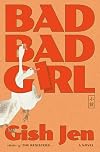
If I write about you, if I write to you, will I understand you better? from Bad Bad Girl by Gish Jen
Gish Jen began to write her mother’s story as a memoir but realized she had to imagine too much, so instead she wrote a novel. It is the story of a strong minded woman, a survivor of the Battle of Shanghai, disappointed in her life, navigating life as a Chinese woman raising American children. Her mothering skills leave indelible marks, calling her daughter ‘bad bad girl’ for show more outspokenness.
Now, this is the mother I remember, tactful as a sledgehammer. from Bad Bad Girl by Gish Jen
Her mother was an excellent student in a Catholic school that taught her how to think. She left Shanghai for an American education. Before she completed her dissertation, she married another Chinese immigrant, a man with a Phd. Children soon followed. Their fortunes rose, then in late life, fell.
Indeed, my entire childhood was a master class in perseverance. If I had a patron saint, it would be Saint Jude, the patron saint of lost causes. from Bad Bad Girl by Gish Jen
Gish Jen resurrects her mother in the story, and is in dialogue with her, endeavoring to understand her life and their relationship. We learn about the wealthy family left behind in Shanghai, a sister worked nearly to death in a reeducation camp, the loss of their fortune and home, the constant fear of death, their continual plea for financial support.
Gish Jen survived and with love from her father and friends, and her love of books and writing. She found success in her career and formed a loving marriage and family. “She has hurt but not destroyed me,” she writes, “Indeed, she has perhaps fueled me.”
Poignant, sometimes heart-rending, sometimes funny, I enjoyed this original blend of memoir and fiction.
Thanks to the publisher for a free book through NetGalley. show less
Gish Jen began to write her mother’s story as a memoir but realized she had to imagine too much, so instead she wrote a novel. It is the story of a strong minded woman, a survivor of the Battle of Shanghai, disappointed in her life, navigating life as a Chinese woman raising American children. Her mothering skills leave indelible marks, calling her daughter ‘bad bad girl’ for show more outspokenness.
Now, this is the mother I remember, tactful as a sledgehammer. from Bad Bad Girl by Gish Jen
Her mother was an excellent student in a Catholic school that taught her how to think. She left Shanghai for an American education. Before she completed her dissertation, she married another Chinese immigrant, a man with a Phd. Children soon followed. Their fortunes rose, then in late life, fell.
Indeed, my entire childhood was a master class in perseverance. If I had a patron saint, it would be Saint Jude, the patron saint of lost causes. from Bad Bad Girl by Gish Jen
Gish Jen resurrects her mother in the story, and is in dialogue with her, endeavoring to understand her life and their relationship. We learn about the wealthy family left behind in Shanghai, a sister worked nearly to death in a reeducation camp, the loss of their fortune and home, the constant fear of death, their continual plea for financial support.
Gish Jen survived and with love from her father and friends, and her love of books and writing. She found success in her career and formed a loving marriage and family. “She has hurt but not destroyed me,” she writes, “Indeed, she has perhaps fueled me.”
Poignant, sometimes heart-rending, sometimes funny, I enjoyed this original blend of memoir and fiction.
Thanks to the publisher for a free book through NetGalley. show less
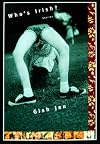
Gish Jen is an uncommon writer, conversant in multiple cultures and identities. The wit she sprinkles into her stories can produce a smile and a laugh, just before it quickens deeper emotions. [Who’s Irish?], a collection of short fiction, strips the layers off of what it means to be Chinese and American and both at the same time.
Among the most memorable stories in the collection is the title story, originally published in The New Yorker in 1998. Jen’s tale of a Chinese grandmother show more maneuvering the landmines of modern American child rearing is simple and fresh, given The New Yorker’s typical voice and subject matter for short fiction. There’s no sex obsessed tales of betrayal or post-modern alcohol stained ennui. The Chinese grandmother in the story is trying to care her granddaughter, the wild child of her daughter and her lazy, Irish son-in-law. Her daughter’s permissive nature has gone to seed, both in the case of the husband and the child. The strong wills of the grandmother and the child collide in a disaster. When the dust settles, grandmother is welcome only in the home of her Irish in-laws. The story is a biting examination of how two different traditional cultures have assimilated into an American landscape; on what remains and what doesn’t; on the lack of substance and the lack of any deep connection to history in the resulting identities.
Similarly, in the final and longest story in the collection, ‘House, House, Home,’ Pammie, a college girl from a traditional, first-generation Chinese family falls into a relationship with her college art professor. They marry and have children. Her family disapproves and ostracizes her because she married a white man or because she married a self-important oaf or because she married someone whose chosen profession is so esoteric – he doesn’t even produce art, he just thinks about it and talks about it. Whatever the reason, Pammie begins to indulge in her own artistic notion, and her husband leaves her. In picking up the pieces of her life, she reconnects with her family and her own identity.
Jen returns to this topic in her stories often, identifying the funny ironies of remaking yourself in a new culture. Along the way, she redefines what it means to be American. While the stories in [Who’s Irish?] are a little uneven, all of them are marked with her sharp tongue and keen eye, such that the whole is an evocative experience.
Bottom Line: A slightly uneven collection of stories that examine the meandering concept of cultural identity in the context of modern American life.
3 ½ bones!!!!! show less
Among the most memorable stories in the collection is the title story, originally published in The New Yorker in 1998. Jen’s tale of a Chinese grandmother show more maneuvering the landmines of modern American child rearing is simple and fresh, given The New Yorker’s typical voice and subject matter for short fiction. There’s no sex obsessed tales of betrayal or post-modern alcohol stained ennui. The Chinese grandmother in the story is trying to care her granddaughter, the wild child of her daughter and her lazy, Irish son-in-law. Her daughter’s permissive nature has gone to seed, both in the case of the husband and the child. The strong wills of the grandmother and the child collide in a disaster. When the dust settles, grandmother is welcome only in the home of her Irish in-laws. The story is a biting examination of how two different traditional cultures have assimilated into an American landscape; on what remains and what doesn’t; on the lack of substance and the lack of any deep connection to history in the resulting identities.
Similarly, in the final and longest story in the collection, ‘House, House, Home,’ Pammie, a college girl from a traditional, first-generation Chinese family falls into a relationship with her college art professor. They marry and have children. Her family disapproves and ostracizes her because she married a white man or because she married a self-important oaf or because she married someone whose chosen profession is so esoteric – he doesn’t even produce art, he just thinks about it and talks about it. Whatever the reason, Pammie begins to indulge in her own artistic notion, and her husband leaves her. In picking up the pieces of her life, she reconnects with her family and her own identity.
Jen returns to this topic in her stories often, identifying the funny ironies of remaking yourself in a new culture. Along the way, she redefines what it means to be American. While the stories in [Who’s Irish?] are a little uneven, all of them are marked with her sharp tongue and keen eye, such that the whole is an evocative experience.
Bottom Line: A slightly uneven collection of stories that examine the meandering concept of cultural identity in the context of modern American life.
3 ½ bones!!!!! show less
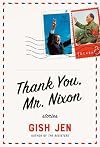
I loved these interlinked stories for their humor, their humanity, and their insight into life in China and the lives of Chinese Americans. Starting from the first story, Thank You, Mr. Nixon, recalling the president’s China visit–and Pat Nixon’s red coat–the author takes us into the China behind the ‘Potemkin’ façade projected to the West. Gish Jen creates conflicted and real families and characters who take us into recognizable, and foreign, situations.
But the bamboo curtain show more had parted. Not all that wide, really, but wide enough for tour buses to get through. from Thank You, Mr. Nixon by Gish Jen
The humorous tone is tempered by references to past trauma. “I remember when the Japanese came,” an old man tells his caretaker with Chinese grandparents, “The Japanese came and boom! Bombs. I once say a girl blown up.”
Characters struggle for a green card, are pressured to fulfill parental dreams but flounder, looking for purpose. They go to China looking for roots and beauty and discover spies and people clamoring for sponsorship. They cope with Covid craziness. They learn the hazards of doing business with China. And, they learn by returning that they can’t go home again.
II highly recommend these stories.
I received a free egalley from the publisher through NetGalley. My review is fair and unbiased. show less
But the bamboo curtain show more had parted. Not all that wide, really, but wide enough for tour buses to get through. from Thank You, Mr. Nixon by Gish Jen
The humorous tone is tempered by references to past trauma. “I remember when the Japanese came,” an old man tells his caretaker with Chinese grandparents, “The Japanese came and boom! Bombs. I once say a girl blown up.”
Characters struggle for a green card, are pressured to fulfill parental dreams but flounder, looking for purpose. They go to China looking for roots and beauty and discover spies and people clamoring for sponsorship. They cope with Covid craziness. They learn the hazards of doing business with China. And, they learn by returning that they can’t go home again.
II highly recommend these stories.
I received a free egalley from the publisher through NetGalley. My review is fair and unbiased. show less

Just the idea of Gish Jen writing a dystopia was enough to make this book irresistible even if I wasn’t already a big fan of dystopias.
THE RESISTERS imagines a world not so far into the future, where the landscape has changed due rising waters, and daily life is watched over by an artificial intelligence named "Aunt Nettie." Automation has directed and shaped the current society and the populace of America has been separated into the “Netted” and the “Surplus.” The former live on show more the high ground and are employed, the latter lives on swamp land or water and are not employed. The latter live on meager “basic income” payments. Immigrants have been shipped back to wherever they came from through a “Send’mBack” policy. The story is filled with the amusing and apt lingo of this future; people are noted as being “Angel-fair”or “Coppertoned,” for instance, and there is the AutoHouse, AutoLawn, SmartGlasses, AutoDogs, SkyCars, Housebots, and NettieSnacks and so on.
This is a family story, told by the father who had been an ESL teacher now deemed “unemployable” and thus “Surplus”. His wife is a lawyer still trying to do good and find justice in the courts under what’s left of the constitution. The Surplus are only allowed one try at having a child and the two have a daughter, Gwen, who turns out to have been gifted with an amazing throwing arm. As she grows up, the family and others cautiously start what becomes a very successful underground baseball league (despite “Unlawful Assembly”) with Gwen as one of its stars. Of course, even with all precautions taken, surveillance is everywhere and the “Netted” soon find out about Gwen and hope to recruit her by dangling the chance of college (only for the “Netted”, of course).
A delightful book: clever, suspenseful, and oftentimes funny; THE RESISTERS is awfully hard to put down. There is plenty of baseball content—perhaps the novel might not be recommended to the baseball averse, but one would certainly miss out on a great read. Gish Jen has written a throughly engaging dystopia using Gwen, her family, and friends to remind of us in a timely way of love, hope and resistance. show less
THE RESISTERS imagines a world not so far into the future, where the landscape has changed due rising waters, and daily life is watched over by an artificial intelligence named "Aunt Nettie." Automation has directed and shaped the current society and the populace of America has been separated into the “Netted” and the “Surplus.” The former live on show more the high ground and are employed, the latter lives on swamp land or water and are not employed. The latter live on meager “basic income” payments. Immigrants have been shipped back to wherever they came from through a “Send’mBack” policy. The story is filled with the amusing and apt lingo of this future; people are noted as being “Angel-fair”or “Coppertoned,” for instance, and there is the AutoHouse, AutoLawn, SmartGlasses, AutoDogs, SkyCars, Housebots, and NettieSnacks and so on.
This is a family story, told by the father who had been an ESL teacher now deemed “unemployable” and thus “Surplus”. His wife is a lawyer still trying to do good and find justice in the courts under what’s left of the constitution. The Surplus are only allowed one try at having a child and the two have a daughter, Gwen, who turns out to have been gifted with an amazing throwing arm. As she grows up, the family and others cautiously start what becomes a very successful underground baseball league (despite “Unlawful Assembly”) with Gwen as one of its stars. Of course, even with all precautions taken, surveillance is everywhere and the “Netted” soon find out about Gwen and hope to recruit her by dangling the chance of college (only for the “Netted”, of course).
A delightful book: clever, suspenseful, and oftentimes funny; THE RESISTERS is awfully hard to put down. There is plenty of baseball content—perhaps the novel might not be recommended to the baseball averse, but one would certainly miss out on a great read. Gish Jen has written a throughly engaging dystopia using Gwen, her family, and friends to remind of us in a timely way of love, hope and resistance. show less
Lists
Awards


You May Also Like


Associated Authors
Statistics
- Works
- 15
- Also by
- 26
- Members
- 2,745
- Popularity
- #9,346
- Rating
- 3.7
- Reviews
- 82
- ISBNs
- 73
- Languages
- 5
- Favorited
- 5

