
Andrew Glass
Author of Folks Call Me Appleseed John
Works by Andrew Glass
Bewildered for Three Days: As to Why Daniel Boone Never Wore His Coonskin Cap (2000) 54 copies, 3 reviews
Bad Guys: True Stories of Legendary Gunslingers, Sidewinders, Fourflushers, Drygulchers, Bushwhackers, Freebooters, and Downright Bad Guys and Gals of the Wild West (1998) 35 copies, 1 review
Davy Crockett and Sally Ann Thunder 3 copies
Scottish Legends 1 copy
I Will Eat Your Heart 1 copy
The Wish Giver 1 copy
Associated Works
Professor Popkin's Prodigious Polish: A Tale of Coven Tree (1990) — Illustrator — 50 copies, 1 review
Sir Arthur Conan Doyle's the Adventures of Sherlock Holmes/Book 2 (Bk. 2) (1981) — Illustrator, some editions — 39 copies
Tagged
Common Knowledge
- Gender
- male
- Education
- Tyler School of Art (Fine arts)
- Short biography
- Andrew Glass grew up in Pittsburgh, Pennsylvania, the oldest of eight children (although he has a twin). He majored in fine arts at the Tyler School of Art in Philadelphia and began illustrating children's books simply because he enjoys drawing. [from Larger Than Life (1991)
- Nationality
- USA
- Places of residence
- Pittsburgh, Pennsylvania, USA
- Associated Place (for map)
- Pennsylvania, USA
Members
Reviews
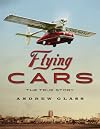
Roadable airplanes, or flying cars, have always been a dream of aeronautical engineers, since the dawn of the age of flight. Glass points out that even before we had the technology to achieve flight, inventors like Leonardo da Vinci were figuring out the means to achieve this feat. Glass takes his reader on an odyssey that begins with the first efforts at flight, and ends with modern day innovations in auto-plane fusion. Each chapter of this book takes the reader a step forward in the show more history of attempts at combining cars and airplanes into a roadable aircraft for the masses. The chapters are arranged chronologically by famous inventor or benchmark in design. There are profuse sketches, illustrations, and photographs to depict the imaginative fancies of these inventors, some of which were a little more than fancies. The reader will be truly amazed by the progress that has historically been made in this direction, as the little known history of flying cars comes to light.
As I read each chapter, I expected the designs for these cross-breeds to gradually unfold in complexity. This wasn't quite the case, however: while one inventor chose to make his aircraft with a flight-component assemblage, another inventor chose to make a three-wheeled aircraft with stable compact wings and rudder. The only commonalty one can find in these composite structures, is that generally the four-wheeled models were meant to look more like cars, requiring a flight component assembly, while the three-wheeled models were designed to eliminate the flight-component assembly altogether. Buckminster Fuller is given credit for having popularized the latter concept.
The rationale that each inventor gives for this kind of transportation is also precariously dissimilar. The inventors of the early 19th century dreamed of a car that could avoid unpaved roadways, since most roadways during that time were muddy and rutted before the era of federally funded highways. As roadways developed, however, inventors of flying cars came up against resistance of the average consumer. Flying cars could not have helicopter propellers because of qualms about blow-back from the propellers flattening rose bushes and lawns or tearing off shingles of houses. There were also worries over whether flying cars would crash land on residential properties. As more of these worries flourished, inventors had to come up with more fantastic claims for their product's utility. Bucky Fuller dreamed up a simplistic future where cars simply took off from roadways and landed comfortably in a suburban saucer-like residence. Daniel Zuck, designing his car during the Cold War, advertised the use of flying cars to scatter dense urban populations in the event of a nuclear attack. Inventors used any dream or fear to pitch their product. Glass leaves us wondering, at the end of this odyssey, why these dreams have never been realized. His afterword leaves us with a few clues to his own thinking on this matter. He feels that flying cars have always been a worry for the public because of the fear of drunken or careless pilots falling out of the sky onto residential homes, suggesting that with new automated computer technology, these threats will eventually become innocuous. My final question, however, is that with decreased commercial flight regulations, what will we do with the plethora of fully-automated drone cars in the sky by that time? Privacy is a little more than a fear that a flying car will crash a party. This is a thought provoking book for young adult readers with an interest in aviation engineering. show less
As I read each chapter, I expected the designs for these cross-breeds to gradually unfold in complexity. This wasn't quite the case, however: while one inventor chose to make his aircraft with a flight-component assemblage, another inventor chose to make a three-wheeled aircraft with stable compact wings and rudder. The only commonalty one can find in these composite structures, is that generally the four-wheeled models were meant to look more like cars, requiring a flight component assembly, while the three-wheeled models were designed to eliminate the flight-component assembly altogether. Buckminster Fuller is given credit for having popularized the latter concept.
The rationale that each inventor gives for this kind of transportation is also precariously dissimilar. The inventors of the early 19th century dreamed of a car that could avoid unpaved roadways, since most roadways during that time were muddy and rutted before the era of federally funded highways. As roadways developed, however, inventors of flying cars came up against resistance of the average consumer. Flying cars could not have helicopter propellers because of qualms about blow-back from the propellers flattening rose bushes and lawns or tearing off shingles of houses. There were also worries over whether flying cars would crash land on residential properties. As more of these worries flourished, inventors had to come up with more fantastic claims for their product's utility. Bucky Fuller dreamed up a simplistic future where cars simply took off from roadways and landed comfortably in a suburban saucer-like residence. Daniel Zuck, designing his car during the Cold War, advertised the use of flying cars to scatter dense urban populations in the event of a nuclear attack. Inventors used any dream or fear to pitch their product. Glass leaves us wondering, at the end of this odyssey, why these dreams have never been realized. His afterword leaves us with a few clues to his own thinking on this matter. He feels that flying cars have always been a worry for the public because of the fear of drunken or careless pilots falling out of the sky onto residential homes, suggesting that with new automated computer technology, these threats will eventually become innocuous. My final question, however, is that with decreased commercial flight regulations, what will we do with the plethora of fully-automated drone cars in the sky by that time? Privacy is a little more than a fear that a flying car will crash a party. This is a thought provoking book for young adult readers with an interest in aviation engineering. show less
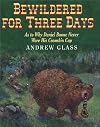
Older Daniel Boone is having his portrait painted when the artist asks where his coonskin cap is. Boone tells the artist that he has not worn the hat since he was a boy. He then proceeds to tell his early boyhood tales of frontier life, befriending Little Beaver of the Delaware Brave, becoming face-to-face with a bear, and taking cover in a tree with a family of raccoons. Boone appreciates the raccoon's hospitality so much that he vows never to wear his coonskin cap again.
Until reading this show more book, I had no idea of the story behind Daniel Boone's coonskin cap. The tale was interesting and full of adventure. The illustrations paired nicely with all of the action taking place in the book. I feel like I received a small history lesson while being entertained the entire time. show less
Until reading this show more book, I had no idea of the story behind Daniel Boone's coonskin cap. The tale was interesting and full of adventure. The illustrations paired nicely with all of the action taking place in the book. I feel like I received a small history lesson while being entertained the entire time. show less
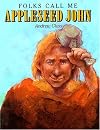
Many people don't know that the real Johnny Appleseed, John Chapman, was quite a tale spinner. One story John loved to tell was about the time his half brother, Nathaniel, came to live with him. Nathaniel, who was used to a comfortable life in Massachusetts, was not exactly well suited for rough living in the wilderness of northwestern Pennsylvania with his free-spirited brother. He certainly did not expect to find John dressed in a burlap sack with a mush pot on his head, living in a hollow show more sycamore tree. John had to bail Nathaniel out of trouble more than once. show less
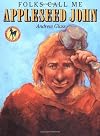
Folks Call Me Appleseed John is about the legend of Johnny Appleseed. The main point of the book is to demonstrate perserverence and kindness. This book has very rustic illustrations, which I like. This type of illustration enhances the story. I really liked how in depth the story went. The legend that I knew was basically "Johnny Appleseed planted apple trees everywhere." This story goes into how John's half brother came to live with him, how they lived, and how John treated animals and show more Native Americans. I would recommend this book to other people because it was so good. I also like how at the end of the book it has a more detailed history of John. show less
Awards


You May Also Like


Associated Authors
Statistics
- Works
- 21
- Also by
- 19
- Members
- 744
- Popularity
- #34,143
- Rating
- 3.5
- Reviews
- 20
- ISBNs
- 36
- Languages
- 1