
Robert E. Vardeman
Author of The Klingon Gambit
About the Author
Disambiguation Notice:
Also writes under the pen names Daniel Moran, Jackson Lowry and Karl Lassiter.
one of the staff writers for the Jake Logan Slocum series.
Series
Works by Robert E. Vardeman
The People in Arms: Military Myth and National Mobilization since the French Revolution (2002) 9 copies
Energy Security and Global Politics: The Militarization of Resource Management (Routledge Global Security Studies) (2008) 8 copies
Crimson Skies: Spicy Air Tales Volume Two: The Great Helium War & Manhattan Mayhem (1999) — Author — 3 copies
Purification 2 copies
Isle of Lost Souls 2 copies
The Power And The Glory 1 copy
The Mating Web 1 copy
Feedback 1 copy
To Cat A Thief 1 copy
Timeless Lisa 1 copy
Ceneotaph Road 1 copy
A hatalon romjai 1 copy
The Hostile Dark 1 copy
Associated Works
Grimm, Grit, and Gasoline: Dieselpunk and Decopunk Fairy Tales (2019) — Contributor — 21 copies, 9 reviews
Tagged
Common Knowledge
- Legal name
- Vardeman, Robert Edward
- Other names
- Lassiter, Karl
Moran, Daniel
Lowry, Jackson
Hale, F. J.
Hudson, Edward S.
Appleton, Victor (house pseudonym) (show all 7)
Kenyon, Paul (house pseudonym) - Birthdate
- 1947-01-06
- Gender
- male
- Education
- University of New Mexico (MS|Materials Engineering)
University of Mexico (BS|Physics)
Irvin High School - Occupations
- novelist
editor
writer
lecturer
science fiction author - Organizations
- Sandia National Laboratories
Bubonicon
Cenotaph Corporation - Awards and honors
- Hugo Award - Best Fan Writer Nomination (1972)
- Nationality
- USA
- Birthplace
- Mineral Wells, Texas, USA
- Places of residence
- Albuquerque, New Mexico, USA
- Disambiguation notice
- Also writes under the pen names Daniel Moran, Jackson Lowry and Karl Lassiter.
one of the staff writers for the Jake Logan Slocum series. - Associated Place (for map)
- USA
Members
Discussions
Confucian confusion in Good Show Sir! — bad science fiction and fantasy covers (January 27)
Powerful Horn of War in Good Show Sir! — bad science fiction and fantasy covers (December 2024)
Reviews

A tough, skilled and rather clever dog sled courier is delivering a jar to a wizard. The jar turns out to contain the spirit of an ancient philosopher ascetic, who posthumously has decided he regrets his choices and now desires nothing more than to witness the excesses of human activity he denied himself in life. He also just won't shut up about it. They get attacked by warriors riding giant dogs, and then a sentient raven shows up and kills the surviving attacker before he can be show more interrogated. And that's the first 30 pages. In the next few dozen, we will meet an ancient flying city, a demon ape in a castle filled with the people it has killed, and a beautiful warrior who seems likely to be more than she seems.
At first glance, a basic sword & sorcery world wherein all characters are heightened, every culture rides a different kind of oversized animal (dogs, eagles, badgers, bears), the characters freely enjoy sexual encounters with a generous portion of the people they meet, and there are magical talismans and evil magic users to contend with. The book does, though, provide the central characters with a good measure of depth, put some thought into the dynamics and functions of the world, and it has a solid pace that keeps me turning the pages (as evidenced by my recap of the first 30, above). The sex -- while something I'm unaccustomed to in quite this level of detail -- is not speculative or any more gratuitous than the violence would be in most adventure novels. And the character relationships grow rather touching, all things considered. "The War of Powers" does not reinvent the wheel, but it does use a lot of well-worn spokes in fun combinations. I won't exactly be rushing to buy the second half of this saga, but I'm positive I will eventually do so. I'm pleasantly invested now and want to see how it ends. show less
At first glance, a basic sword & sorcery world wherein all characters are heightened, every culture rides a different kind of oversized animal (dogs, eagles, badgers, bears), the characters freely enjoy sexual encounters with a generous portion of the people they meet, and there are magical talismans and evil magic users to contend with. The book does, though, provide the central characters with a good measure of depth, put some thought into the dynamics and functions of the world, and it has a solid pace that keeps me turning the pages (as evidenced by my recap of the first 30, above). The sex -- while something I'm unaccustomed to in quite this level of detail -- is not speculative or any more gratuitous than the violence would be in most adventure novels. And the character relationships grow rather touching, all things considered. "The War of Powers" does not reinvent the wheel, but it does use a lot of well-worn spokes in fun combinations. I won't exactly be rushing to buy the second half of this saga, but I'm positive I will eventually do so. I'm pleasantly invested now and want to see how it ends. show less

One of the most prevalent tropes of the Star Trek franchise is the disruptive effect of the outsider to the smoothly-functioning operations of the U.S.S. Enterprise. The ship picks up a person or small group of people, these people introduce some foreign values to the crew, and then a few leaders (usually, but not always the captain) address the disruption caused and reassert Starfleet order. It's a recurrent trope in part because of its versatility and the number of variations possible, but show more that doesn't make it any less of a trope.
It's no surprise that the trope would appear eventually in a Star Trek novel, and Robert Vardeman's book seems to be the first employment of it in print. Yet for the first use in a novel with all of the greater possibilities the medium entails, his use of it is surprisingly unimaginative. Picking up after the events of his previous contribution to the series, [b:The Klingon Gambit|216650|The Klingon Gambit|Robert E. Vardeman|https://images.gr-assets.com/books/1290002309s/216650.jpg|2042161], Kirk and company are assigned to transport a small team of ambassadors to a system where two planets are on the verge of conflict. Along the way they rescue Lorelai, a woman of an unknown species from her disabled craft. Once on board her pacifist philosophy and powers of persuasion quickly sow dissent among the crew. Though Kirk and Spock attempt to battle her influence, they soon find their mission in jeopardy in the face of the resistance of the crew, who are following Lorelai's siren song (get it?) instead of the orders of their superiors.
It's fair to note that just because a trope isn't terrible just because it's a trope, and the subsequent use of it in Star Trek: The Next Generation, Star Trek: Enterprise, and other franchise media demonstrate some of the creative possibilities still possible with it. This is why Vardeman's novel is so disappointing; rather than take it in rich new directions possible thanks to the freedom inherent in a novel, he prefers to deliver instead what could have been just another warmed-over episode of the original series. There is little development of the plot and even less of the characters, as Vardeman relies upon the work of the series and what limited effort he put into his previous contribution to coast through. Even his main antagonist is defined more by her powers rather than any inherent motivation beyond "It's her job," and her employment in the story's resolution is predictable from the moment her abilities are defined. To be fair it's an improvement over his previous novel, but that reflects more the very low bar set by his earlier effort than a dramatic improvement in quality between the two books. Perhaps a subsequent novel would have been even better, but I can't say that I'm regretting that he never wrote another one for the franchise. show less
It's no surprise that the trope would appear eventually in a Star Trek novel, and Robert Vardeman's book seems to be the first employment of it in print. Yet for the first use in a novel with all of the greater possibilities the medium entails, his use of it is surprisingly unimaginative. Picking up after the events of his previous contribution to the series, [b:The Klingon Gambit|216650|The Klingon Gambit|Robert E. Vardeman|https://images.gr-assets.com/books/1290002309s/216650.jpg|2042161], Kirk and company are assigned to transport a small team of ambassadors to a system where two planets are on the verge of conflict. Along the way they rescue Lorelai, a woman of an unknown species from her disabled craft. Once on board her pacifist philosophy and powers of persuasion quickly sow dissent among the crew. Though Kirk and Spock attempt to battle her influence, they soon find their mission in jeopardy in the face of the resistance of the crew, who are following Lorelai's siren song (get it?) instead of the orders of their superiors.
It's fair to note that just because a trope isn't terrible just because it's a trope, and the subsequent use of it in Star Trek: The Next Generation, Star Trek: Enterprise, and other franchise media demonstrate some of the creative possibilities still possible with it. This is why Vardeman's novel is so disappointing; rather than take it in rich new directions possible thanks to the freedom inherent in a novel, he prefers to deliver instead what could have been just another warmed-over episode of the original series. There is little development of the plot and even less of the characters, as Vardeman relies upon the work of the series and what limited effort he put into his previous contribution to coast through. Even his main antagonist is defined more by her powers rather than any inherent motivation beyond "It's her job," and her employment in the story's resolution is predictable from the moment her abilities are defined. To be fair it's an improvement over his previous novel, but that reflects more the very low bar set by his earlier effort than a dramatic improvement in quality between the two books. Perhaps a subsequent novel would have been even better, but I can't say that I'm regretting that he never wrote another one for the franchise. show less
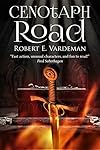
And just when I started being hopeful about this genre... Well, you can't always expect to be pleased about things in categories, anyway, so I should have held some of that hope back.
In Cenotaph Road, we meet Lan, a suppposedly skilled swordsman with some kind of innate ability for the arcane. After being framed for the rape and death of his... ummm... OK, I can't call her his lover, the thing is, the woman was a prostitute. In any case, Lan got framed for it, and so had to flee from his show more home. Trying to escape his pursuers, he entered the Cenotaph Road, which is something like a gateway system between parallel worlds. In one of those worlds, he met and saved a giant spider, Krek, and from then on, they started a weird partnership as they kept on having one adventure right after the other.
Let me say right now, the only reason I actually managed to finish tis book was because of Krek. I'm an insectophobic, but even so, the creature was an amazing character! In fact, if Lan had died somewhere along the way, and Krek kept on having these adventures on his own, I would have been more than happy to keep reading this series.
As it was, though, I had to suffer through Lan's stupidly repeated mistakes. And his thoughts. God, his thoughts were even worse!!! If there was ever a guy whipped at the prospect of a pretty female, it was definitely him! To the point where it made me wanna puke! The dude had issues, I'm telling you! You would think he got the message loud and clear after Zarella stringing him along - really, the woman had made it crystal clear the only thing that could make her heart race was wealth and riches - but noooo, not Lan! No, sir, the idiot had to go and fall in love at first sight with a weak-ass, cowardly, shallow, gold-digging bimbo - AGAIN! Oh, and, yeah, did I mention he hated Inyx, who, by the way, was the ONLY female actually respecting herself enough to fight back and try to be free whenever someone tried to enslave her? Yup, our dear boy Lan freaked at the mere idea that a woman would try and be strong or independent and not a slut - at first, at least, because after Thing #2 was out of the picture (good riddance, I say!), he suddenly saw Inyx's worth and was all too happy to smell the roses...
All in all, not a great read, and I'm very grateful it didn't take long to end. I don't know how much more of this I would have handled. Maybe Krek will end up realizing his true nature and eat up Lan in one of the future books? One can only hope...
***I was given an ARC from the publisher via NetGalley in exchange for an honest review. The opinion stated in this review is solely mine, and no compensation was given or taken to alter it.*** show less
In Cenotaph Road, we meet Lan, a suppposedly skilled swordsman with some kind of innate ability for the arcane. After being framed for the rape and death of his... ummm... OK, I can't call her his lover, the thing is, the woman was a prostitute. In any case, Lan got framed for it, and so had to flee from his show more home. Trying to escape his pursuers, he entered the Cenotaph Road, which is something like a gateway system between parallel worlds. In one of those worlds, he met and saved a giant spider, Krek, and from then on, they started a weird partnership as they kept on having one adventure right after the other.
Let me say right now, the only reason I actually managed to finish tis book was because of Krek. I'm an insectophobic, but even so, the creature was an amazing character! In fact, if Lan had died somewhere along the way, and Krek kept on having these adventures on his own, I would have been more than happy to keep reading this series.
As it was, though, I had to suffer through Lan's stupidly repeated mistakes. And his thoughts. God, his thoughts were even worse!!! If there was ever a guy whipped at the prospect of a pretty female, it was definitely him! To the point where it made me wanna puke! The dude had issues, I'm telling you! You would think he got the message loud and clear after Zarella stringing him along - really, the woman had made it crystal clear the only thing that could make her heart race was wealth and riches - but noooo, not Lan! No, sir, the idiot had to go and fall in love at first sight with a weak-ass, cowardly, shallow, gold-digging bimbo - AGAIN! Oh, and, yeah, did I mention he hated Inyx, who, by the way, was the ONLY female actually respecting herself enough to fight back and try to be free whenever someone tried to enslave her? Yup, our dear boy Lan freaked at the mere idea that a woman would try and be strong or independent and not a slut - at first, at least, because after Thing #2 was out of the picture (good riddance, I say!), he suddenly saw Inyx's worth and was all too happy to smell the roses...
All in all, not a great read, and I'm very grateful it didn't take long to end. I don't know how much more of this I would have handled. Maybe Krek will end up realizing his true nature and eat up Lan in one of the future books? One can only hope...
***I was given an ARC from the publisher via NetGalley in exchange for an honest review. The opinion stated in this review is solely mine, and no compensation was given or taken to alter it.*** show less

Thanks to Netgalley for the ARC!
As I was reading this, I was beset with a number of problems. The first being that it appeared to be tied to Vardeman's fantasy series, the second being that I was only given this book 3 days to read before it gets archived. So, freaking out, I made a couple of conclusions... the first being that I don't have to read the rest because this appears to be straight terraforming SF with no fantasy involved, and the second being a non-starter because I read show more fast.
That being said, I plowed through it with quite a bit of enjoyment!
This came out 5 years before Kim Stanley Robinson's [b:Red Mars|77507|Red Mars (Mars Trilogy, #1)|Kim Stanley Robinson|https://images.gr-assets.com/books/1440699787s/77507.jpg|40712], but it shares SOOO MUCH IN COMMON that I was both nostalgic and rather amazed, making me think about all the other SF authors who had done terraforming fiction with so much science and verve and I just couldn't think of any, so now this guy has got my attention.
Vardeman got so much right! :) Of course, he's working with a nearby star system rather than Mars, but that doesn't matter to me. The fact that he focuses on both story and the science is the thing!
Yes, it kinda felt like a Greek tragedy at times and other times it felt like the blurb was going to make it a lot more cheesy by the end than it really was.. and that's another thing! I do NOT like the blurb here for this novel. It cheapens the fact that so much story actually occurs and the world-building is rather impressive if heavy-handed in places.
I'm giving a lot of that a big long pass, because I remember Red Mars doing a lot of the same damn thing and yet BOTH of these belong in the same category and same level of world-building. Granted, Red Mars is clearly the winner, but I am not going to ignore the fact that this was very decent and comes nearly to the same heights as the other, later, novel.
Hats off! Respect!
On a purely story note, however, there's a number of plot holes I wish weren't there, but none of them are so bad as to make me dislike anything as a whole. :) show less
As I was reading this, I was beset with a number of problems. The first being that it appeared to be tied to Vardeman's fantasy series, the second being that I was only given this book 3 days to read before it gets archived. So, freaking out, I made a couple of conclusions... the first being that I don't have to read the rest because this appears to be straight terraforming SF with no fantasy involved, and the second being a non-starter because I read show more fast.
That being said, I plowed through it with quite a bit of enjoyment!
This came out 5 years before Kim Stanley Robinson's [b:Red Mars|77507|Red Mars (Mars Trilogy, #1)|Kim Stanley Robinson|https://images.gr-assets.com/books/1440699787s/77507.jpg|40712], but it shares SOOO MUCH IN COMMON that I was both nostalgic and rather amazed, making me think about all the other SF authors who had done terraforming fiction with so much science and verve and I just couldn't think of any, so now this guy has got my attention.
Vardeman got so much right! :) Of course, he's working with a nearby star system rather than Mars, but that doesn't matter to me. The fact that he focuses on both story and the science is the thing!
Yes, it kinda felt like a Greek tragedy at times and other times it felt like the blurb was going to make it a lot more cheesy by the end than it really was.. and that's another thing! I do NOT like the blurb here for this novel. It cheapens the fact that so much story actually occurs and the world-building is rather impressive if heavy-handed in places.
I'm giving a lot of that a big long pass, because I remember Red Mars doing a lot of the same damn thing and yet BOTH of these belong in the same category and same level of world-building. Granted, Red Mars is clearly the winner, but I am not going to ignore the fact that this was very decent and comes nearly to the same heights as the other, later, novel.
Hats off! Respect!
On a purely story note, however, there's a number of plot holes I wish weren't there, but none of them are so bad as to make me dislike anything as a whole. :) show less
Lists
Awards

You May Also Like


Associated Authors
Statistics
- Works
- 130
- Also by
- 28
- Members
- 5,387
- Popularity
- #4,625
- Rating
- 3.2
- Reviews
- 39
- ISBNs
- 236
- Languages
- 4
- Favorited
- 4
