
Clifford E. Trafzer
Author of Native Universe: Voices of Indian America
About the Author
Clifford E. Trafzer is Distinguished Professor of History and Rupert Costo Chair at the University of California, Riverside.
Works by Clifford E. Trafzer
Boarding School Blues: Revisiting American Indian Educational Experiences (Indigenous Education) (2006) 51 copies, 2 reviews
Exterminate Them! Written Accounts of the Murder, Rape, and Enslavement of Native Americans during the California Gold Rush (1999) 48 copies, 1 review
Renegade Tribe: The Palouse Indians and the Invasion of the Inland Pacific Northwest (1986) 25 copies
The Indian School on Magnolia Avenue: Voices and Images from Sherman Institute (2012) 17 copies, 1 review
Medicine Ways: Disease, Health, and Survival among Native Americans (Contemporary Native American Communities) (2001) 16 copies
Prison Centennial, 1876-1976: A pictorial history of the Arizona Territorial Prison at Yuma (1980) — Author — 12 copies
Death Stalks the Yakama: Epidemiological Transitions and Mortality on the Yakama Indian Reservation, 1888-1964 (1997) 9 copies
Shadows of the Sherman Institute: A Photographic History of the Indian School on Magnolia Avenue (2017) 5 copies
The Northwest Tribes in Exile: The Modoc, Nez Perce, and Palouse Removal to Indian Territory (Washington State Centennial Series) (1987) 3 copies
Grandmother, Grandfather, and Old Wolf: Tamanwit Ku Sukat and Traditional Native American Stories from the Columbian Plateau (1998) 3 copies
Fighting Invisible Enemies: Health and Medical Transitions among Southern California Indians (2019) 2 copies
Strong Hearts and Healing Hands: Southern California Indians and Field Nurses, 1920–1950 (2021) 1 copy
Comanche Medicine Man: Kenneth Coosewoon's Great Vision, Blue Medicine, and Sweat Lodge Healings (2015) 1 copy
Navajos and Spaniards 1 copy
Prison Centennial 1876-1976 1 copy
Associated Works
Talking Leaves: Contemporary Native American Short Stories (1991) — Contributor — 217 copies, 2 reviews
Here First: Autobiographical Essays by Native American Writers (Modern Library Paperbacks) (2000) — Contributor — 37 copies, 1 review
Tagged
Common Knowledge
- Legal name
- Trafzer, Clifford Earl
- Birthdate
- 1949-03-01
- Gender
- male
- Education
- Northern Arizona University (BA|1970, MA|1971)
Oklahoma State University (PhD|1973) - Occupations
- historian
- Organizations
- American Historical Association
Organization of American Historians
American Indian Historical Association
Western History Association - Awards and honors
- PEN Oakland/Josephine Miles Literary Award
- Nationality
- USA
- Birthplace
- Mansfield, Ohio, USA
- Places of residence
- Spring Valley, California, USA
- Associated Place (for map)
- USA
Members
Reviews
Boarding School Blues: Revisiting American Indian Educational Experiences (Indigenous Education) by Clifford E. Trafzer

this book *really* frustrated me. these essays read like propaganda, so i imagine it's how a lot of right wing people might think when they read the books i like. it felt like they totally whitewashed the experience of the kids sent or stolen and taken to these boarding schools and their families. (they even said over and over again that they didn't have first hand records so they were going off of what teachers said or other things.) they talked about minor incidents of fun that "proved" show more that these places were positive, mentioning in passing the death, sickness, running away that permeated these places. they make the leap that because people survived and thrived in spite of their experiences at these schools, because the children trauma bonded and made friends that lasted a lifetime, that these were positive experiences. these essays are disgusting and dangerous. (that said, it is good for me to know that good things did happen in these places, too, that it wasn't all awful all the time. there is nuance to some of it and it's good for me to remember that. but still.)
except, somehow essay number 9 snuck in. it compares the histories and realities of the indian boarding schools in america with those in australia. and this essay doesn't pull any punches. it is honest and talks about the danger of assuming all the things you read in the 9 other essays in this book. i don't know how the editors let this piece of truth in, but thank you margaret d jacobs for making this book not total trash. quotes to follow from her essay.
"Yet the fact that some Indian children and parents adapted to a coercive government policy and seized and reshaped it to meet their needs should no lead scholars to neglect an analysis of that police or to conclude that it was benign."
"...it becomes clear that colonial control of indigenous peoples provided the primary motivation for removing indigenous children. Through taking indigenous children hostage, government officials sought to compel indigenous parents to cooperate more fully with government wishes and to render their children more 'useful' to colonial aims." show less
except, somehow essay number 9 snuck in. it compares the histories and realities of the indian boarding schools in america with those in australia. and this essay doesn't pull any punches. it is honest and talks about the danger of assuming all the things you read in the 9 other essays in this book. i don't know how the editors let this piece of truth in, but thank you margaret d jacobs for making this book not total trash. quotes to follow from her essay.
"Yet the fact that some Indian children and parents adapted to a coercive government policy and seized and reshaped it to meet their needs should no lead scholars to neglect an analysis of that police or to conclude that it was benign."
"...it becomes clear that colonial control of indigenous peoples provided the primary motivation for removing indigenous children. Through taking indigenous children hostage, government officials sought to compel indigenous parents to cooperate more fully with government wishes and to render their children more 'useful' to colonial aims." show less
"Exterminate Them": Written Accounts of the Murder, Rape, and Slavery of Native Americans During the California Gold Rush, 1848-1868 by Clifford E. Trafzer
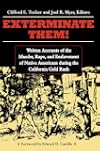
A good collection of newspaper clippings related to the war of annihilation waged by Americans against the native peoples of California. My only complaints are that the title is somewhat misleading, as most of the accounts are only tangentially related to the subheading.
My other issue was the overzealous and awkward editing. About half the time errors are marked with "sic", the editors are the ones in error. Just as a few examples, they mark in error "defence" and "organised" (both British show more English spellings), "forray" and "despatched" (both acceptable alternative spellings), and even "extinguishment", which is correctly spelled and current American English. At another time, they mark a line "toge [sic] her", when the context makes it clear they meant to write "together". So either the sic should have come in the end, or there was a mistake in the transcription from the microfilm.
They also make the mistake of including one of the articles in two separate sections.
But on all the editing does not detract much from the overall work, which does a better job telling the history the Gold Rush than any history textbook you'll come across. show less
My other issue was the overzealous and awkward editing. About half the time errors are marked with "sic", the editors are the ones in error. Just as a few examples, they mark in error "defence" and "organised" (both British show more English spellings), "forray" and "despatched" (both acceptable alternative spellings), and even "extinguishment", which is correctly spelled and current American English. At another time, they mark a line "toge [sic] her", when the context makes it clear they meant to write "together". So either the sic should have come in the end, or there was a mistake in the transcription from the microfilm.
They also make the mistake of including one of the articles in two separate sections.
But on all the editing does not detract much from the overall work, which does a better job telling the history the Gold Rush than any history textbook you'll come across. show less
The Indian School on Magnolia Avenue: Voices and Images from Sherman Institute (First Peoples: New Directions in Indigenous Studies) by Clifford E. Trafzer
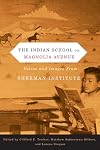
The Indian School on Magnolia Avenue is a fascinating glimpse in to life at an off-reservation boarding school for Native American children. This collection of writings and images focuses on the earlier years of the Sherman Institute in Riverside, California. The federal government opened this flagship institution in 1902, seeking to transform American Indian students into productive farmers, carpenters, homemakers, nurses, cooks, and seamstresses.
The book is a compilation of documents from show more the Sherman Indian Museum examining the building of Sherman, the school’s Mission architecture, the nursing program, the Special Five-Year Navajo Program, the Sherman cemetery, and student life. There is also a photo essay depicting life at the school. show less
The book is a compilation of documents from show more the Sherman Indian Museum examining the building of Sherman, the school’s Mission architecture, the nursing program, the Special Five-Year Navajo Program, the Sherman cemetery, and student life. There is also a photo essay depicting life at the school. show less
Boarding School Blues: Revisiting American Indian Educational Experiences (Indigenous Education) by Clifford E. Trafzer
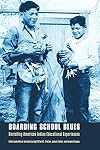
Horrible book. 9 out of ten essays sugar coat the death and, suffering, and cultural destruction of native youth in boarding schools. Some of them could have been a brochure for the schools.
Lists
Awards

You May Also Like


Associated Authors
Statistics
- Works
- 50
- Also by
- 3
- Members
- 936
- Popularity
- #27,446
- Rating
- 3.7
- Reviews
- 5
- ISBNs
- 75