
James E. Gunn (1923–2020)
Author of The Listeners
About the Author
Series
Works by James E. Gunn
The Best of Astounding: Classic Short Novels from the Golden Age of Science Fiction (1992) 22 copies
Human Voices: Science Fiction Stories (Five Star Speculative Fiction Series) (2002) 10 copies, 1 review
Asimov's Science Fiction: Vol. 45, No. 9 & 10 [September/October 2021] (2021) — Contributor — 7 copies
Von Poe bis Wells. Heyne Bibliothek der Science Fiction Literatur 91. Wege zur Science Fiction 02. (1998) 7 copies
The Old Folks [short fiction] 3 copies
Tsylana 2 copies
The Misogynist 2 copies
The Giftie 2 copies
The End-of-the-World Ball 2 copies
The Reluctant Witch 2 copies
Against The Stars 2 copies
Transcendental - The Trilogy (The Transcendental Machine trilogy) (Transcendental / Transgalactic / Transformation) (2020) 2 copies
A Monster Named Smith {short story} 2 copies
Wherever You May Be 2 copies
Crisis: Annihilation 2 copies
Guilt 2 copies
The North Wind 2 copies
The Lens of Time 1 copy
The Day the Magic Came Back 1 copy
The Gingerbread Man 1 copy
Consciousness: 4107's Story 1 copy
KAMPUS Easton Press 1 copy
Singular Days 1 copy
Ghost Fleet; Fondly 1 copy
Reclaiming The Stars 1 copy
Return From The Stars 1 copy
The War of the Worlds 1 copy
In Our Stars 1 copy
Quantum Theory 1 copy
Fury 1 copy
Patterns 1 copy
Elixir 1 copy
Little Orphan Android 1 copy
The Last Word 1 copy
Witch Hunt 1 copy
Trial By Fire 1 copy
Witches Must Burn 1 copy
The Voices 1 copy
Skin Game 1 copy
Man of Parts 1 copy
Green Thumb 1 copy
A Word For Freedom 1 copy
The Stilled Patter 1 copy
Everyday Is Christmas 1 copy
The Boy With Five Fingers 1 copy
Un regalo dalle stelle 1 copy
If I Forget Thee {novella} 1 copy
I fabbricanti di felicità 1 copy
Road to Science Fiction, The 1 copy
HGli Iimmortali: romanzo 1 copy
The Stilled Patter 1 copy
Open Warfare 1 copy
The Slaves Of Venus 1 copy
The Sun Came Up Last Night! 1 copy
Survival Policy 1 copy
The Futurist 1 copy
Associated Works
The War of the Worlds (1898) — Afterword, some editions; Introduction, some editions; Preface, some editions — 21,421 copies, 357 reviews
Mapping the World of Harry Potter: An Unauthorized Exploration of the Bestselling Fantasy Series of All Time (2005) — Contributor — 337 copies, 6 reviews
Taking the Red Pill: Science, Philosophy and Religion in The Matrix (2003) — Contributor — 311 copies, 4 reviews
Thunder and Roses: Volume IV: The Complete Stories of Theodore Sturgeon (1997) — Introduction, some editions — 196 copies
Gateways: A Feast of Great New Science Fiction Honoring Grand Master Frederik Pohl (2010) — Contributor — 113 copies, 2 reviews
Science Fiction Today and Tomorrow: A Discursive Symposium (1974) — Contributor — 99 copies, 2 reviews
Nebula Awards 30: SFWA's Choices For The Best Science Fiction And Fantasy Of The Year (Nebula Awards Showcase) (1996) — Contributor — 87 copies, 2 reviews
Analog Science Fiction/Science Fact: Vol. XCVII, No. 3 (March 1977) (1977) — Contributor — 29 copies
Asimov's Science Fiction: Vol. 41, No. 11 & 12 [November/December 2017] (2017) — Contributor — 22 copies, 3 reviews
Analog Science Fiction/Science Fact: Vol. XCV, No. 6 (June 1975) (1975) — Contributor — 22 copies, 1 review
King Kong Is Back!: An Unauthorized Look at One Humongous Ape! (Smart Pop series) (2005) — Contributor — 19 copies
Asimov's Science Fiction: Vol. 41, No. 9 & 10 [September/October 2017] (2017) — Contributor — 17 copies, 2 reviews
Asimov's Science Fiction: Vol. 42, No. 1 & 2 [January/February 2018] (2018) — Contributor — 12 copies
Asimov's Science Fiction: Vol. 42, No. 3 & 4 [March/April 2018] (2018) — Contributor — 12 copies, 1 review
Asimov's Science Fiction: Vol. 38, No. 9 [September 2014] (2014) — Contributor — 10 copies, 1 review
Analog Science Fiction and Fact: Vol. CXXXVI, No. 1 & 2 (January/February 2016) (2016) — Contributor — 9 copies
Asimov's Science Fiction: Vol. 41, No. 7 & 8 [July/August 2017] (2017) — Contributor — 9 copies, 1 review
Asimov's Science Fiction: Vol. 43, No. 11 & 12 [November/December 2019] (2019) — Contributor — 5 copies
Asimov's Science Fiction: Vol. 44, No. 11 & 12 [November/December 2020] (2020) — Contributor — 3 copies
Albedo One, issue 38 — Interviewee — 1 copy
Readings in Cosmology and Extragalactic Astronomy: Physics 361-01 Cosmology, Spring Semester 1995 (1995) — Contributor — 1 copy
Tagged
Common Knowledge
- Legal name
- Gunn, James Edwin
- Other names
- James, Edwin
- Birthdate
- 1923-07-12
- Date of death
- 2020-12-23
- Gender
- male
- Education
- University of Kansas (BS ∙ Journalism)
- Occupations
- professor (English)
editor
novelist
short story writer - Organizations
- Science Fiction and Fantasy Writers of America (President)
Center for the Study of Science Fiction (Director)
United States Navy
University of Kansas (Director of Public Relations) - Awards and honors
- Damon Knight Memorial Grand Master Award (2007)
SFRA Pilgrim Award (1976) - Nationality
- USA
- Birthplace
- Kansas City, Missouri, USA
- Places of residence
- Kansas City, Missouri, USA
- Associated Place (for map)
- Kansas City, Missouri, USA
Members
Reviews

1941 noir is notable for how sharp the humor is. It is filled with a cast of really strange characters - a killer who likes to weep - two half-sisters who both sort of love him - a preying psychiatrist - an alcoholic mother and her rapidly evolving daughter - a confused kid sister - the killer's friend - one of the half-sister's intended spouses - the psychiatrist's "Earth Mother" assistant...it goes on and on. Everything moves along at a pretty good pace, with lots of memorable scenes along show more the way. it never quite seems real, however, since it is all just so strange. Great dialogue throughout, which perhaps explains why 21-year-old novelist Gunn spent the rest of his 46-year lifespan writing screenplays--and never another novel. Well, this is a good one to be semi-remembered by. Definitely recommended. This was the basis for the cult classic movie Born to Kill - which I haven't seen in a very long time, but does away with some of the characters and focuses the story a bit. I'll have to watch it again. show less

We need a full list of philosophers’ favorite pulp fiction.
Norman Malcolm tells us that Wittgenstein liked Norbert Davis’s Rendezvous with Fear (1943, aka The Mouse in the Mountain). Gilles Deleuze, in his essay commemorating the 1000th volume in Gallimard’s Série Noire, cites Deadlier than the Male by James Gunn (1942) as his favorite.
I haven’t read Davis yet, but Gunn’s only novel is a thoroughly enjoyable kick in the teeth. There’s killing and desperate pursuit and show more dangerous people who are not what they seem. As in any good noir, the atmosphere pulses with barely contained menace, and resolution and hope and decency are empty notions. The story surges forward and the dialogue is as good as anything in Hammett or Chandler. Gunn even makes a kind of hero out of the lascivious, acid-tongued boozer Mrs. Krantz, which probably makes Deadlier than the Male a kind of masterpiece. show less
Norman Malcolm tells us that Wittgenstein liked Norbert Davis’s Rendezvous with Fear (1943, aka The Mouse in the Mountain). Gilles Deleuze, in his essay commemorating the 1000th volume in Gallimard’s Série Noire, cites Deadlier than the Male by James Gunn (1942) as his favorite.
I haven’t read Davis yet, but Gunn’s only novel is a thoroughly enjoyable kick in the teeth. There’s killing and desperate pursuit and show more dangerous people who are not what they seem. As in any good noir, the atmosphere pulses with barely contained menace, and resolution and hope and decency are empty notions. The story surges forward and the dialogue is as good as anything in Hammett or Chandler. Gunn even makes a kind of hero out of the lascivious, acid-tongued boozer Mrs. Krantz, which probably makes Deadlier than the Male a kind of masterpiece. show less
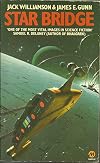
This is good, old-fashioned science fiction with only one human woman in the entire book; she's beautiful, smart, powerful, but in need of saving at some point in the story. Like good, old-fashioned science fiction, there is some exploration of important ideas, in this case, about empires and democracies and individualism and caring for others.
A quote I liked, appears towards the end, when the rugged, individualist hero realizes
"No man can act alone; he is bound up in humanity. No man show more suffers alone; humanity suffers with him. Injustice to one is injustice to all; every man should resent it as if it happened to him; it did.. . . There was a simple way of saying it all: no matter how far apart people seem, there is a bridge that joins them all." [p. 149]
In this case, the bridge is not only figurative: there are tubes that allow people and communication to travel much faster than the speed of light.
In other words, as John Donne said centuries ago (1624), "No man is an island."
And then the hero sees that this realization "was worth dying for. But even more important, it was a reason for living." [p. 149] Nice.
There's also a lot of killing, and even a pirate! The story starts in a timeless Colorado dessert with the hero on a pony, but it soon becomes obvious that it takes place well into the future.
There is a Wikipedia article about the book. Jack Williamson started it, had trouble finishing it, and gave it to James E. Gunn to complete. The front cover blurb by Samuel R. Delaney, "one of the most vital images in science fiction," is what prompted me to buy the book.
The book was written before political correctness became a thing, but I think it's easy enough to change "man" to "person" and "savage" to something better or argue that the story is told from the point of view of a flawed man (or person) and the words and attitudes are his. show less
A quote I liked, appears towards the end, when the rugged, individualist hero realizes
"No man can act alone; he is bound up in humanity. No man show more suffers alone; humanity suffers with him. Injustice to one is injustice to all; every man should resent it as if it happened to him; it did.. . . There was a simple way of saying it all: no matter how far apart people seem, there is a bridge that joins them all." [p. 149]
In this case, the bridge is not only figurative: there are tubes that allow people and communication to travel much faster than the speed of light.
In other words, as John Donne said centuries ago (1624), "No man is an island."
And then the hero sees that this realization "was worth dying for. But even more important, it was a reason for living." [p. 149] Nice.
There's also a lot of killing, and even a pirate! The story starts in a timeless Colorado dessert with the hero on a pony, but it soon becomes obvious that it takes place well into the future.
There is a Wikipedia article about the book. Jack Williamson started it, had trouble finishing it, and gave it to James E. Gunn to complete. The front cover blurb by Samuel R. Delaney, "one of the most vital images in science fiction," is what prompted me to buy the book.
The book was written before political correctness became a thing, but I think it's easy enough to change "man" to "person" and "savage" to something better or argue that the story is told from the point of view of a flawed man (or person) and the words and attitudes are his. show less
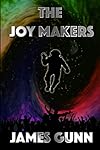
This novel is about what the word “happy” really means—and about freedom: “An unhappy man is a deadly focus of social disintegration” could almost be from George Orwell’s Nineteen Eighty-Four.
The story begins in the small town of Millville when a new company appears on the scene who, for a (huge) price, guarantee your happiness. Joshua Hunt’s initial scepticism gradually falters and, long dissatisfied with his life, he signs up for their services. What he finds himself show more increasingly drawn into is something called “hedonics”; but what is it exactly—a new form of psychotherapy, a new science or religion even? At its heart is a rigorous programme of self-discipline, using a combination of medical advances (if these really are “advances”) and an array of techniques for self-imposed mind-control. And Hedonics Inc. are ambitious: this is a whole ideology; and their aim, ultimately, is to create a new and perfect society. “That action is best which produces the greatest happiness of the greatest numbers.” And, “As long as we have these techniques available, nothing—no one—can make us unhappy. Like gods, we hold our own happiness in our own hands.” Mm, well maybe; but this is already sounding like Orwell, and the “perfect society” a dystopia.
A couple of extra things to say about this book. First, it’s divided into three parts, each set further into the future than the last, and was originally published (1954 and ̕55) as three novellas in various science-fiction magazines. Gunn claimed it wasn’t a classic “fix-up” though, that he wrote and sold them with this eventual single novel in mind.
And second, if you read it yourself be prepared for some pretty cringe-inducing 1950s stuff, such as this (talking about the colonisation of Venus): “It took Man four hundred years to conquer the relatively benign North American continent. In less than half that time he would change Venus’s alien, poisonous nature. Already he had tamed her, sweetened her breath, softened her hard bosom. Now he was making her fertile.” Gaah, I mean, where do you start? The way he saw himself, Western civilisation, colonisation, ourselves as a species, the environment, the planet and, of course, women all expressed in forty-five words! (But then, I have no doubt whatsoever that in another seven decades from now our descendants will be cringing, every bit as aghast, at our attitudes).
But if you can put up with that sort of thing, this is a really good read—some of the details in particular highly imaginative. I’m guessing it was mainly meant as a send-up of the Church of Scientology (“hedonics” a parody of scientology’s “dianetics”), which was brand-new back in the 1950s. I can’t help feeling, though, that Gunn must surely have also been influenced, as so many people were, by Orwell’s still-fresh nightmare which had been published only seven years earlier. show less
The story begins in the small town of Millville when a new company appears on the scene who, for a (huge) price, guarantee your happiness. Joshua Hunt’s initial scepticism gradually falters and, long dissatisfied with his life, he signs up for their services. What he finds himself show more increasingly drawn into is something called “hedonics”; but what is it exactly—a new form of psychotherapy, a new science or religion even? At its heart is a rigorous programme of self-discipline, using a combination of medical advances (if these really are “advances”) and an array of techniques for self-imposed mind-control. And Hedonics Inc. are ambitious: this is a whole ideology; and their aim, ultimately, is to create a new and perfect society. “That action is best which produces the greatest happiness of the greatest numbers.” And, “As long as we have these techniques available, nothing—no one—can make us unhappy. Like gods, we hold our own happiness in our own hands.” Mm, well maybe; but this is already sounding like Orwell, and the “perfect society” a dystopia.
A couple of extra things to say about this book. First, it’s divided into three parts, each set further into the future than the last, and was originally published (1954 and ̕55) as three novellas in various science-fiction magazines. Gunn claimed it wasn’t a classic “fix-up” though, that he wrote and sold them with this eventual single novel in mind.
And second, if you read it yourself be prepared for some pretty cringe-inducing 1950s stuff, such as this (talking about the colonisation of Venus): “It took Man four hundred years to conquer the relatively benign North American continent. In less than half that time he would change Venus’s alien, poisonous nature. Already he had tamed her, sweetened her breath, softened her hard bosom. Now he was making her fertile.” Gaah, I mean, where do you start? The way he saw himself, Western civilisation, colonisation, ourselves as a species, the environment, the planet and, of course, women all expressed in forty-five words! (But then, I have no doubt whatsoever that in another seven decades from now our descendants will be cringing, every bit as aghast, at our attitudes).
But if you can put up with that sort of thing, this is a really good read—some of the details in particular highly imaginative. I’m guessing it was mainly meant as a send-up of the Church of Scientology (“hedonics” a parody of scientology’s “dianetics”), which was brand-new back in the 1950s. I can’t help feeling, though, that Gunn must surely have also been influenced, as so many people were, by Orwell’s still-fresh nightmare which had been published only seven years earlier. show less
Lists
Awards


You May Also Like


Associated Authors
Statistics
- Works
- 157
- Also by
- 89
- Members
- 4,584
- Popularity
- #5,488
- Rating
- 3.9
- Reviews
- 80
- ISBNs
- 232
- Languages
- 7