
Janice Daugharty
Author of The Little Known
About the Author
Series
Works by Janice Daugharty
Vacation Bible School (Jesus Bus) 3 copies
I Ain't Staying 2 copies
"Black Widow" 2 copies
Christmas Mourning 1 copy
The Legacy of Roosevelt Clay 1 copy
Jesus Bus 1 copy
Associated Works
Tagged
Common Knowledge
- Canonical name
- Daugharty, Janice
- Legal name
- Daugharty, Janice Staten
- Birthdate
- 1944
- Gender
- female
- Education
- Valdosta State University
- Awards and honors
- Pulitzer Prize finalist (1997 | Earl in the Yellow Shirt)
- Relationships
- Oates, Joyce Carol ("fairy godmother")
- Nationality
- USA
- Associated Place (for map)
- USA
Members
Reviews
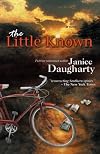
The Little Known is the story of a nine-year-old African American boy named Knot in 1960's segregated Georgia. While out riding his cousin's bicycle, he comes across a bag of money, dropped by a bank robber who was fleeing from the police. Knot could have easily spent some of the money on that bicycle he's been wanting, but he knows he'd have to explain himself. Instead, he decides to give the money away, hoping to make life better for those around him. Only, it does not quite work out that show more way.
Knot is a sweetheart of a boy who is coming into his own. He seems so innocent at times and yet like an older soul at others. He has been poor all his life and believes that money can make things better. He quickly learns, however, that having money does not correlate with people doing the right thing. Knot is also struggling with his identity, trying to figure out his place in the world--and in his family.
The author captures the essence of a poverty stricken, close-knit community, full of internal strife and yet coming together in times of need. Knot lives with Marge, a woman whose weakness is alcohol. I didn't much like her at first, but the more I got to know her, the sorrier I felt for her and the more I hoped she would pull herself together for Knot's sake. She really wasn't a bad person, just a damaged one. Many of the characters in the novel are damaged in some way, white and black alike. Among them are the family next door with the drunk abusive husband; the daughter whose mother is mentally ill and often runs naked in the neighborhood; and a girl who is handicapped but whose family can't afford a wheelchair. I wouldn't have minded if some of these other characters had been more fleshed out, however. Then again, this is Knot's story more than anyone else's.
And although the author did not go into it as much as I would have liked, I was especially drawn to Knot's relationship with Becky Bruce, the white girl and the daughter of Sammy Bruce, a man who terrorizes not only those in the black community but his own family as well. Becky is a sad child, withdrawn and easy to tears. While Knot tries to dismiss her at first, he can't help but feel the need to help her, somehow rescue her from her father. He is fearful though; the colors of their skin make friendship dangerous.
While Knot is my favorite character in the novel, coming in at a close second is the pastor. Knot admits that he likes to go to church every Sunday for the food. Sometimes it's the only good meal he'll get that week. The pastor plays the role of the father figure and is perhaps the one stable person in Knot's life.
Race does play a part in the novel. There is always an undercurrent of tension in that regard. Knot is one of a handful of black students in a school that has recently been integrated. And in the society at large, there is a clear demarcation of who holds the power: the white man. As the story unfolds, however, there is definite hope that change is coming.
Overall, this was a touching novel of forgiveness and hope. On the surface, it is a simple story, but it has several layers, some of which I'm still discovering after having finished it. This is a novel I think both adults and children would enjoy.
Just a note of warning: the author does use the "n" word in the text, albeit minimally. Given the time period the novel is set in, it was not out of place. show less
Knot is a sweetheart of a boy who is coming into his own. He seems so innocent at times and yet like an older soul at others. He has been poor all his life and believes that money can make things better. He quickly learns, however, that having money does not correlate with people doing the right thing. Knot is also struggling with his identity, trying to figure out his place in the world--and in his family.
The author captures the essence of a poverty stricken, close-knit community, full of internal strife and yet coming together in times of need. Knot lives with Marge, a woman whose weakness is alcohol. I didn't much like her at first, but the more I got to know her, the sorrier I felt for her and the more I hoped she would pull herself together for Knot's sake. She really wasn't a bad person, just a damaged one. Many of the characters in the novel are damaged in some way, white and black alike. Among them are the family next door with the drunk abusive husband; the daughter whose mother is mentally ill and often runs naked in the neighborhood; and a girl who is handicapped but whose family can't afford a wheelchair. I wouldn't have minded if some of these other characters had been more fleshed out, however. Then again, this is Knot's story more than anyone else's.
And although the author did not go into it as much as I would have liked, I was especially drawn to Knot's relationship with Becky Bruce, the white girl and the daughter of Sammy Bruce, a man who terrorizes not only those in the black community but his own family as well. Becky is a sad child, withdrawn and easy to tears. While Knot tries to dismiss her at first, he can't help but feel the need to help her, somehow rescue her from her father. He is fearful though; the colors of their skin make friendship dangerous.
While Knot is my favorite character in the novel, coming in at a close second is the pastor. Knot admits that he likes to go to church every Sunday for the food. Sometimes it's the only good meal he'll get that week. The pastor plays the role of the father figure and is perhaps the one stable person in Knot's life.
Race does play a part in the novel. There is always an undercurrent of tension in that regard. Knot is one of a handful of black students in a school that has recently been integrated. And in the society at large, there is a clear demarcation of who holds the power: the white man. As the story unfolds, however, there is definite hope that change is coming.
Overall, this was a touching novel of forgiveness and hope. On the surface, it is a simple story, but it has several layers, some of which I'm still discovering after having finished it. This is a novel I think both adults and children would enjoy.
Just a note of warning: the author does use the "n" word in the text, albeit minimally. Given the time period the novel is set in, it was not out of place. show less
Living with his Aunt Marge in the poorest quarter of a small Georgia town, Knot longs for a family of his own, a comfortable home with regular meals, and a bicycle. Poverty becomes the least of his worries when he finds a sack of money, dropped in the course of a bank robbery. But stolen money is difficult to spend and Knot resolves to give it away, anonymously, to the people who need it most -- the poorest people of his neighborhood. Despite his best efforts, the effects of the sudden show more windfall on the little community are mixed, at best -- donations to Marge only increase her ability to drink, another boy gets a bicycle with money intended for his disabled sister, but good things come too -- abused wives have the choice to leave, although they don't always take it, the energetic young preacher builds a basketball court and teaches Knot to play. In the course of a year, Knot gains the family he wants and a new name, but not in the way he expected. New ideas are astir in the small community, the Civil Rights Movement, referred to as "the Cause",the possibility of education through the newly desegregated school, and new models for manhood in the young preacher -- all of these feed Knot's hunger for a larger life. When Knot stands up to a white man, and survives, he has no further need of the money.
The language of this book is beautiful and evocative, involving all the senses on every page. Fire "crackles and purrs as if filled with milk-fed kittens", a young girl blows bubbles on which "hatch marks of rose sun" shimmer and we can smell the asphalt of the roads, the woodsmoke from the quarter's fires, the damp vegetation of the roadsides. The life it evokes, of poverty and simmering racial tension is not for the faint-hearted, but strength and love are found in improbable places and Knot's journey to manhood seems to shimmer with possibility. show less
The language of this book is beautiful and evocative, involving all the senses on every page. Fire "crackles and purrs as if filled with milk-fed kittens", a young girl blows bubbles on which "hatch marks of rose sun" shimmer and we can smell the asphalt of the roads, the woodsmoke from the quarter's fires, the damp vegetation of the roadsides. The life it evokes, of poverty and simmering racial tension is not for the faint-hearted, but strength and love are found in improbable places and Knot's journey to manhood seems to shimmer with possibility. show less
 This review was written for LibraryThing Early Reviewers.
I've been a fan of Janice Daugharty since her debut short story collection Going Through the Change. Daugharty's voice, one of the most distinctive in contemporary American literature, is dense and rich - one might want to take a fork to it. In this novel, Knot, a poor 12-year-old African-American boy living with his often-drunk mother in the segregated South, comes across a sack of money dropped by a bank robber. He begins to secretly dole it out to his impoverished neighbors,with less than show more satisfying results. Although the setting is potentially bleak, Daugharty lightens it up with flashes of humor. show less
This review was written for LibraryThing Early Reviewers."The Little Known," a coming of age novel set in the period just after the assassination of President John Kennedy, was written for the young adult market but there is something here for readers of all ages. On the one hand, the novel’s deeply personal portrayal of the harsh nature of race relations of the time is sure to move younger readers who may have only heard about those days in more general terms. On the other, older readers will be reminded that a great deal of progress has been show more achieved in the last 50 years.
Things are changing very slowly for the black citizens of little Statenville, Georgia. “Knot” Crews does go to school with white kids now, but he seldom, if ever, dares to speak to one of them, and he lives with his hard-drinking mother in the same segregated part of town in which every Statenville black lives. Blacks and whites do not, by choice of both sides, mix in Statenville.
Near the end of the summer, Knot happens upon a bag of cash tossed aside by a bank robber who is trying to escape the policemen closing in on him. When Knot sees the stacks of $100-dollar bills in the sack ($100,000 worth), he carries the money home knowing full well that his conscious will never allow him to spend it - that he will almost certainly be caught if he ever tries to pass one of the hundreds. Little does Knot know, however, that this money will change his life in ways he could never imagine.
Knot is a soft hearted kid despite the fact that his mother spends more money on booze for herself than she spends on food for him. He is often hungry, and he dresses in the castoff clothing of older relatives, but so does pretty much every other kid in his neighborhood so Knot fits right in. He looks forward to Sunday church services because the old church ladies provide him with a community meal there that beats anything else he will eat during the rest of the week. Some of Knot’s neighbors, though, are unluckier than others, and he decides to use some of his found money to make their lives a little easier. That is when he begins to anonymously mail single hundred dollar bills to those he believes are hurting most.
Thus begin Knot’s valuable, but terribly disappointing, lessons about human nature. Seldom is his money spent for the purpose he gives it. Most of the money he gives away is spent on new television sets, bicycles, toys and liquor rather than on the clothing, food, diapers and home improvements his neighbors so desperately need. Knot is, however, happy to learn that a few hundred dollars can be enough money to give some abused women, white and black alike, the courage to leave their husbands behind for fresh starts with their children someplace else.
"The Little Known" follows Knot and his neighbors for most of a school year during which the little changes he initiates begin to have a big, cumulative impact on the neighborhood. He learns that money is not the most important thing in the world, that it cannot buy happiness or morality, and that the exact opposite is more often the case than not. Knot might never spend a dime of the bank’s money on himself but the money still manages to teach him most of life’s most important lessons.
Some of the sexual innuendos and implied language in the book are, I think, a little too much for middle school readers, making the book more suitable for high school age readers.
Rated at: 4.0 show less
Things are changing very slowly for the black citizens of little Statenville, Georgia. “Knot” Crews does go to school with white kids now, but he seldom, if ever, dares to speak to one of them, and he lives with his hard-drinking mother in the same segregated part of town in which every Statenville black lives. Blacks and whites do not, by choice of both sides, mix in Statenville.
Near the end of the summer, Knot happens upon a bag of cash tossed aside by a bank robber who is trying to escape the policemen closing in on him. When Knot sees the stacks of $100-dollar bills in the sack ($100,000 worth), he carries the money home knowing full well that his conscious will never allow him to spend it - that he will almost certainly be caught if he ever tries to pass one of the hundreds. Little does Knot know, however, that this money will change his life in ways he could never imagine.
Knot is a soft hearted kid despite the fact that his mother spends more money on booze for herself than she spends on food for him. He is often hungry, and he dresses in the castoff clothing of older relatives, but so does pretty much every other kid in his neighborhood so Knot fits right in. He looks forward to Sunday church services because the old church ladies provide him with a community meal there that beats anything else he will eat during the rest of the week. Some of Knot’s neighbors, though, are unluckier than others, and he decides to use some of his found money to make their lives a little easier. That is when he begins to anonymously mail single hundred dollar bills to those he believes are hurting most.
Thus begin Knot’s valuable, but terribly disappointing, lessons about human nature. Seldom is his money spent for the purpose he gives it. Most of the money he gives away is spent on new television sets, bicycles, toys and liquor rather than on the clothing, food, diapers and home improvements his neighbors so desperately need. Knot is, however, happy to learn that a few hundred dollars can be enough money to give some abused women, white and black alike, the courage to leave their husbands behind for fresh starts with their children someplace else.
"The Little Known" follows Knot and his neighbors for most of a school year during which the little changes he initiates begin to have a big, cumulative impact on the neighborhood. He learns that money is not the most important thing in the world, that it cannot buy happiness or morality, and that the exact opposite is more often the case than not. Knot might never spend a dime of the bank’s money on himself but the money still manages to teach him most of life’s most important lessons.
Some of the sexual innuendos and implied language in the book are, I think, a little too much for middle school readers, making the book more suitable for high school age readers.
Rated at: 4.0 show less
This review was written for LibraryThing Early Reviewers.Awards

You May Also Like


Associated Authors
Statistics
- Works
- 33
- Also by
- 3
- Members
- 544
- Popularity
- #45,826
- Rating
- 3.4
- Reviews
- 57
- ISBNs
- 33
- Favorited
- 1
