
Elena Gorokhova
Author of A Mountain of Crumbs: A Memoir
About the Author
Image credit: elenagorokhova.com
Works by Elena Gorokhova
Tagged
Common Knowledge
- Gender
- female
- Occupations
- teacher
memoirist - Organizations
- Hudson Valley Community College
- Nationality
- Russia (birth)
USA - Birthplace
- Leningrad, Russia, USSR
- Places of residence
- Nutley, New Jersey, USA
Ridgewood, New Jersey, USA - Associated Place (for map)
- New Jersey, USA
Members
Reviews
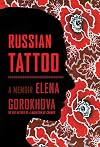
A very thoughtful memoir. Excellent points about both cultures - Russian (Soviet) and American. Here is one: "Back in my insane Motherland waiters waited and teachers taught. Everything was permanent, everything made sense. If you moved tables, you knew nothing about books or theater. If you punched out cash register receipts, you thought Pasternak was an herb." So true... And what immigrant hasn't gone through this sentiment: "What I don't know anymore is where I belong. Which end of the show more ocean that divides the continents, the ways of life, should I now call home? " I was also humbled by the saying Gorokhova's mother, having followed her daughter into the new country, kept repeating: "When things are good you don't search for better"...
Every immigrant's path is same and different all at once. I can comment on the "sameness", having gone through that myself: what Elena Gorokhova describes is all very true. As for her individual circumstances - I have to admire her for ruthlessly baring her soul and exposing her own and her relatives' unvarnished weaknesses for the whole world to see. It's not an easy thing to do. For this, I give her so much credit that I am willing to overlook a few things that in the beginning of the book made me think she sounded a bit resentful and complaining, though that went away later on. Another thing, at times I felt like she was overreaching with the search for unusual, lyrical metaphors - not that most of them were not quite good, they were... But all that was minor, compared with the essence of her story.
In the end it's this: "Along with those who left their countries for other shores, I belong in neither land. We are unmoored and disconnected..." This memoir is a worthy sequel to Gorokova's debut novel "A Mountain of Crumbs". show less
Every immigrant's path is same and different all at once. I can comment on the "sameness", having gone through that myself: what Elena Gorokhova describes is all very true. As for her individual circumstances - I have to admire her for ruthlessly baring her soul and exposing her own and her relatives' unvarnished weaknesses for the whole world to see. It's not an easy thing to do. For this, I give her so much credit that I am willing to overlook a few things that in the beginning of the book made me think she sounded a bit resentful and complaining, though that went away later on. Another thing, at times I felt like she was overreaching with the search for unusual, lyrical metaphors - not that most of them were not quite good, they were... But all that was minor, compared with the essence of her story.
In the end it's this: "Along with those who left their countries for other shores, I belong in neither land. We are unmoored and disconnected..." This memoir is a worthy sequel to Gorokova's debut novel "A Mountain of Crumbs". show less
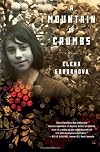
A Mountain of Crumbs was called the "Russian equivalent of Angela's Ashes" by U.S. Poet Laureate Billy Collins, while Frank McCourt, author of Ashes, calls it a "rich experience". J.M. Coetzee gave it high praise. These are some powerful endorsements. Is is warranted? I believe so. The writing is top notch and intelligent, her choice of detail from daily life in Soviet Russia during the 1960s and 70s opens new vistas into a lost world. The sense of growing up in the USSR - Gorokhova was born show more in 1955 - is vivid and memorable. Gorokhova comes of age and discovers the mysteries of love and life, yet she was never innocent to the pervasive control the Soviet state holds on private life, it was an open secret. Eventually, success comes - not in the form of material wealth or conquering ones enemies or inner demons, Gorokhova is likable and well adjusted - but by finding a happy home and someone she loves. Her love of books means Russian literature peppers the memoir, the real and fiction sometimes merge, just as the real and fiction of the USSR were hard to tell apart. show less
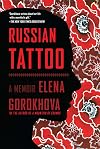
This book is a memoir by a woman who immigrated to the US from Russia, by marrying an American man, in order to escape her overbearing mother and Leningrad. I like the way this is written, with humor, and as a series of shorter pieces, that give the reader snapshots of different parts of her life; marriage; divorce; work (she teaches ESL college students); having her mother move to the US and live with her; parenthood. Gorokhova gives a good description of what it might be like to be dropped show more into another culture (the description of her first encounter with a hamburger, for example.)
The most touching part of the book is Gorokhova's struggles trying to raise her daughter to be bilingual, and her feeling that she was not able to impart important parts of herself and her culture to her daughter.
Her descriptions of the differences between Soviet and US culture are vivid. Here she describes a visit to Russure with her husband, Andy.
"No one needs any pictures, though, to see the distance that divides us. All they need to do is glance at Andy, at is straight spine and unencumbered shoulders, at his Western look--which comes not from leather shoes or Levi's jeans but from the way he moves without apprehension, the way his eyes are not afraid to see into the future. show less
The most touching part of the book is Gorokhova's struggles trying to raise her daughter to be bilingual, and her feeling that she was not able to impart important parts of herself and her culture to her daughter.
Her descriptions of the differences between Soviet and US culture are vivid. Here she describes a visit to Russure with her husband, Andy.
"No one needs any pictures, though, to see the distance that divides us. All they need to do is glance at Andy, at is straight spine and unencumbered shoulders, at his Western look--which comes not from leather shoes or Levi's jeans but from the way he moves without apprehension, the way his eyes are not afraid to see into the future. show less
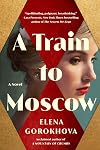
The protagonist Sasha is born into a Russian family in a provincial town around the time of the Second World War. During her youth, Stalinist communism tries to white-wash Russian history by avoiding difficult parts, like barbarous murders, the horrors of anti-German military campaigns, and betrayals of one’s neighbors to prisons. For the Party, World War II tells the story of glorious and miraculous Russian triumph over the world, without any complications.
However, Sasha soon discovers show more the journal of her late uncle, who was an artist before being lost to history during this great war. He saw life clearly, and through him, she decides to become an actress. The life of direct access to art (and truth) appeals to her longings. Despite the misgivings of her family (especially her practical mother), she decides to move to Moscow to pursue acting school.
However, she leaves behind the complex social life of a small town. Her boyfriend Andrei, himself with heavy moral weights, is becoming a Party member and exploring a life of ambition. She leaves behind memories of another childhood friend, unable to arrive at adulthood. Her family lives in a web of lies, death, manipulations, and defeat. These dark relationships serve for Gorohova as a microcosm of the tragedy that was Stalinist Russia. It was not a regime based on truth or human dignity.
This story, written by an American immigrant from Russia, reminds readers of the value of truthfulness in healthy human relations. This theme certainly speaks loudly to modern times in America where some proclaim a so-called “post-truth” era. It also rekindles the enduring faith that out of any ashes, the human spirit will eventually triumph, much as Sasha rose from provincial Russia.
Although the eternal struggles of mother Russia are littered throughout centuries of Russian literature, I can only hope that trading these struggles for American realities will produce better fruit for the modern world. Such hope is fostered by Gorokhova’s first novel, though, and those who seek better human life will benefit from reading this book. show less
However, Sasha soon discovers show more the journal of her late uncle, who was an artist before being lost to history during this great war. He saw life clearly, and through him, she decides to become an actress. The life of direct access to art (and truth) appeals to her longings. Despite the misgivings of her family (especially her practical mother), she decides to move to Moscow to pursue acting school.
However, she leaves behind the complex social life of a small town. Her boyfriend Andrei, himself with heavy moral weights, is becoming a Party member and exploring a life of ambition. She leaves behind memories of another childhood friend, unable to arrive at adulthood. Her family lives in a web of lies, death, manipulations, and defeat. These dark relationships serve for Gorohova as a microcosm of the tragedy that was Stalinist Russia. It was not a regime based on truth or human dignity.
This story, written by an American immigrant from Russia, reminds readers of the value of truthfulness in healthy human relations. This theme certainly speaks loudly to modern times in America where some proclaim a so-called “post-truth” era. It also rekindles the enduring faith that out of any ashes, the human spirit will eventually triumph, much as Sasha rose from provincial Russia.
Although the eternal struggles of mother Russia are littered throughout centuries of Russian literature, I can only hope that trading these struggles for American realities will produce better fruit for the modern world. Such hope is fostered by Gorokhova’s first novel, though, and those who seek better human life will benefit from reading this book. show less
Lists
Awards


You May Also Like


Statistics
- Works
- 4
- Members
- 753
- Popularity
- #33,775
- Rating
- 3.9
- Reviews
- 42
- ISBNs
- 24
- Languages
- 3