

Benson Bobrick
Author of Wide as the Waters: The Story of the English Bible and the Revolution It Inspired
About the Author
Benson Bobrick holds a doctorate in English & Comparative Literature from Columbia University & is the author of six previous books. He lives in Brattleboro, Vermont. (Bowker Author Biography)
Image credit: Lois Wadler
Works by Benson Bobrick
Wide as the Waters: The Story of the English Bible and the Revolution It Inspired (2001) 752 copies, 9 reviews
A Passion for Victory: The Story of the Olympics in Ancient and Early Modern Times (2012) 42 copies, 2 reviews
Tagged
Common Knowledge
- Birthdate
- 1947-03-15
- Gender
- male
- Education
- Columbia University (Ph.D.)
- Awards and honors
- American Academy of Arts and Letters Academy Award (Literature, 2002)
- Nationality
- USA
- Places of residence
- New York, New York, USA
- Associated Place (for map)
- New York, USA
Members
Reviews

If you can't trust a book about the Bible, what can you trust?
Sadly, the number of errors in this book was so high that I couldn't even finish it. I say "sadly" because this is a very interesting, vividly written book on an interesting topic. If you like historical novels -- I don't; give me history any day -- you might enjoy it. But don't believe any of it. Not in detail, anyway.
The problems start early. I first noticed it on page 13, where it says "Each part [that is, the three parts of show more Jewish scripture, Law, Prophets, and Writings] arose as a separate collection of sacred texts, with the Law in use as Scripture by 400 B.C.; the Prophets, by 200 B.C.; and the Writings by about 130 B.C." Just how wrong you will find this statement depends on your religious stance -- most liberal scholars would say that books such as Ecclesiastes and Esther weren't even written until after 130 B.C.E., while a fundamentalist would date them earlier -- but all would allow that some books of the Writings were not universally accepted as canonical until well after that date.
The discussion of the Septuagint and of the canon on page 14 is so brief as to be extremely misleading, but it could perhaps be accepted, except that it omits the Letter to the Hebrews from the New Testament! (It refers to thirteen letters of Paul, but either Hebrews is a separate letter or there are fourteen letters of Paul). It also refers to the Apocalypse as by John, giving the impression that it's the same John as the person man who wrote the Gospel -- but scholars have been pointing out for more than a thousand years that the same person cannot have written those two books (a fact that is obvious to anyone with even a little Greek).
On page 21, it says that Joseph of Arimathea was a member of the "town council" of Jerusalem. We are told that Joseph was a member of the Sanhedrin, and Mark 15:43, etc. refer to the Sanhedrin as the "council" -- but not a "town council," as if you could call up Joseph of Arimathea and complain about your neighbour not mowing his grass! The Sanhedrin was a religious council.
On page 84, we read about progress in understanding "Greek, Hebrew, and other languages, such as Aramaic and and Chaldee." Just one problem: Chaldee isn't a language. It's a name used by older scholars to refer to Aramaic, since Aramaic was the language used by the Chaldeans when they occupied Babylon, and there are a few sections of the Hebrew Bible written in Aramaic. One could refer to a dialect of Aramaic called Chaldean, just as there is Talmudic Aramaic and Syriac Aramaic and Palestinian Aramaic, but it's not a separate language.
Finally, on pp. 300-301 there is a list of dates in the history of the English Bible. This leaves out some very important dates, such as the publication of Erasmus's Greek New Testament in 1516 (important because this is what Tyndale translated into English) and the later editions of Stephanus and Beza (from which the King James Bible was translated), but those are merely omissions. The last date is "1881-85 Revised Standard Version."
Guess what. I have a Revised Standard Version here. With a copyright page. The first edition of the New Testament was published 1946, the Old Testament in 1952, and a revised New Testament in 1971. This has now been largely supplemented by the New Revised Standard Version. The 1881 date refers to the (English) Revised Version. It is not the same thing!
I'm sure I've either convinced you by now or you've stopped reading, so I won't go on. Most people aren't bothered by small mistakes to the extent that I am. If not, you may read this book with enjoyment, and you may even learn from it. But keep in mind: what you learn may well prove to be alternative facts. show less
Sadly, the number of errors in this book was so high that I couldn't even finish it. I say "sadly" because this is a very interesting, vividly written book on an interesting topic. If you like historical novels -- I don't; give me history any day -- you might enjoy it. But don't believe any of it. Not in detail, anyway.
The problems start early. I first noticed it on page 13, where it says "Each part [that is, the three parts of show more Jewish scripture, Law, Prophets, and Writings] arose as a separate collection of sacred texts, with the Law in use as Scripture by 400 B.C.; the Prophets, by 200 B.C.; and the Writings by about 130 B.C." Just how wrong you will find this statement depends on your religious stance -- most liberal scholars would say that books such as Ecclesiastes and Esther weren't even written until after 130 B.C.E., while a fundamentalist would date them earlier -- but all would allow that some books of the Writings were not universally accepted as canonical until well after that date.
The discussion of the Septuagint and of the canon on page 14 is so brief as to be extremely misleading, but it could perhaps be accepted, except that it omits the Letter to the Hebrews from the New Testament! (It refers to thirteen letters of Paul, but either Hebrews is a separate letter or there are fourteen letters of Paul). It also refers to the Apocalypse as by John, giving the impression that it's the same John as the person man who wrote the Gospel -- but scholars have been pointing out for more than a thousand years that the same person cannot have written those two books (a fact that is obvious to anyone with even a little Greek).
On page 21, it says that Joseph of Arimathea was a member of the "town council" of Jerusalem. We are told that Joseph was a member of the Sanhedrin, and Mark 15:43, etc. refer to the Sanhedrin as the "council" -- but not a "town council," as if you could call up Joseph of Arimathea and complain about your neighbour not mowing his grass! The Sanhedrin was a religious council.
On page 84, we read about progress in understanding "Greek, Hebrew, and other languages, such as Aramaic and and Chaldee." Just one problem: Chaldee isn't a language. It's a name used by older scholars to refer to Aramaic, since Aramaic was the language used by the Chaldeans when they occupied Babylon, and there are a few sections of the Hebrew Bible written in Aramaic. One could refer to a dialect of Aramaic called Chaldean, just as there is Talmudic Aramaic and Syriac Aramaic and Palestinian Aramaic, but it's not a separate language.
Finally, on pp. 300-301 there is a list of dates in the history of the English Bible. This leaves out some very important dates, such as the publication of Erasmus's Greek New Testament in 1516 (important because this is what Tyndale translated into English) and the later editions of Stephanus and Beza (from which the King James Bible was translated), but those are merely omissions. The last date is "1881-85 Revised Standard Version."
Guess what. I have a Revised Standard Version here. With a copyright page. The first edition of the New Testament was published 1946, the Old Testament in 1952, and a revised New Testament in 1971. This has now been largely supplemented by the New Revised Standard Version. The 1881 date refers to the (English) Revised Version. It is not the same thing!
I'm sure I've either convinced you by now or you've stopped reading, so I won't go on. Most people aren't bothered by small mistakes to the extent that I am. If not, you may read this book with enjoyment, and you may even learn from it. But keep in mind: what you learn may well prove to be alternative facts. show less
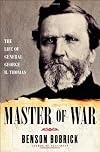
Memo to Benson Bobrick: The American Civil War was not a war between Ulysses S. Grant and George H. Thomas. It was a war between the Union and the Confederacy.
You could be forgiven for not knowing that, should you read this book without knowing more about the Civil War. It is far too much of a smear campaign against Grant and William Tecumseh Sherman. Bobrick constantly accuses those two generals of deliberately sabotaging Thomas to improve their reputations.
To be sure, there is show more near-universal agreement that Thomas was one of the great generals of the war. His victory at Mill Springs was one of the first great Union successes of the war. He very possibly saved the Union with his brilliant defense at Chickamauga. His victory at Nashville was the most decisive Union win of the war, and it ended the last Southern hopes. Thomas was certainly a better tactical fighter than Grant or Sherman, and probably the best such general the Union had. Many -- I'm one of them -- think him the best Union general of the war. The only general on either side who can make a serious claim to be greater is Robert E. Lee.
But Grant, for all his tactical ineptitude, did win the war. Sherman, for all his flightiness and mistakes, did supply the second pillar of Grant's great two-pronged offensive. It's clearly true that Grant under-valued Thomas, and it perhaps made Grant's task harder. But it wasn't as if Grant was setting out simply to make Thomas look bad!
Far too much of this book consists of unfair charges against Grant and Sherman. This isn't just off-putting, it wastes space that otherwise could be devoted to Thomas's achievements. And it distorts the picture. Too, the book probably devotes too much time and space to the Civil War, ignoring the rest of Thomas's life. Also -- although this may not be Bobrick's fault -- all the maps are placed too far forward in the text, making it difficult to refer to them.
George H. Thomas, pillar of the Union, the greatest general of the Northern side, deserves a good modern biography. Sadly, this isn't it. show less
You could be forgiven for not knowing that, should you read this book without knowing more about the Civil War. It is far too much of a smear campaign against Grant and William Tecumseh Sherman. Bobrick constantly accuses those two generals of deliberately sabotaging Thomas to improve their reputations.
To be sure, there is show more near-universal agreement that Thomas was one of the great generals of the war. His victory at Mill Springs was one of the first great Union successes of the war. He very possibly saved the Union with his brilliant defense at Chickamauga. His victory at Nashville was the most decisive Union win of the war, and it ended the last Southern hopes. Thomas was certainly a better tactical fighter than Grant or Sherman, and probably the best such general the Union had. Many -- I'm one of them -- think him the best Union general of the war. The only general on either side who can make a serious claim to be greater is Robert E. Lee.
But Grant, for all his tactical ineptitude, did win the war. Sherman, for all his flightiness and mistakes, did supply the second pillar of Grant's great two-pronged offensive. It's clearly true that Grant under-valued Thomas, and it perhaps made Grant's task harder. But it wasn't as if Grant was setting out simply to make Thomas look bad!
Far too much of this book consists of unfair charges against Grant and Sherman. This isn't just off-putting, it wastes space that otherwise could be devoted to Thomas's achievements. And it distorts the picture. Too, the book probably devotes too much time and space to the Civil War, ignoring the rest of Thomas's life. Also -- although this may not be Bobrick's fault -- all the maps are placed too far forward in the text, making it difficult to refer to them.
George H. Thomas, pillar of the Union, the greatest general of the Northern side, deserves a good modern biography. Sadly, this isn't it. show less
This is a first-rate narrative of an unjustly forgotten, or at least overlooked Union General. The author pulls no punches in criticizing Gen Thomas's cohorts, especially Sherman and Grant in their (successful) attempts at impugning Thomas. His reputation likely also suffered by his early death, still in uniform. At the very least the existence of Gen Thomas proves that Confederate generals could have chosen national over parochial interests in the great test of their age, and been show more successful Northern leaders instead of traitorous 'Secesh'. show less
Wide as the waters : the story of the English Bible and the revolution it inspired by Benson Bobrick

Benson Bobrick has written a phenomenal political, religious, sociological, and literary history of what is arguably the most influential book in the English language, the Bible. His is not a book of religious philosophy, belief, or, if one prefers, superstition; it is, rather, an objective history of the evolution of popular thought and of varying governmental support of and opposition to translating the Bible into the English language. Inasmuch as secular government and ecclesiastical show more hierarchies were inseparably intertwined through the period that figures most prominently in this book, the 16th century, Bobrick's work addresses both the Crown and the Church and their varying support and oppression of the translating, the printing, the importing, and the selling of the Bible. Oppression? Yes, I believe common agreement could be found that the arrest of translators for treason and their execution by burning at the stake pretty well fit with the definition of oppression.
Perhaps one may find the reason I was initially attracted to Bobrick's book twenty years ago (I just finished re-reading it) to be of some interest. Way back in Antediluvian Epoch (end of the 1960s into the beginning of the 70s), I casually mentioned biblical translation to the secretary in the office where I worked, only to be told in no uncertain terms that the Bible is the literal word of God and has always existed in English (20th century English at that). Arguing with someone who had obviously fallen under the sway of some sort of fanatical evangelistic preacher would, of course, have been fruitless, but the encounter did instill in me a desire to learn more about the actual history of the development of the book. Some years earlier, one of my literature professors had observed that the Bible really does deserve some familiarity inasmuch as it has influenced English-language literature more and is most often cited and alluded to by all sorts of writers than any other book in existence. With both of these memories urging me on, I was delighted to encounter Bobrick's work not long after it was published in 2001. In my re-reading in late 2024, I found it every bit as fascinating as I did the first time through.
Bobrick's history begins even before the advent of Gutenberg's printing press with St. Jerome's translation of the Hebrew and Greek stories and testaments into the Latin Vulgate. From there, we're introduced to the 14th century Wycliffe translation from the Vulgate. Then we're on to Tyndale's translation from the Greek and the Hebrew. After that, we encounter Coverdale's Bible as the first complete Bible printed in English, the Great Bible, the Geneva Bible, and naturally the Authorized Version (popularly known as the King James Version), along with a few others along the way. All differed in their translations from Hebrew, Greek, or Latin, which, or course, was itself a translation. On our route through history, we learn of royal favor and royal condemnation, assassination, revolt, smuggling, imprisonment and death in the Tower, beheading, and the laying of the political philosophy that not only featured in the 18th century American Revolution but that still underpins democratic governments in the 21st century.
Do not conclude that Wide as the Waters must be dull and pedantic because it is a history book. In Bobrick's hands, this history is alive, and his book is a page-turner for anyone who is at all curious as to the evolution of today's English-language Judeo-Christian Bible. The reader need not be “religious” to learn from this book and, more importantly perhaps, to enjoy it. He or she need only appreciate the often-violent history of 16th century England, which had a surprisingly significant and far-reaching influence on the history and present-day governance of the United States. I give Wide as the Waters my highest commendation as being fully worth the hours out of the reader's finite lifetime that are spent in its reading. show less
Perhaps one may find the reason I was initially attracted to Bobrick's book twenty years ago (I just finished re-reading it) to be of some interest. Way back in Antediluvian Epoch (end of the 1960s into the beginning of the 70s), I casually mentioned biblical translation to the secretary in the office where I worked, only to be told in no uncertain terms that the Bible is the literal word of God and has always existed in English (20th century English at that). Arguing with someone who had obviously fallen under the sway of some sort of fanatical evangelistic preacher would, of course, have been fruitless, but the encounter did instill in me a desire to learn more about the actual history of the development of the book. Some years earlier, one of my literature professors had observed that the Bible really does deserve some familiarity inasmuch as it has influenced English-language literature more and is most often cited and alluded to by all sorts of writers than any other book in existence. With both of these memories urging me on, I was delighted to encounter Bobrick's work not long after it was published in 2001. In my re-reading in late 2024, I found it every bit as fascinating as I did the first time through.
Bobrick's history begins even before the advent of Gutenberg's printing press with St. Jerome's translation of the Hebrew and Greek stories and testaments into the Latin Vulgate. From there, we're introduced to the 14th century Wycliffe translation from the Vulgate. Then we're on to Tyndale's translation from the Greek and the Hebrew. After that, we encounter Coverdale's Bible as the first complete Bible printed in English, the Great Bible, the Geneva Bible, and naturally the Authorized Version (popularly known as the King James Version), along with a few others along the way. All differed in their translations from Hebrew, Greek, or Latin, which, or course, was itself a translation. On our route through history, we learn of royal favor and royal condemnation, assassination, revolt, smuggling, imprisonment and death in the Tower, beheading, and the laying of the political philosophy that not only featured in the 18th century American Revolution but that still underpins democratic governments in the 21st century.
Do not conclude that Wide as the Waters must be dull and pedantic because it is a history book. In Bobrick's hands, this history is alive, and his book is a page-turner for anyone who is at all curious as to the evolution of today's English-language Judeo-Christian Bible. The reader need not be “religious” to learn from this book and, more importantly perhaps, to enjoy it. He or she need only appreciate the often-violent history of 16th century England, which had a surprisingly significant and far-reaching influence on the history and present-day governance of the United States. I give Wide as the Waters my highest commendation as being fully worth the hours out of the reader's finite lifetime that are spent in its reading. show less
Lists
Awards


You May Also Like


Associated Authors
Statistics
- Works
- 15
- Members
- 2,761
- Popularity
- #9,290
- Rating
- 3.9
- Reviews
- 32
- ISBNs
- 72
- Languages
- 4
- Favorited
- 2