
Richard Misrach
Author of Petrochemical America
About the Author
Works by Richard Misrach
Associated Works
Strangers in Their Own Land: Anger and Mourning on the American Right (2016) — Cover artist, some editions — 1,444 copies, 43 reviews
In Response to Place: Photographs from the Nature Conservancy's Last Great Places (2001) — Photographer — 67 copies
Art Museum: Sophie Calle, Louise Lawler, Richard Misrach, Diane Neumaiger, Richard Ross and Thomas Struth (1995) — Photographer — 7 copies
Tagged
Common Knowledge
- Canonical name
- Misrach, Richard
- Birthdate
- 1949-07-11
- Gender
- male
- Education
- University of California, Berkeley
- Occupations
- photographer
- Nationality
- USA
- Birthplace
- Los Angeles, California, USA
- Associated Place (for map)
- California, USA
Members
Reviews
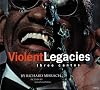
In Violent Legacies the acclaimed photographer Richard Misrach compiles three "cantos" in his ongoing series of photographs exploring the desert of the American West. The desert has long been a metaphor in Misrach's art. Here, this barren land, so often romanticized, undergoes an eerie transformation at the hands of man and becomes an unmistakable reflection of militarism, violence, and environmental destruction. Misrach's political commitment and activism--filtered through an ironic show more counterposing of form and content, as well as his exquisite use of color and composition--have never been as powerfully articulated as in these three new cantos, which are centered around the Utah deadlands and a former nuclear test site in Nevada. The late Susan Sontag contributes a subtle yet probing allegorical meditation on violence in contemporary society, and in a postscript interview, Misrach provides background information about the photographed sites. show less
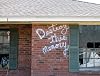
The photographs in Richard Misrach's "Destroy This Memory" are a stark, affecting reminder of the physical and psychological impact of Hurricane Katrina as told by those on the ground, and seen through the lens of a contemporary master. Rather than simply surveying the damage, Misrach--who has photographed the region regularly since the 1970s, most notably for his ongoing "Cancer Alley" project--found himself drawn to the hurricane-inspired graffiti: messages scrawled in spray paint, show more crayons, chalk or whatever materials residents and rescue workers happened to have on hand. At turns threatening, desperate, clinical and even darkly humorous, the phrases he captures--the only text that appears in the book--offer revealing and unique human perspectives on the devastation and shock left in the wake of this disaster. "Destroy This Memory" presents previously unpublished and starkly compelling material, all of which Misrach shot with his 4 MP pocket camera while also working on a separate archive of over 1,000 photographs with his 8 x 10 large-format camera. Created between October and December 2005, this series of images serves as a potent, unalloyed document of the raw experiences of those left to fend for themselves in the aftermath of Katrina. With no essay, titles or even page numbers in the way, the words on these homes, cars and trees offer a searing testament that continues to speak volumes, five years after their original inscription.
Richard Misrach (born 1949) is credited with helping to pioneer the renaissance of color photography and large-scale presentation in the 1970s. He has exhibited extensively, and his work is held in the permanent collections of prestigious institutions such as The Museum of Modern Art, Whitney Museum of American Art, and The Metropolitan Museum of Art, in New York; National Gallery of Art, Washington, D.C.; Museum of Fine Arts, Houston; and Art Institute of Chicago. show less
Richard Misrach (born 1949) is credited with helping to pioneer the renaissance of color photography and large-scale presentation in the 1970s. He has exhibited extensively, and his work is held in the permanent collections of prestigious institutions such as The Museum of Modern Art, Whitney Museum of American Art, and The Metropolitan Museum of Art, in New York; National Gallery of Art, Washington, D.C.; Museum of Fine Arts, Houston; and Art Institute of Chicago. show less

Third volume in the author’s ‘Desert Cantos’ series. – ”Richard Misrach’s ‘Desert Cantos’ is an epic, multi-part tour de force about the American desert. Ambivalent and encouraging, romantic and realistic, seductive and remote, angry and political, his photographs are as unlike anything that preceded them as they are a part of the American landscape tradition.”
In Violent Legacies the acclaimed photographer Richard Misrach compiles three "cantos" in his ongoing series of show more photographs exploring the desert of the American West. The desert has long been a metaphor in Misrach's art. Here, this barren land, so often romanticized, undergoes an eerie transformation at the hands of man and becomes an unmistakable reflection of militarism, violence, and environmental destruction. Misrach's political commitment and activism--filtered through an ironic counterposing of form and content, as well as his exquisite use of color and composition--have never been as powerfully articulated as in these three new cantos, which are centered around the Utah deadlands and a former nuclear test site in Nevada. The late Susan Sontag contributes a subtle yet probing allegorical meditation on violence in contemporary society, and in a postscript interview, Misrach provides background information about the photographed sites. show less
In Violent Legacies the acclaimed photographer Richard Misrach compiles three "cantos" in his ongoing series of show more photographs exploring the desert of the American West. The desert has long been a metaphor in Misrach's art. Here, this barren land, so often romanticized, undergoes an eerie transformation at the hands of man and becomes an unmistakable reflection of militarism, violence, and environmental destruction. Misrach's political commitment and activism--filtered through an ironic counterposing of form and content, as well as his exquisite use of color and composition--have never been as powerfully articulated as in these three new cantos, which are centered around the Utah deadlands and a former nuclear test site in Nevada. The late Susan Sontag contributes a subtle yet probing allegorical meditation on violence in contemporary society, and in a postscript interview, Misrach provides background information about the photographed sites. show less
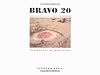
In 'Bravo 20', Richard MISRACH documents the destruction of the landscape for military purposes as well as the fight for a military area and makes a suggestion as to what should best be done with the exploded war scrap.
In 1952, the U.S. Navy began illegally testing high-explosive bombs on an enormous expanse of public land near Fallon, in northwestern Nevada. The land had long been sacred to the Northern Paiute Indians, who called it the “Source of Creation.” The Navy called it “Bravo show more 20.”
Here is the dramatic story and the first photographic documentation of what happened to the public’s land at “Bravo 20.” With the help of the local residents, award-winning landscape photographer Richard Misrach gained access to the area using a 1972 mining law to claim a tract of land at the heart of the bombing range. Despite initial fears of unexploded bombs or wayward Navy bombers, Misrach “worked his claim”—and his camera—for the next eighteen months. The result of his efforts is a breathtaking collection of full-color photographs—and a remarkable proposal for America’s first environmental memorial: Bravo 20 National Park.
The photographs capture both the natural beauty and the man-made devastation unique to the remote Nevada landscape. Scattered across the great alkali flat, rusted wrecks of military vehicles lie as if on a battle field. A bomb crater is filled with crimson liquid where the earth itself seems to bleed. An abandoned school bus sits among the sagebrush. (Caption: “Target.”) A single peak rises steeply on the horizon—Lone Rock, known to the Northern Paiute as “Wolf’s Head.” From its summit flies the American flag, raised by the photographer and his friends to ward off the Navy bombers that have already reduced its height by more than a third.—the publisher"For eighteen months in the mid-eighties, photographer Richard MISRACH roamed through the natural beauty and man-made devastation of Bravo 20 [bombing range], while Myriam Weisang Misrach researched the history of military expansionism --and local protest-- in the West. The result is a book that not only documents the ongoing battle for Bravo 20, but offers a suggestion on what best to do with the burst shells, bombed-out buses, automobile hulls, and other naval detritus: leave it right where it is." (© Mother Jones)
"Perhaps the most stunning photo book I've seen this year." (© Kurt Wolf, 'San Francisco Bay Guardian) show less
In 1952, the U.S. Navy began illegally testing high-explosive bombs on an enormous expanse of public land near Fallon, in northwestern Nevada. The land had long been sacred to the Northern Paiute Indians, who called it the “Source of Creation.” The Navy called it “Bravo show more 20.”
Here is the dramatic story and the first photographic documentation of what happened to the public’s land at “Bravo 20.” With the help of the local residents, award-winning landscape photographer Richard Misrach gained access to the area using a 1972 mining law to claim a tract of land at the heart of the bombing range. Despite initial fears of unexploded bombs or wayward Navy bombers, Misrach “worked his claim”—and his camera—for the next eighteen months. The result of his efforts is a breathtaking collection of full-color photographs—and a remarkable proposal for America’s first environmental memorial: Bravo 20 National Park.
The photographs capture both the natural beauty and the man-made devastation unique to the remote Nevada landscape. Scattered across the great alkali flat, rusted wrecks of military vehicles lie as if on a battle field. A bomb crater is filled with crimson liquid where the earth itself seems to bleed. An abandoned school bus sits among the sagebrush. (Caption: “Target.”) A single peak rises steeply on the horizon—Lone Rock, known to the Northern Paiute as “Wolf’s Head.” From its summit flies the American flag, raised by the photographer and his friends to ward off the Navy bombers that have already reduced its height by more than a third.—the publisher"For eighteen months in the mid-eighties, photographer Richard MISRACH roamed through the natural beauty and man-made devastation of Bravo 20 [bombing range], while Myriam Weisang Misrach researched the history of military expansionism --and local protest-- in the West. The result is a book that not only documents the ongoing battle for Bravo 20, but offers a suggestion on what best to do with the burst shells, bombed-out buses, automobile hulls, and other naval detritus: leave it right where it is." (© Mother Jones)
"Perhaps the most stunning photo book I've seen this year." (© Kurt Wolf, 'San Francisco Bay Guardian) show less
Awards


You May Also Like


Associated Authors
Statistics
- Works
- 27
- Also by
- 5
- Members
- 698
- Popularity
- #36,253
- Rating
- 4.1
- Reviews
- 6
- ISBNs
- 35
- Languages
- 2
- Favorited
- 2