
Vladimir Bartol (1903–1967)
Author of Alamut
About the Author
Works by Vladimir Bartol
قلعة النسور 1 copy
1992 1 copy
Tagged
Common Knowledge
- Birthdate
- 1903-02-24
- Date of death
- 1967-09-12
- Gender
- male
- Occupations
- writer
- Nationality
- Slovenia
- Birthplace
- Trieste, Austria-Hungary (Italy)
- Places of residence
- Trieste, Italy
Ljubljana, Slovenia
Belgrade, Serbia - Place of death
- Ljubljana, Slovenia
- Burial location
- Žale, Ljubljana, Slovenia
- Associated Place (for map)
- Slovenia
Members
Reviews

Jó kis történelmi regény ez a kardozás-szerelem-cselszövevény szentháromságának fényében, ahol a három alkotóelem megfelelően kiegyensúlyozza egymást. Ráadásul az Alamut története már önmagában megér egy misét (vagy mi is van a mohamedánoknál): az asszaszinok szektájának (regényhez illően szabadon kezelt) keletkezéstörténetét meséli el, színhely tehát Észak-Irán, az időpont pedig a XI. század harmadik harmada. Bartol nagyon szépen, alulról építi show more fel a sztorit, egyrészt egy rabnőt látunk, aki egy rejtélyes csodakertbe kerül, ahol szabályosan hurit képeznek belőle, másrészt pedig egy elhivatott iszmaelita fiút, aki megérkezik Alamutba, hogy minden nehézséget leküzdve okleveles fidajín legyen. Némi előkészítés után aztán az író fejest ugrik a nagypolitikába, így megismerkedhetünk Haszán Ibn Szabáh prófétával, a karizmatikus vezérrel, akinek nagy-nagy tervei vannak… Szóval remekül van felépítve a történet, tobzódunk a körömrágásban, így még azt is hajlamos vagyok megbocsátani Bartolnak, hogy prófétája olyan szájbarágósan vázolja fel világhódító vízióit, mintha egy XX. századi kereskedelmi igazgató prezentációját látnánk.
Ez a könyv mindenek előtt és mindenek felett tanmese, annak a folyamatnak a leírása, amikor egy tapasztalatlan, befolyásolható fiatalemberből elvakult bérgyilkost faragnak. Bartol hipotézise meglehetősen sértő ezekre a szektákra nézve – persze kit érdekel, sértődjenek meg. Elképzelése szerint minden vallási fanatikus mögött egy nagy képességű szélhámos áll, aki őt a mennyország* ígéretével (és esetleg némi hasissal) elkábítja, majd dróton rángatja – ez a kókler már túl okos ahhoz, hogy bármiben is higgyen, de nagyon jól jön neki, hogy az ostoba fundamentalisták élő fegyverként szolgálnak neki. Persze ez az elmélet túlmutat a ma öngyilkos merénylőin, inkább egy általános viszonyt ábrázol bábjátékos és báb között, ami bármelyik (akár vallásos, akár vallástalan) csoport esetében érvényes lehet**. Ez a könyv bizonyos értelemben a nietzsche-i übermensch fogalmának újragondolása: a sokszínűen és bizonyos tekintetben igen vonzóan megrajzolt „Hegyi Öreg” machinációit ugyanis az legalizálja (saját elgondolása szerint), hogy ő mennyivel magasabb szinten képes felfogni az „igazi igazságot”***. Így aztán bármit megtehet a pórnéppel, eszközként tekinthet rájuk, hiszen ő intellektuális képességeinél fogva sokkal teljesebb életformát képvisel. Hát köszi. (Amúgy meg ezekkel az egyenletekkel mindig az a baj, hogy én vagyok bennük a pórnép.) Jó lenne azt mondani, hogy talán majd egy fanatikus elolvassa ezt a könyvet, kinyílik a szeme, és meglátja a madzagokat a feje felett… ám sajnos a fanatikusok ritkán olvasnak olyan könyvet, amire a főnök nem adta áldását. Meg mondjuk úgy egyáltalán: ritkán.
* Amúgy meg nem tudok napirendre térni afelett, hogy felnőtt férfiakat meg lehet etetni olyan édenkert-képpel, ami leginkább egy fantáziátlan, hormonzavaros kiskamasz álmodozásaihoz hasonlít: evés, ivás, dugás az örökkévalóságig. Pláne hogy a nyugati civilizáció nem elhanyagolható része már ötven éve egészen konkrétan valóban ezt csinálja, és mégsem tűnik felhőtlenül boldognak – úgyhogy nem értem, mi ebben olyan ellenállhatatlanul vonzó.
** A könyv 1938-ban jelent meg – érdemes lehet elmélázni azon, hogy Bartol szeme előtt nem a szélsőjobboldali fanatikusok példája lebegett-e.
*** Hogy mindent szabad és semmit sem tilos. Ezek az iszmaeliták, úgy látszik, ilyen titkos szabadkőművesek voltak. show less
Ez a könyv mindenek előtt és mindenek felett tanmese, annak a folyamatnak a leírása, amikor egy tapasztalatlan, befolyásolható fiatalemberből elvakult bérgyilkost faragnak. Bartol hipotézise meglehetősen sértő ezekre a szektákra nézve – persze kit érdekel, sértődjenek meg. Elképzelése szerint minden vallási fanatikus mögött egy nagy képességű szélhámos áll, aki őt a mennyország* ígéretével (és esetleg némi hasissal) elkábítja, majd dróton rángatja – ez a kókler már túl okos ahhoz, hogy bármiben is higgyen, de nagyon jól jön neki, hogy az ostoba fundamentalisták élő fegyverként szolgálnak neki. Persze ez az elmélet túlmutat a ma öngyilkos merénylőin, inkább egy általános viszonyt ábrázol bábjátékos és báb között, ami bármelyik (akár vallásos, akár vallástalan) csoport esetében érvényes lehet**. Ez a könyv bizonyos értelemben a nietzsche-i übermensch fogalmának újragondolása: a sokszínűen és bizonyos tekintetben igen vonzóan megrajzolt „Hegyi Öreg” machinációit ugyanis az legalizálja (saját elgondolása szerint), hogy ő mennyivel magasabb szinten képes felfogni az „igazi igazságot”***. Így aztán bármit megtehet a pórnéppel, eszközként tekinthet rájuk, hiszen ő intellektuális képességeinél fogva sokkal teljesebb életformát képvisel. Hát köszi. (Amúgy meg ezekkel az egyenletekkel mindig az a baj, hogy én vagyok bennük a pórnép.) Jó lenne azt mondani, hogy talán majd egy fanatikus elolvassa ezt a könyvet, kinyílik a szeme, és meglátja a madzagokat a feje felett… ám sajnos a fanatikusok ritkán olvasnak olyan könyvet, amire a főnök nem adta áldását. Meg mondjuk úgy egyáltalán: ritkán.
* Amúgy meg nem tudok napirendre térni afelett, hogy felnőtt férfiakat meg lehet etetni olyan édenkert-képpel, ami leginkább egy fantáziátlan, hormonzavaros kiskamasz álmodozásaihoz hasonlít: evés, ivás, dugás az örökkévalóságig. Pláne hogy a nyugati civilizáció nem elhanyagolható része már ötven éve egészen konkrétan valóban ezt csinálja, és mégsem tűnik felhőtlenül boldognak – úgyhogy nem értem, mi ebben olyan ellenállhatatlanul vonzó.
** A könyv 1938-ban jelent meg – érdemes lehet elmélázni azon, hogy Bartol szeme előtt nem a szélsőjobboldali fanatikusok példája lebegett-e.
*** Hogy mindent szabad és semmit sem tilos. Ezek az iszmaeliták, úgy látszik, ilyen titkos szabadkőművesek voltak. show less
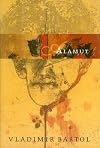
Alamut was a fortress in Iran; according to legend, it was a training ground for assassins. It was also the birthplace of the fedayeen. The question facing ibn Sabbah, the mysterious leader at Alamut, was how to motivate soldiers to not only carry out orders without fear of death, but how to make them actually welcome death in the line of their duty. Ibn Sabbah finds his answer in the Ismaili motto of "Nothing is true; everything is permitted." Alamut becomes his place to play out the grand show more vision he has for indoctrinating his fighting force.
We are first introduced to two young characters: Halima, who is brought to the castle for purposes that are not clear to her at first, and ibn Tahir, who is coming to become one of the first fedayeen. They each play out different sides of the drama and react differently as they see more of what is happening at Alamut. One of the strengths of the novel is the way the characters' reactions, both major and minor, to revelations about ibn Sabbah's plans run the gamut from disbelief to horror to wonder to disillusionment.
What does it mean to have faith? What is worthy to be believed in? What if you believe in something your entire life, but it was never true? These are the kinds of questions the novel raises, while still spinning a page-turning tale.
Recommended for: readers of Foucault's Pendulum, people who like stories of the distant past set in faraway lands, grown-ups who want to read fairy tales.
Quote: Not just the simple folk from the masses, even the more exalted minds preferred a tangible lie to an ungraspable truth. show less
We are first introduced to two young characters: Halima, who is brought to the castle for purposes that are not clear to her at first, and ibn Tahir, who is coming to become one of the first fedayeen. They each play out different sides of the drama and react differently as they see more of what is happening at Alamut. One of the strengths of the novel is the way the characters' reactions, both major and minor, to revelations about ibn Sabbah's plans run the gamut from disbelief to horror to wonder to disillusionment.
What does it mean to have faith? What is worthy to be believed in? What if you believe in something your entire life, but it was never true? These are the kinds of questions the novel raises, while still spinning a page-turning tale.
Recommended for: readers of Foucault's Pendulum, people who like stories of the distant past set in faraway lands, grown-ups who want to read fairy tales.
Quote: Not just the simple folk from the masses, even the more exalted minds preferred a tangible lie to an ungraspable truth. show less
Alamut was a timely and pertinent political allegory when it was first published on the eve of World War II; it is an appropriate political allegory for the time in which it is set, 11th century Persia as various Muslim sects vied for primacy; and it is equally pertinent today, in the age of terror following the events of 9/11 and the United States' extreme reaction to that event.
Hasan ibm Sabbah, an Ismaili leader who controls the fortress at Alamut, has devised and is implementing a plan show more to install himself as the leader of the Persian world. He is training and plans to manipulate a cadre of innocent young men, the fedai, by giving them a taste of paradise, thus ensuring that they will go willingly to their deaths on suicide missions. He has created a secret garden with glass pavillions and beautiful young women dressed in silk and jewels and well-trained in poetry, music, dance, and sexual techniques. The young men will be drugged with hashish and will wake up in 'paradise' for one night, before being returned to be sent on a suicide mission.
The novel raises philosophical, moral and social issues. Hasan is actually a Machiavellian figure, and his motto is 'Nothing is true; everything is permitted.' At times it is unclear whether he is insane or brilliant. Beyond raising issues to ponder, however, Alamut is an exciting and well-written story, somewhat of a cross between an adventure story and a fairy tale, as the stories of the fedai, the women in the secret garden, and the ruthless leaders are told in alternating chapters.
While historical developments since 1938 have raised serious questions about the factuality of the underlying story, there was a fortress at Alamut (its ruins remain), Hasan is a historical figure, and stories of fedai or assassins were described by Marco Polo. show less
Hasan ibm Sabbah, an Ismaili leader who controls the fortress at Alamut, has devised and is implementing a plan show more to install himself as the leader of the Persian world. He is training and plans to manipulate a cadre of innocent young men, the fedai, by giving them a taste of paradise, thus ensuring that they will go willingly to their deaths on suicide missions. He has created a secret garden with glass pavillions and beautiful young women dressed in silk and jewels and well-trained in poetry, music, dance, and sexual techniques. The young men will be drugged with hashish and will wake up in 'paradise' for one night, before being returned to be sent on a suicide mission.
The novel raises philosophical, moral and social issues. Hasan is actually a Machiavellian figure, and his motto is 'Nothing is true; everything is permitted.' At times it is unclear whether he is insane or brilliant. Beyond raising issues to ponder, however, Alamut is an exciting and well-written story, somewhat of a cross between an adventure story and a fairy tale, as the stories of the fedai, the women in the secret garden, and the ruthless leaders are told in alternating chapters.
While historical developments since 1938 have raised serious questions about the factuality of the underlying story, there was a fortress at Alamut (its ruins remain), Hasan is a historical figure, and stories of fedai or assassins were described by Marco Polo. show less
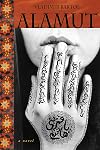
Alamut, by Vladimir Bartol, is apparently one of the great works in the Slovenian language. It has, according to Wikipedia, been translated into many other languages and is even compulsory reading on the curriculum of Slovenian schools. This translation into English is the second, the first done in 2004 by Scala House Press.
The novel is historical fiction dealing with the Ismaili “Old man of the mountain” who imbued his followers with immense faith and zeal, partly through the use of show more hashish, and developed the fearsome clandestine fighting force known to the world as Assassins. The story here, relates the personal experiences of some of his early recruits as well as the women he used to seduce them, his commanders, their families and various sundry other characters. The schizophrenic point of view is a little unusual since we never get a sense of who the main characters are – you get insight into everyone’s internal state which can be very distracting. However, the main story line is fairly clear as Hasan, the Old Man himself, builds gardens to resemble paradise, brings young men into his camp, tests their faith and finally sends them to the gardens to “Paradise” after dosing them with hashish. When they return, they are completely loyal to him and don’t fear death. You also get the story from the point of view of the Houris – the young women in the gardens specially trained to pretend they are in paradise.
The plot is deceptively simple, the philosophy transparent and the reader is generally treated like an idiot who needs everything explained. At least this is what I thought originally. The last fifty pages of the book turn everything on its head and leave you confused about right and wrong, moral ambiguity and who the protagonists really are. This sudden lack of a sense of moral compass is actually something of a redeeming quality in the novel, since until that point, everything seems like a morality play on the horrors of fascism. At the end you are left wondering if this book really was against ideology, or at a deeper level, in support of some higher ideal – what exactly it is is left to the reader as an exercise.
I would still have to complain that the translation seems targeted at the reader’s digest condensed version crowd. Not that it reads in a badly stilted way, it just seems really dumbed down. Perhaps this is the way the original reads in Slovenian too, although it makes it unlikely to have claimed the crown of Slovenian literacy. I imagine it’s difficult to find a good Slovenian-English translator - but really - some of the poem translations here make me want to jump off cliff with the Assassins.
This brings me to another problem I have with the book – its cover. Since I have an advance readers copy, I can’t be certain that this is the book’s final public face, however, the blurbs on the outside cover are highly misleading. They make reference to Osama Bin Laden with vague claims that the book somehow relates to modern day terrorism. I guess on a superficial level there are similarities but I can’t say they’re great. It also mention’s the new computer game, Assassin’s creed. I’m not sure who the target audience is but they’re going to be disappointed. If, like me, they were interested in the book due to its status as a literary work in Slovenian, and its reputation as a metaphor for fascism, they’re going to be surprised at the simplistic translation. If they’re looking for great historical fiction with excellent plotting and attention to detail, they will be bored by the less than exciting plot and plodding philosophical discussions,.
That said, the story, if you can win through to the end, does have some literary merit as it raises a lot of questions about moral behaviour, rational manipulation and the meanings of ideology. Not a beautiful read, nor a deeply inspiring one, but one that raises more questions than it answers. show less
The novel is historical fiction dealing with the Ismaili “Old man of the mountain” who imbued his followers with immense faith and zeal, partly through the use of show more hashish, and developed the fearsome clandestine fighting force known to the world as Assassins. The story here, relates the personal experiences of some of his early recruits as well as the women he used to seduce them, his commanders, their families and various sundry other characters. The schizophrenic point of view is a little unusual since we never get a sense of who the main characters are – you get insight into everyone’s internal state which can be very distracting. However, the main story line is fairly clear as Hasan, the Old Man himself, builds gardens to resemble paradise, brings young men into his camp, tests their faith and finally sends them to the gardens to “Paradise” after dosing them with hashish. When they return, they are completely loyal to him and don’t fear death. You also get the story from the point of view of the Houris – the young women in the gardens specially trained to pretend they are in paradise.
The plot is deceptively simple, the philosophy transparent and the reader is generally treated like an idiot who needs everything explained. At least this is what I thought originally. The last fifty pages of the book turn everything on its head and leave you confused about right and wrong, moral ambiguity and who the protagonists really are. This sudden lack of a sense of moral compass is actually something of a redeeming quality in the novel, since until that point, everything seems like a morality play on the horrors of fascism. At the end you are left wondering if this book really was against ideology, or at a deeper level, in support of some higher ideal – what exactly it is is left to the reader as an exercise.
I would still have to complain that the translation seems targeted at the reader’s digest condensed version crowd. Not that it reads in a badly stilted way, it just seems really dumbed down. Perhaps this is the way the original reads in Slovenian too, although it makes it unlikely to have claimed the crown of Slovenian literacy. I imagine it’s difficult to find a good Slovenian-English translator - but really - some of the poem translations here make me want to jump off cliff with the Assassins.
This brings me to another problem I have with the book – its cover. Since I have an advance readers copy, I can’t be certain that this is the book’s final public face, however, the blurbs on the outside cover are highly misleading. They make reference to Osama Bin Laden with vague claims that the book somehow relates to modern day terrorism. I guess on a superficial level there are similarities but I can’t say they’re great. It also mention’s the new computer game, Assassin’s creed. I’m not sure who the target audience is but they’re going to be disappointed. If, like me, they were interested in the book due to its status as a literary work in Slovenian, and its reputation as a metaphor for fascism, they’re going to be surprised at the simplistic translation. If they’re looking for great historical fiction with excellent plotting and attention to detail, they will be bored by the less than exciting plot and plodding philosophical discussions,.
That said, the story, if you can win through to the end, does have some literary merit as it raises a lot of questions about moral behaviour, rational manipulation and the meanings of ideology. Not a beautiful read, nor a deeply inspiring one, but one that raises more questions than it answers. show less
 This review was written for LibraryThing Early Reviewers.
Lists
My TBR (1)
Awards


You May Also Like


Associated Authors
Statistics
- Works
- 7
- Members
- 788
- Popularity
- #32,299
- Rating
- 4.1
- Reviews
- 24
- ISBNs
- 52
- Languages
- 13
- Favorited
- 2
