
Albert A. Bell, Jr.
Author of Exploring the New Testament World
About the Author
Series
Works by Albert A. Bell, Jr.
Resources in ancient philosophy : an annotated bibliography of scholarship in English, 1965-1989 (1994) 3 copies
Hiding From the Past: An Eighth Case from the Notebooks of Pliny the Younger (2020) 1 copy, 1 review
The Secret of the Bradford House: A Steve and Kendra Mystery (Steve and Kendra Mysteries) (2016) 1 copy
Tagged
Common Knowledge
- Canonical name
- Bell, Albert A., Jr.
- Birthdate
- 1945
- Gender
- male
- Education
- University of North Carolina (PhD|Classics|1977)
Southeastern Baptist Theological Seminary (MDiv|1973)
Duke University (MA|1969)
Carson-Newman College (BA|1966) - Occupations
- classicist
historian
college professor
cleric - Organizations
- Hope College
Southern Baptist Convention - Nationality
- USA
- Places of residence
- Michigan, USA
North Carolina, USA
Tennessee, USA - Associated Place (for map)
- USA
Members
Reviews

Another delightful Pliny the Younger mystery from the pen of Albert A. Bell. Mr. Bell has given us a more intriguing mystery than in his debut Pliny novel. In this one, Pliny, with the aid of his faithful friend Tacitus, are asked by the Emperor Domitian, to find the unexpurgated memoirs of Agrippina, for some nefarious purpose of Domitian's. Pliny does demonstrate to the emperor his skill in nosing out how the murder of a slave, a mason and plasterer, was probably accomplished. As a first show more step in his search for the missing scrolls, Pliny visits an old philosopher with ties to the imperial family and meets there a woman of mysterious background, Cornelia, whom he brings to his home at the behest of the philosopher. His and Tacitus' search leads them to the reason for the slave's death; a hunt underneath the Baths of Titus for a certain fresco; a dinner party at Tacitus' home at which he meets Tacitus' father-in-law, the famous governor Agricola of Britannia, who later gives great help in solving the mystery.
Pliny was as engaging as in the first novel and I like it that he is not perfect; he sometimes makes mistakes. I liked that Pliny's mother, Lady Plinia, was so important here. Both she and Cornelia were strong women and likeable. The author does introduce bits of history or Roman customs. Also in this case, several characters were Jewish and they explained about their funeral customs. Though the author is sometimes too obvious in how he inserts history, these books are a pleasant way to learn a little factual information. I liked the part demonstrating the workings of the Roman client-patron relationship. Pliny has done favors for a jeweler; in turn, the jeweler makes a beautiful necklace for Cornelia to wear to Tacitus'. I also liked the little line drawings that adorned practically every page.
I plan to continue with this series. I couldn't put this novel down. show less
Pliny was as engaging as in the first novel and I like it that he is not perfect; he sometimes makes mistakes. I liked that Pliny's mother, Lady Plinia, was so important here. Both she and Cornelia were strong women and likeable. The author does introduce bits of history or Roman customs. Also in this case, several characters were Jewish and they explained about their funeral customs. Though the author is sometimes too obvious in how he inserts history, these books are a pleasant way to learn a little factual information. I liked the part demonstrating the workings of the Roman client-patron relationship. Pliny has done favors for a jeweler; in turn, the jeweler makes a beautiful necklace for Cornelia to wear to Tacitus'. I also liked the little line drawings that adorned practically every page.
I plan to continue with this series. I couldn't put this novel down. show less
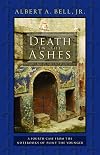
Another fine Roman mystery from Albert Bell, though more in a minor key than the previous three books in the series. That's because of the setting -- the area around Vesuvius five years after the eruption that buried Pompeii and a whole lot more around the Bay of Naples. The ash still lies deep over much of the area, many houses have been buried and many lives lost (how many, no one is sure), and starving brigands wander in the spectral landscape. It's not a cheery scene, and it is show more particularly hard on Pliny, who has horrible memories of the eruption itself, which killed his uncle. But he and Tacitus are in the region in response to a friend's plea for help. The story unfolds, as our hero traces down clues, fights off people who clearly want to kill him, and has to put up with occasional earthquakes. As in the other books in the series, the characterization is strong, and the setting is vividly realized. This is an excellent read in an excellent series. show less
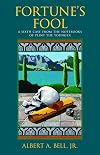
This novel brings the series back to the high standard of the first four in the series, combining a compelling mystery with more complications in Pliny's complicated personal life. The story is set at Pliny's villa on the shores of Lake Como (a beautifully evoked setting). The mystery begins when a skeleton falls out of a wall that Pliny is having demolished so that he can enlarge the villa, in a (fruitless) attempt to placate his unpleasant wife Livia. Nothing, of course, will placate Livia show more except the disappearance of Pliny's slave and lover Aurora. Pliny of course wants to find out whose skeleton it is, and how it got in the wall, and the plot devolves from there, reaching back into the past to touch Pliny's family. Well written and lively, this novel leaves me waiting for the next book in the series. show less
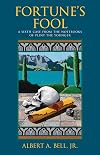
While demolishing a 20-year-old wall on an estate he inherited from his father, Pliny finds a skeleton buried inside the wall. Who was it and why was it put there? Some people seem determined that he will not find out.
The 'who' was fairly obvious, though watching Pliny uncovering the 'why' was good fun. I could think of several ways out of the dilemmas in his personal life but of course he didn't ask my advice.
The 'who' was fairly obvious, though watching Pliny uncovering the 'why' was good fun. I could think of several ways out of the dilemmas in his personal life but of course he didn't ask my advice.
Awards

You May Also Like


Associated Authors
Statistics
- Works
- 24
- Members
- 425
- Popularity
- #57,428
- Rating
- 3.7
- Reviews
- 26
- ISBNs
- 33
- Favorited
- 1