

Richard Brookhiser
Author of Founding Father: Rediscovering George Washington
About the Author
Richard Brookhiser is a Senior Editor at The National Review and a New York Observer columnist. He contributes to such publications as American Heritage and The New York Times. He lives in New York City
Image credit: Received from publisher for use in SOTT
Works by Richard Brookhiser
Rules of Civility: The 110 Precepts That Guided Our First President in War and Peace (1997) 149 copies, 3 reviews
Right Time, Right Place: Coming of Age with William F. Buckley Jr. and the Conservative Movement (2009) 58 copies, 3 reviews
Associated Works
Presidential Leadership: Rating the Best and the Worst in the White House (2004) — Contributor — 158 copies, 3 reviews
Beyond the Boom: New Voices on American Life, Culture, and Politics (1990) — Contributor — 15 copies
America's National Treasure: The Declaration of Independence & William J. Stone's Official Facsimile — Afterword — 1 copy, 1 review
Tagged
Common Knowledge
- Birthdate
- 1955-02-23
- Gender
- male
- Education
- Yale College (AB| English)
- Occupations
- journalist
biographer
historian - Organizations
- National Review [1970 to the present|
New York Observer
Yale Political Union Party of the Right - Awards and honors
- National Humanities Medal (2008)
Guggenheim fellowship (2011)
Honorary D.Litt., Washington College (2005) - Relationships
- Safer, Jeanne (spouse)
- Nationality
- USA
- Birthplace
- Irondequoit, New York, USA
- Places of residence
- Rochester, New York, USA
New York, New York, USA
New Haven, Connecticut, USA
Ulster County, New York, USA - Associated Place (for map)
- New York, USA
Members
Reviews
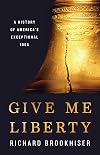
Richard Brookhiser's Give Me Liberty was published in 2019, likely as his contribution to the debate concerning American exceptionalism and what a legitimate American nationalism consists of assuming there can be one. In my view it is better placed as an alternative and maybe antidote to the 1619 Project, the self-conscious effort by the New York Times to recast American history as a nation conceived in original sin and dedicated to the proposition that only white people are entitled to show more membership in good standing. Their project is intended to lay the groundwork for "fundamental transformation" advocated by the cultural left and its political instantiation, the Democratic Party of the 21st century.
Brookhiser's work is broken into thirteen chapters (an esoteric nod to the original stars and stripes?). Each chapter relates the story behind a specific document, speech, or public statement that speaks to the "America's exceptional idea", liberty. He begins with the Virginia colony and the settlement in Jamestown and invites the reader to consider that in, yes 1619, there was more than one event that took place of what might be considered world historical significance - the first elections to and meeting of the Jamestown General Assembly, the beginning of self-government in America.
From there he relates the story of the Flushing Remonstrance and the trial of John Peter Zenger which called for religious tolerance and freedom of the press via an attempt to redefine the common law tradition of seditious libel long before they were incorporated into the First Amendment by the first Congress to be seated under the Constitution of 1787. There are the expected chapters on the adoption of the Declaration of Independence in 1776 and the Constitutional Convention, the debates over the adoption and how the of spirt of liberty and equality infused both documents.
In between the chapter on the Declaration and the chapter on the Constitution, Brookhiser discusses another constitution, that of the New York Manumission Society whose original membership included Alexander Hamilton, John Jay, George Clinton, lesser well know notables and a group of men who have been largely forgotten many of whom were Quakers including a descendant of one Robert Bowne who had been jailed by Peter Stuyvesant for allowing his home to be used as a meeting place for Quakers in 1662, five years after the presentation of the Flushing Remonstrance.
Like many of the theoretical opponents of the institution of slavery some of the founding members of the society actually owned slaves including Jay who owned five. It is the fashion among modern historians to dismiss these efforts to contain and over time abolish slavery (and to protect the legal status of free backs) as gross hypocrisy. But in 1827 when slavery was finally eliminated in New York, William Hamilton who had helped found the African Zion Church declaimed, "This day has the state of New York regenerated herself -this day has she been cleansed of a most foul, poisonous and damnable stain". After recognizing the efforts of the Society of Friends, Hamilton declared, "The most powerful lever, or propelling cause was the Manumission Society", He then paid tribute to 81 year old Jay, "that great and good statesman, the right honorable John Jay...Blessed God! How good it is, he has lived to see, as reward, the finishing of work he helped to begin".
Brookhiser devotes chapters to the history behind the Monroe Doctrine, the Seneca Falls Declaration on women's rights, the Gettysburg Address, the Statue of Liberty, the "Cross of Gold Speech" by William Jennings Bryan at the 1896 Democratic convention, the Arsenal of Democracy fireside chat by FDR to justify the decision to supply the British with armaments to enable that country to fight on alone against Hitler and the Tear Down this Wall speech delivered by President Reagan in 1987 on the occasion of the 750th anniversary of the city of Berlin.
In the conclusion Brookhiser acknowledges that there were other candidates for inclusion: Martin Luther King, Jr., Frederick Douglass, the Mayflower Compact and the Federalist Papers, et. al. It is his hope that the future will provide many more examples of public statements on the promise and spirit of American liberty.
If you are in the education "business' and looking for an alternative to the mandated deconstruction of the American experiment this is an outstanding book to put to good use. If you want both a good read and an eloquent reconstruction of many of the events of our history I give this work my highest recommendation. show less
Brookhiser's work is broken into thirteen chapters (an esoteric nod to the original stars and stripes?). Each chapter relates the story behind a specific document, speech, or public statement that speaks to the "America's exceptional idea", liberty. He begins with the Virginia colony and the settlement in Jamestown and invites the reader to consider that in, yes 1619, there was more than one event that took place of what might be considered world historical significance - the first elections to and meeting of the Jamestown General Assembly, the beginning of self-government in America.
From there he relates the story of the Flushing Remonstrance and the trial of John Peter Zenger which called for religious tolerance and freedom of the press via an attempt to redefine the common law tradition of seditious libel long before they were incorporated into the First Amendment by the first Congress to be seated under the Constitution of 1787. There are the expected chapters on the adoption of the Declaration of Independence in 1776 and the Constitutional Convention, the debates over the adoption and how the of spirt of liberty and equality infused both documents.
In between the chapter on the Declaration and the chapter on the Constitution, Brookhiser discusses another constitution, that of the New York Manumission Society whose original membership included Alexander Hamilton, John Jay, George Clinton, lesser well know notables and a group of men who have been largely forgotten many of whom were Quakers including a descendant of one Robert Bowne who had been jailed by Peter Stuyvesant for allowing his home to be used as a meeting place for Quakers in 1662, five years after the presentation of the Flushing Remonstrance.
Like many of the theoretical opponents of the institution of slavery some of the founding members of the society actually owned slaves including Jay who owned five. It is the fashion among modern historians to dismiss these efforts to contain and over time abolish slavery (and to protect the legal status of free backs) as gross hypocrisy. But in 1827 when slavery was finally eliminated in New York, William Hamilton who had helped found the African Zion Church declaimed, "This day has the state of New York regenerated herself -this day has she been cleansed of a most foul, poisonous and damnable stain". After recognizing the efforts of the Society of Friends, Hamilton declared, "The most powerful lever, or propelling cause was the Manumission Society", He then paid tribute to 81 year old Jay, "that great and good statesman, the right honorable John Jay...Blessed God! How good it is, he has lived to see, as reward, the finishing of work he helped to begin".
Brookhiser devotes chapters to the history behind the Monroe Doctrine, the Seneca Falls Declaration on women's rights, the Gettysburg Address, the Statue of Liberty, the "Cross of Gold Speech" by William Jennings Bryan at the 1896 Democratic convention, the Arsenal of Democracy fireside chat by FDR to justify the decision to supply the British with armaments to enable that country to fight on alone against Hitler and the Tear Down this Wall speech delivered by President Reagan in 1987 on the occasion of the 750th anniversary of the city of Berlin.
In the conclusion Brookhiser acknowledges that there were other candidates for inclusion: Martin Luther King, Jr., Frederick Douglass, the Mayflower Compact and the Federalist Papers, et. al. It is his hope that the future will provide many more examples of public statements on the promise and spirit of American liberty.
If you are in the education "business' and looking for an alternative to the mandated deconstruction of the American experiment this is an outstanding book to put to good use. If you want both a good read and an eloquent reconstruction of many of the events of our history I give this work my highest recommendation. show less
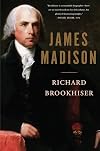
This is a comprehensive but accessible look at the fourth US president. I feel like I got a good sense of Madison's personality and his approach to the new republic. Brookhiser's evaluation of the Virginia planter class---how it declined in influence after Monroe because education declined, and they could no longer balance its negatives with intellect---feels resonant today (not just about VA, though).
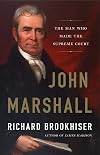
A Founding Father, a Revolutionary fighter, a lawyer, a VA politician, a national politician, a disciple of Washington, Secretary of State under President John Adams until Adams nominated him to the Supreme Court where Marshall served for 34 years!
This may look like a man who seems distant and hard to understand, a man who is more marble than flesh, more imaginary than relatable. But that is NOT the case with Justice Marshall. Author Richard Brookhiser has brought to life Chief Justice John show more Marshall in a way that makes him seem understandable, real, relatable. Here was a man who loved his family dearly, who even hated some family with a passion (ahem...second cousin Thomas Jefferson), who loved nothing more than to hang out with his friends, drink and play games all while b.s.ing and enjoying the time as it went by. He was bright, loved to read and write, and could cajole many into seeing his way of thinking...which may be why he had so many unanimous decisions.
While not a traditional biography, Mr. Brookhiser has written a biography as seen through the major decisions that he and his courts ruled upon. I have not seen biography like this before and was taken aback initially, but grew to love the history behind the cases, what stage Marshall was in in his life and the doings of his family and such, and ultimately the case and the decisions that he and the courts made on them.
So good, so original, so readable and so relatable. Highly recommended to readers of history, lovers of the revolutionary times, or those interested in the Supreme Court and its history. An easy four stars. show less
This may look like a man who seems distant and hard to understand, a man who is more marble than flesh, more imaginary than relatable. But that is NOT the case with Justice Marshall. Author Richard Brookhiser has brought to life Chief Justice John show more Marshall in a way that makes him seem understandable, real, relatable. Here was a man who loved his family dearly, who even hated some family with a passion (ahem...second cousin Thomas Jefferson), who loved nothing more than to hang out with his friends, drink and play games all while b.s.ing and enjoying the time as it went by. He was bright, loved to read and write, and could cajole many into seeing his way of thinking...which may be why he had so many unanimous decisions.
While not a traditional biography, Mr. Brookhiser has written a biography as seen through the major decisions that he and his courts ruled upon. I have not seen biography like this before and was taken aback initially, but grew to love the history behind the cases, what stage Marshall was in in his life and the doings of his family and such, and ultimately the case and the decisions that he and the courts made on them.
So good, so original, so readable and so relatable. Highly recommended to readers of history, lovers of the revolutionary times, or those interested in the Supreme Court and its history. An easy four stars. show less
A worthy addition to Richard Brookhiser's biographies of the Founders, James Madison, is however, likely to be disappointing to those readers with an appetite for massive, exhaustive, sometimes exhausting biographies. Think of Ron Chernow's biographies of Washington, Hamilton and Grant. It also may disappoint those readers who were anticipating a thorough explication of Madison the political theorist including an analysis of those writers who were the greatest influence on Madison's thought, show more something along the lines of Forrest McDonald's biography of Hamilton.
Brookhiser's understanding of Madison draws a pointed distinction between him and his close friend and colleague Jefferson. The latter comes off as the philosopher and poet of the founding, whereas Madison is the consummate skilled politician. His skills are most obviously at work in those situations where prudence is called for not just in the realm of decision making but also in circumstances where he finds it necessary to correct Jefferson when he threatens to go over the top. Probably the best practical illustration of this is the difference in the argument and rhetoric employed by Madison in his drafting of the Virginia Resolution in response to the passage of the Alien and Sedition Acts in comparison with the more radical and incendiary Kentucky Resolution authored by Jefferson. Another illustration of their complementary roles would be a comparison of Jefferson, the political philosopher and rhetorician's most famous work, the Declaration of Independence, with Madison's most enduring legacy - the note taker at the Constitutional Convention - and the political analyst of the Federalist Papers.
It might be that per Brookhiser Madison's real legacy to the country is the system of party politics that originates in his tenure as the first Speaker of House and the combat with Hamilton over his program to establish the nation's credit via a national bank and assumption of the outstanding Revolutionary war debts of the states, including repayment of of notes at face value regardless of whether or not the holder was a veteran or speculator. The Republican Party, which evolved over time to become the present day Democratic Party, was a comparatively well oiled machine that consigned their opponents to the history books in basically a generation; though it must be admitted that Jefferson, Madison, and Monroe received plenty of help from the overreaching folly of the Federalists.
Madison the politician proved adept at shifting positions as the occasion required. The nationalist of the Convention and the Federalist shifted into a strict constructionist and states' rights advocate during the administrations of Washington and Adams, and shifted back again during his own administration and that of Jefferson. The interposition by a state to nullify an act of the federal government it considered unconstitutional was claimed by opponents of the Embargo Act, the War of 1812 and the Tariff of 1828. When John C. Calhoun justified his opposition to the 1828 act on constitutional grounds citing Federalist 51 and the Virginia and Kentucky Resolutions, the long retired Madison authored a letter that was published in the North American Review. He argued that the doctrine of interposition called for a group on states (not just South Carolina) to co-operate in necessary and proper measures, i.e., via committing politics not secession or revolution. Whatever the credibility of Madison's attempts to thread the needle, Brookhiser credits Madison's letter with defusing the force behind Calhoun's claims on behalf of nullification. Chief Justice Marshall, the last of the Federalists, commented that "Madison is himself again."
As always, Brookhiser is a pleasure to read, informative, entertaining, and opinionated with a light touch. show less
Brookhiser's understanding of Madison draws a pointed distinction between him and his close friend and colleague Jefferson. The latter comes off as the philosopher and poet of the founding, whereas Madison is the consummate skilled politician. His skills are most obviously at work in those situations where prudence is called for not just in the realm of decision making but also in circumstances where he finds it necessary to correct Jefferson when he threatens to go over the top. Probably the best practical illustration of this is the difference in the argument and rhetoric employed by Madison in his drafting of the Virginia Resolution in response to the passage of the Alien and Sedition Acts in comparison with the more radical and incendiary Kentucky Resolution authored by Jefferson. Another illustration of their complementary roles would be a comparison of Jefferson, the political philosopher and rhetorician's most famous work, the Declaration of Independence, with Madison's most enduring legacy - the note taker at the Constitutional Convention - and the political analyst of the Federalist Papers.
It might be that per Brookhiser Madison's real legacy to the country is the system of party politics that originates in his tenure as the first Speaker of House and the combat with Hamilton over his program to establish the nation's credit via a national bank and assumption of the outstanding Revolutionary war debts of the states, including repayment of of notes at face value regardless of whether or not the holder was a veteran or speculator. The Republican Party, which evolved over time to become the present day Democratic Party, was a comparatively well oiled machine that consigned their opponents to the history books in basically a generation; though it must be admitted that Jefferson, Madison, and Monroe received plenty of help from the overreaching folly of the Federalists.
Madison the politician proved adept at shifting positions as the occasion required. The nationalist of the Convention and the Federalist shifted into a strict constructionist and states' rights advocate during the administrations of Washington and Adams, and shifted back again during his own administration and that of Jefferson. The interposition by a state to nullify an act of the federal government it considered unconstitutional was claimed by opponents of the Embargo Act, the War of 1812 and the Tariff of 1828. When John C. Calhoun justified his opposition to the 1828 act on constitutional grounds citing Federalist 51 and the Virginia and Kentucky Resolutions, the long retired Madison authored a letter that was published in the North American Review. He argued that the doctrine of interposition called for a group on states (not just South Carolina) to co-operate in necessary and proper measures, i.e., via committing politics not secession or revolution. Whatever the credibility of Madison's attempts to thread the needle, Brookhiser credits Madison's letter with defusing the force behind Calhoun's claims on behalf of nullification. Chief Justice Marshall, the last of the Federalists, commented that "Madison is himself again."
As always, Brookhiser is a pleasure to read, informative, entertaining, and opinionated with a light touch. show less
Lists
Awards


You May Also Like


Associated Authors
Statistics
- Works
- 21
- Also by
- 7
- Members
- 3,781
- Popularity
- #6,702
- Rating
- 3.7
- Reviews
- 58
- ISBNs
- 80
- Languages
- 1
- Favorited
- 6
