
Ken Gelder
Author of The Subcultures Reader
About the Author
Ken Gelder is Professor of English in the School of Culture and Communication at the University of Melbourne, Australia. His books include Reading the Vampire (1994), the co-authored Uncanny Australia (1998), Popular Fiction: The Logics and Practices of a Literary Field (2004), and Subcultures: show more Cultural Histories and Social Practice (2007). He is editor of The Horror Reader (2000) and the second edition of The Subcultures Reader (2005). show less
Works by Ken Gelder
Associated Works
Tagged
Common Knowledge
Members
Reviews
Strong, with serious caveats.
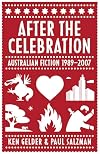
Ken Gelder and Paul Salzman collaborated on their 1989 volume The new diversity: Australian fiction, 1970-88 which was, and remains in my opinion, a seminal volume on Australian literary writing in the late 20th century. The book covers an invigorating period in our history, as the culture, economy, and outlook of the country changed remarkably rapidly following a fairly static period since WWII. It manages to have something to say on basically every fiction show more writer of note during the years 1970-88 (with the exception of 'genre fiction', which is rectified in this sequel).
In 2008, the pair reunited to write this volume, covering the next 18 years in Australian fiction. It was an equally interesting period in the country, as the policies of globalisation, multiculturalism, and expansiveness set forward in that early period were responded to, in ways both positively and negatively, largely by the John Howard government during its 11 year tenure. This text is also handy, but I'm not sure it can challenge the original, even with an older and wiser writing duo at the helm.
There are many strengths to After the Celebration, make no mistake. However Diversity's greatest strength was that it had the rigor and imprimatur of academia, while remaining readable by all, with its focus on cataloguing and discussing as many novelists and novels as possible. By contrast, Celebration is a straightforwardly academic work - some chapters began their lives as articles or papers - and this leads to some challenges. The first volume's structure was built around eleven categories, exemplifying the movements in fiction of the time, into which each book was sorted. The second volume, by contrast, has only six chapters (one of which is genre fiction) with quite specific themes, meaning a lot of the roughly 250 works mentioned in the book are, truly, mentioned: given one or two sentences as parallels to the main novels under discussion. The first volume eschewed specific source citations in favour of a generous biography; the second is littered with hundreds of end citations. The first volume wasn't afraid to discuss comparative quality where necessary, but for the most part focused on what the books themselves were saying; the second volume instead often focuses on what they're not saying.
What I mean by this is that an academic paper, in contrast to a generalist synoptic overview, has to have a hypothesis and approach. The first two chapters - on books with environmental themes and books related to colonialism, respectively - use the term "critical reading" in all its possible meanings. Tim Winton's landmark Cloudstreet is largely dismissed because, although it is celebrated for its working-class characters, the writers feel they are not truly "working-class" because they don't have connections to the organised labour movement. Murray Bail's Eucalyptus is discredited for not engaging with Aboriginal themes despite being set on the land. I would say that most novels get a fairly rough ride this time around, often with more focus on whether a work meets the arbitrary standard set by the particular essay's viewpoint than with what the author was trying to convey. Both Peter Carey and Robert Drewe's novels about Ned Kelly are examined primarily through the lens of "yet another book about a white heterosexual male hero", for example. (Indeed, the authors who are most praised seem to be those where internal wars are playing out; Kate Grenville is rewarded for The Secret River seemingly largely because other academics criticised her for it!)
I make these statements tentatively, because Gelder and Salzman are luminaries in the field, and know what they're talking about. They're perfectly entitled to take these views of the books, and I'm partly just disappointed because I would've preferred a more typical volume, like Diversity, that examined as many novels as possible in a straightforward fashion. But there is something frustrating here. A heckuva lot of novels were published in the years (immediately following the Bicentenary) that looked at the relationship of white Australians with the land, often with a tone of either redemption or of finding a true home. This is a considerable shift from the often-dislocated focus of novels that were chronicled in Diversity which surely says something fascinating about where we are (were) as a nation. Although it's changing rapidly, 80% or more of Australians still identify as white, and have a range of varying, often long-standing relationships to this grant land. If these novels were being written, and in some cases selling quite well, they must have spoken to sentiments that can be traced to cultural shifts and trends. Instead, there is a vague sense of superiority here, as if Gelder and Salzman have figured out the "correct" way to view Australia, and writers can either live up to that or earn a spanking.
Again, I don't intend any of this as criticism. It is the nature of an academic paper, and that's what we have here. They didn't feel like doing another book of standard literary analysis, and that's their choice. But where I still pull Diversity off the shelf fairly regularly, for research or to check a fact, I suspect Celebration will be among the also-rans. show less
Ken Gelder and Paul Salzman collaborated on their 1989 volume The new diversity: Australian fiction, 1970-88 which was, and remains in my opinion, a seminal volume on Australian literary writing in the late 20th century. The book covers an invigorating period in our history, as the culture, economy, and outlook of the country changed remarkably rapidly following a fairly static period since WWII. It manages to have something to say on basically every fiction show more writer of note during the years 1970-88 (with the exception of 'genre fiction', which is rectified in this sequel).
In 2008, the pair reunited to write this volume, covering the next 18 years in Australian fiction. It was an equally interesting period in the country, as the policies of globalisation, multiculturalism, and expansiveness set forward in that early period were responded to, in ways both positively and negatively, largely by the John Howard government during its 11 year tenure. This text is also handy, but I'm not sure it can challenge the original, even with an older and wiser writing duo at the helm.
There are many strengths to After the Celebration, make no mistake. However Diversity's greatest strength was that it had the rigor and imprimatur of academia, while remaining readable by all, with its focus on cataloguing and discussing as many novelists and novels as possible. By contrast, Celebration is a straightforwardly academic work - some chapters began their lives as articles or papers - and this leads to some challenges. The first volume's structure was built around eleven categories, exemplifying the movements in fiction of the time, into which each book was sorted. The second volume, by contrast, has only six chapters (one of which is genre fiction) with quite specific themes, meaning a lot of the roughly 250 works mentioned in the book are, truly, mentioned: given one or two sentences as parallels to the main novels under discussion. The first volume eschewed specific source citations in favour of a generous biography; the second is littered with hundreds of end citations. The first volume wasn't afraid to discuss comparative quality where necessary, but for the most part focused on what the books themselves were saying; the second volume instead often focuses on what they're not saying.
What I mean by this is that an academic paper, in contrast to a generalist synoptic overview, has to have a hypothesis and approach. The first two chapters - on books with environmental themes and books related to colonialism, respectively - use the term "critical reading" in all its possible meanings. Tim Winton's landmark Cloudstreet is largely dismissed because, although it is celebrated for its working-class characters, the writers feel they are not truly "working-class" because they don't have connections to the organised labour movement. Murray Bail's Eucalyptus is discredited for not engaging with Aboriginal themes despite being set on the land. I would say that most novels get a fairly rough ride this time around, often with more focus on whether a work meets the arbitrary standard set by the particular essay's viewpoint than with what the author was trying to convey. Both Peter Carey and Robert Drewe's novels about Ned Kelly are examined primarily through the lens of "yet another book about a white heterosexual male hero", for example. (Indeed, the authors who are most praised seem to be those where internal wars are playing out; Kate Grenville is rewarded for The Secret River seemingly largely because other academics criticised her for it!)
I make these statements tentatively, because Gelder and Salzman are luminaries in the field, and know what they're talking about. They're perfectly entitled to take these views of the books, and I'm partly just disappointed because I would've preferred a more typical volume, like Diversity, that examined as many novels as possible in a straightforward fashion. But there is something frustrating here. A heckuva lot of novels were published in the years (immediately following the Bicentenary) that looked at the relationship of white Australians with the land, often with a tone of either redemption or of finding a true home. This is a considerable shift from the often-dislocated focus of novels that were chronicled in Diversity which surely says something fascinating about where we are (were) as a nation. Although it's changing rapidly, 80% or more of Australians still identify as white, and have a range of varying, often long-standing relationships to this grant land. If these novels were being written, and in some cases selling quite well, they must have spoken to sentiments that can be traced to cultural shifts and trends. Instead, there is a vague sense of superiority here, as if Gelder and Salzman have figured out the "correct" way to view Australia, and writers can either live up to that or earn a spanking.
Again, I don't intend any of this as criticism. It is the nature of an academic paper, and that's what we have here. They didn't feel like doing another book of standard literary analysis, and that's their choice. But where I still pull Diversity off the shelf fairly regularly, for research or to check a fact, I suspect Celebration will be among the also-rans. show less
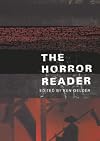
A useful compilation of academic essays on classic works of horror (mainly film). I will note that the collection was published in 2000, meaning it does not contain anything from the last two decades of literary criticism of the horror genre. There are some classic pieces in here I was especially interested in having (e.g., ones on body horror and the final girl trope). I would say this is a collection geared almost entirely to those with an academic interest in the genre, and who are show more primarily oriented toward films. If one is a non-academic, or primarily interested in non-film literature, there's probably much less of interest here. It's not comprehensive--how could it be?--but it does provide a clear sense of what could be done in serious horror studies. If nothing else, it makes clear that this is a genre to be taken seriously. show less

Gelder and Salzman's work (this and its sequel, After the Celebration: Australian Fiction 1989-2007) is appreciated by everyone. Literally, everyone. I can't find a single person who disapproves.
As the title suggests, The New Diversity explores the range of writing in Australian fiction between 1970, the era in which many of the Western social changes of the previous decade finally caught up with the Land Down Under, and 1988, the Bicentenary of white Australia and thus a landmark moment for show more discussion, celebration, rejection, anger, cheer, and unbridled nationalism. Also, conveniently enough, it was an era in which arts funding reached its greatest peak in Australia, primarily due to the progressive view of the Gough Whitlam government, and in which a new generation pushed to explore literature on Australian terms.
This is an intelligent, thoughtful book. Some of the chapters remain easy reading; others have become time capsules. All remain useful ways of approaching Australian texts, even as the generation of writers profiled here have either gone on to become iconic elder statespeople, or respected-but-unread names, or otherwise been forgotten completely, while new voices rise to the fore. show less
As the title suggests, The New Diversity explores the range of writing in Australian fiction between 1970, the era in which many of the Western social changes of the previous decade finally caught up with the Land Down Under, and 1988, the Bicentenary of white Australia and thus a landmark moment for show more discussion, celebration, rejection, anger, cheer, and unbridled nationalism. Also, conveniently enough, it was an era in which arts funding reached its greatest peak in Australia, primarily due to the progressive view of the Gough Whitlam government, and in which a new generation pushed to explore literature on Australian terms.
This is an intelligent, thoughtful book. Some of the chapters remain easy reading; others have become time capsules. All remain useful ways of approaching Australian texts, even as the generation of writers profiled here have either gone on to become iconic elder statespeople, or respected-but-unread names, or otherwise been forgotten completely, while new voices rise to the fore. show less
This is a compilation of short stories that fans of crime fiction in general, and the local product in particular, will have on their must read lists.
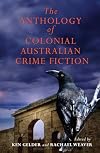
Written from 1859 to 1933, this selection of 17 stories provide a fascinating insight into the social issues that were being addressed by crime fiction authors during that period. Not surprisingly, the delivery may have changed - and I suppose we're not tracking murderers through the bush on horseback much anymore - but the fundamental worries show more then are not a lot different from those that are being written about now. Nor is the standard of the storytelling, which in this book is absolutely fantastic. The collection contains stories from some of our finest early writers - John Lang, William Burrows, Mary Fortune, James Skipp Borlase, BL Farjeon, RP Whitworth, Campbell McKellar, Francis Adams, Ernest Favene, Guy Boothby, Roderic Quinn, Coo-ee (William Sylvester Walker), EW Hornung, 'Rolf Boldrewood' (Thomas Alexander Browne), Randolph Bedford, Norman Lindsay and Alan Michaelis.
Particular favourites of mine were the Mary Fortune stories (not just because she stands out amongst the male writers), the Norman Lindsay story and the Francis Adams - which contains references to events in The Murder of Madeline Brown; as an added bonus many of the stories are based in and around the Goldfields of Victoria (which gives the whole thing a particularly local feel for me anyway). All the stories are replicated from their originals, so the language and terminology is exactly as it was at the time - giving a very accurate representation of the style of writing, talking and living for the period. This has the added bonus of giving readers a look at how long so many of our local colloquialisms have been around, and conversely, how much has been lost.
Despite the possibility of local flavour, not just because it contains entries from favourite authors, this Anthology is a fascinating glimpse into our history, and into the quality and breadth of the Australian crime fiction writing fraternity, which it's easy to forget has been around for a long long time now. Australian have always told their own stories, and books like THE ANTHOLOGY OF COLONIAL AUSTRALIAN CRIME FICTION remind us how strong that tradition has always been. show less
Written from 1859 to 1933, this selection of 17 stories provide a fascinating insight into the social issues that were being addressed by crime fiction authors during that period. Not surprisingly, the delivery may have changed - and I suppose we're not tracking murderers through the bush on horseback much anymore - but the fundamental worries show more then are not a lot different from those that are being written about now. Nor is the standard of the storytelling, which in this book is absolutely fantastic. The collection contains stories from some of our finest early writers - John Lang, William Burrows, Mary Fortune, James Skipp Borlase, BL Farjeon, RP Whitworth, Campbell McKellar, Francis Adams, Ernest Favene, Guy Boothby, Roderic Quinn, Coo-ee (William Sylvester Walker), EW Hornung, 'Rolf Boldrewood' (Thomas Alexander Browne), Randolph Bedford, Norman Lindsay and Alan Michaelis.
Particular favourites of mine were the Mary Fortune stories (not just because she stands out amongst the male writers), the Norman Lindsay story and the Francis Adams - which contains references to events in The Murder of Madeline Brown; as an added bonus many of the stories are based in and around the Goldfields of Victoria (which gives the whole thing a particularly local feel for me anyway). All the stories are replicated from their originals, so the language and terminology is exactly as it was at the time - giving a very accurate representation of the style of writing, talking and living for the period. This has the added bonus of giving readers a look at how long so many of our local colloquialisms have been around, and conversely, how much has been lost.
Despite the possibility of local flavour, not just because it contains entries from favourite authors, this Anthology is a fascinating glimpse into our history, and into the quality and breadth of the Australian crime fiction writing fraternity, which it's easy to forget has been around for a long long time now. Australian have always told their own stories, and books like THE ANTHOLOGY OF COLONIAL AUSTRALIAN CRIME FICTION remind us how strong that tradition has always been. show less
Lists
culture (2)
Awards


You May Also Like


Associated Authors
Statistics
- Works
- 23
- Also by
- 1
- Members
- 348
- Popularity
- #68,678
- Rating
- 3.6
- Reviews
- 5
- ISBNs
- 43
- Languages
- 1