
Charles Emmerson
Author of 1913: In Search of the World Before the Great War
About the Author
Image credit: Charles Emmerson. Photo courtesy Chatham House.
Works by Charles Emmerson
Crucible: The Long End of the Great War and the Birth of a New World, 1917-1924 (2019) 101 copies, 1 review
Associated Works
Tagged
Common Knowledge
- Birthdate
- 1976
- Gender
- male
- Occupations
- historian
- Nationality
- UK
- Birthplace
- Melbourne, Victoria, Australia
- Places of residence
- London, England, UK
- Associated Place (for map)
- UK
Members
Reviews
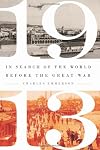
This is an enjoyable book with an interesting proposition - it is an historical snapshot of the world in 1913, one year before the start of WWI. It does not attempt to set out the causes of the war, merely to give the reader a feel for the normality or otherwise of lives lived just before everything went dark. And the picture is mostly one of normality. There are clearly clouds on the horizon, but few expected apocalypse. The vignettes of the various cities of the world are telling and well show more chosen. The reader gains a great appreciation of the context of the times.
Of course, the great unasked and unanswered question is: how do we know that our normality is not transient and that a new dark chapter is not about to fall on us? We don't. But this book encourages you to think of the future as being something beyond more of the same.
Read July 2013 show less
Of course, the great unasked and unanswered question is: how do we know that our normality is not transient and that a new dark chapter is not about to fall on us? We don't. But this book encourages you to think of the future as being something beyond more of the same.
Read July 2013 show less

Most books about the run-up to WWI focus on the power brokers in Europe, and in so doing, make the war sound anything but avoidable. Emmerson, on the other hand, keeps his ear to the ground trod by commoners in his survey of the state of mind in over twenty cities across the globe, drawing upon accounts in newspapers and magazines, travel memoirs and diaries. At this level, war seemed very remote indeed. European monarchs were all related, after all; vacations were taken abroad at all levels show more of society; food preferences were becoming global; and some cities were beginning to look interchangeable, in spite of their putative exoticism. John Maynard Keynes pronounced globalization "normal, certain, and permanent.…”
For those with little background in the history of the beginning of the twentieth century, this book provides a very good, if short, summary of what had been going on not only in Washington, London, Berlin, and Vienna, but also in such “far-flung” places as Winnipeg, Algiers, Tehran, Shanghai and other areas commonly ignored in books about the background of WWI.
We found not much new in this book, but we have read a lot of history, and it was still entertaining enough not to abandon in spite of covering familiar territory. For those who want a guide to the world before taking on The Great War, this is an excellent place to start. show less
For those with little background in the history of the beginning of the twentieth century, this book provides a very good, if short, summary of what had been going on not only in Washington, London, Berlin, and Vienna, but also in such “far-flung” places as Winnipeg, Algiers, Tehran, Shanghai and other areas commonly ignored in books about the background of WWI.
We found not much new in this book, but we have read a lot of history, and it was still entertaining enough not to abandon in spite of covering familiar territory. For those who want a guide to the world before taking on The Great War, this is an excellent place to start. show less
https://nwhyte.livejournal.com/3236402.html
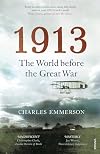
The author worked alongside me in the International Crisis Group back in the early years of this century, and went on to greater thinktanky things; in this book, he looks at 1913, the last year before the first world war, from the perspective of twenty-three great cities, starting and ending with London, but visiting the Americas, Asia, Africa, Australia and the rest of Europe en route. It's a masterly synthesis of what was going on in global show more politics, pulling together loads of primary sources - newspapers, diaries, etc - to build a clear picture of human politics as it was experienced by the people of the day. It was particularly interesting to get the perspective of cities from outside the European cultural space, such as Bombay, Peking, Shanghai, Tokyo, Tehran. It's quite a long book but a refreshingly quick read.
The concentration on individual cities does mean that two aspects of the world in 1913 are underplayed. First, most obviously, the countryside is seen only in relation to the city. Sure, the cities were where change was taking pace most quickly, but the politics of land ownership and agricultural technology are also fairly crucial drivers and are largely not included. Second, of course you can only pick so many cities; Brussels is not listed in the index, though there are a couple of paragraphs on the World's Fair in Ghent; Ireland's impact on England is described, but not from Ireland's pint of view; we hear from Algiers and Durban, but little from the continent they fringe. And third, there is little space for transnational phenomena - for instance, there is a throwaway remark about the meeting of the International Women's Suffrage Alliance in Budapest, which the Persian delegation was unable to attend; Lenin and Stalin pop up very briefly in the chapter on Vienna, as does Adolf Hitler.
But I guess you have to take your framing devices where you can find them, and I must admit I liked this a lot more than the last such book I read. show less
The author worked alongside me in the International Crisis Group back in the early years of this century, and went on to greater thinktanky things; in this book, he looks at 1913, the last year before the first world war, from the perspective of twenty-three great cities, starting and ending with London, but visiting the Americas, Asia, Africa, Australia and the rest of Europe en route. It's a masterly synthesis of what was going on in global show more politics, pulling together loads of primary sources - newspapers, diaries, etc - to build a clear picture of human politics as it was experienced by the people of the day. It was particularly interesting to get the perspective of cities from outside the European cultural space, such as Bombay, Peking, Shanghai, Tokyo, Tehran. It's quite a long book but a refreshingly quick read.
The concentration on individual cities does mean that two aspects of the world in 1913 are underplayed. First, most obviously, the countryside is seen only in relation to the city. Sure, the cities were where change was taking pace most quickly, but the politics of land ownership and agricultural technology are also fairly crucial drivers and are largely not included. Second, of course you can only pick so many cities; Brussels is not listed in the index, though there are a couple of paragraphs on the World's Fair in Ghent; Ireland's impact on England is described, but not from Ireland's pint of view; we hear from Algiers and Durban, but little from the continent they fringe. And third, there is little space for transnational phenomena - for instance, there is a throwaway remark about the meeting of the International Women's Suffrage Alliance in Budapest, which the Persian delegation was unable to attend; Lenin and Stalin pop up very briefly in the chapter on Vienna, as does Adolf Hitler.
But I guess you have to take your framing devices where you can find them, and I must admit I liked this a lot more than the last such book I read. show less
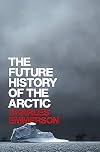
Thorough and entertainingly written. But the main problem with this book is how quickly parts of it feel dated. Although published in 2010, the state of affairs in economics, geopolitics, and climate change are moving so rapidly that book occasionally feels much older.
Lists
Awards

You May Also Like


Associated Authors
Statistics
- Works
- 3
- Also by
- 1
- Members
- 617
- Popularity
- #40,746
- Rating
- 4.2
- Reviews
- 12
- ISBNs
- 21
- Favorited
- 1