
Deborah Swift
Author of The Lady's Slipper
About the Author
Image credit: Photo by Jonathan Bean
Series
Works by Deborah Swift
Associated Works
Tagged
Common Knowledge
- Other names
- Blake, Davina
- Birthdate
- 1955-09-02
- Gender
- female
- Organizations
- Historical Novel Society, Romantic Novelists Association
- Awards and honors
- Shortlisted for the Impress Prize for Fiction
- Agent
- Annette Green
- Short biography
- I live in a small village in the English Lake District. I read widely - contemporary as well as classic fiction, but write historical novels. I share my house with my husband and two cats, and enjoy walking and swimming and tai chi as an antidote to sitting at my desk!
- Nationality
- England
UK
Members
Reviews
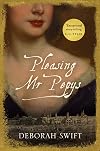
Deb Willet's aunt has found employment for Deb as a companion to Mrs. Pepys. As the companion to the wife of Samuel Pepys, administrator to the navy of England and Member of Parliament, Deb is placed among society's finest. However, Deb quickly learns that Mrs. Pepys is insecure in her placement and Mr. Pepys has roaming hands. One of the Pepys' favored pastimes is going to the theatre. Through their theatre outings, Deb is introduced to Abigail Williams, the mistress of Lord Bruncker, show more President of the Royal Society. Needing a friend, Deb takes up Abigail's invitation. However, being a friend to Abigail is much more complicated than simple outing. Soon, Abigail is having Deb bring her things from Mr. Pepys office and having Deb copy letters of Lord Bruncker. Before she knows it, Deb has become a spy for the Dutch, just like Abigail.
Intricate and historically detailed, Pleasing Mr. Pepys brought me into the spy world of the 17th Century. I really didn't know much about Samuel Pepys or what was happening around London in the late 1600's except for some notorious doings of Charles II and his mistresses. I felt for Deb's character while at the same time being intrigued. I felt like she continually received the short end of the stick throughout her life; her mother left, she was thrust into the care of an aunt who saw her and her sister as a nuisance, was then sold off as a companion to Mrs. Pepys only to be taken advantage of by Mr. Pepys and cajoled into being a spy for Abigail Williams. Throughout all of this however, Deb manages to find strength and carry on. At one point she states "Very well, if she was a whore and a traitor, she would be one that survived." I found myself continually pulled into the writing by different elements, the mystery of Deb's mother, the blossoming romance between Deb and Jem and the continual danger of the spy games. Through Deb and Abagail, I was pulled into the world of a spymistress and given a different look into a woman's life in 1600's London.
I was pleased to find out that Deb Willet was a real character in the life of Samuel Pepys and written about in his diary. While Deb's true role in his life might not be fully known, Deborah Swift's creation is an exciting possibility.
This book was received for free in return for an honest review. show less
Intricate and historically detailed, Pleasing Mr. Pepys brought me into the spy world of the 17th Century. I really didn't know much about Samuel Pepys or what was happening around London in the late 1600's except for some notorious doings of Charles II and his mistresses. I felt for Deb's character while at the same time being intrigued. I felt like she continually received the short end of the stick throughout her life; her mother left, she was thrust into the care of an aunt who saw her and her sister as a nuisance, was then sold off as a companion to Mrs. Pepys only to be taken advantage of by Mr. Pepys and cajoled into being a spy for Abigail Williams. Throughout all of this however, Deb manages to find strength and carry on. At one point she states "Very well, if she was a whore and a traitor, she would be one that survived." I found myself continually pulled into the writing by different elements, the mystery of Deb's mother, the blossoming romance between Deb and Jem and the continual danger of the spy games. Through Deb and Abagail, I was pulled into the world of a spymistress and given a different look into a woman's life in 1600's London.
I was pleased to find out that Deb Willet was a real character in the life of Samuel Pepys and written about in his diary. While Deb's true role in his life might not be fully known, Deborah Swift's creation is an exciting possibility.
This book was received for free in return for an honest review. show less
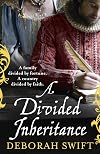
Book received as part of GoodReads FirstReads program in return for an honest review. Thanks for the book!
One word can best describe this book: wow! Such an incredible journey is a rare find. This book needs to be savored again and again in my humble opinion.
The star to me was Elspeth's journey. She's introduced to the reader as a woman focused on helping her father run his business, worship her faith as best she can, and seems content with her life. Yet, by the end of the novel, she's a show more different woman with different goals, a more broad view of the world, and a deeper understanding of herself as a woman. I found her journey complex and so intriguing that I pretty much lived this novel over the last few days. The author was able to bring Elspet's intelligence, drive, and self awareness to such vivid life; I feel like I changed and grew with her.
The historical details and world building... Oh my Lord, this reader was in heaven! Everything just shines with vivacity and vitality. I experienced the fading glory of Elspet's home, the rambunctiousness of her dogs (this owner of a 2 year old Corgi can so relate! XD), the hot dust of Inquisition Spain, the ring of steel in the sword training yard, and the glory of Seville laid out at my feet from an old and crumbling balcony. Deborah Swift has joined the ranks of authors that I know will transport me with skill and ease to another era and country. She's got an immense talent for this that I look forward to exploring in other works by her.
I liked reading some of the weighty themes she explores as well. The potent lessons about intolerance and how it can destroy a people and identity stayed with me. There were some scenes that dealt with religious intolerance, both in England and Spain, that echoed stories from the Holocaust I've read about. They made me shiver and just think about the state of the world then and now. Very powerful stuff.
My only gripe with this book, and it's a teensy one, would be a pacing issue. The story is slow to start and the first fourth of the book seems to move forward very slowly. However, once things pick up, it's a fast and furious journey of exploration and self discovery to the very end. Even the slow parts has some fantastic character exploration and world building in Jacobean England.
Overall, this book is a winner. Even though it had a bit of a slow start, I still feel like it deserves a solid five stars for the strong, strong showing in it's others parts. I enjoyed the vividness of the setting and time period. The characters breathed with life. I also learned from this book. All told, I look forward with anticipation to this author's other works. She'll be one I keep reading. show less
One word can best describe this book: wow! Such an incredible journey is a rare find. This book needs to be savored again and again in my humble opinion.
The star to me was Elspeth's journey. She's introduced to the reader as a woman focused on helping her father run his business, worship her faith as best she can, and seems content with her life. Yet, by the end of the novel, she's a show more different woman with different goals, a more broad view of the world, and a deeper understanding of herself as a woman. I found her journey complex and so intriguing that I pretty much lived this novel over the last few days. The author was able to bring Elspet's intelligence, drive, and self awareness to such vivid life; I feel like I changed and grew with her.
The historical details and world building... Oh my Lord, this reader was in heaven! Everything just shines with vivacity and vitality. I experienced the fading glory of Elspet's home, the rambunctiousness of her dogs (this owner of a 2 year old Corgi can so relate! XD), the hot dust of Inquisition Spain, the ring of steel in the sword training yard, and the glory of Seville laid out at my feet from an old and crumbling balcony. Deborah Swift has joined the ranks of authors that I know will transport me with skill and ease to another era and country. She's got an immense talent for this that I look forward to exploring in other works by her.
I liked reading some of the weighty themes she explores as well. The potent lessons about intolerance and how it can destroy a people and identity stayed with me. There were some scenes that dealt with religious intolerance, both in England and Spain, that echoed stories from the Holocaust I've read about. They made me shiver and just think about the state of the world then and now. Very powerful stuff.
My only gripe with this book, and it's a teensy one, would be a pacing issue. The story is slow to start and the first fourth of the book seems to move forward very slowly. However, once things pick up, it's a fast and furious journey of exploration and self discovery to the very end. Even the slow parts has some fantastic character exploration and world building in Jacobean England.
Overall, this book is a winner. Even though it had a bit of a slow start, I still feel like it deserves a solid five stars for the strong, strong showing in it's others parts. I enjoyed the vividness of the setting and time period. The characters breathed with life. I also learned from this book. All told, I look forward with anticipation to this author's other works. She'll be one I keep reading. show less
This was one of those historical novels that leave you breathless; it's so much more that the blurb suggests. Deborah Swift impressed me with her novel The Gilded Lily -- I loved the setting, the heroine, the evocative articulation of the era -- and in A Divided Inheritance, she does it again.
Set in 1609, the novel follows Elspet Leviston, a young woman with a miserly father who runs a successful lace business. Smart and committed, Elspet hopes to one day continue her father's legacy after show more she marries, but that dream is derailed when Zachary Deane, a long-lost cousin, suddenly appears. Elspet's father makes it clear Zachary will be heir to the company, despite Zachary's obvious disinterest in the business. Only after Zachary is arrested for fighting -- Elspet's cousin is passionate about swordplay -- does her father decides to send him on a Grand Tour in hopes of educating the young man. But days after Zachary leaves, Elspet's father dies, and she goes after Zachary in hopes of wresting the business from his hands.
In the end, however, this isn't a novel of inheritance rights or family squabbles. Zachary goes to Seville, Spain, studying the art of swordfighting at a Spanish academy, when the edict ordering the expulsion of the Spanish Muslims or moriscos is signed. Bustling, glorious Seville is a cosmopolitan city with a diverse population, and many of Zachary's acquaintances are Muslims or moriscos. Despite his disinterest in getting embroiled in anything outside of his practice with the sword, Zachary finds himself having to act.
While this might sound complicated, Swift conveys the various threads easily and expertly. I'm not a fan of swords or sword-fighting (in most novels, I kind of gloss over the fighting scenes), but Swift manages to articulate the artistry and physicality of every move so that I could see it in my mind's eye.
As with The Gilded Lily, the unfamiliar 17th century comes alive in her prose without being weighted down by the dreaded infodump. I felt immersed. There are wonderful layers to the novel, be it the freedom to worship (Zachary and Elspet are secret Catholics in London, but can worship openly in Spain) or the freedom to pursue one's aspirations, and I found much in the story to relate to even though I've never had the urge to fence.
This was a surprising novel -- the arc of the story is so much greater, more rich, than the blurb allows -- and those who enjoy characters that aren't immediately easy to like will want this one. There's armchair escape to Seville, as well, and action in spades. At nearly 500 pages, this book races every moment, and I couldn't put it down. show less
Set in 1609, the novel follows Elspet Leviston, a young woman with a miserly father who runs a successful lace business. Smart and committed, Elspet hopes to one day continue her father's legacy after show more she marries, but that dream is derailed when Zachary Deane, a long-lost cousin, suddenly appears. Elspet's father makes it clear Zachary will be heir to the company, despite Zachary's obvious disinterest in the business. Only after Zachary is arrested for fighting -- Elspet's cousin is passionate about swordplay -- does her father decides to send him on a Grand Tour in hopes of educating the young man. But days after Zachary leaves, Elspet's father dies, and she goes after Zachary in hopes of wresting the business from his hands.
In the end, however, this isn't a novel of inheritance rights or family squabbles. Zachary goes to Seville, Spain, studying the art of swordfighting at a Spanish academy, when the edict ordering the expulsion of the Spanish Muslims or moriscos is signed. Bustling, glorious Seville is a cosmopolitan city with a diverse population, and many of Zachary's acquaintances are Muslims or moriscos. Despite his disinterest in getting embroiled in anything outside of his practice with the sword, Zachary finds himself having to act.
While this might sound complicated, Swift conveys the various threads easily and expertly. I'm not a fan of swords or sword-fighting (in most novels, I kind of gloss over the fighting scenes), but Swift manages to articulate the artistry and physicality of every move so that I could see it in my mind's eye.
As with The Gilded Lily, the unfamiliar 17th century comes alive in her prose without being weighted down by the dreaded infodump. I felt immersed. There are wonderful layers to the novel, be it the freedom to worship (Zachary and Elspet are secret Catholics in London, but can worship openly in Spain) or the freedom to pursue one's aspirations, and I found much in the story to relate to even though I've never had the urge to fence.
This was a surprising novel -- the arc of the story is so much greater, more rich, than the blurb allows -- and those who enjoy characters that aren't immediately easy to like will want this one. There's armchair escape to Seville, as well, and action in spades. At nearly 500 pages, this book races every moment, and I couldn't put it down. show less
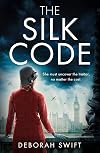
"The Silk Code" by Deborah Swift is a gripping and atmospheric WWII novel that skillfully blends espionage, danger, betrayal, and historical detail. Set in Nazi-occupied Europe, it weaves together mystery and suspense with a strong emotional core. I was immediately drawn into the world of secret codes, resistance networks, and the quiet heroism of the women working behind the scenes.
Nancy, a skilled codebreaker turned undercover agent in the Netherlands, is a standout character - brave, show more believable, and deeply compelling. Her courage and resilience really shine. I also liked Tom, whose work developing safer ways for field agents to send messages was both innovative and vital. The one character I had no time for was Nancy’s brother, Neil, who was a weak and frustrating presence from the start.
Swift excels at creating tension and painting a vivid, immersive picture of the time period. Her research is clearly thorough, but never heavy-handed, and the historical accuracy adds to the authenticity of the story. The plot is layered and emotional, with high stakes as Nancy faces betrayal, danger, and tough moral choices.
"The Silk Code" was a great read, perfect for fans of WWII fiction, especially those drawn to stories of unsung female heroes. I’ll definitely be reading more from Deborah Swift! show less
Nancy, a skilled codebreaker turned undercover agent in the Netherlands, is a standout character - brave, show more believable, and deeply compelling. Her courage and resilience really shine. I also liked Tom, whose work developing safer ways for field agents to send messages was both innovative and vital. The one character I had no time for was Nancy’s brother, Neil, who was a weak and frustrating presence from the start.
Swift excels at creating tension and painting a vivid, immersive picture of the time period. Her research is clearly thorough, but never heavy-handed, and the historical accuracy adds to the authenticity of the story. The plot is layered and emotional, with high stakes as Nancy faces betrayal, danger, and tough moral choices.
"The Silk Code" was a great read, perfect for fans of WWII fiction, especially those drawn to stories of unsung female heroes. I’ll definitely be reading more from Deborah Swift! show less
Awards


You May Also Like


Associated Authors
Statistics
- Works
- 33
- Also by
- 1
- Members
- 592
- Popularity
- #42,408
- Rating
- 3.9
- Reviews
- 73
- ISBNs
- 83
- Favorited
- 1


