
Paul L. Hedren
Author of The Great Sioux War, 1876-1877
About the Author
Paul L. Hedren is a retired National Park Service superintendent and the author of numerous books including Powder River. Disastrous Opening of the Great Sioux War
Series
Works by Paul L. Hedren
Traveler's Guide to the Great Sioux War: The Battlefields, Forts, and Related Sites of America's Greatest Indian War (1996) 37 copies
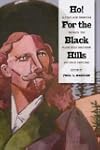
Ho! For the Black Hills: Captain Jack Crawford Reports the Black Hills Gold Rush and Great Sioux War (2012) 25 copies, 16 reviews
Sitting Bull's War: The Battle of Little Big Horn and the Fight for Buffalo and Freedom on the Plains (2025) 23 copies, 1 review
Great Sioux War Orders of Battle: How the United States Army Waged War on the Northern Plains, 1876–1877 (Frontier Military) (2011) 16 copies
Associated Works
Forty Years a Fur Trader on the Upper Missouri: The Personal Narrative of Charles Larpenteur (1898) — Introduction, some editions — 95 copies, 2 reviews
Utah Historical Quarterly - Vol. 53, No. 2, Spring 1985 - Community and Culture (1985) — Contributor — 4 copies
Utah Historical Quarterly, Fall 1981, Vol. 49, No.4. Observing the Utah Scene, Claude T. Barnes Utah Naturalist... (1981) — Contributor — 3 copies
Tagged
Common Knowledge
- Gender
- male
- Occupations
- interpretive specialist
National Park Service Superintendent - Organizations
- Golden Spike National Historic Site
National Park Service
Fort Union Trading Post National Historic Site - Places of residence
- Omaha, Nebraska, USA
Williston, North Dakota, USA - Associated Place (for map)
- USA
Members
Reviews
Ho! For the Black Hills: Captain Jack Crawford Reports the Black Hills Gold Rush and Great Sioux War by Paul L. Hedren
Nineteenth century US history is filled with stories of opportunity and the folk heroes who pursued them. Looking back at that time from our perspective in the early 21st century it is easy to be selective about our considerations of the past. We can view the exploits of those heroes with a fond longing, wondering what it would have been like to share in their experiences first-hand. We can also look more soberly at what happened, knowing that terrible acts of injustice that were often show more part-and-parcel of the “successes” of history. The “heroes” were often ordinary people living in somewhat extraordinary times and circumstances, taking advantage of the opportunities that arose and making choices that often had far-reaching consequences.
One of those people was Jack Crawford, a man who was both a participant in and a chronicler of the settlement of the Black Hills during the gold rush of 1876. Crawford’s story is told through a collection of letters he sent from the Hills as a correspondent for the Omaha Daily Bee, which have been collected and edited by Paul L. Hedren in Ho! For the Black Hills: Captain Jack Crawford reports the Black Hills Gold Rush and Great Sioux War (Pierre, SD: South Dakota State Historical Society Press, 2012).
In 1874 George A. Custer led a military expedition that confirmed anecdotal reports of gold in the Black Hills. At that time the Hills were part of the lands belonging to the Sioux through treaties and they were strictly off-limits to exploration and settlement by non-Native Americans. Crawford accompanied a second expedition to the Hills, led by George Crook. Part of Crook’s task was to remove non-Native Americans from the Hills but the lure of gold continued to draw settlers in nonetheless.
The US government attempted to negotiate an arrangement that would allow exploration and development of the Hills but was unsuccessful in these efforts. As 1876 came along there was a de facto policy of ignoring the increasing amount of people and commerce streaming into the Hills. Crawford returned to the Hills in January and through September he wrote letters back to Omaha describing the situation first-hand. His letters present the realities of life among the gold camps and the towns quickly springing up as gold discoveries moved from the first finds in the south towards the northern Hills.
As winter turned to spring and then summer the increasing encroachment on the land that was to have been by treaty the perpetual property of the Sioux resulted in conflict that turned into the open warfare we know as the Great Sioux War. Among the conflicts of this war are the battles of the Little Bighorn and of Slim Buttes. Many of us have heard of the former while the latter is largely unknown. But both loom large in their effect on US policy, military and otherwise, towards non-Native Americans. Crawford, who was also serving as a US Army Scout in September, 1876, provides an eye-witness account of the fighting at Slim Buttes.
Hedren has taken the letters of Crawford, which were gathered from a study of the newspaper archives, and arranged them in chronological groups, based upon when they were written. Given the unstructured mail service in the Hills in 1876 a number of his letters arrived at the newspaper at irregular intervals. In each section he provides an overview of the situation at large in the Hills, as well as a more specific discussion of Crawford’s activities, concluding with Crawford’s letters.
Crawford’s reports vary in their detail but in sum they seem to portray an accurate picture of what life was like and what issues mattered to the people coming to the Hills in search of their future. His principal topic is the mining itself, its struggles as well as its riches, followed by a secondary, and essentially interrelated concern for relationships, or lack thereof, with the Native American population. In this latter issue he is very much a person of his time and place, both locally and in the broader sense of Manifest Destiny, essentially believing that the Native American population was not on par in a moral sense with the settlers of European descent. He wanted the Native Americans gone, and he didn’t seem to care how it happened or where they went.
I enjoyed reading this book, both Crawford’s first-person perspective on a small chapter of American history, as well as Hedren’s work of placing it into context. I have been to the Hills several times on vacation and now have a richer understanding of what happened in some of the places I’ve visited. Reading this book is giving me a yearning to travel there again and consider its history from a new vantage point.
Note: I have chosen to use the term “Native Americans” uniformly in this review, rather than the varied, occasionally pejorative, terms used by Crawford in his letters. show less
One of those people was Jack Crawford, a man who was both a participant in and a chronicler of the settlement of the Black Hills during the gold rush of 1876. Crawford’s story is told through a collection of letters he sent from the Hills as a correspondent for the Omaha Daily Bee, which have been collected and edited by Paul L. Hedren in Ho! For the Black Hills: Captain Jack Crawford reports the Black Hills Gold Rush and Great Sioux War (Pierre, SD: South Dakota State Historical Society Press, 2012).
In 1874 George A. Custer led a military expedition that confirmed anecdotal reports of gold in the Black Hills. At that time the Hills were part of the lands belonging to the Sioux through treaties and they were strictly off-limits to exploration and settlement by non-Native Americans. Crawford accompanied a second expedition to the Hills, led by George Crook. Part of Crook’s task was to remove non-Native Americans from the Hills but the lure of gold continued to draw settlers in nonetheless.
The US government attempted to negotiate an arrangement that would allow exploration and development of the Hills but was unsuccessful in these efforts. As 1876 came along there was a de facto policy of ignoring the increasing amount of people and commerce streaming into the Hills. Crawford returned to the Hills in January and through September he wrote letters back to Omaha describing the situation first-hand. His letters present the realities of life among the gold camps and the towns quickly springing up as gold discoveries moved from the first finds in the south towards the northern Hills.
As winter turned to spring and then summer the increasing encroachment on the land that was to have been by treaty the perpetual property of the Sioux resulted in conflict that turned into the open warfare we know as the Great Sioux War. Among the conflicts of this war are the battles of the Little Bighorn and of Slim Buttes. Many of us have heard of the former while the latter is largely unknown. But both loom large in their effect on US policy, military and otherwise, towards non-Native Americans. Crawford, who was also serving as a US Army Scout in September, 1876, provides an eye-witness account of the fighting at Slim Buttes.
Hedren has taken the letters of Crawford, which were gathered from a study of the newspaper archives, and arranged them in chronological groups, based upon when they were written. Given the unstructured mail service in the Hills in 1876 a number of his letters arrived at the newspaper at irregular intervals. In each section he provides an overview of the situation at large in the Hills, as well as a more specific discussion of Crawford’s activities, concluding with Crawford’s letters.
Crawford’s reports vary in their detail but in sum they seem to portray an accurate picture of what life was like and what issues mattered to the people coming to the Hills in search of their future. His principal topic is the mining itself, its struggles as well as its riches, followed by a secondary, and essentially interrelated concern for relationships, or lack thereof, with the Native American population. In this latter issue he is very much a person of his time and place, both locally and in the broader sense of Manifest Destiny, essentially believing that the Native American population was not on par in a moral sense with the settlers of European descent. He wanted the Native Americans gone, and he didn’t seem to care how it happened or where they went.
I enjoyed reading this book, both Crawford’s first-person perspective on a small chapter of American history, as well as Hedren’s work of placing it into context. I have been to the Hills several times on vacation and now have a richer understanding of what happened in some of the places I’ve visited. Reading this book is giving me a yearning to travel there again and consider its history from a new vantage point.
Note: I have chosen to use the term “Native Americans” uniformly in this review, rather than the varied, occasionally pejorative, terms used by Crawford in his letters. show less
 This review was written for LibraryThing Early Reviewers.
Ho! For the Black Hills: Captain Jack Crawford Reports the Black Hills Gold Rush and Great Sioux War by Paul L. Hedren
My favorite uncle, who died six years ago at the age of 102, bought me a gold pan in my early teens, i.e., fifty-five years ago, so I could pan with him on his patented placer mine in Montana. Gold fever has been in my blood ever since. "Ho! For the Black Hills" by Paul L. Hedren has only stoked that fever!
The book has a narrow and specific objective: creating the historical foundation through the author's commentary for an appreciation of a series of newspaper articles written by "Captain" show more Jack Crawford about the gold rush in the Black Hills of South Dakota in 1875-76 and published in the Omaha Bee. In addition, Jack Crawford became involved in and reported on the Sioux Indian wars that inevitably grew out of the gold rush and the resulting violation of the treaty between the United States Government and the Sioux. This narrow objective is admirably met by the author, allowing the reader to better understand and enjoy the writings of Captain Jack on their own.
The author shows great discipline in maintaining his focus on the main subject - the writings of Jack Crawford - in the face of many attractive sideshows: the Indian wars; the gold rush itself; the interesting characters who cross Crawford's path (Wild Bill Hickock, Buffalo Bill, General Crook, and various bad men of the Black Hills), all of which would be fun tangents to write about. But this is not a biography of Crawford or a history of the Black Hills or any other individual involved. Instead, the author keeps his eye on the prize - the writings of Crawford - and gives only enough well-written historical background to make Crawford's life, the gold rush, the Indian Wars, the newspaper business, etc., appropriate background coloration for the newspaper articles.
"Captain" Jack Crawford was a true character of the wild, wild west, a self-made and romantic image of what he wanted people to believe the wild west to have been. And, after gaining recognition in the self-created roles of a civilian scout for the cavalry, a reporter, a "Hiller", a Civil War veteran, a partner in Buffalo Bill's western show, he took his own show on the road and for years performed his poems, commentary and tall tales on the stage.
All of this is put together in fine fashion by the author. He gives insights into the Sioux Indian war, the workings of a gold rush, the interactions of individuals caught up in this historical period, and does so in an accessible and well presented manner.
This is an enjoyable and informative book, a happy addition to my library. show less
The book has a narrow and specific objective: creating the historical foundation through the author's commentary for an appreciation of a series of newspaper articles written by "Captain" show more Jack Crawford about the gold rush in the Black Hills of South Dakota in 1875-76 and published in the Omaha Bee. In addition, Jack Crawford became involved in and reported on the Sioux Indian wars that inevitably grew out of the gold rush and the resulting violation of the treaty between the United States Government and the Sioux. This narrow objective is admirably met by the author, allowing the reader to better understand and enjoy the writings of Captain Jack on their own.
The author shows great discipline in maintaining his focus on the main subject - the writings of Jack Crawford - in the face of many attractive sideshows: the Indian wars; the gold rush itself; the interesting characters who cross Crawford's path (Wild Bill Hickock, Buffalo Bill, General Crook, and various bad men of the Black Hills), all of which would be fun tangents to write about. But this is not a biography of Crawford or a history of the Black Hills or any other individual involved. Instead, the author keeps his eye on the prize - the writings of Crawford - and gives only enough well-written historical background to make Crawford's life, the gold rush, the Indian Wars, the newspaper business, etc., appropriate background coloration for the newspaper articles.
"Captain" Jack Crawford was a true character of the wild, wild west, a self-made and romantic image of what he wanted people to believe the wild west to have been. And, after gaining recognition in the self-created roles of a civilian scout for the cavalry, a reporter, a "Hiller", a Civil War veteran, a partner in Buffalo Bill's western show, he took his own show on the road and for years performed his poems, commentary and tall tales on the stage.
All of this is put together in fine fashion by the author. He gives insights into the Sioux Indian war, the workings of a gold rush, the interactions of individuals caught up in this historical period, and does so in an accessible and well presented manner.
This is an enjoyable and informative book, a happy addition to my library. show less
This review was written for LibraryThing Early Reviewers.Ho! For the Black Hills: Captain Jack Crawford Reports the Black Hills Gold Rush and Great Sioux War by Paul L. Hedren
For a history book, this was what Mark Twain would have called a rippin' good yarn. "Captain" Jack Crawford is a twenty-something who is seeking adventure and wants to tell you all about it. In 1875, he leaves Omaha in the employ of one of its newspapers, the "Omaha Bee," and goes up into the Black Hills to document the gold rush happening there. The Black Hills are part of Indian territory according to treaty but that is irrelevant to Jack and his friends the intrepid miners, because there show more is gold and they are sovereign citizens. I read about manifest destiny in history class but I think I never really got what it felt like to those who believed in it, until I read this book, which is largely a collection of the letters he wrote to the paper from the Black Hills documenting the gold rush's progress.
It is a funny style of writing, in which Jack occasionally uses the first person but usually writes with a kind of charming "royal we" alternating with the third person "your correspondent saw..." and I can only assume his spelling was as creative; but the newspaper, spoilsports that they are, probably cleaned it up for publication. He also loves doggerel and eventually added to his spurious "captain"-cy the title "Poet Scout of the Black Hills." Silly and sometimes rather clever verses pour from his pen. Suffice to say the Lakota do not come out too well. He was obviously on the other side.
After Custer is killed at Little Big Horn, Crawford is asked to join General Crook's army in the Great Sioux Wars. He serves as a scout and sends several interesting letters about the experience to the Bee. However, being a newspaperman first and a scout second, he sort of burns his bridges with the Army by racing Crook's designated dispatch carrier in order to get a friend's story about an Indian battle into the papers first. That's it for Crook, who dismisses him immediately.
After the time in which he wrote these letters, Captain Jack joined Buffalo Bill Cody's players for a while, before striking out on his own and being basically a performer mythologizing the West of his youth until his death at age 69.
The letters were surprisingly fun to read and Professor Hedren's commentary and context were also well-written and entertaining for a lay reader like myself. There are lots of photos including several of Jack in what can only be described as corny costumes, buckskin and rifles galore, and of course a broad brimmed cowboy hat.
Highly, highly recommended for anyone who has ever been the slightest bit interested in the American West and cowboy culture. show less
It is a funny style of writing, in which Jack occasionally uses the first person but usually writes with a kind of charming "royal we" alternating with the third person "your correspondent saw..." and I can only assume his spelling was as creative; but the newspaper, spoilsports that they are, probably cleaned it up for publication. He also loves doggerel and eventually added to his spurious "captain"-cy the title "Poet Scout of the Black Hills." Silly and sometimes rather clever verses pour from his pen. Suffice to say the Lakota do not come out too well. He was obviously on the other side.
After Custer is killed at Little Big Horn, Crawford is asked to join General Crook's army in the Great Sioux Wars. He serves as a scout and sends several interesting letters about the experience to the Bee. However, being a newspaperman first and a scout second, he sort of burns his bridges with the Army by racing Crook's designated dispatch carrier in order to get a friend's story about an Indian battle into the papers first. That's it for Crook, who dismisses him immediately.
After the time in which he wrote these letters, Captain Jack joined Buffalo Bill Cody's players for a while, before striking out on his own and being basically a performer mythologizing the West of his youth until his death at age 69.
The letters were surprisingly fun to read and Professor Hedren's commentary and context were also well-written and entertaining for a lay reader like myself. There are lots of photos including several of Jack in what can only be described as corny costumes, buckskin and rifles galore, and of course a broad brimmed cowboy hat.
Highly, highly recommended for anyone who has ever been the slightest bit interested in the American West and cowboy culture. show less
This review was written for LibraryThing Early Reviewers.Ho! For the Black Hills: Captain Jack Crawford Reports the Black Hills Gold Rush and Great Sioux War by Paul L. Hedren
What a surprising gem of a book! Paul Hedren has collected the writings of Jack Crawford, a correspondent for the Omaha Bee living in Custer City during the start of the Black Hills gold rush and the onset of the Great Souix War of 1876. Each chapter starts with Hedren summing up Crawford's exploits for a period of time, setting the stage and context for the actual letters Crawford sent which follow.
Crawford's writing is folksy and lively, giving the reader a unique view of life in the show more rugged mining towns. Crawford details town growth, disputes between miners and with natives, and even has several adventures himself. Jack comes to know most of those in Custer City, as well as miners, businessmen, and soldiers in the beautiful Black Hills area. His reporting set the tone for what other parts of the nation believed about the gold rush, and did much to both glorify and humanize the place and its people.
This book comes highly recommended for anyone interested in a bit of US history most of us have never known about. Crawford's letters are fantastic to read, and Hedren does an excellent job providing the context for Jack's writings. show less
Crawford's writing is folksy and lively, giving the reader a unique view of life in the show more rugged mining towns. Crawford details town growth, disputes between miners and with natives, and even has several adventures himself. Jack comes to know most of those in Custer City, as well as miners, businessmen, and soldiers in the beautiful Black Hills area. His reporting set the tone for what other parts of the nation believed about the gold rush, and did much to both glorify and humanize the place and its people.
This book comes highly recommended for anyone interested in a bit of US history most of us have never known about. Crawford's letters are fantastic to read, and Hedren does an excellent job providing the context for Jack's writings. show less
This review was written for LibraryThing Early Reviewers.Awards


You May Also Like


Associated Authors
Statistics
- Works
- 22
- Also by
- 5
- Members
- 296
- Popularity
- #79,167
- Rating
- 4.0
- Reviews
- 21
- ISBNs
- 30
