
María Luisa Bombal (1910–1980)
Author of House of mist ; and, The shrouded woman : two novels
About the Author
Series
Works by María Luisa Bombal
Obras completas, Tomo 2: Testimonio autobiografico /Amortajada /Arbol /Cartas y entrevistas (Coleccion Viento Joven) (2013) 5 copies
La amortajada, novela 3 copies
Obras Completas Tomo 1 (La ultima niebla, La historia de Maria Griselda & Las islas nuevas) (Coleccion Viento Joven) (2005) 2 copies
Spowita całunem 1 copy
La amortajada 1 copy
Entre a Vida e o Sonho 1 copy
La amortajada y el árbol 1 copy
Associated Works
Secret Weavers: Stories of the Fantastic by Women Writers of Argentina and Chile (1991) — Contributor — 25 copies
Tagged
Common Knowledge
- Canonical name
- Bombal, María Luisa
- Birthdate
- 1910-06-08
- Date of death
- 1980-05-06
- Gender
- female
- Education
- University of Paris
Sorbonne University
Lycée La Bruyère - Occupations
- novelist
short story writer - Short biography
- María Luisa Bombal was born to a Chilean family who moved to Paris in 1922. She attended the Lycée La Bruyère and studied literature and philosophy at the Sorbonne. After a brief return to Chile in 1931–1933, she fled depression and an unhappy marriage for Buenos Aires, Argentina, where she joined a literary circle that including Jorge Luis Borges and Pablo Neruda. She emigrated to the USA in 1940 and lived there for three decades before returning again to Chile.
Her first novel, La última niebla (The House of Mist), was published in 1935. Bombal wrote several other novels as well as short stories, often featuring heroines who create fantasy worlds to escape from unfulfilling love relationships and restricted social roles. Her work influenced many later writers of magical realism. Feminist critics and writers have given her works wider attention in recent years. - Nationality
- Chile
- Birthplace
- Viña del Mar, Chile
- Places of residence
- London, England, UK
Paris, France
Buenos Aires, Argentina
USA
Members
Discussions
TonyH reads in 2012 in Club Read 2012 (January 2013)
Reviews
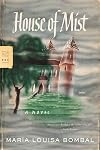
In this elegant classic, recently reissued in the States, Helga, the narrator, is a plain-looking orphan given to flights of wild imagination and a passionate love of life. At seven, while out in the abandoned bramble-filled garden searching for Prince Toad with the small golden crown, she happens upon the enchanted bear in her fairytales. He is as irritable and grouchy as any bear and though he remains abrupt, the 12-year-old Daniel nevertheless condescends to help her look for her Toad. show more And so he becomes her intermittent, capricious friend.
Years later, after some particularly interesting twists in the tale, Helga marries Daniel, now a rich landowner; but she is his second wife. She is completely devoted to him, as she has been most of her life. He, however, is still passionately in love with his deceased first wife, an unreservedly beautiful woman whose beauty and mysterious death remain the subject of many conversations in society.
Daniel has married Helga merely to save her from a life of servitude to others. As she is brought to her new hacienda set deep in the Chilean woods, they are enveloped by a dense, all-encompassing mist that seems to swallow up the surrounds including the lagoon where Teresa, Daniel's first wife, drowned. There are many moments of sadness, as well as joy, for the new bride who becomes absorbed by nagging questions about Teresa's death. This part of the book was deliciously reminiscent of Rebecca, which was, incidentally, published in 1938, three years after the publication of House of Mist.
Bombal's prose is crisp, and this impressive novel draws you into a fairytale experience replete with palaces in the middle of forests, old-fashioned but luxurious horse-drawn carriages, huge dancing halls, and women resplendent in ball gowns. There is even a witch!
One night, they are invited to a ball, but Daniel refuses to attend. He is happy to let Helga go, and she does so with great exuberance. The next morning, after champagne followed by a night of passion with a romantic and attentive lover, she is wracked with guilt. But she also feels so much more hopeful, alive, and happy. This sets off a whole train of events...
When Bombal first wrote House of Mist (La Última Niebla) in Spanish, in 1935, it was hailed with critical acclaim. Bombal had broken with tradition. For the first time in Latin American novels, heroines portrayed an inner psychological world. Helga's thoughts are fuelled by a fondness for fairytales. At 18, she still dreams of fairies and castles, and has trouble distinguishing between her dreams and reality. This engaging novel abounds with an air of drama and mystery that never lets up, and keeps one guessing right till the end!
This review was first published in Issue 5 of Belletrista: http://www.belletrista.com/2010/issue5/anth_3.php show less
Years later, after some particularly interesting twists in the tale, Helga marries Daniel, now a rich landowner; but she is his second wife. She is completely devoted to him, as she has been most of her life. He, however, is still passionately in love with his deceased first wife, an unreservedly beautiful woman whose beauty and mysterious death remain the subject of many conversations in society.
Daniel has married Helga merely to save her from a life of servitude to others. As she is brought to her new hacienda set deep in the Chilean woods, they are enveloped by a dense, all-encompassing mist that seems to swallow up the surrounds including the lagoon where Teresa, Daniel's first wife, drowned. There are many moments of sadness, as well as joy, for the new bride who becomes absorbed by nagging questions about Teresa's death. This part of the book was deliciously reminiscent of Rebecca, which was, incidentally, published in 1938, three years after the publication of House of Mist.
Bombal's prose is crisp, and this impressive novel draws you into a fairytale experience replete with palaces in the middle of forests, old-fashioned but luxurious horse-drawn carriages, huge dancing halls, and women resplendent in ball gowns. There is even a witch!
One night, they are invited to a ball, but Daniel refuses to attend. He is happy to let Helga go, and she does so with great exuberance. The next morning, after champagne followed by a night of passion with a romantic and attentive lover, she is wracked with guilt. But she also feels so much more hopeful, alive, and happy. This sets off a whole train of events...
When Bombal first wrote House of Mist (La Última Niebla) in Spanish, in 1935, it was hailed with critical acclaim. Bombal had broken with tradition. For the first time in Latin American novels, heroines portrayed an inner psychological world. Helga's thoughts are fuelled by a fondness for fairytales. At 18, she still dreams of fairies and castles, and has trouble distinguishing between her dreams and reality. This engaging novel abounds with an air of drama and mystery that never lets up, and keeps one guessing right till the end!
This review was first published in Issue 5 of Belletrista: http://www.belletrista.com/2010/issue5/anth_3.php show less

i really love the atmospheric, mistiness of helga's reality here. the not knowing if she's being gaslit or having hallucinations or actually having these memories and experiences. what is much much harder for me is how much of a serious asshole daniel is, and how much stronger this book would be if he was remotely likable. he was awful in pretty much every way, which got in the way of so much of the story. without that, this could have been a really fantastic book. as it is, props for idea show more and the creepy mist that mirrors helga's mind, but this could have been much stronger. show less
An early example of what would be called "magical realism", The House of Mist is set in the early part of the 20th century in Argentina and takes, I think, from both the Gothic and fairy tale tradition. Our awkwardly-named heroine, Helga, begins her story when she is a child, orphaned and being brought up by her aunt and uncle; and, of course, she has a beautiful cousin to be measured against. She knows little of her parents, a mystery that will be revealed over the course of the novel. show more Helga is a reader and her head is filled with fairy and folk tales when she meets the young Daniel next door, she is looking for a frog prince. She will eventually marry the mercurial Daniel and go to live in his big, isolated, deteriorating (creepy) hacienda in the woods. But Daniel is NO prince and she is not his first wife. And that is not the end of the story.
While the premise has the sound of a fairy tale to it, and its narrative often has a feel of fairy tale, the story is more complex, full of secrets and mystery (and death), and woven into it are visions and illusions that may or may not be reality.
When I began the book, I thought it might be too light for my tastes, but I soon found myself thoroughly captivated by the story. I think, Bombal uses magical realism as tool to change Helga; for as she sorts out illusion and reality, she really comes into her own (perhaps stopping short of being a feminist novel). show less
While the premise has the sound of a fairy tale to it, and its narrative often has a feel of fairy tale, the story is more complex, full of secrets and mystery (and death), and woven into it are visions and illusions that may or may not be reality.
When I began the book, I thought it might be too light for my tastes, but I soon found myself thoroughly captivated by the story. I think, Bombal uses magical realism as tool to change Helga; for as she sorts out illusion and reality, she really comes into her own (perhaps stopping short of being a feminist novel). show less

I ordered the book La Ultima Niebla/El Árbol, by María Luisa Bombal, for Christmas, and read the two title stories while at home for the holidays. I was impressed by the perspective that she had as a woman in the early part of the 20th Century. Her stories presented a lot of the themes that I associate with modern feminism, and I can´t say that I entirely expected them to be exhibited in a work from the 1930´s, written by a Chilean. On the other hand, maybe I shouldn´t be surprised, show more because many of my female Chilean friends that I met while studying in Santiago seemed more feminist than their North American counterparts, so maybe such an early show of feminism from the Southern Cone isn´t so surprising. Furthermore, I´m not exactly an expert on feminist literature, so really what I´m going on here is my reading The Bell Jar in high school and hanging out with women who are liberal and could perhaps be considered feminists. Anyway, the two stories that I read use symbols such as fog and a large, beautiful tree to represent the struggles that women trapped in the boredom of conventional marriage faced. The language is very straightforward and simple, and all the more powerful for being so. The stories are blunt and insistent in showing the frustrations of female life in a world that does not confer them the rights that they know they deserve. In reading the introduction, I learned that María Luisa Bombal spent a lot of her life in Paris and was a pretty cosmopolitan figure. These stories, I believe, were published in Sur, and she had a lot of famous friends. Hell, she dedicated “La Última Niebla” to Oliverio Girondo and Norah Lange. I really enjoyed these stories. I´d been reading novels and needed something that I could read in one sitting, a story with a beginning and an end that were within my grasp over a shorter space of time. And I´m trying to read more female authors, because I feel it´s ridiculous that such a large percentage of my books come from, essentially, half of the population on earth. They´re good stories, they seem revolutionary to me, and they make me think about my friends in Chile. I would recommend them to anyone. show less
Lists
Awards


You May Also Like


Associated Authors
Statistics
- Works
- 32
- Also by
- 9
- Members
- 617
- Popularity
- #40,746
- Rating
- 4.1
- Reviews
- 14
- ISBNs
- 54
- Languages
- 5
- Favorited
- 2