
Andreas Eschbach
Author of The Carpet Makers
About the Author
Image credit: Andreas Eschbach at the 2013 Frankfurt Book Fair on October 11, 2013 in Frankfurt, Germany
Series
Works by Andreas Eschbach
Die Abschaffung des Todes: Die Unsterblichkeit ist nur ein paar Milliarden Dollar entfernt. Thriller (2024) 24 copies
Gliss. Tödliche Weite: Spannende und bildgewaltige All-Age-Science-Fiction (2021) 16 copies, 1 review
Die Auferstehung 2 copies
Видео Иисус 1 copy
Skaitmeninis Jėzus 1 copy
Le projet Mars - Intégrale 1 copy
Das schönste Fest 1 copy
Eschbach-Shortstories 1 copy
Associated Works
The SFWA European Hall of Fame: Sixteen Contemporary Masterpieces of Science Fiction from the Continent (2007) — Contributor — 134 copies, 4 reviews
The Black Mirror and Other Stories: An Anthology of Science Fiction from Germany and Austria (2008) — Contributor — 33 copies, 2 reviews
Tagged
Common Knowledge
- Birthdate
- 1959-09-15
- Gender
- male
- Occupations
- science fiction author
- Nationality
- Germany
- Birthplace
- Ulm, Baden-Württemberg, West Germany
- Places of residence
- Bretagne, Frankreich
- Associated Place (for map)
- Ulm, Baden-Württemberg, West Germany
Members
Reviews

WHAT THE HELL HAPPENED HERE?
Andreas Eschbach’s ‘The Carpet Makers’ impressed the hell out of me. I’ve been going around for a few years now, recommending it to all and sundry. I was wildly excited that he had a new book coming out in English, and bought it the very first time I saw it up for sale. I even recommended it to others before reading it myself. I hereby rescind that recommendation.
I would never in a thousand years have guessed that this book was by the same author. show more There’s no similarity. It’s definitely not an issue of translation, either – it’s a matter of content.
I feel like the book aims at being ‘a thinking man’s thriller’ – but it fails both at introducing new and fascinating philosophical concepts and at being thrilling.
Hiroshi is the half-Japanese son of a laundress working at the French embassy in Tokyo. He’s a precocious robotics genius whose skills lead him to befriending the ambassador’s young daughter, Charlotte. His situation leads to an early awareness of class differences and wealth disparity, which instills in him the ambition to someday eliminate poverty from the world. And he has a plan as to how to achieve this goal! (Don’t hold your breath though – the author is coy about what this idea is for over half of the book, and when it’s finally revealed, it’s quite underwhelming and unoriginal.)
After a slow and didactic exposition of these younger years, deus ex machina in the form of a previously-absent billionaire father allows Hiroshi to move to the United States, experience culture shock, and attend MIT.
Then, in a third section, an unlikely concatenation of coincidences causes Charlotte to be present at the discovery of what seems to be super-powerful alien technology – technology that Just Happens to look just like what Hiroshi, now an eccentric recluse, has been working on.
The first two parts of the book are slow-moving personal drama, mixed with occasional didactic insertions of Liberal Thoughts. The third part comes off more as an attempt at a Michael-Crichton-style thriller. In striking contrast to the didactic insertions, the actual subtext of the book is very, very conservative and offensively sexist. Charlotte, a main character, seemingly exists only to be Hiroshi’s Muse (explicitly stated). Without him, she wanders around lost and accomplishing nothing, looking enviously at the women around her who have become personally fulfilled by bearing children, doing housework (yes, really), and caring for their men.
The book features a number of different geographical and cultural locations. None of them are portrayed convincingly. I find myself doubting whether the author has ever visited Japan or the United States, let alone the Arctic. The Japanese and Louisianan settings were just nonexistent and neutral. The Boston setting – especially to someone who’s actually been on both the Harvard and MIT campuses plenty – is just flat-out wrong. I feel like the author did his research by watching some 1980s frat-house comedy movie. He also has the definite opinion that ANY woman enrolled at MIT or Harvard is there to “achieve her MRS. Degree” and once she catches the right husband, she’ll be happy. No one at these schools seems to put much thought or time into their studies.
The worst part (or maybe just a bit that epitomizes and illustrates the whole attitude of the book): Ok, there’s an Artic research expedition going on. Two men, two women. One of the men is taking photos for the media. He says: “Ladies! … Could you do something that looks like you’re working? From over here it looks like Adrian [the other guy] is doing everything and you two are just standing watching.” The ‘girls’ giggle and respond “Well, that’s what’s happening, isn’t it?” Then the guy directs them what to do so it *looks* like they’re competent researchers, for the press. Throughout the book, it’s like this. Men are the ‘doers.’ Charlotte has a special talent, but it’s just something she’s born with, not something she works at or uses effectively. Over 650 pages, this gets really aggravating.
I’m adding one star for a cool (and devastating) theory as to why, in a galaxy filled with planets, we’ve never been contacted by alien life. But that’s one worthwhile paragraph in a book that overall, is not worth the time. show less
Andreas Eschbach’s ‘The Carpet Makers’ impressed the hell out of me. I’ve been going around for a few years now, recommending it to all and sundry. I was wildly excited that he had a new book coming out in English, and bought it the very first time I saw it up for sale. I even recommended it to others before reading it myself. I hereby rescind that recommendation.
I would never in a thousand years have guessed that this book was by the same author. show more There’s no similarity. It’s definitely not an issue of translation, either – it’s a matter of content.
I feel like the book aims at being ‘a thinking man’s thriller’ – but it fails both at introducing new and fascinating philosophical concepts and at being thrilling.
Hiroshi is the half-Japanese son of a laundress working at the French embassy in Tokyo. He’s a precocious robotics genius whose skills lead him to befriending the ambassador’s young daughter, Charlotte. His situation leads to an early awareness of class differences and wealth disparity, which instills in him the ambition to someday eliminate poverty from the world. And he has a plan as to how to achieve this goal! (Don’t hold your breath though – the author is coy about what this idea is for over half of the book, and when it’s finally revealed, it’s quite underwhelming and unoriginal.)
After a slow and didactic exposition of these younger years, deus ex machina in the form of a previously-absent billionaire father allows Hiroshi to move to the United States, experience culture shock, and attend MIT.
Then, in a third section, an unlikely concatenation of coincidences causes Charlotte to be present at the discovery of what seems to be super-powerful alien technology – technology that Just Happens to look just like what Hiroshi, now an eccentric recluse, has been working on.
The first two parts of the book are slow-moving personal drama, mixed with occasional didactic insertions of Liberal Thoughts. The third part comes off more as an attempt at a Michael-Crichton-style thriller. In striking contrast to the didactic insertions, the actual subtext of the book is very, very conservative and offensively sexist. Charlotte, a main character, seemingly exists only to be Hiroshi’s Muse (explicitly stated). Without him, she wanders around lost and accomplishing nothing, looking enviously at the women around her who have become personally fulfilled by bearing children, doing housework (yes, really), and caring for their men.
The book features a number of different geographical and cultural locations. None of them are portrayed convincingly. I find myself doubting whether the author has ever visited Japan or the United States, let alone the Arctic. The Japanese and Louisianan settings were just nonexistent and neutral. The Boston setting – especially to someone who’s actually been on both the Harvard and MIT campuses plenty – is just flat-out wrong. I feel like the author did his research by watching some 1980s frat-house comedy movie. He also has the definite opinion that ANY woman enrolled at MIT or Harvard is there to “achieve her MRS. Degree” and once she catches the right husband, she’ll be happy. No one at these schools seems to put much thought or time into their studies.
The worst part (or maybe just a bit that epitomizes and illustrates the whole attitude of the book): Ok, there’s an Artic research expedition going on. Two men, two women. One of the men is taking photos for the media. He says: “Ladies! … Could you do something that looks like you’re working? From over here it looks like Adrian [the other guy] is doing everything and you two are just standing watching.” The ‘girls’ giggle and respond “Well, that’s what’s happening, isn’t it?” Then the guy directs them what to do so it *looks* like they’re competent researchers, for the press. Throughout the book, it’s like this. Men are the ‘doers.’ Charlotte has a special talent, but it’s just something she’s born with, not something she works at or uses effectively. Over 650 pages, this gets really aggravating.
I’m adding one star for a cool (and devastating) theory as to why, in a galaxy filled with planets, we’ve never been contacted by alien life. But that’s one worthwhile paragraph in a book that overall, is not worth the time. show less
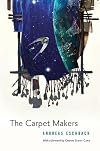
This book has a weird premise, which is why I bought it to begin with. On a planet, there is an entire system set up around one produced good: Carpets. Carpet-Makers are the most honored members of society. They spend their entire lives making a carpet out of human hair. They use the hair of their wives and daughters. They’re the only people in society allowed to have multiple wives - so they can have multiple colors from those wives as well as producing more colors/hair through their show more daughters. They are allowed one son, to continue the carpet making tradition. They toil away at this task day and night, every day; the work is so intricate that it takes their entire lives to produce one carpet. When the carpet is completed, it is sold, and the price of that hair carpet sets up the next generation (no really, it’s enough money for the family to live off on their entire lives), with the son of the carpet maker marrying and starting his carpet, to toil at until his son is ready to marry and begin the cycle all over again. That is their entire lives. And the economy and society of the entire planet revolves around these precious hair carpets. This is how it has been for untold generations.
They make these carpets to honor their God-Emperor, or at least that’s what they believe/know to be true. These carpets are supposedly shipped off world to adorn the palace of this immortal emperor who has all power and has ruled for however-many millenia.
And then it all changes. And the mystery of the hair carpets is discovered.
This book was interesting - not just in the actual story, but the way it is told. It has amazing writing - each chapter is a short story (so the book is basically a series of short stories) with a one or two (or whatever) character/thread link carrying you from one to the next. It’s usually a pretty tenuous link, but the book is about the story, about human nature - not the characters themselves.
But even without the book being about the characters, most of the chapters encompass something about the main character from the story that is so strong and shocking that at the end of the chapter, I’m left with a “WTF/Whoa/OMG” moment. Some of these chapters just break my heart.
Actually, this whole book pretty much kills me. Eschbach gets more said, more done, more story told, and more emotions out of my gut in 10-15 pages than most authors can get in whole trilogies. It’s a very short book, and it covers a story that takes place over 80,000 years and it’s absolutely amazing. show less
They make these carpets to honor their God-Emperor, or at least that’s what they believe/know to be true. These carpets are supposedly shipped off world to adorn the palace of this immortal emperor who has all power and has ruled for however-many millenia.
And then it all changes. And the mystery of the hair carpets is discovered.
This book was interesting - not just in the actual story, but the way it is told. It has amazing writing - each chapter is a short story (so the book is basically a series of short stories) with a one or two (or whatever) character/thread link carrying you from one to the next. It’s usually a pretty tenuous link, but the book is about the story, about human nature - not the characters themselves.
But even without the book being about the characters, most of the chapters encompass something about the main character from the story that is so strong and shocking that at the end of the chapter, I’m left with a “WTF/Whoa/OMG” moment. Some of these chapters just break my heart.
Actually, this whole book pretty much kills me. Eschbach gets more said, more done, more story told, and more emotions out of my gut in 10-15 pages than most authors can get in whole trilogies. It’s a very short book, and it covers a story that takes place over 80,000 years and it’s absolutely amazing. show less
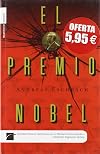
Días antes del nombramiento del Premio Nobel de Medicina, tres miembros del comité que participan en la elección mueren en un accidente de avión en Milán. Poco antes de la votación, Hans-Olof Andersson, también miembro del comité, recibe la visita de un hombre que le ofrece una importante cantidad de dinero a cambio de su voto por una candidata con muy pocas opciones. Él no está dispuesto a aceptar este soborno, pero los chantajistas están decididos a hacer lo que sea para show more conseguir el premio y secuestran a la hija de Hans-Olof. Ante la desesperación, Andersson decide pedir ayuda a su cuñado, Gunnar Forsberg, que está es la cárcel cumpliendo condena por espionaje industrial. A través de contactos, Hans-Olof consigue liberarlo y Gunnar se pone de inmediato a la búsqueda de su sobrina, el único familiar que le queda tras la muerte de su hermana. Todo parece indicar que detrás del secuestro se encuentra una importante compañía farmacéutica a la que el Premio Nobel daría un gran reconocimiento. Gunnar debe darse prisa porque el tiempo corre en su contra. show less
Eschbach has a way of creating worlds that makes them both magical and wonderfully mundane, to where you're exploring a world built by beautiful language while, at the same time, feeling that the people involved are utterly familiar, different as their cares and their world may be. You can say that this story is about passion or art or the meaning of life, or about exploration or revenge or religion or world views, or even about telling stories. It's all of this. It's also about the meaning show more found in the day-to-day survival of life and of belief, and about determination and hope.
In the beginning, it's something of an old-world fairy tale, and then it is a mastery of space and perspective, and finally, it is something beautiful, somewhere in between.
If you haven't figured it out already from this wandering review, Eschbach's stories rather defy description, but they are wonderful. They are utterly wonderful. And if you read science fiction or fantasy, you should read The Carpet Makers.
Absolutely recommended. show less
In the beginning, it's something of an old-world fairy tale, and then it is a mastery of space and perspective, and finally, it is something beautiful, somewhere in between.
If you haven't figured it out already from this wandering review, Eschbach's stories rather defy description, but they are wonderful. They are utterly wonderful. And if you read science fiction or fantasy, you should read The Carpet Makers.
Absolutely recommended. show less
Lists
Favourite Books (1)
Reading LIst (1)
Awards


You May Also Like


Associated Authors
Statistics
- Works
- 109
- Also by
- 7
- Members
- 5,520
- Popularity
- #4,512
- Rating
- 3.8
- Reviews
- 164
- ISBNs
- 357
- Languages
- 15
- Favorited
- 27
