
Sergei Lukyanenko
Author of Night Watch
About the Author
Image credit: Wikipedia
Series
Works by Sergei Lukyanenko
Rytsari soroka ostrovov ;: Malchik i tma (Zvezdnyi labirint) (Russian Edition) (2000) 19 copies, 2 reviews
Die Wächter - Licht und Dunkelheit: Roman (Die neuen Abenteuer der Wächter, Band 1) (2015) 11 copies, 1 review
Die Wächter – Nacht der Inquisition: Roman (Die neuen Abenteuer der Wächter 3) (German Edition) (2016) 8 copies
Destiny Inc 3 copies
калеки 3 copies
Dozory. Nochnoi Dozor. Dnevnoi Dozor. Sumerechnyi Dozor. Poslednii Dozor [fantasticheskie romany] (in Russian) (2008) 3 copies
Черновик: Фантастический роман 2 copies
Звездная тень : [Фантаст. роман] 2 copies
Sergei Lukyanenko Night Watch Trilogy Collection: Last Watch, the Day Watch, the Twilight Watch, the Night Watch (2011) 2 copies
Прекрасное далеко 1 copy
Foxtrot at High Noon 1 copy
Temporary Vanity 1 copy
Ночь накануне 1 copy
Сумеречный дозор: Дозоры 3 1 copy
Лабиринт отражений 1 copy
Нощен патрул 1 copy
Šesta straža 1 copy
"Л" - значит люди 1 copy
Die gemeinsame Sache 1 copy
Der eigene Kreis 1 copy
Der gemeinsame Feind 1 copy
Das gemeinsame Schicksal 1 copy
Fremd unter Anderen 1 copy
Wächter des Tages : Roman 1 copy
Eine andere Kraft 1 copy
From Fate 1 copy
Where the Mean Enemy Lurks 1 copy
Son Nöbet 1 copy
Spektrum 1 copy
Тени снов (Линия грёз, #3) 1 copy
Три дня Индиго 1 copy
Семь дней до Мегиддо 1 copy
Дозоры: Ночной Дозор. Дневной Дозор. Сумеречный Дозор (Миры Сергея Лукьяненко) (Russian Edition) 1 copy
Осенние визиты 1 copy
Прозрачные витражи 1 copy
Associated Works
The SFWA European Hall of Fame: Sixteen Contemporary Masterpieces of Science Fiction from the Continent (2007) — Contributor — 134 copies, 4 reviews
Tagged
Common Knowledge
- Legal name
- Lukyanenko, Sergei Vasilievich
- Other names
- Lukianenko, Sergej
Łukjanienko, Siergiej - Birthdate
- 1968-04-08
- Gender
- male
- Education
- Alma-Ata State Medical Institute (1992)
- Occupations
- fantasy writer
science fiction writer - Awards and honors
- Ruscon (SF writer of the year) 2005
- Short biography
- Sergei Lukyanenko (as his name appears on books and films in U.S. markets) is a science-fiction and fantasy author, writing in Russian, and is arguably the most popular contemporary Russian sci-fi writer. His works often feature intense action-packed plots, interwoven with the moral dilemma of keeping one's humanity while being strong.
Recently his works have been adapted into film productions, for which he wrote the screenplays. He lives in Moscow with his wife Sonia and two sons, Artemiy and Danil, keeps mice as pets and enjoys cooking. - Nationality
- Russia
- Birthplace
- Karatau, Kazakhstan, USSR
- Places of residence
- Karatau, Kazakhstan (formerly USSR)
Moscow, Russia
Members
Discussions
Night Watch in Thing(amabrarian)s That Go Bump in the Night (August 2006)
Reviews
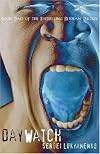
I love these books. They are not easy to read, they have complicated plots - but it is well worth the time it takes to understand what is happening.
This book starts with a Light Magician and a Dark Witch being sent to recover at a children's camp to recover (Each magician type uses light or dark energy). When these two enemies discover each other - a duel happens, killing the Dark Witch. This sets off a devious plot of warring factions that starts a complicated convoluted plot in motion, show more with checks and counter-checks where all pieces on the table are being used for the benefit of the Watches.
This world is hauntingly beautiful. The people in this world are strange, troubled, not Human (or becoming Not human). The city of Moscow is a full character in these books - a cold place of tall buildings, uncaring residents, beautiful. Its a talented author that can hit the sweet spot of explanation to showing. Also, I want to mention that the translator did an excellent job in this book. Without reading Russian, the book still resonated with me.
I highly recommend this series if you want to read something that is well written, requires thinking, and is not quite like anything else available in print. show less
This book starts with a Light Magician and a Dark Witch being sent to recover at a children's camp to recover (Each magician type uses light or dark energy). When these two enemies discover each other - a duel happens, killing the Dark Witch. This sets off a devious plot of warring factions that starts a complicated convoluted plot in motion, show more with checks and counter-checks where all pieces on the table are being used for the benefit of the Watches.
This world is hauntingly beautiful. The people in this world are strange, troubled, not Human (or becoming Not human). The city of Moscow is a full character in these books - a cold place of tall buildings, uncaring residents, beautiful. Its a talented author that can hit the sweet spot of explanation to showing. Also, I want to mention that the translator did an excellent job in this book. Without reading Russian, the book still resonated with me.
I highly recommend this series if you want to read something that is well written, requires thinking, and is not quite like anything else available in print. show less
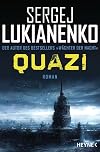
Wenn man es genau nimmt, ist „Quazi“ ein Zombie-Buch. Nur eben etwas anders. Weniger post-apokalyptisch. Irgendwie. Es gibt funktionierende Regierungen, Städte mit Infrastruktur. Und eben Zombies. Und von den Zombies gibt es zwei Arten: den klassischen Ich-will-Dich-fressen-Typ und den neuen Ich-bin-zwar-tot-aber-ich-bin-Vegetarier-Typ. Klingt irgendwie schräg. Ein interessanter Ansatz ist es auf jeden Fall. Menschen, die sterben, stehen wieder auf. In diesem Stadium – als show more Aufständische – sind sie allerdings Typ 1 und fressen sich ihren Weg durch die lebendigen Menschen. Dann passiert jedoch etwas, was diesen Typ 1 zu Typ 2 erhöht und Typ 2 ist ein Quazi. Intelligent, anständig, allerdings äußerst emotionslos. Ein wandelnder Toter: er könnte Deine Nachbarin sein. Oder Deine Mutter. Im Buch wird verraten, was passieren muss, damit aus einem von Instinkten getriebenen Aufständischen ein Quazi wird. Ich will es Euch nicht verraten, nur soviel, dass es nicht wirklich lecker ist. Quazi sind also lebende Tote, mit grauer Haut, die nicht atmen und nichts fühlen: weder Freude noch Trauer noch Mitleid. Aus ihrem alten Leben haben sie nur eine einzelne Leidenschaft mit in ihr neues Leben übernommen und diese blendet meist alles andere aus. Michail war vor seinem Tod Polizist und ist es auch weiterhin.
Er wird Denis zur Seite gestellt, der Quazi hasst und am liebsten jedem Aufständischen den Kopf abschlagen würde. Während die beiden also unfreiwilliger Weise zu Partnern im Dienst werden, entwickelt sich zwischen beiden eine – wenn auch nicht innige – Freundschaft. Und zusammen decken sie etwas auf, dass die Zukunft der Menschheit und der Quazi verändern könnte.
Für mich hat sich „Quazi“ wesentlich besser und flüssiger lesen lassen, als „Wächter der Nacht“, an dem ich ja immer noch irgendwie sitze. Das Setting in Moskau finde ich klasse und auch die Rückblenden, die Denis‘ Geschichte erzählen finde ich sehr schön. Manche Stellen haben den Plot nicht wirklich vorangetrieben und waren teilweise auch etwas langatmig, aber für das Worldbuilding waren sie sehr förderlich. Lukianenko erschafft hier definitiv eine interessante Welt.
Fazit
Mir hat das Buch wirklich sehr gut gefallen. Einzig für das Klischee des alkoholkranken Polizisten mit dramatischer Vergangenheit sowie die teils sehr antiquierten Ansichten über Frauen muss ich einen Stern abziehen, denn das hat mich irgendwie sehr gestört. Ansonsten definitiv ein unterhaltsames und spannendes Buch. show less
Er wird Denis zur Seite gestellt, der Quazi hasst und am liebsten jedem Aufständischen den Kopf abschlagen würde. Während die beiden also unfreiwilliger Weise zu Partnern im Dienst werden, entwickelt sich zwischen beiden eine – wenn auch nicht innige – Freundschaft. Und zusammen decken sie etwas auf, dass die Zukunft der Menschheit und der Quazi verändern könnte.
Für mich hat sich „Quazi“ wesentlich besser und flüssiger lesen lassen, als „Wächter der Nacht“, an dem ich ja immer noch irgendwie sitze. Das Setting in Moskau finde ich klasse und auch die Rückblenden, die Denis‘ Geschichte erzählen finde ich sehr schön. Manche Stellen haben den Plot nicht wirklich vorangetrieben und waren teilweise auch etwas langatmig, aber für das Worldbuilding waren sie sehr förderlich. Lukianenko erschafft hier definitiv eine interessante Welt.
Fazit
Mir hat das Buch wirklich sehr gut gefallen. Einzig für das Klischee des alkoholkranken Polizisten mit dramatischer Vergangenheit sowie die teils sehr antiquierten Ansichten über Frauen muss ich einen Stern abziehen, denn das hat mich irgendwie sehr gestört. Ansonsten definitiv ein unterhaltsames und spannendes Buch. show less
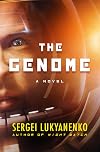
The Genome caught my attention with its name, since I am a molecular biologist who has worked with several genomes in the past. The science fiction aspect of the story in The Genome, in addition to the space dwelling human and Other empires, is well fleshed out. It should be said that some aspects of enhancing humans by reprogramming their genetic material at puberty is simply impossible due to physical and molecular constraints, some depicted in the novel are plausible (though very far away show more from what we can achieve today). So I don’t expect superhuman-powered speshes to populate the universe anytime soon (certainly not in mid-21st century), but it is an exciting and interesting premise for a novel.
The story follows the adventures of Alex Romanov, a master-pilot spesh, who is discharged from the hospital on an industrial planet after a work accident that cut him in two. Right out of the hospital, Alex’s life gets complicated, where he helps a girl escape from some thugs, and protects her while she goes through a complicated metamorphosis (indicating that she too is a spesh). Having been forced to find a new job right away, Ale accepts the captain position in a firm he has never heard of before flying a nice vessel for a good salary for an unknown purpose.
The setup is rather mysterious and engaging. Alex has his doubts about the job he has acquired, simply to have the money the salary was offering so that he can help the girl. His doubts multiply as he hires a new crew, each member possessing some impressive skills and some quirks that make him worry. The plot thickens as things seem better than he had hoped (turns out they are going to carry alien races for tourism purposes), but complications multiply still.
And then… And then the space sci-fi adventure turns into a classic whodunit, complete with Sherlock Holmes! This was rather unexpected, and I believe makes the book rather unique in the genre. On the one hand, Sherlock in space seems rather odd, on the other, it works well, because all the elements of a classic “impossible” crime is well laid out: confined location (spaceship), a brutal murder, each and every person on board a suspect with good motives, many secrets… The switch to classic mystery type plot in the middle was a bit of a shock, but in the end, I liked it (somewhat like Firefly, where the concept of cowboys in space seems weird at first, but works in the end).
Character development is another story, and perhaps the reason why I would rate the novel a 3.5/5 and not higher. I understand that Lukyanenko explicitly declares that he will not attempt to be politically correct. And he is Russian, so if we are to impose on him the prejudices he finds easy to write with, we would not expect him to be politically correct, anyway. So when the sexy white girl is petite and described repeatedly as a nymphet, and the sexy black woman is rather aggressive and “voluptuous,” when he (through the main character, Alex) comments on how feminists would never work in the kitchen to serve food for others, when he allows the only unlikeably bitchy character on board to be the only gay man, and then he turns him straight… Well, we are reminded that he knows all of this is on purpose, may offend others, and he is nor apologizing for it. Good for him! I wasn’t offended by any of this, but I did wonder if Lukyanenko can write any other way than sounding like a typical heterosexist Russian male (complete with the soft, rather hapless inside, affable likability, and a desperate need to be loved). Perhaps we’ll find out in the future. Until then, I am not judging either way. (I have not read Night Watch and Day Watch, but I have seen the films, which probably do the books no justice, and do not give me any real idea about his writing style.)
Beyond Alex, the other characters are mostly rudimentary. Kim and Janet, the female sex partners of Alex (and others) are probably the second most developed characters in the book. Considering that some key developments will require the reader to understand how things came to be, the lack of character development for some characters was not something that thrilled me. Edgar, perhaps the most intriguing character in the novel, was developed somewhat better, but the complete character switch halfway through the story was a bit unrealistic, though Lukyanenko tries to explain this in the plot.
Some would say the main story of the novel is about being human. More specifically, about the role our ability to fall in love plays in being human. There are many monologs, via Alex and the narration, about love, falling in love, what love requires, how it is not to be able to fall in love, what could substitute for love, what, if anything, could oppose love, who would benefit from not being able to love anyone. In addition to the discussion of love, there is plenty of philosophizing about the difference between master and slave, and how, genetically programming humans so they cannot do certain things and can only do other things may turn them into slaves. Some of the more minor concerns discussed include moral implication of cloning and consent.
In general, these themes and ideas were more successful in dialog form than in long monolog form. Lukyanenko does both, mostly relying on monologs in Alex’s head about the nature of love and being human, and on dialogs between characters about clones, slavery, and consent. The ending is interesting, though a bit open-ended, in this regard, where Alex claims he has fallen in love with Dr. Watson (though, going back to character development, it is impossible to really see how he was able to fall in love with her, unless he is just in love with her looks, because we know almost nothing about her, except for the fact that she is nice and smart. Perhaps that’s all Alex needs to fall in love, or perhaps he thinks he is in love… It is more believable that Dr. Watson has fallen in love with Alex, since she had ample time to study him, learn everything about him, and obsess about him during the murder investigation.) We do not know if Alex has gained the ability to love despite his spesh abilities, or if he is not as spesh as before, or what.
As this was a translated work, I will have to say something about the language. For the most part, the translation reads smoothly. Some things that bothered me were clearly based on the way Lukyanenko writes (a few stream-of-consciousness sentences in the middle of a larger paragraph, the overwhelming usage of “rainbow” especially in the beginning of the novel, some repetitive clichés) and not the translation. Two things stuck out that may be related to translation: “s/he started” and “rejoined.” These seem archaic usages that are not common in English today, and they read awkwardly in the text. A few places could have been trimmed for a better, tighter translation (easier said than done!) despite the fact that the original was probably not edited to be tight either. Lukyanenko also has a propensity to tell rather than show, but this is typical of sci-fi and fantasy writing, so I cannot complain too much.
Overall, The Genome was an engaging, fun read with some surprises, mostly due to style than plot twists. Coming back to the name of the book, I think The Genome fits the bill well, but an equally good argument could be made for “Sherlock in Space!”
Thanks to NetGalley and Open Road Integrated Media for a free digital copy of the book for my honest review. show less
The story follows the adventures of Alex Romanov, a master-pilot spesh, who is discharged from the hospital on an industrial planet after a work accident that cut him in two. Right out of the hospital, Alex’s life gets complicated, where he helps a girl escape from some thugs, and protects her while she goes through a complicated metamorphosis (indicating that she too is a spesh). Having been forced to find a new job right away, Ale accepts the captain position in a firm he has never heard of before flying a nice vessel for a good salary for an unknown purpose.
The setup is rather mysterious and engaging. Alex has his doubts about the job he has acquired, simply to have the money the salary was offering so that he can help the girl. His doubts multiply as he hires a new crew, each member possessing some impressive skills and some quirks that make him worry. The plot thickens as things seem better than he had hoped (turns out they are going to carry alien races for tourism purposes), but complications multiply still.
And then… And then the space sci-fi adventure turns into a classic whodunit, complete with Sherlock Holmes! This was rather unexpected, and I believe makes the book rather unique in the genre. On the one hand, Sherlock in space seems rather odd, on the other, it works well, because all the elements of a classic “impossible” crime is well laid out: confined location (spaceship), a brutal murder, each and every person on board a suspect with good motives, many secrets… The switch to classic mystery type plot in the middle was a bit of a shock, but in the end, I liked it (somewhat like Firefly, where the concept of cowboys in space seems weird at first, but works in the end).
Character development is another story, and perhaps the reason why I would rate the novel a 3.5/5 and not higher. I understand that Lukyanenko explicitly declares that he will not attempt to be politically correct. And he is Russian, so if we are to impose on him the prejudices he finds easy to write with, we would not expect him to be politically correct, anyway. So when the sexy white girl is petite and described repeatedly as a nymphet, and the sexy black woman is rather aggressive and “voluptuous,” when he (through the main character, Alex) comments on how feminists would never work in the kitchen to serve food for others, when he allows the only unlikeably bitchy character on board to be the only gay man, and then he turns him straight… Well, we are reminded that he knows all of this is on purpose, may offend others, and he is nor apologizing for it. Good for him! I wasn’t offended by any of this, but I did wonder if Lukyanenko can write any other way than sounding like a typical heterosexist Russian male (complete with the soft, rather hapless inside, affable likability, and a desperate need to be loved). Perhaps we’ll find out in the future. Until then, I am not judging either way. (I have not read Night Watch and Day Watch, but I have seen the films, which probably do the books no justice, and do not give me any real idea about his writing style.)
Beyond Alex, the other characters are mostly rudimentary. Kim and Janet, the female sex partners of Alex (and others) are probably the second most developed characters in the book. Considering that some key developments will require the reader to understand how things came to be, the lack of character development for some characters was not something that thrilled me. Edgar, perhaps the most intriguing character in the novel, was developed somewhat better, but the complete character switch halfway through the story was a bit unrealistic, though Lukyanenko tries to explain this in the plot.
Some would say the main story of the novel is about being human. More specifically, about the role our ability to fall in love plays in being human. There are many monologs, via Alex and the narration, about love, falling in love, what love requires, how it is not to be able to fall in love, what could substitute for love, what, if anything, could oppose love, who would benefit from not being able to love anyone. In addition to the discussion of love, there is plenty of philosophizing about the difference between master and slave, and how, genetically programming humans so they cannot do certain things and can only do other things may turn them into slaves. Some of the more minor concerns discussed include moral implication of cloning and consent.
In general, these themes and ideas were more successful in dialog form than in long monolog form. Lukyanenko does both, mostly relying on monologs in Alex’s head about the nature of love and being human, and on dialogs between characters about clones, slavery, and consent. The ending is interesting, though a bit open-ended, in this regard, where Alex claims he has fallen in love with Dr. Watson (though, going back to character development, it is impossible to really see how he was able to fall in love with her, unless he is just in love with her looks, because we know almost nothing about her, except for the fact that she is nice and smart. Perhaps that’s all Alex needs to fall in love, or perhaps he thinks he is in love… It is more believable that Dr. Watson has fallen in love with Alex, since she had ample time to study him, learn everything about him, and obsess about him during the murder investigation.) We do not know if Alex has gained the ability to love despite his spesh abilities, or if he is not as spesh as before, or what.
As this was a translated work, I will have to say something about the language. For the most part, the translation reads smoothly. Some things that bothered me were clearly based on the way Lukyanenko writes (a few stream-of-consciousness sentences in the middle of a larger paragraph, the overwhelming usage of “rainbow” especially in the beginning of the novel, some repetitive clichés) and not the translation. Two things stuck out that may be related to translation: “s/he started” and “rejoined.” These seem archaic usages that are not common in English today, and they read awkwardly in the text. A few places could have been trimmed for a better, tighter translation (easier said than done!) despite the fact that the original was probably not edited to be tight either. Lukyanenko also has a propensity to tell rather than show, but this is typical of sci-fi and fantasy writing, so I cannot complain too much.
Overall, The Genome was an engaging, fun read with some surprises, mostly due to style than plot twists. Coming back to the name of the book, I think The Genome fits the bill well, but an equally good argument could be made for “Sherlock in Space!”
Thanks to NetGalley and Open Road Integrated Media for a free digital copy of the book for my honest review. show less
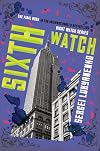
This is an interesting series in that, each time a new book comes out, I tend to pick it up out of obligation, having gone through the full series, yet, as soon as I get a few pages in, I then remember that I actually enjoy the writing, the characters, and the world that Lukyanenko had built over the six novels.
But I think I can say I never had more fun that with this one, supposedly the conclusion of the series. Not only are all the incredible concepts that make this world come alive all on show more display, but the author simply seems to find more and more avenues to run down, each one a diamond mine of sparkling creativity.
And dammit, this one was just fun. I was intrigued and bought in early for the ride, but I didn't count on all the chuckles along the way.
If I had one quibble about the story, it was the fact that no one seemed to be more upset about the impending apocalypse. Other than that, this story was bang-on perfect. show less
But I think I can say I never had more fun that with this one, supposedly the conclusion of the series. Not only are all the incredible concepts that make this world come alive all on show more display, but the author simply seems to find more and more avenues to run down, each one a diamond mine of sparkling creativity.
And dammit, this one was just fun. I was intrigued and bought in early for the ride, but I didn't count on all the chuckles along the way.
If I had one quibble about the story, it was the fact that no one seemed to be more upset about the impending apocalypse. Other than that, this story was bang-on perfect. show less
Lists
Read in 2014 (2)
Awards


You May Also Like


Associated Authors
Statistics
- Works
- 150
- Also by
- 5
- Members
- 14,503
- Popularity
- #1,581
- Rating
- 3.9
- Reviews
- 332
- ISBNs
- 503
- Languages
- 19
- Favorited
- 60
