
Project Itoh (1974–2009)
Author of Harmony
About the Author
Series
Works by Project Itoh
ハーモニー 1 (, #1) 2 copies
伊藤計劃記録 I (ハヤカワ文庫JA) 1 copy
Genocidal Organ 2 1 copy
Genocidal Organ 3 1 copy
Associated Works
Phantasm Japan: Fantasies Light and Dark, From and About Japan (2014) — Contributor — 50 copies, 1 review
セレクション戦争と文学 6 イマジネーションの戦争 — Contributor — 1 copy
リテラリーゴシック・イン・ジャパン 文学的ゴシック作品選 — Contributor — 1 copy
科学魔界 (50) Aug 2008 — Contributor — 1 copy
群像 2008年 09月号 [雑誌] — Contributor — 1 copy
WALK (57) DECEMBER 2008 特集・物語の手触り―なぜ物語は求められるのか? — Contributor — 1 copy
S-Fマガジン 2009年 07月号 [雑誌] — Contributor — 1 copy
S-Fマガジン 2008年 04月号 [雑誌] — Contributor — 1 copy
S-Fマガジン 2009年 01月号 [雑誌] — Contributor — 1 copy
Project Itoh: Augmentative Book 1 — 原作 — 1 copy
Project Itoh: Augmentative Book 2 — 原作 — 1 copy
Project Itoh: Augmentative Book 3 — 原作 — 1 copy
Tagged
Common Knowledge
- Canonical name
- Project Itoh
- Legal name
- Itō, Satoshi
伊藤 聡 - Other names
- Project-Itoh
伊藤, 計劃 - Birthdate
- 1974-10-14
- Date of death
- 2009-03-20
- Gender
- male
- Education
- Musashino Art University (美術学部映像科)
- Relationships
- 塔, 円城 (friend)
- Nationality
- Japan
- Birthplace
- Tokyo, Japan
- Place of death
- Tokyo, Japan
- Associated Place (for map)
- Tokyo, Japan
Members
Reviews
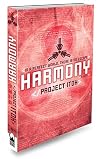
This story is a deeply social SF, exploring the effects of hyper-advanced medical technology that makes humans essentially invulnerable to disease, and the social system that forces conformity to that technology. Three girls are so resistant to the restrictive nature of a "kind" society that they try to kill themselves, and this stuff the course of not only their futures but all of humanity.
This is a very thought provoking story, but I can see it causing some consternation in current show more society, with certain discussions of Naziism and politically correct ideas in lights that many people might not like. However, the base concepts of the cost of absolute safety and the choice between dangerous freedom and safe oppression is one that's always worth probing.
The translation by Alexander O. Smith is also excellent. It's smooth and natural, and never feels awkward. show less
This is a very thought provoking story, but I can see it causing some consternation in current show more society, with certain discussions of Naziism and politically correct ideas in lights that many people might not like. However, the base concepts of the cost of absolute safety and the choice between dangerous freedom and safe oppression is one that's always worth probing.
The translation by Alexander O. Smith is also excellent. It's smooth and natural, and never feels awkward. show less
Genocidal Organ is a debut that shows enormous promise.
The novel is rife with fascinating concepts, the main character is relatable despite living a life so far removed from our own, and some of the action sequences truly put you in there.
On the other hand there unfortunately are so many pages of exhibition, of overexplanation, of endless monologues, that you are wondering whether this novel ever passed through the hands of an editor.
Contentwise this novel is extremely bleak, possibly the show more darkest I've ever read. There is death on every page, in almost every scene, every conversation and every thought of the protagonist.
Ultimately these flaws and the bleakness make me hesitant to recommend this, but if you're willing to tackle those, you'll find an interesting book by a talented author who unfortunately didn't live long enough to develop to his full potential. show less
The novel is rife with fascinating concepts, the main character is relatable despite living a life so far removed from our own, and some of the action sequences truly put you in there.
On the other hand there unfortunately are so many pages of exhibition, of overexplanation, of endless monologues, that you are wondering whether this novel ever passed through the hands of an editor.
Contentwise this novel is extremely bleak, possibly the show more darkest I've ever read. There is death on every page, in almost every scene, every conversation and every thought of the protagonist.
Ultimately these flaws and the bleakness make me hesitant to recommend this, but if you're willing to tackle those, you'll find an interesting book by a talented author who unfortunately didn't live long enough to develop to his full potential. show less
Although Genocidal Organ was the third novel by Project Itoh to be translated and released in English, in Japan the book was actually his debut work as an author. My introduction to Itoh's fiction was through the award-winning Harmony, his first novel to be translated into English, which I greatly enjoyed and found to be an intelligent, thought-provoking work of science fiction. I was also greatly impressed by his two short stories: "The Indifference Engine," collected in The Future is show more Japanese, and "From Nothing, With Love," found in Phantasm Japan. Thus, reading Genocidal Organ, released by Viz Media's Haikasoru imprint in 2012 with a translation by Edwin Hawkes, was an obvious choice for me. The publication of Genocidal Organ in Japan in 2007 established Itoh as a talented author to watch out for. Sadly, he died two years later at the age of thirty-four from cancer. But Itoh and his work haven't been forgotten. In 2014 it was announced that three of his novels, including Genocidal Organ, were to be adapted as feature-length animated films.
Ever since the attack on the World Trade Center on September 11, 2001, American citizens have more or less willingly given up their privacy and freedoms in order to feel safer from perceived terrorist threats. Much of the world has followed suit and there are very few places left where a person isn't closely monitored and recorded, the immense amounts of data and metadata collected being saved indefinitely, waiting to be complied at a moments notice. In order to maintain this life of extreme hyper-surveillance there are people who must deal in death. Clavis Shepherd is one such man, an assassin who is a part of the Special Operations of the United States Military. He has killed countless people in service of his country—men, women, even children—but his recent missions have all had one target in common, an American linguist by the name of John Paul. Time and again the man seems to manage to slip away just before Shepherd's unit arrives, leaving behind one developing country after another devastated by civil war and genocide.
Genocidal Organ is a novel that is absolutely saturated with death. It's something that Clavis cannot escape in either his personal or professional life, whether he's asleep or awake. Killing other people is his job and aided by modern science and medicine he is largely able to accept that, but his work is still tremendously damaging psychologically. But it's not until Clavis had to make the decision whether or not to remove his mother from life support after she was in an accident that mortality really became personal to him. From there, his mental stability begins to steadily unravel as he is haunted by all of the death that he has seen and the death for which he has been responsible. Genocidal Organ can be horrific and tragic, gruesome and visceral. Clavis has been both a participant in and a witness to some truly terrible things—war and genocide that lay waste to entire countries and populations and all that accompanies that devastation. And, as an assassin for the government, he knows that he's not an innocent bystander in how events unfold.
First and foremost, Genocidal Organ is Shepherd's own personal narrative as he struggles to come to terms with his role as an assassin, but his story is couched in a much larger one dealing with global policy and international politics. Itoh has successfully incorporated many different genre styles in order to create a compelling and cohesive novel. In addition to all of the action and espionage, there are also the mysteries surrounding Paul as the "King of Genocide," and an exceptionally strong philosophical and intellectual bent to the story as Genocidal Organ examines the worth of life and cost of freedom. Itoh presents an incredibly insightful perspective of the Untied States as a world power. Although it is perhaps more critical and frank than most American authors would likely attempt, the perspective is one that still feels surprisingly authentic. (It's also very clear that Itoh was particularly well-versed in Western literature and popular culture.) Ultimately, though at times heavy-handed, Genocidal Organ is a fascinating and engaging novel of the near future; I remain convinced that Itoh was an author of exceptional talent.
Experiments in Manga show less
Ever since the attack on the World Trade Center on September 11, 2001, American citizens have more or less willingly given up their privacy and freedoms in order to feel safer from perceived terrorist threats. Much of the world has followed suit and there are very few places left where a person isn't closely monitored and recorded, the immense amounts of data and metadata collected being saved indefinitely, waiting to be complied at a moments notice. In order to maintain this life of extreme hyper-surveillance there are people who must deal in death. Clavis Shepherd is one such man, an assassin who is a part of the Special Operations of the United States Military. He has killed countless people in service of his country—men, women, even children—but his recent missions have all had one target in common, an American linguist by the name of John Paul. Time and again the man seems to manage to slip away just before Shepherd's unit arrives, leaving behind one developing country after another devastated by civil war and genocide.
Genocidal Organ is a novel that is absolutely saturated with death. It's something that Clavis cannot escape in either his personal or professional life, whether he's asleep or awake. Killing other people is his job and aided by modern science and medicine he is largely able to accept that, but his work is still tremendously damaging psychologically. But it's not until Clavis had to make the decision whether or not to remove his mother from life support after she was in an accident that mortality really became personal to him. From there, his mental stability begins to steadily unravel as he is haunted by all of the death that he has seen and the death for which he has been responsible. Genocidal Organ can be horrific and tragic, gruesome and visceral. Clavis has been both a participant in and a witness to some truly terrible things—war and genocide that lay waste to entire countries and populations and all that accompanies that devastation. And, as an assassin for the government, he knows that he's not an innocent bystander in how events unfold.
First and foremost, Genocidal Organ is Shepherd's own personal narrative as he struggles to come to terms with his role as an assassin, but his story is couched in a much larger one dealing with global policy and international politics. Itoh has successfully incorporated many different genre styles in order to create a compelling and cohesive novel. In addition to all of the action and espionage, there are also the mysteries surrounding Paul as the "King of Genocide," and an exceptionally strong philosophical and intellectual bent to the story as Genocidal Organ examines the worth of life and cost of freedom. Itoh presents an incredibly insightful perspective of the Untied States as a world power. Although it is perhaps more critical and frank than most American authors would likely attempt, the perspective is one that still feels surprisingly authentic. (It's also very clear that Itoh was particularly well-versed in Western literature and popular culture.) Ultimately, though at times heavy-handed, Genocidal Organ is a fascinating and engaging novel of the near future; I remain convinced that Itoh was an author of exceptional talent.
Experiments in Manga show less
I can see why this was nominated for this year's Phillip K. Dick award.
Dystopian fiction is one of my favourite genres, and this book really takes the top spot of some of the scariest dystopian fiction that I've ever read. And I've read plenty of it (starting with Huxley's "Brave New World" at age 13).
I'm definitely not going to give spoilers on this one, because I think that everyone should give this book a read. Much in the vein of Otsuichi's writing, Itoh's prose is short and brutal and show more straight to the point, with the opening of the book much like a punch to the gut. But not in a bad way - that I have to emphasize - but more in the "open your eyes and pay attention, dammit" sort of way. Even though this book takes place in the future (with a slightly alternate past), the echoes with current society are strong and frightening - a portent of what we may become should we continue to be so health-obsessed in global society as a whole.
It's a shame that that we'll never get another book from Itoh (unless they find something else that they haven't already posthumously published) - he had true talent. I can only hope that Viz/Haikasoru goes ahead and translates the rest of his (sadly small) bibliography.
(crossposted to goodreads and witchoftheatregoing.wordpress.com) show less
Dystopian fiction is one of my favourite genres, and this book really takes the top spot of some of the scariest dystopian fiction that I've ever read. And I've read plenty of it (starting with Huxley's "Brave New World" at age 13).
I'm definitely not going to give spoilers on this one, because I think that everyone should give this book a read. Much in the vein of Otsuichi's writing, Itoh's prose is short and brutal and show more straight to the point, with the opening of the book much like a punch to the gut. But not in a bad way - that I have to emphasize - but more in the "open your eyes and pay attention, dammit" sort of way. Even though this book takes place in the future (with a slightly alternate past), the echoes with current society are strong and frightening - a portent of what we may become should we continue to be so health-obsessed in global society as a whole.
It's a shame that that we'll never get another book from Itoh (unless they find something else that they haven't already posthumously published) - he had true talent. I can only hope that Viz/Haikasoru goes ahead and translates the rest of his (sadly small) bibliography.
(crossposted to goodreads and witchoftheatregoing.wordpress.com) show less
Lists
Awards


You May Also Like


Associated Authors
Statistics
- Works
- 24
- Also by
- 27
- Members
- 410
- Popularity
- #59,367
- Rating
- 3.6
- Reviews
- 15
- ISBNs
- 39
- Languages
- 6