
Drago Jančar
Author of I Saw Her That Night
About the Author
Image credit: Der slowenische Schriftsteller Jančar auf der Wiener Buchmesse 2019. By Bwag - Own work, CC BY-SA 4.0, https://commons.wikimedia.org/w/index.php?curid=83761131
Works by Drago Jančar
Veliki briljantni valécek : drama 3 copies
La mirada de l'àngel: Tretze contes més mort a Santa Maria de les Neus (Narratives) (Catalan Edition) (2003) 2 copies
Smrt pri Mariji Snezni 2 copies
L'Elève de Joyce 1 copy
Jakobova lestev 1 copy
Razbiti vrc 1 copy
Klementov Padec 1 copy
Sproti. Eseji in clanki 1 copy
Red in pekel, drame 1 copy
Kürek Mahkumu 1 copy
Associated Works
Description of a Struggle: The Vintage Book of Contemporary Eastern European Writing (1994) — Contributor — 77 copies, 1 review
Tagged
Common Knowledge
- Canonical name
- Drago Jančar
- Birthdate
- 1948-04-13
- Gender
- male
- Education
- Maribor University
- Occupations
- playwright
novelist
essayist
editor - Awards and honors
- European Prize for Literature (2011)
- Nationality
- Slovenia
- Birthplace
- Maribor, Yugoslavia (now Slovenia)
- Places of residence
- Ljubljana, Slovenia
Maribor, Slovenia - Map Location
- Slovenia
Members
Reviews
This novel is a whirlwind of lives lived by one man, Johan Ot. Fortune, misfortune, fortune, misfortune: such is the pattern stamped upon his soul. I found myself reading quickly to keep the story moving and then halting and slowing down to savor the text and its details.
The story is all the more engaging knowing that it was written in 1978 during the height of the Cold War in the then-nation of Yugoslavia, held together by Tito and his version of communism. The parallels of Leopold's Holy show more Roman Empire, its accompanying Inquisition, and the attempt to hold together peoples being cobbled together by Catholicism (in the face of challenges from Lutheranism, a merchant class, emerging middle class, and the like) to its contemporary setting (1978), as well as that of the American empire of 2011 (when the English translation makes its debut) is absolutely stunning when I really pause to think about it. Looking backward and forward in time, while focusing on the specific story of one man in a particular space and time, this novel is breathtaking in its beauty, humor, and horror. show less
The story is all the more engaging knowing that it was written in 1978 during the height of the Cold War in the then-nation of Yugoslavia, held together by Tito and his version of communism. The parallels of Leopold's Holy show more Roman Empire, its accompanying Inquisition, and the attempt to hold together peoples being cobbled together by Catholicism (in the face of challenges from Lutheranism, a merchant class, emerging middle class, and the like) to its contemporary setting (1978), as well as that of the American empire of 2011 (when the English translation makes its debut) is absolutely stunning when I really pause to think about it. Looking backward and forward in time, while focusing on the specific story of one man in a particular space and time, this novel is breathtaking in its beauty, humor, and horror. show less
I simply can't say enough how easily I found myself falling deeply under the spell of Jancar (and I would assume some of Biggins as well, being the translator) as I turned the pages of this book. Simply telling other readers that I couldn't put the book down is not description enough for how I felt as I read the Galley Slave. Every word seemed to help you hang on until the one that followed it. The main character, in fact, doesn't become a galley slave until well through the book, however, show more the words "when are they going to get to it?" never crossed my mind. The entire story was a beautiful curiosity and an amazing journey through a time of witch burning, church complications, and plague, where the city and state gradually lose control of all that they are used to holding and discover there may be no way back to the order everyone is expecting.
The main character is Johan Ot, a stranger with a questionable past who has a very unique life after we meet him, let alone what we learn about him as the story progresses. The author puts us easily into Ot's head, helping us to realize the horrors of watching people tormented for being who they are, or watching officials get what they want, no matter what. When threats of torture are thrown on him, it is our hearts that pound in anticipation of the pain and anguish that is to come. If anyone asks if it is possible to write a beautiful book about a tormented soul, this would be the book I would point to. show less
The main character is Johan Ot, a stranger with a questionable past who has a very unique life after we meet him, let alone what we learn about him as the story progresses. The author puts us easily into Ot's head, helping us to realize the horrors of watching people tormented for being who they are, or watching officials get what they want, no matter what. When threats of torture are thrown on him, it is our hearts that pound in anticipation of the pain and anguish that is to come. If anyone asks if it is possible to write a beautiful book about a tormented soul, this would be the book I would point to. show less

Llego hasta la página 100 y lo dejo. No me interesa gran cosa lo que estoy leyendo.
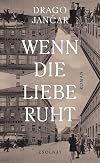
Bereits im einleitenden Kapitel des zur Zeit der deutschen Besatzung in der nordslowenischen Provinz-Hauptstadt Maribor (Marburg) angesiedelten, fulminanten Romans von Dragor Jančar wird deutlich, daß hier keine Normalität verhandelt wird, als sich die Studentin Sonja bei einem slowenischen SS-Mann für ihren inhaftierten Freund einsetzt, was der Kollaborateur schamlos ausnutzt.
Und obwohl Valentin freikommt, ist dieser noch so jungen Beziehung in den Zeiten des Krieges – auch jenem der show more Partisanen, denen Valentin sich anschließt – keine Zukunft beschieden: zu verheerend sind die Auswirkungen des brutalen Besatzungs-Regimes sowie die zwischen Kollaboration & Widerstand zertörten zivilgesellschaftlichen Verhältnisse: kein Individuum bleibt unbeschädigt, selbst die letztlich siegreichen Partisanen werden - zuweilen – zu neuen Tätern.
Ein schlechter Autor hätte aus diesem Stoff einen Helden-Kitsch gemacht, ein mittelmäßiger einen deprimierenden Text, den man nicht lesen wollen würde. Dragor Jančar hingegen verwandelt diese zutiefst traurige Geschichte einer mißlingenden Liebe in beglückende & bewegende Literatur: ein kleines Meisterwerk & eine starke Empfehlung show less
Und obwohl Valentin freikommt, ist dieser noch so jungen Beziehung in den Zeiten des Krieges – auch jenem der show more Partisanen, denen Valentin sich anschließt – keine Zukunft beschieden: zu verheerend sind die Auswirkungen des brutalen Besatzungs-Regimes sowie die zwischen Kollaboration & Widerstand zertörten zivilgesellschaftlichen Verhältnisse: kein Individuum bleibt unbeschädigt, selbst die letztlich siegreichen Partisanen werden - zuweilen – zu neuen Tätern.
Ein schlechter Autor hätte aus diesem Stoff einen Helden-Kitsch gemacht, ein mittelmäßiger einen deprimierenden Text, den man nicht lesen wollen würde. Dragor Jančar hingegen verwandelt diese zutiefst traurige Geschichte einer mißlingenden Liebe in beglückende & bewegende Literatur: ein kleines Meisterwerk & eine starke Empfehlung show less
Oct 12, 2022German
Awards


You May Also Like


Associated Authors
Statistics
- Works
- 52
- Also by
- 2
- Members
- 462
- Popularity
- #53,211
- Rating
- 3.8
- Reviews
- 11
- ISBNs
- 106
- Languages
- 17
