
Gina Ochsner
Author of The Russian Dreambook of Color and Flight
About the Author
Image credit: Photo by Sheryl H. Eldridge, Newport (Oregon) Public Library
Works by Gina Ochsner
Associated Works
Fantastic Women: 18 Tales of the Surreal and the Sublime from Tin House (2011) — Contributor — 61 copies, 2 reviews
From the Bering Strait : and other stories, winners of the 1999 Fish Publishing Short Story Prize (1999) — Contributor — 1 copy
Tagged
Common Knowledge
- Gender
- female
- Nationality
- USA
- Places of residence
- Keizer, Oregon, USA
- Associated Place (for map)
- Oregon, USA
Members
Reviews
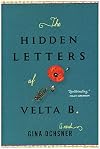
Inara, a dying mother in her last days, shares stories with her son Maris, of their family and the people who live in their small Latvian town. Memories dug up like the plots in the cemetery her family has been caretaking, are laid out to be deciphered along with hidden letters her grandmother Velta wrote to her grandfather during WWII after the Soviets invaded their small town and incarcerated him. Maris is an unusual young man; he has huge ears and can hear things others can’t. His mind show more is extremely creative and he helps his mother understand the letters that she found hidden years before: but the messages they hold will change their town.
This book is like a piece of art, intricate full of depth and an interestingly written mystery. It did take me awhile to get into the tone of the story. Its murkiness seeped through every page, almost like a gothic fairy tale set in a dark forest and yet it’s starts in current time. I may have to go back and read it again; because there are things I missed the first time through. Gina’s characters are intriguing and not all they appear to be on the surface. Definite 4 stars. show less
This book is like a piece of art, intricate full of depth and an interestingly written mystery. It did take me awhile to get into the tone of the story. Its murkiness seeped through every page, almost like a gothic fairy tale set in a dark forest and yet it’s starts in current time. I may have to go back and read it again; because there are things I missed the first time through. Gina’s characters are intriguing and not all they appear to be on the surface. Definite 4 stars. show less

In post-Soviet Russia a miscellaneous group of people live in a condemned apartment building and Gina Ochsner describes their lives. The possibility of some funding for the local Museum, where three of the tenants work, is talked about on the back cover but this is a minor part of the plot. This is a quirky and unsettling novel, a world of shortages, dreams and hopes as the mismatched people try to survive.
I can see this isn't going to be a novel for everyone. The muck and grime of daily show more life; the feral children; the touches of magical realism won't be to everyone's taste but I really liked this book. Bizarre as this is I like the way Gina Ochsner writes and the story she tells and I will definitely be looking for more of her work. show less
I can see this isn't going to be a novel for everyone. The muck and grime of daily show more life; the feral children; the touches of magical realism won't be to everyone's taste but I really liked this book. Bizarre as this is I like the way Gina Ochsner writes and the story she tells and I will definitely be looking for more of her work. show less
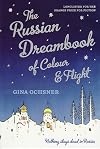
The Russian Book of Color and Flight offers provocative insight into what has happened in post-Soviet Russia. As it continues playing "King of the Hill" by fighting wars with Cheynya, Bosnia, Afganistan, Georgia, etc. (not in a historical timeline), the ordinary Russian bears the brunt of such folly.
Muslims, Jews, and Christians circumspectly inhabit a condemned building. While there is no plot per se, the narratives are provided by the main characters in the building. How they live show more (totally influenced by their various religions), their jobs, the absolute lack of sustainable goods, e.g., fuel, ink, money, and food. Though plausible, it is absurdly unreal. Dystopian fiction with huge satirical swathes.
Tanya, abandoned by her mother and raised by her cynical grandmother, "re-creates art" in the museum in which she works. Tanya also incessantly writes in her blue notebook, her constant companion. What is notable about her style of writing is the recurring inclusion of her perception of the extraordinary colors visible only to her despite her bleak surroundings, and how one would create such colors, e.g., a "Prussian blue" versus a "French blue," etc. I found her to be one of the most interesting characters in the book.
The least enjoyable part of the book was the recurring references to the significance of the communal outdoor privy, its occupants and their daily business within its confines.
There also is a mystical component with Azade, the privy attendant who is able to divine the troubles of the occupants by their gaseous emissions and their meager ordure.
Despite this continously annoying segue, I could not stop reading this book. The author's writing is phenomenal, and I would like to read more of her work. show less
Muslims, Jews, and Christians circumspectly inhabit a condemned building. While there is no plot per se, the narratives are provided by the main characters in the building. How they live show more (totally influenced by their various religions), their jobs, the absolute lack of sustainable goods, e.g., fuel, ink, money, and food. Though plausible, it is absurdly unreal. Dystopian fiction with huge satirical swathes.
Tanya, abandoned by her mother and raised by her cynical grandmother, "re-creates art" in the museum in which she works. Tanya also incessantly writes in her blue notebook, her constant companion. What is notable about her style of writing is the recurring inclusion of her perception of the extraordinary colors visible only to her despite her bleak surroundings, and how one would create such colors, e.g., a "Prussian blue" versus a "French blue," etc. I found her to be one of the most interesting characters in the book.
The least enjoyable part of the book was the recurring references to the significance of the communal outdoor privy, its occupants and their daily business within its confines.
There also is a mystical component with Azade, the privy attendant who is able to divine the troubles of the occupants by their gaseous emissions and their meager ordure.
Despite this continously annoying segue, I could not stop reading this book. The author's writing is phenomenal, and I would like to read more of her work. show less
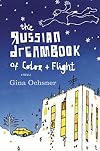
Um. Well, this takes place in post-Soviet Russia, and is more or less about three widows - an Eastern Orthodox Christian, a Muslim, and a Jew - who all live in the same condemned apartment building with their children. Christian Lukeria torments her overweight granddaughter Tanya who spends a lot of her time obsessing over clouds and colors; Muslim Azade learns people's secrets by smelling their excrement and worries over where she went wrong with her son Vitek; Jewish Olga frets over the show more fate of her idiot son Yuri and his selfish girlfriend Zoya. Also, there's a gaggle of feral children running around. The book begins with the suicide of Mircha, Azade's husband, whose ghost shows up soon after to cause mischief. Much of the actual plot revolves around the local museum where Yuri, Zoya, and Tanya all work. None of the exhibits are originals, and in fact most were created by Tanya herself out of candy wrappers and glue. However, when the possibility arises of a grant from some wealthy Americans, the entire apartment building is in a tizzy. The ending is happy - more or less - though it feels forced and borders on deus ex machina. This is the sort of novel where you have to just absorb things as they come and not approach it expecting some sort of coherent storyline. Mostly it's about a group of characters, and much of the book is spent explaining their personalities, motivations, and histories. And that's usually fine by me, except that this time around everyone was so exceptionally screwed up that I couldn't muster the least bit of sympathy for any of them. Perhaps another reader would find it darkly humorous but mostly I was just glad when it was over. show less
Awards


You May Also Like


Associated Authors
Statistics
- Works
- 8
- Also by
- 9
- Members
- 321
- Popularity
- #73,714
- Rating
- 3.6
- Reviews
- 13
- ISBNs
- 17
- Languages
- 2