
Jean Racine (1639–1699)
Author of Phaedra
About the Author
Jean Racine is considered the greatest of French tragic dramatists. If Shakespeare's (see Vol. 1) theater is characterized by exploration and invention, Racine's is defined by restraint and formal perfection. His themes are derived from Greco-Roman, biblical, and oriental sources and are developed show more in the neoclassic manner: keeping to few characters, observing the "three unities" defined by Aristotle (see Vols. 3, 4, and 5) as essential to tragedy (i. e., unity of time, place, and action), and writing in regular 12-syllable verses called "alexandrines." In contrast to Corneille, whose theater is eminently political and concerned with moral choices, Racine locates tragic intrigue in the conflict of inner emotions. He is a master at exploring the power of erotic passion to transform and pervert the human psyche. As a Jansenist who believed that a person deprived of grace was subject to the tyranny of instincts, Racine was interested in portraying human passions---particularly the passion of love---in a state of crisis. Racine is also one of the greatest of all French poets, and his plays are a challenge to any translator. His major tragedies include Andromaque (1667), Britannicus (1669), e Berenice (1670), Iphigenie (1674), and Phedre (1677). (Bowker Author Biography) show less
Image credit: Wikipédia France
Series
Works by Jean Racine
Théâtre complet I : La Thébaïde, Alexandre le Grand, Andromaque, Les Plaideurs, Britannicus, Bérénice (1964) 65 copies
Théâtre complet II : Bajazet, Mithridate, Iphigénie, Phèdre, Athalie (1983) — Author — 47 copies, 1 review
La bibliothèque, 19 : Andromaque, Berenice, Iphigenie, Mithridate, Bajazet, Phedre, Esther, Athalie (2009) 6 copies
Oeuvres de Racine 5 copies
Racine: Theatre Complet II (Bajazet, Mithridate, Iphigénie, Phèdre, Esther, Athalie) (1998) 5 copies
Classical French theatre — Contributor — 5 copies
3 Great French Plays — Contributor — 4 copies
Complete Plays, vol 1 (ML 390) 4 copies
2 Plays: Iphigenie / Mithridate 3 copies
Œuvres de J. Racine 3 copies
Jean Racine összes drámái 3 copies
Tragedie 3 copies
Oeuvres de Jean Racine , Tome III. 3 copies
Théâtre I 2 copies
Théâtre français, répertoire complet, La Thébaïde, Alexandre, Andromaque, les Plaideurs, Tome 1: Britannicus, Bérénice (2017) 2 copies
THEATRE COMPLET, I, LA THEBAIDE, ALEXANDRE LE GRAND, ANDROMAQUE, LES PLAIDEURS, BRITANNICUS, BERENICE (1968) 2 copies
Œuvres complètes. Tome premier 2 copies
Racine: Britannicus ane Phèdre — Author — 2 copies
Phèdre 2 copies
Iphigenia, Phaedra, Athaliah 2 copies
Théâtre. Tome 1 2 copies
2 Plays: Athalie / Esther 2 copies
Racine összes drámai művei 1 copy
Oeuvres de Jean Racine, précédées d'une notice sur sa vie et ses ouvrages. Nouvelle édition... 1 copy
Oeuvres Complete 1 copy
Tres tragedias 1 copy
Oeuvres complètes de Jean Racine , avec le commentaire de La Harpe. Tome premier [-huitième]. 1 copy
Phd̈re tragďie 1 copy
The Works of Racine 1 copy
Phaedra and Other Plays 1 copy
Œuvres de Jean Racine Tome 5 1 copy
Œuvres de Jean Racine Tome 3 1 copy
Théâtre I - La Thébaîde, Alexandre Le Grand, Andromaque, Les Plaideurs, Britannicus, Bérénice 1 copy
RACINE Theatre complet - Variantes, bibliographie et notes par E. PILCON et R. GROOS - La PLEIADE [1940] (1940) 1 copy
Théatre choisi de Racine 1 copy
Oeuvres de Racine (2 vols) 1 copy
Théâtre, tome 1 1 copy
Les Plaideurs, Britannicus 1 copy
Athalie et autres tragédies 1 copy
Connaissance des lettres 1 copy
Berenice, Bajazet 1 copy
Théatre complet I la thébaïde, alexandre, andromaque, les plaideurs, britannicus, bérénice (1908) 1 copy
Oevres completes de Racine 1 copy
Tawny scrawny lion 1 copy
Francuski klasicisti 1 copy
Tragedie : wybór 1 copy
Œuvres Complètes de J. Racine, Vol. 5: Avec les Notes de Tous les Commentateurs (Classic Reprint) (French Edition) (2017) 1 copy
Théâtre II 1 copy
Théâtre, Tome 1 1 copy
Lettres inédites de Jean Racine et de Louis Racine : précédées de la vie de Jean Racine et d'une notice sur Louis Racine, etc 1 copy, 1 review
Poésie Lyrique Au Moyen Âge: Tome I (Nouveaux Classiques Larousse) (Spécial Documentation Thématique) (1975) — Author — 1 copy
Chefs-d'oeuvre de Racine 1 copy
Mid-Career Tragedies 1 copy
Racine összes drámai művei 1 copy
Œuvres complètes I 1 copy
Théatre 1 copy
Théâtre choisi de Racine 1 copy
Oeuvres de Racine : Tome I 1 copy
Oeuvres de Racine : Tome II 1 copy
MAESTRI ATALIA 1 copy
Choix de tragedies 1 copy
Theatre 1 1 copy
Inni spirituali 1 copy
Jean Racine: Oeuvres complètes et annexes (Nouvelle édition enrichie) (French Edition) (2010) 1 copy
Thatre 1 copy
Ouvres 1 copy
Œuvres de Racine. 1 copy
Œuvres 1 copy
uvres compls 1 copy
Ouvres Complètes 1 copy
Theatre choisi de Racine 1 copy
Procederen 1 copy
Theatre, Tome I (La Thébaide, Alexandre le Grand, Andromaque, Les Plaideurs, Britannicus, Bérénice) 1 copy
Racine: Phaedra, Andromache, Berenice, Athaliah, Britannicus — Author — 1 copy
Jean Racine Five Plays Translated Into English Verse and with an Introduction By Kenneth Muir (1960) — Author — 1 copy
Théâtre de 1664 à [1691] 1 copy
Associated Works
Continental Drama: Calderon; Corneille; Racine; Molière; Lessing; Schiller (2004) — Contributor — 252 copies
Oogst Der Tijden. keur uit de werken van schrijvers en dichters aller volken en eeuwen (1940) — Contributor — 12 copies
Profil littérature, profil d'une oeuvre : Racine : Phèdre (12 sujets corrigés) (1973) — Contributor — 4 copies
Le monde des passions en 30 dissertations: Balzac, Hume, Racine: programme 2015-2016 (2015) — Contributor, some editions — 1 copy
Schillers sämtliche Werke. 8 Band. Übersetzungen: Turandot - Der Parasit - Der Neffe als Onkel - Phädra — Contributor — 1 copy
Fauré’s Requiem : Music for reflection and hope : Royal Festival Hall : Sun 24 Oct, 3pm [programme] (2021) — Text — 1 copy
Theater, Volume 30, Number 1 — Contributor — 1 copy
Rossini : Ermione {video recording} {1995 television film} {Glyndebourne} (1995) — Original author — 1 copy
Die Deutsche Schaubühne zu Wienn, nach alten und neuen Mustern — Contributor — 1 copy
Tagged
Common Knowledge
- Canonical name
- Racine, Jean
- Legal name
- Racine, Jean-Baptiste
- Other names
- Racine
- Birthdate
- 1639-12-22
- Date of death
- 1699-04-21
- Gender
- male
- Education
- Petites écoles de Port-Royal
Collège de Beauvais - Occupations
- dramatist
- Organizations
- Académie française, (Membre, 1672 | 1899)
Académie des inscriptions et belles-lettres (Membre, 1682 | 1899) - Relationships
- Louis XIV (Protecteur)
Madame de Montespan (Protectrice)
Madame de Maintenon (Protectrice) - Short biography
- Jean Racine (1639-1699) est un dramaturge, poète et tragédien classique français majeur.
Il naît le 22 décembre 1639 à la Ferté-Milon en Picardie dans une famille de moyenne bourgeoisie. Il perd sa mère à l'âge de deux ans et son père à quatre ans.. Il étudie, à partir de 1649 à Port-Royal-des-Champs puis fait un passage au collège de Beauvais, haut lieu du jansénisme, à Paris et retourne aux Granges de Port-Royal-des-Champs pour l’année de rhétorique. Il est en classe de philosophie au collège d’Harcourt, à Paris en 1658.
Il débute dans l'écriture avec La Thébaïde en 1664, joué par la troupe de Molière, poursuit et connaît un triomphe avec Andromaque en 1667. Cette réussite en fait l'égal et le rival de Corneille tant auprès du public que de Louis XIV qui en fait un favori majeur. Dès lors, sa promotion sociale et économique est assurée. Il est élu à l'Académie française en 1672, anobli en 1674 et atteint la gloire avec Phèdre en 1677.
Devenu courtisan du roi, Racine délaisse alors la Poésie. Suivent ainsi des tragédies commandées notamment par Mme de Maintenon, des historiographies, cantiques et oeuvres dramatiques plus tournées vers la morale austère du jansénisme.
Il meurt le 21 avril 1699 à Paris et est inhumé à Port-Royal-des-Champs. Après la destruction de l’abbaye en 1711, ses cendres sont transférées à l’église Saint-Étienne-du-Mont, à Paris.
La critique et la postérité consacre au cours des siècles Racine, avec Molière et Corneille, comme dramaturge majeur des Lettres classiques françaises. Universellement reconnu dans le domaine de la littérature, il est et reste l'un des auteurs les plus joués. - Cause of death
- liver cancer
- Nationality
- France
- Birthplace
- La Ferté-Milon, Picardy, France
- Places of residence
- Paris, Île-de-France, France
- Place of death
- Paris, Île-de-France, France
- Burial location
- Saint-Étienne-du-Mont Church, Paris, Île-de-France, France
- Map Location
- France
Members
Reviews
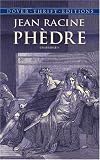
Let's see: thwarted love, betrayal, implied incest, heinous lies, father-son love triangle with wife/stepmother, and a whole lot of death at the end. Um, yeah, that's the recipe for a pretty awesome story. Phaedra, married to Theseus, has always nurtured a secret love for his son, Hippolytus. When she receives news that Theseus is dead, she finally confesses her love to Hippolytus, who is in love with Aricia and is disgusted by his step-mother's advances. But, hey, guess what? Theseus isn't show more dead and returns just in time for all Hades to break loose . . .
Soap operas have nothing on ancient Greek drama. Plus, on All My Children, you never get a half bull/half dragon sea beastie sent by Neptune to torch our hero into a crispy critter before his horses go mad, crash the chariot, and then drag him to death. show less
Soap operas have nothing on ancient Greek drama. Plus, on All My Children, you never get a half bull/half dragon sea beastie sent by Neptune to torch our hero into a crispy critter before his horses go mad, crash the chariot, and then drag him to death. show less

When is one guilty of something, when one commits the reprehensible deed, and only one knows it, or when it is made known to others?
Phèdre thinks that the latter case is a great deal worse, worse even than death:
je meurs pour ne point faire un aveu si funeste
je n’en mourrai plus, j’en mourrai plus coupable
And so probably did Racine, because in his Phèdre, the action is activated by Phèdre’s avowal of her guilt which she makes three times. These three long soliloquies are amongst show more the most famous parts of the play. She is guilty of loving her stepson and she acknowledges this to her “confidente” (Oenone), to her stepson (Hyppolite), and to her husband (Thésée). These three confessions trigger the drama that unfolds irremediably fast, bringing the tragic downfall of both guilty and non guilty.
But the interest of this play is not in the plot, but in the themes that Racine so lyrically develops. Love coupled with jealousy as a fatal damnation. Treachery as the worst ignominy that can be suffered and inflicted. Choices that remain captive and render Destiny unavoidable. And expectedly in Racine, the power of the word as the vehicle for the human soul.
Racine’s tragedies are distilled drama. They are tragedies at their purest in which there is the very minimum of extraneous material. Respecting the three Aristotelian units of one place, one theme and one unit of time (one day), Racine also added the typically 17th century French concept of “bienséance” or “propriety”. He approached the three units by emptying them as much as possible. The place is no place, but just an enclosing undefined lieu that traps the tragic heroes and heroines in their own disarrays. The action takes place elsewhere and the messengers just inform the enclosed heroes about them. The resulting single action we see acted is no action at all, but the soul’s suffering them (in a way similarly to Baroque opera in which the recitatives tell the story and the arias sing the feelings). With so much material stripped out, then everything can happen quickly. We end up not been aware of whether it all happened in one day, or in an accelerated, condensed and immeasurable eternity. On the stage are left the abstract concepts that do not resolve.
For Phèdre has remained guilty.
I have reread this play as a complement to reading Marcel Proust’s La recherche du temps perdu as part of the 2013: The Year of Reading Proust Group. And since it is a play I have sought to watch it acted out. I found this DVD http://www.amazon.co.uk/Phèdre-DVD-Dominique-Blanc/dp/B0002T279G/ref=sr_1_1?ie=..., and therefore my review will comment on this production as well.
I should add that, sadly, this is the only filmed production of a Racine play that I have been able to find. Are they commercially so unattractive? When I lived in Paris I was on a budget but was willing to stand and queue, for sometimes close to two hours, to be able to get the cheapest tickets (FF12.-) for the Comédie Française performances (Corneille, Marivaux, but mostly Molière and Racine). In one year I did not miss one single production.
I am lucky that I have seen some wonderful productions of Racine at the CF then. The stage settings were bare. The accoutrements for emphasizing the Drama were almost only the costumes that the characters wore, with their flowing tunics and floating capes and veils. They were simple but made out of absolutely exquisite materials. Contrasting hues in the clothing paralleled opposite personalities while subtle gradations in color tones marked allegiances. Only tenuously would they distract from the declaimed verses. The acting was selective. Racine’s characters do not move abruptly nor do they gesticulate while they converse. They do not need to touch since they reach each other with their words. Racine’s heroes and heroines are walking and speaking souls.
When in this DVD Phèdre first appears on the stage as a crouching and limping neurotic woman I was shocked that this could be a Racine Queen. I had been expecting a dignified dame whose august and majestic body carried the full weight of suffering in a stately manner. Phèdre is most famous for her remarkable and very long monologues, known to be so difficult to deliver well that they can make or unmake an actress. It seems that theatre critics count their career in France by the number of Phèdres they have attended. The legendary Sarah Bernhardt was unforgettably photographed in this role.
But this unappealing first entrance of a broken and bent Phèdre in my DVD is, furthermore, followed by somewhat hysterical characters who shout at each other their love and longings. Their incensed and broken sentences and undue emphasis at invented syncopations ruins Racine’s verses and rhyme.
For Racine was a master of the Alexandrines, the twelve syllable verses with a clear caesura in its exact middle. His iambic hexameters establish a cadential rhythm which measures an even pace. True, at selected times he breaks and joins the verses with a skillful “enjambement” (the continuation of a thought in the following verse) that has an effect of an accelerated train of thought, but this enjambement ought not to interfere with a mellifluous enunciation of the lines. His verses should have the lulling effect of a hypnotic lullaby.
In the DVD production, with its broken chants and histrionic acting, a worthy exception is Théramène’s account of Hyppolite’s death. Were a film director of Steven Spielberg’s kind get hold of Théramène’s speech, it would be inflated it into a fantastic rendering of monsters, seas opening into abysms, and a hair-raising run of frenzied and desperate horses with a fatal consequence. Instead, true to Racine, a sad man, barely moving, declaims this succession of horrors, without blinking, depicting with only words the dreadful scene that gradually sinks the listening father into an unavoidable sorrow. What a wonderful speech.
It is not surprising that Racine’s selected use of words and exquisite ability with the Alexandrines would fascinate someone as careful and sensitive to the power of language as Marcel Proust. We have Proust’s explicit admiration for the way Racine could twist the very formal structure of his verses and with a broken syntax add ambiguity and richness to his meaning. These examples he gave are from Andromaque:
Pourquoi l’assassiner, Qu’a-t-il fait? A quel titre ?
Qui te l’a dit ?
But it was the poignant portrayal of guilty love in Phèdre that obsessed Proust. And it is this play, which he knew in its entirety by heart, that he has associated to his fictional actress La Berma and which figures in La recherche repeatedly.
--------------------------
After this wonderful reading I will proceed with the rereading of more plays by Racine and with the listening of Rameau’s Opera, Hippolyte et Aricie. show less
God DAMN I absolutely adored this! 4.5 stars and possibly 5 (we'll see if I round up)! Even though I already know the plot I still found it so heart-rending. Phaedra's soliloquies are so beautifully written, Aricia's rebuttal to Theseus is amazing and had me rooting for her and Hippolytus's characterisation is exactly what I was looking for! The writing style was absolutely gorgeous, I was completely eating it up (remind me at a later date to read Richard Wilbur's translation).
I feel like show more Racine did an expert job of modernising (relatively speaking) the original myth, still maintaining the tragic plot whilst removing some of the most unnecessarily horrific elements and improving the characterisation - I especially liked Phaedra herself not making the accusation which made me all the more conflicted in my sympathies (as this helps maintain, as Racine mentioned, the idea that she is 'neither wholly guilty nor wholly innocent'). Introducing Aricia also gave a breath of fresh air that allowed Hippolytus to not be depicted as one-sided as he often can be.
Overall this was soooo good and I'm excited to read more of Racine's plays! show less
I feel like show more Racine did an expert job of modernising (relatively speaking) the original myth, still maintaining the tragic plot whilst removing some of the most unnecessarily horrific elements and improving the characterisation - I especially liked Phaedra herself not making the accusation which made me all the more conflicted in my sympathies (as this helps maintain, as Racine mentioned, the idea that she is 'neither wholly guilty nor wholly innocent'). Introducing Aricia also gave a breath of fresh air that allowed Hippolytus to not be depicted as one-sided as he often can be.
Overall this was soooo good and I'm excited to read more of Racine's plays! show less

I consider Racine the greatest French playwright (sorry, Molière fans), and I consider Phèdre and Britannicus his two greatest plays. My quarrel here, and hence my low rating of 2½**, is with the translation – specifically, Richard Wilbur's use of heroic couplets which, despite some add-on enjambment, still make Racine sound too much like John Dryden.
Nothing against Dryden, mind you, but I think Wilbur would have been better advised to go with blank verse for a playwright who engages show more in tragic set-pieces. I'm going to get on to Wilbur's Molière translations, though, where heroic couplets (assuming that's what Wilbur used for Molière) might give a sing-song effect more appropriate to comic satire. show less
Nothing against Dryden, mind you, but I think Wilbur would have been better advised to go with blank verse for a playwright who engages show more in tragic set-pieces. I'm going to get on to Wilbur's Molière translations, though, where heroic couplets (assuming that's what Wilbur used for Molière) might give a sing-song effect more appropriate to comic satire. show less
Lists
Awards


You May Also Like


Associated Authors
Statistics
- Works
- 322
- Also by
- 19
- Members
- 7,072
- Popularity
- #3,471
- Rating
- 3.9
- Reviews
- 101
- ISBNs
- 669
- Languages
- 17
- Favorited
- 16


