
Michael Moorcock
Author of Elric of Melniboné
About the Author
Michael Moorcock, 1939 - Writer Michael Moorcock was born December 18, 1939 in Mitcham, Surrey, England. Moorcock was the editor of the juvenile magazine Tarzan Adventures from 1956-58, an editor and writer for the Sexton Blake Library and for comic strips and children's annuals from 1959-61, an show more editor and pamphleteer for Liberal Party in 1962, and became editor and publisher for the science fiction magazine New Worlds in 1964. He has worked as a singer-guitarist, has worked with the rock bands Hawkwind and Blue Oyster Cult and is a member of the rock band Michael Moorcock and the Deep Fix. Moorcock's writing covers a wide range of science fiction and fantasy genres. "The Chronicles of Castle Brass" was a sword and sorcery novel, and "Breakfast in the Ruins: A Novel of Inhumanity" uses the character Karl Glogauer as a different person in different times. Karl participates in the political violence of the French Revolution, the Paris Commune, and a Nazi concentration camp. Moorcock also wrote books and stories that featured the character Jerry Cornelius, who had no consistent character or appearance. "The Condition of Muzak" completed the initial Jerry Cornelius tetralogy and won Guardian Literary Prize in 1977. "Byzantium Endures" and "The Laughter of Carthage" are two autobiographical novels of the Russian emigre Colonel Pyat and were the closest Moorcock came to conventional literary fiction. "Byzantium Endures" focuses on the first twenty years of Pyat's life and tells of his role in the Russian revolution. Pyat survives the revolution and the subsequent civil war by working first for one side and then another. "The Laughter of Carthage" covers Pyat's life from 1920-1924 telling of his escape from Communist Russia and his travels in Europe and America. It's a sweeping picture of the world during the 1920's because it takes the character from living in Constantinople to Hollywood. Moorcock returned to the New Wave style in "Blood: A Southern Fantasy" (1994) and combined mainstream fiction with fantasy in "The Brothel of Rosenstrasse," which is set in the imaginary city of Mirenburg. MoorCock won the 1967 Nebula Award for Behold the Man and the 1979 World Fantasy Award for his novel, Gloriana. (Bowker Author Biography) show less
Disambiguation Notice:
Moorcock, Michael, b. 1939, British writer known primarily for science fiction/fantasy. He has written under many pseudonyms and his bibliography is very complex.
Be extremely careful when combining his works!
Image credit: Michael Moorcock on October 17, 2010
Series
Works by Michael Moorcock
The Elric Saga, Part I (Elric of Melniboné; The Sailor on the Seas of Fate; The Weird of the White Wolf) (1983) 929 copies, 11 reviews
The Elric Saga, Part II (The Vanishing Tower; The Bane of the Black Sword; Stormbringer) (1984) 628 copies, 6 reviews
The Elric Saga, Part III (The Fortress of the Pearl; The Revenge of the Rose) (2002) 154 copies, 1 review
The Cornelius Chronicles Vol. II: The Lives and Times of Jerry Cornelius / The Entropy Tango (1986) 137 copies
Cornelius Chronicles, Vol. 3 (Adventures of Una Persson and Catherine Cornelius in the Twentieth Century/the Alchemist's Question) (1987) 86 copies, 1 review
The Elric Saga: Part IV (The Dreamthief's Daughter; The Skrayling Tree; The White Wolf's Son) (2005) 78 copies
Before Armageddon (An Anthology of Victorian and Edwardian Fiction Published Before 1914, Volume 1) (1975) — Editor — 47 copies, 1 review
Michael Moorcock's Elric: The Making of a Sorcerer #1 - The First Dream: Bargains in Blades (2004) 13 copies
The Michael Moorcock Library The Multiverse Vol.1 (Michael Moorcock Library the Multiverse, 1) (2023) 12 copies, 1 review
The Michael Moorcock Library: Hawkmoon - The History of the Runestaff Volume 2 (2020) 11 copies, 1 review
An Alien Heat & The Hollow Lands (2 Books from the Dancers at the End of Time Trilogy) (1972) 10 copies
New Worlds SF 149, April 1965 — Editor — 7 copies
The Fortress of the Pearl 6 copies
The Cairene Purse [short fiction] 6 copies
Michael Moorcock's Elric Vol. 4: The Dreaming City Deluxe Edition (MICHAEL MOORCOCK LIBRARY) (2024) 5 copies, 1 review
Sea Wolves 5 copies
By MICHAEL MOORCOCK THE VANISHING TOWER (ELRIC SERIES) (paperback / softback) [Paperback] (1988) 5 copies
The Last Enchantment 5 copies
Sir Milk and Blood 5 copies
The Sailor on the Seas of Fate 5 copies
Michael Moorcock's Elric: The Making of a Sorcerer #2 - The Second Dream: The Sea-King's Sister (2004) 4 copies
London Bone [novelette] 4 copies
The White Wolf's Song 4 copies
The Stone Thing 4 copies
Michael Moorcock's Multiverse #1 4 copies
The Case of the Nazi Canary 4 copies
Michael Moorcock's Elric Vol. 3: The White Wolf Deluxe Edition (MICHAEL MOORCOCK LIBRARY) (2023) 4 copies
New Worlds SF 166, September 1966 3 copies
The Sea of Demons 3 copies
Michael Moorcock's Elric: The Making of a Sorcerer #3 - The Third Dream: The South Wind's Soul (2006) 3 copies
Voortrekker A Tale of Empire 3 copies
New Worlds SF 171, March 1967 — Editor — 3 copies
Michael Moorcock's Multiverse #6 3 copies
Dead Singers 3 copies
Tom Strong #32 - The Black Blade of the Barbary Coast, Part 2 — Author — 3 copies
Mission to Asno 3 copies
Red Pearls: An Elric Story 3 copies
Michael Moorcock's Multiverse #2 3 copies
Crimson Eyes 3 copies
Between the Wars: Pyat Quartet 1 - 4 3 copies
Michael Moorcock's Multiverse #5 3 copies
Michael Moorcock's Multiverse #7 3 copies
Sojan The Swordsman 3 copies
The Flaneur Des Arcades De L'opera 3 copies
A Dead Singer [short fiction] 3 copies
The Affair Of The Bassin Les Hivers 3 copies
The Delhi Division 2 copies
Michael Moorcock's Elric: The Making of a Sorcerer #4 - The Fourth Dream: Dragon Lord's Destiny (2006) 2 copies
The Girl Who Killed Sylvia Blade 2 copies
A espada diabólica 2 copies
Elriko kronikos: fantastinis romanas 2 copies
The Roaming Forest 2 copies
The Swastika Set-Up 2 copies
The Longford Cup 2 copies
Eagle Picture Library # 9 2 copies
"The Complete Ice Schooner" 2 copies
A Portrait in Ivory 2 copies
The Opium General {short story} 2 copies
The Eternal Champion [short story] 2 copies
Sad Giant's Shield 2 copies
The Affair of the Seven Virgins 2 copies
Benediction: Warlord Of The Air 2 copies
The Ghost Warriors 2 copies
New Worlds SF 157, December 1965 2 copies
Doomed Lord's Passing 2 copies
Elric: The Stealer of Cake 2 copies
The Entropy Circuit 2 copies
The Sleeping Sorceress [short story] 2 copies
Michael Moorcock's Multiverse #12 2 copies
Robot 24 2 copies
Revolt in Hatnor 2 copies
The Devil Hunters of Norj 2 copies
The Purple Galley 2 copies
Prisoners In Stone 2 copies
Michael Moorcock's Multiverse #10 2 copies
Sojan At Sea 2 copies
Constant Fire 2 copies
Blitz Kid 2 copies
The Warlord of the Air, The Land Leviathan & The Steel Tsar (Nomad[s] of the Time Streams / Oswald Bastable Series; 3 Volumes, DAW Boooks) (1982) 2 copies
Waiting for the End of Time... 2 copies
Michael Moorcock's Multiverse #11 2 copies
Black Sword's Brothers 2 copies
Michael Moorcock's Multiverse #9 2 copies
Michael Moorcock's Multiverse #8 2 copies
The Sunset Perspective 2 copies
The Plain Of Mystery 2 copies
Michael Moorcock's Multiverse #3 2 copies
Michael Moorcock's Multiverse #4 2 copies
New Worlds SF 142, May-June 1964 — Editor — 2 copies
Il mastino della guerra 2 copies
The Sons of the Snake God 2 copies
Niki Hoeky — Editor — 2 copies
Έλρικ: 3. Ο Λευκός Λύκος 1 copy
Michael Moorcock's Elric: The Making of a Sorcerer #4 - The Fourth Dream: Dragon Lord's Destiny 1 copy
The Distant Suns 1 copy
Elric. La saga infinita 1 copy
Cornelius Chronicle, The 1 copy
Viimeisten aikojen valtiaat 1 copy
Elrik od Melnibonea, 2. deo 1 copy
Elrik od Melnibonea, 1. deo 1 copy
The English Assassin 1 copy
New Worlds 1 copy
SF Reprise 5 1 copy
Casablanca [ss] 1 copy
Michael Moorcock's Multiverse #s 1-12 (Moonbeams and Roses, The Metatemporal Detective, Duke Elric) 1 copy
New worlds quarterly. No. 5, 1 copy
New Worlds 158, January 1966 1 copy
...i ujrzeli człowieka 1 copy
The Nomad of Time (The Warlord of the Air, The Land Leviathan, The Steel Tsar) Book Club Edition 1 copy
Wieczny wojownik. Tom 1 1 copy
The Jade Man's Eyes - Elric 1 copy
Tom Strong #32 1 copy
Elric of Melinoboné 1 copy
The Real Life Mr Newman 1 copy
The Eternal Champion 1 1 copy
New Worlds SF 151, June 1965 1 copy
Elryk z Melniboné 1 copy
Audiobook Collection 1 copy
Leggende alla fine del tempo 1 copy
Elric #4 1 copy
The Lovebeast 1 copy
Olujnik, 1. deo 1 copy
Il segreto del talismano 1 copy
Ravenbrand 1 copy
Daughter of a Warrior King 1 copy
The Hordes Attack 1 copy
The sedentary Jew 1 copy
The Visible Men 1 copy
Sojan Swordsman of Zylor! 1 copy
The Black Blade's Song 1 copy
A Winter Admiral 1 copy
La Forteresse de la perle 1 copy
The city in the autumn stars - copy of a fragment of the manuscript - inscribed by the author 1 copy
Going Home 1 copy
Goodbye, Miranda 1 copy
Islands 1 copy
Going to Canada 1 copy
Leaving Pasadena 1 copy
The Last Call 1 copy
My Life 1 copy
The Children of the Pit 1 copy
The Romanian Question 1 copy
Dogfight Donovan's Day Off 1 copy
The Kassandra Peninsula 1 copy
Revolutions 1 copy
The Minstrel Girl 1 copy
Harlequin's Lament 1 copy
Preliminary Data 1 copy
Further Information 1 copy
Phase Three 1 copy
The Dodgem Decision 1 copy
The Murderer's Song 1 copy
The Gangrene Collection 1 copy
The Dying Castles 1 copy
Pride of the Empire 1 copy
Klan the Spoiler 1 copy
Dek of Noothar 1 copy
The Siege of Noothar 1 copy
Rens Karto of Bersnol 1 copy
The White Pirate 1 copy
No Ordinary Christian 1 copy
Through The Shaving Mirror 1 copy
Cheering for the Rockets 1 copy
The Spencer Inheritance 1 copy
Furniture 1 copy
London Flesh 1 copy
Printer's Devil 1 copy
De comavluchteling 1 copy
New Worlds SF, August 1965 1 copy
New Worlds SF, October 1965 1 copy
Nomad Of Time (All 3), The 1 copy
Schoonerul Gheții 1 copy
Los Cuentos del Lobo Blanco 1 copy
Starship Storm Troopers 1 copy
The Fracking Factory 1 copy
Starship Stormtroopers 1 copy
Aspects Of Fantasy Part 3 1 copy
Elric The Stealer of Souls 1 copy
Earl Aubec of Matador 1 copy
Aspects Of Fantasy Part 4 1 copy
Il fiume dell'eternità 1 copy
The Lost Canal 1 copy
Modem Times 1 copy
SF Reprise 1 1 copy
The Swords of Corum 1 copy
The Sleeping Princess 1 copy
אבי-סער 1 copy
Bug Jack Barron 1 copy
Elric Series 1 copy
Peace on Earth 1 copy
Associated Works
The Gormenghast Trilogy (1967) — Introduction, some editions; Introduction, some editions — 4,909 copies, 71 reviews
The Thackery T. Lambshead Pocket Guide to Eccentric and Discredited Diseases (2003) — Contributor — 809 copies, 20 reviews
The Big Book of Science Fiction: The Ultimate Collection (2016) — Contributor — 520 copies, 8 reviews
The Thackery T. Lambshead Cabinet of Curiosities: Exhibits, Oddities, Images, and Stories from Top Authors and Artists (2011) — Contributor — 491 copies, 17 reviews
The Year's Best Science Fiction: Eighth Annual Collection (1991) — Contributor — 416 copies, 6 reviews
The Science Fiction Hall of Fame, Volume Three: Nebula Winners 1965-1969 (1982) — Contributor — 267 copies, 1 review
9-11: The World's Finest Comic Book Writers & Artists Tell Stories to Remember (2002) — Author — 256 copies, 1 review
Science Fiction: The 100 Best Novels : An English-Language Selection, 1949-1984 (1985) — Foreword — 230 copies, 5 reviews
Masterpieces of Terror and the Unknown: A Treasury of Bizarre Tales Old and New (1993) — Contributor — 213 copies, 2 reviews
The Year's Best Fantasy and Horror: Third Annual Collection (1988) — Contributor — 193 copies, 2 reviews
The Michael Moorcock Library - Elric Vol. 3: The Dreaming City (1982) — Original from — 118 copies, 2 reviews
Mythmakers and Lawbreakers: Anarchist Writers on Fiction (2010) — Contributor — 111 copies, 1 review
Mammoth Book of Short Fantasy Novels (Mammoth) (1986) — Contributor, some editions — 80 copies, 1 review
ParaSpheres: Extending Beyond the Spheres of Literary and Genre Fiction: Fabulist and New Wave Fabulist Stories (2006) — Contributor — 65 copies
The Great Captains (The Epic Romance of King Arthur) (1956) — Introduction, some editions — 62 copies, 1 review
Twenty Houses of the Zodiac: Anthology of International Science Fiction (1979) — Contributor — 47 copies, 1 review
Light Years and Dark: Science Fiction and Fantasy of and for Our Time (1984) — Contributor — 38 copies
Send My Love and a Molotov Cocktail! Stories of Crime, Love, and Rebellion (2011) — Contributor — 37 copies
A Cross of Centuries: Twenty-five Imaginative Tales About the Christ (2007) — Contributor — 32 copies, 2 reviews
Exploring Fantasy Worlds: Essays on Fantastic Literature (I.O. Evans Studies in the Philosophy & Criticism of Literature (1985) — Contributor — 24 copies
The Magazine of Fantasy and Science Fiction September/October 2019, Vol. 137, Nos. 3 & 4 (1991) — Contributor — 18 copies
Postscripts Magazine, Issue 15: Worldcon 2008 Special (2008) — Contributor, some editions — 15 copies
Star*Reach #6 — Contributor — 3 copies
Monolith 003 : Almanah Znanstveno-fantasticne Knjizevnosti (Monolith, No. 003) (2000) — Contributor — 3 copies
Millemondi Inverno 1996 — Contributor — 2 copies
Evolution @ Intersection — Contributor — 2 copies
Science Fantasy 62, December 1963 — Contributor — 1 copy
Locus Nr.492 2002.01 — Contributor — 1 copy
New Edge Sword & Sorcery Issue #4 — Contributor — 1 copy
New Edge Sword & Sorcery Issue #1 — Contributor, some editions — 1 copy
Conan the Barbarian [1970] #015 — Contributor — 1 copy
Conan Saga #6 — Contributor — 1 copy
Conan the Barbarian [1970] #014 — Contributor — 1 copy
Tagged
Common Knowledge
- Legal name
- Moorcock, Michael John
- Other names
- Barclay, William
Barclay, Bill
Barrington, Michael
Bradbury, Edward P.
Colvin, James
Colvin, Warwick, Jr. (show all 11)
Harris, Roger
Moorcock, Mike
Moorcock, M. J.
Reid, Desmond
Renegade - Birthdate
- 1939-12-18
- Gender
- male
- Occupations
- science fiction writer
editor
musician
fantasy writer - Organizations
- Swordsmen and Sorcerers' Guild of America
- Awards and honors
- British Fantasy Award (Committee Award ∙ 1993)
World Fantasy Award (Life Achievement, 2000)
Prix Utopiales "Grandmaster" Lifetime Achievement Award (2004)
Damon Knight Memorial Grand Master Award (literary fantasy and science fiction ∙ 2008) - Relationships
- Bailey, Hilary (1st wife; divorced)
Peake, Mervyn (friend)
Sophie, Katie, Max (children with Hilary Bailey)
Jill Riches (second wife)
Linda Steele (3rd wife; married 1983) - Nationality
- UK
- Birthplace
- London, Middlesex, England, UK
- Places of residence
- Texas, USA
Paris, Île-de-France, France
Notting Hill Gate, London, Middlesex, England, UK
West Riding, Yorkshire, England, UK - Map Location
- England, UK
- Disambiguation notice
- Moorcock, Michael, b. 1939, British writer known primarily for science fiction/fantasy. He has written under many pseudonyms and his bibliography is very complex.
Be extremely careful when combining his works!
Members
Discussions
THE DEEP ONES: "Wolf" by Michael Moorcock in The Weird Tradition (March 2025)
THE DEEP ONES: "The Stealer of Souls" by Michael Moorcock in The Weird Tradition (May 2023)
THE DEEP ONES: "Lost Sorceress of the Silent Citadel" by Michael Moorcock in The Weird Tradition (September 2021)
Reviews
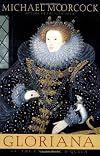
Moorcock's writing oscillates between excellence and bullshit so dramatically and with such frequency that it's dizzying. Nowhere is this better exemplified then with this book, which was promised as courtly intrigue that takes place in Spencer's Fairy Queene. There are few things that could mar such an outstanding premise. One of those things is a persistent misogyny built into the very foundation of the plot.
Moorcock is a well poisoner. No one can ever write an erotic romp through a show more Shakespearean fantasy setting ever again. The ur-text of such a tantalizing genre is inescapably rape apologia. show less
Moorcock is a well poisoner. No one can ever write an erotic romp through a show more Shakespearean fantasy setting ever again. The ur-text of such a tantalizing genre is inescapably rape apologia. show less

THE WARHOUND AND THE WORLD'S PAIN wasn't part of the Eternal Champion cycle when I first read them back in the '70s, not coming along until 1981, but Von Bek is most definitely a manifestion in the same ranks as Erekose,Elric, Corum and Hawkmoon despite being rooted in a historical rather than fantasy context, at least to begin with.
Von Bek is a typical tortured Moorcock hero, but less tortured than some, a battle hardened veteran, having come to terms with his base nature. After being shown show more the Hell that awaits his soul, he makes a deal with Lucifer to take on a quest, not in search of enlightenment, but to heal the pain of the World
Ostensibly this is the story of a grail quest, but it's classic Moorcock, so things are never simple. All of his trademark flourishes are in evidence here, with wild rides through shifting reality, musings on the nature of humanity and its place in the many facetted universe, and simpler matters, like the nature of comradeship, and the power of a man to make his own reality through force of will.
Reading this I was transported again to my first Moorcock readings in the very early '70s, and felt the same sense of awe and wonder at the force of his vision that I did back then.
This is sword and sorcery at its finest, and, by Arioch, I love it. show less
Von Bek is a typical tortured Moorcock hero, but less tortured than some, a battle hardened veteran, having come to terms with his base nature. After being shown show more the Hell that awaits his soul, he makes a deal with Lucifer to take on a quest, not in search of enlightenment, but to heal the pain of the World
Ostensibly this is the story of a grail quest, but it's classic Moorcock, so things are never simple. All of his trademark flourishes are in evidence here, with wild rides through shifting reality, musings on the nature of humanity and its place in the many facetted universe, and simpler matters, like the nature of comradeship, and the power of a man to make his own reality through force of will.
Reading this I was transported again to my first Moorcock readings in the very early '70s, and felt the same sense of awe and wonder at the force of his vision that I did back then.
This is sword and sorcery at its finest, and, by Arioch, I love it. show less

Blood: A Southern Fantasy was written in the early 1990s when Moorcock had been living for a short while in central Texas, and had recently traveled around the southern US. It is the first volume of the Second Ether trilogy. Despite a tone of straightforward exposition, it involves so much implicit worldbuilding (and multiversebuilding) that it can be confounding. A successful reader will likely just have to roll with it on many occasions. Chapter titles are polyglot, with Spanglish, Creole, show more and German accounting for many of them.
The initial setting is a North America in which racial privileges and biases are largely reversed from our own. As a result of greedy accident, there has been a corrosive failure of reality, and chance has come to dominate over law in the operation of nature. The protagonists of the tale are gambler adepts. Chief of these for the story's part is Jack Karaquasian, who is the Eternal Champion, or at least the Elric and Jerry Cornelius analogue of Blood. Gaming by means some sort of simulative technology never fully detailed, Mr. Karaquasian and his friend Sam Oakenhurst have made careers of this art. The upshot of the thing is a sort of Moorcockian psychedelic cyberpunk.
The Second Ether itself is another world differing in scale and fractally linked with the others in a multiverse roamed by "freescalers" and fought over by the Singularity and the Chaos Engineers. These are recognizable as the "Law and Chaos" teams of Moorcock's earlier fantasies, but they are also expressed in popular media available in Jack's world, recounting an interminable melodramatic space opera in short serial episodes by Warwick Colvin. The sort of porous relationship between these planes of existence reminded me somewhat of Grant Morrison's later comic book The Filth.
Karaquasian and Oakenhurst become connected with love interests who draw them into the Game of Time that transpires in the Second Ether, so that they take on roles in the sprawling conflict of that other world. Despite an overblown cartoonish aesthetic, the Game of Time has a great deal of philosophical meat to it. These later chapters of the book are full of pan-solipsist cosmogony and piquant reflections on fate and freedom, honor and guilt.
Within Moorcock's multiversal hyperwork, the Second Ether seems to have the strongest narrative ties to the von Bek books. Rose von Bek is Sam Oakenhurst's romantic other. This first volume of a trilogy does come to as much of a conclusion as one might reasonably expect. I enjoyed it and I will proceed with the next volume Fabulous Harbours, which I have in hand. show less
The initial setting is a North America in which racial privileges and biases are largely reversed from our own. As a result of greedy accident, there has been a corrosive failure of reality, and chance has come to dominate over law in the operation of nature. The protagonists of the tale are gambler adepts. Chief of these for the story's part is Jack Karaquasian, who is the Eternal Champion, or at least the Elric and Jerry Cornelius analogue of Blood. Gaming by means some sort of simulative technology never fully detailed, Mr. Karaquasian and his friend Sam Oakenhurst have made careers of this art. The upshot of the thing is a sort of Moorcockian psychedelic cyberpunk.
The Second Ether itself is another world differing in scale and fractally linked with the others in a multiverse roamed by "freescalers" and fought over by the Singularity and the Chaos Engineers. These are recognizable as the "Law and Chaos" teams of Moorcock's earlier fantasies, but they are also expressed in popular media available in Jack's world, recounting an interminable melodramatic space opera in short serial episodes by Warwick Colvin. The sort of porous relationship between these planes of existence reminded me somewhat of Grant Morrison's later comic book The Filth.
Karaquasian and Oakenhurst become connected with love interests who draw them into the Game of Time that transpires in the Second Ether, so that they take on roles in the sprawling conflict of that other world. Despite an overblown cartoonish aesthetic, the Game of Time has a great deal of philosophical meat to it. These later chapters of the book are full of pan-solipsist cosmogony and piquant reflections on fate and freedom, honor and guilt.
Within Moorcock's multiversal hyperwork, the Second Ether seems to have the strongest narrative ties to the von Bek books. Rose von Bek is Sam Oakenhurst's romantic other. This first volume of a trilogy does come to as much of a conclusion as one might reasonably expect. I enjoyed it and I will proceed with the next volume Fabulous Harbours, which I have in hand. show less

While promotional copy insists that this latest addition to Moorcock's tales of the last Emperor of Melniboné "takes place between the first and second books of the Elric Saga," that refers to their current packaging in the Saga Press edition. For those of us more familiar with the old mass market paperbacks and their omnibus collections, that makes it fall between "The Weird of the White Wolf" and "The Vanishing Tower." Elric's peregrinations with Moonglum in the Young Kingdoms are show more interrupted with a trip to "the underside of the world," where the moody kinslayer traces the origins of the Melnibonéan race and their relationship to the dragons with whom their culture is in symbiosis.
The first half of the book consists of two novellas previously published under other titles. I had read "How Elric Pursued His Weird into the Far World" when it was called "Red Pearls" in the 2010 collection Swords & Dark Magic. I liked it then, but it was too long ago for me to assess how "substantially revised" (per the appended note) this new version is. The story here is interesting, but often told at a somewhat chilly level of abstraction. The second novella is "How Elric Discovered an Unpleasant Kinship," published before revision as "Black Petals," serialized in Weird Tales (2008-9) and collected in Elric: Swords and Roses. Despite owning the latter volume, I had never read this story. It felt very much like a return to form, with a mood that matched "The Stealer of Souls" from 1962.
The second half of The Citadel of Forgotten Myths is centered on the citadel of the title, the stronghold of Kirinmoir. This polity in the World Below compares to Elric's own Imryrr as an age-old capital of his race. It is matriarchal, however, with an apiary-centered economy. The story starts with some adventuring, and it builds to a great military conflict driven by Melnibonéan grudges and the scheming of gods of Chaos.
Particularly in the final part, this book has many "Easter eggs" for longtime readers of Moorcock, and not merely of the crossover variety that tie this story into his multiversal hyperwork of the Eternal Champion, Cosmic Balance, and moonbeam roads. For example, he alludes to his own song lyric in mentioning "veterans of those dreadful psychic wars" (184) and to his recent autobio-fantasy in "a whispering swarm constantly reminding him of his own mortality" (185).
Some contemporary political sarcasm is evident in naming a throwaway character G'nilwab Sirob--an anagram of "Bawling Boris" (205). (I suspect that I failed to catch yet other references built into character names.) Moorcock also has deranged Chaos Queen Xiombarg extol herself as "Goddess made Great Again" (284), and Elric expresses his resentment that his countrymen wanted him to "make Melniboné great again" (314).
The inhuman Elric is veritably the apotheosis of the sword & sorcery murder hobo. As an inversion of Robert E. Howard's Conan, the point that stands out in these particular tales is the ineluctable net of dependencies and obligations that bind Elric to his race, his cursed sword, and his patron demon. Where Conan prizes his freedom and independence, Elric seems unable even to conceive of such a condition. I don't think this book would make an especially effective point of entry for the Elric stories, let alone the larger Eternal Champion quilt. Still, I enjoyed it, and it fueled my appetite for re-reading Moorcock's prince of ruins. show less
The first half of the book consists of two novellas previously published under other titles. I had read "How Elric Pursued His Weird into the Far World" when it was called "Red Pearls" in the 2010 collection Swords & Dark Magic. I liked it then, but it was too long ago for me to assess how "substantially revised" (per the appended note) this new version is. The story here is interesting, but often told at a somewhat chilly level of abstraction. The second novella is "How Elric Discovered an Unpleasant Kinship," published before revision as "Black Petals," serialized in Weird Tales (2008-9) and collected in Elric: Swords and Roses. Despite owning the latter volume, I had never read this story. It felt very much like a return to form, with a mood that matched "The Stealer of Souls" from 1962.
The second half of The Citadel of Forgotten Myths is centered on the citadel of the title, the stronghold of Kirinmoir. This polity in the World Below compares to Elric's own Imryrr as an age-old capital of his race. It is matriarchal, however, with an apiary-centered economy. The story starts with some adventuring, and it builds to a great military conflict driven by Melnibonéan grudges and the scheming of gods of Chaos.
Particularly in the final part, this book has many "Easter eggs" for longtime readers of Moorcock, and not merely of the crossover variety that tie this story into his multiversal hyperwork of the Eternal Champion, Cosmic Balance, and moonbeam roads. For example, he alludes to his own song lyric in mentioning "veterans of those dreadful psychic wars" (184) and to his recent autobio-fantasy in "a whispering swarm constantly reminding him of his own mortality" (185).
Some contemporary political sarcasm is evident in naming a throwaway character G'nilwab Sirob--an anagram of "Bawling Boris" (205). (I suspect that I failed to catch yet other references built into character names.) Moorcock also has deranged Chaos Queen Xiombarg extol herself as "Goddess made Great Again" (284), and Elric expresses his resentment that his countrymen wanted him to "make Melniboné great again" (314).
The inhuman Elric is veritably the apotheosis of the sword & sorcery murder hobo. As an inversion of Robert E. Howard's Conan, the point that stands out in these particular tales is the ineluctable net of dependencies and obligations that bind Elric to his race, his cursed sword, and his patron demon. Where Conan prizes his freedom and independence, Elric seems unable even to conceive of such a condition. I don't think this book would make an especially effective point of entry for the Elric stories, let alone the larger Eternal Champion quilt. Still, I enjoyed it, and it fueled my appetite for re-reading Moorcock's prince of ruins. show less
Lists
Read These Too (1)
PM Press (1)
Favourite Books (1)
2016 UpROOTed (1)
Art of Reading (1)
Awards


You May Also Like


Associated Authors
Statistics
- Works
- 659
- Also by
- 179
- Members
- 65,135
- Popularity
- #216
- Rating
- 3.8
- Reviews
- 835
- ISBNs
- 1,490
- Languages
- 21
- Favorited
- 194


