
Edward E. Kramer
Author of The Sandman: Book of Dreams
About the Author
Series
Works by Edward E. Kramer
Associated Works
Tagged
Common Knowledge
- Other names
- Kramer, Ed
Eliot, Nathan - Birthdate
- 1961-03-20
- Gender
- male
- Education
- Emory College
Emory University School of Medicine - Occupations
- editor
- Nationality
- USA
- Birthplace
- Brooklyn, New York, USA
- Places of residence
- Duluth, Georgia, USA
- Associated Place (for map)
- USA
Members
Reviews
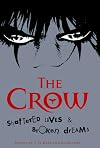
A more iconic collection of 90s angst and goth would be difficult to imagine. With contributors ranging from the creator of the Crow himself (James O'Barr, maybe you'll come back home to the mitt now that Texas can't keep the power on?) who is also editing, to obvious genre fans from the musical world like Henry Rollins and Iggy Pop (with music being such an important factor in the Crow's film success), to some of the biggest names in genre fiction at the time. The one glaring omission in show more terms of contributors I would have liked to see was Michael Moorcock, conspicuous not just by his absence, but by the fact that he is mentioned in the introduction and a multitude of the contributors have connections to him. It would have been interesting to see his take on Crow, given that in many ways the Crow's greatest weapon is fear and rage, some of the things the black sword personifies.
This collection had the feel of the best of the 'zines from this era...a mix of poetry, art, and short fiction raw and sometimes over-the-top in its descent into self-indulgent angst, depression, and rage. And I mean that in the best possible way. Thoroughly enjoyable. My only complaint is that it doesn't feel much like a Crow collection? There are some great Crow stories here: obviously O'Barr's 'Spooky, Codeine, and the Deadman', Nancy Collins' 'Variations on a Theme', Alan Dean Foster's 'Procrastinator', Rick Reed's 'Moving Towards the Light', Charles de Lint's 'China Doll', and John Shirley's 'Wings Burnt Black'. But they're in the minority. By and large, while there are some amazing pieces here like A.A. Attanasio's 'Hellbent', Rex Miller's 'Spike Team', Christopher Golden's 'Lament for the Gunwitch', S.P. Somtow's 'Red as Jade', Edward Bryant's 'Shuttlecock', and Chet Williamson's 'Blood-Red Sea' the majority of the fiction, poetry, and art isn't really Crow related other than fitting the general 'feel' of the era. Or as the kids might say these days, 'the vibe'. It contributes to the sense that this is a novel length 'zine of the time, with contributors far above what a zine generally would have been able to draw.
A good collection, just know going in that Crow material is limited. show less
This collection had the feel of the best of the 'zines from this era...a mix of poetry, art, and short fiction raw and sometimes over-the-top in its descent into self-indulgent angst, depression, and rage. And I mean that in the best possible way. Thoroughly enjoyable. My only complaint is that it doesn't feel much like a Crow collection? There are some great Crow stories here: obviously O'Barr's 'Spooky, Codeine, and the Deadman', Nancy Collins' 'Variations on a Theme', Alan Dean Foster's 'Procrastinator', Rick Reed's 'Moving Towards the Light', Charles de Lint's 'China Doll', and John Shirley's 'Wings Burnt Black'. But they're in the minority. By and large, while there are some amazing pieces here like A.A. Attanasio's 'Hellbent', Rex Miller's 'Spike Team', Christopher Golden's 'Lament for the Gunwitch', S.P. Somtow's 'Red as Jade', Edward Bryant's 'Shuttlecock', and Chet Williamson's 'Blood-Red Sea' the majority of the fiction, poetry, and art isn't really Crow related other than fitting the general 'feel' of the era. Or as the kids might say these days, 'the vibe'. It contributes to the sense that this is a novel length 'zine of the time, with contributors far above what a zine generally would have been able to draw.
A good collection, just know going in that Crow material is limited. show less

The Sandman: Book of Dreams contains short stories from authors Clive Barker, Susanna Clarke, Lisa Goldstein, Gene Wolfe, Delia Sherman, and others involving the Endless and their realms. Some of the stories only touch on the Endless, with minor cameos or references, but most build on the characters as established by Neil Gaiman during his run in The Sandman. A few stories are set during the comic, but it's not necessary to have read those stories to understand the plot. Gaiman's show more introductions serve to background the short stories and offer funny anecdotes about how he met each of the authors. That said, of all the Sandman-titled works, this one is the weakest as it's not written by Gaiman himself. Of course, it's still a wonderful collection of short fiction and will entertain the reader. show less
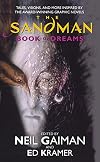
The Sandman, as written by Neil Gaiman and penciled and inked by a phenomonal cast (Sam Keith, Mike Dringenberg, and so many more) has a justified place in the list of all-time greatest works in comic book history. We can and should revise our assessment of art when the artist has failed us, but the experience of Sandman is a work of many hearts, all of them carrying their own secret pain, and one of them is me.

I wanted to like this book a lot more than I ultimately did. It's a collection of prose stories set in and around The Sandman mythos. I was anticipated something full of dark magic and fantastic moodiness; instead, I just got a jumble of dullness. Many I just never got into and ended up skimming: Colin L. Greenland's "Masquerade and High Water," both stories about Wanda (Caitlín R. Kiernan's "Escape Artist" and Robert Rodi's "An Extra Smidgen of Eternity"), Karen Haber's "A Bone Dry Place," show more Delia Sherman's "The Witch's Heart," Steven Brust's "Valóság and Élet," and Susanna Clarke's "Stopp't-Clock Yard." (Interestingly this last one feels like it's set in the same world as Jonathan Strange & Mr Norrell, the world of English magic.)
Some, I had more specific negative opinions about. Lisa Goldstein's "Stronger Than Desire" seemed to just hinge on a revelation that wasn't very revealing. B. W. Clough's "The Birth Day" was all right, but not up to much in the end. And for some reason there are two stories about sexually-abused children being protected by their dolls. The first, Tad Williams's "The Writer's Child" just irritated me with its faux child style (I hate prose that tries to mimic how kids write; it's never real). And the second, Mark Kreighbaum's "The Gate of Gold" starts off great, but just becomes cruel for a reason I don't understand.
Some, I had more mixed reactions to. I really wanted to like Barbara Hambly's "Each Damp Thing," a tale set in the Dreaming which unites all my favorite recurring characters: Cain, Abel, Lucian, Merv, and best of all, Matthew the Raven. Unfortunately, it sees them all battling something the absorbs organic matter, which feels like something out of an sf story, not a dream. Will Shetterly's "Splatter" is very well done, and very enjoyable, up until the end. It's set during the serial killer story arc in The Sandman, and I think I just disagree with the story philosophically, refusing to believe that anything like what the story depicts could actually exist. Nancy A. Collins's "The Mender of Broken Dreams" has a great premise, but expresses that story with a plot that's not a plot at all: character wants to know where he comes from, character asks, character is told, character is happy now.
There were some good ones, though. John M. Ford's "Chain Home, Low" was probably my favorite in the book, telling the tale of several different characters affected by the sleeping sickness that struck the universe when Dream was imprisoned. It's a moody, poignant tale about failed ambitions, and the prose is great, to boot. George Alec Effinger's "Seven Nights in Slumberland" is quite good, bringing Little Nemo into the DC Universe and The Sandman mythology; like Gaiman says, it really is a Winsor McCay comic in literary form. Cleverly done. And Gene Wolfe's "Ain't You 'Most Done?" is fantastic, the last haunting, moving dream of a dying man who never dreamed while he was alive. They feel like stories that could have been actual side stories during the series, haunting and fascinating in the ways that the best of those were. But three good stories does not a good anthology make.
Neil Gaiman's The Sandman Spin-Offs: « Previous in sequence | Next in sequence » show less
Some, I had more specific negative opinions about. Lisa Goldstein's "Stronger Than Desire" seemed to just hinge on a revelation that wasn't very revealing. B. W. Clough's "The Birth Day" was all right, but not up to much in the end. And for some reason there are two stories about sexually-abused children being protected by their dolls. The first, Tad Williams's "The Writer's Child" just irritated me with its faux child style (I hate prose that tries to mimic how kids write; it's never real). And the second, Mark Kreighbaum's "The Gate of Gold" starts off great, but just becomes cruel for a reason I don't understand.
Some, I had more mixed reactions to. I really wanted to like Barbara Hambly's "Each Damp Thing," a tale set in the Dreaming which unites all my favorite recurring characters: Cain, Abel, Lucian, Merv, and best of all, Matthew the Raven. Unfortunately, it sees them all battling something the absorbs organic matter, which feels like something out of an sf story, not a dream. Will Shetterly's "Splatter" is very well done, and very enjoyable, up until the end. It's set during the serial killer story arc in The Sandman, and I think I just disagree with the story philosophically, refusing to believe that anything like what the story depicts could actually exist. Nancy A. Collins's "The Mender of Broken Dreams" has a great premise, but expresses that story with a plot that's not a plot at all: character wants to know where he comes from, character asks, character is told, character is happy now.
There were some good ones, though. John M. Ford's "Chain Home, Low" was probably my favorite in the book, telling the tale of several different characters affected by the sleeping sickness that struck the universe when Dream was imprisoned. It's a moody, poignant tale about failed ambitions, and the prose is great, to boot. George Alec Effinger's "Seven Nights in Slumberland" is quite good, bringing Little Nemo into the DC Universe and The Sandman mythology; like Gaiman says, it really is a Winsor McCay comic in literary form. Cleverly done. And Gene Wolfe's "Ain't You 'Most Done?" is fantastic, the last haunting, moving dream of a dying man who never dreamed while he was alive. They feel like stories that could have been actual side stories during the series, haunting and fascinating in the ways that the best of those were. But three good stories does not a good anthology make.
Neil Gaiman's The Sandman Spin-Offs: « Previous in sequence | Next in sequence » show less
Lists
Awards


You May Also Like


Associated Authors
Statistics
- Works
- 19
- Also by
- 3
- Members
- 4,338
- Popularity
- #5,781
- Rating
- 3.6
- Reviews
- 48
- ISBNs
- 69
- Languages
- 6