

Robert E. Weinberg
Author of 100 Ghastly Little Ghost Stories
About the Author
Image credit: www.robertweinberg.net/
Works by Robert E. Weinberg
Weird Vampire Tales: 30 Blood-Chilling Stories from the Weird Fiction Pulps (1992) — Editor — 98 copies, 3 reviews
Rivals of Weird Tales: 30 Great Fantasy & Horror Stories from the Weird Fiction Pulps (1990) — Editor — 97 copies, 1 review
The Science of James Bond: From Bullets to Bowler Hats to Boat Jumps, the Real Technology Behind 007's Fabulous Films (2006) 75 copies, 3 reviews
The Science of Stephen King: From Carrie to Cell, The Terrifying Truth Behind the Horror Master's Fiction (2007) 47 copies
THE ANGEL: Tiger Claws; The Totem Pole Murders; Tsang Accessory - Pulp Classics (10) Ten (1975) 3 copies
The Other Sword 3 copies
The Ghost of Lin San Fu — Editor — 3 copies
Ro Erg 2 copies
Vengeance on The Avenger (Pulp 10) — Editor — 2 copies
Catacombs 2 copies
Vampire the Masquerade: Giovanni 2 copies
The Occult Omnibus 1 copy
Marvel Comics: Cable 1 copy
Death Rides the Elevator 1 copy
Swords from the West 1 copy
Operator #5 & Calling Justice Inc. (Pulp 11) — Editor — 1 copy
Enter the Eradicator! 1 copy
Children of Moriah 1 copy
Kiss Me Deadly 1 copy
Associated Works
The Mammoth Book of Perfect Crimes & Impossible Mysteries (2006) — Contributor — 160 copies, 4 reviews
The Horror on the Links: The Complete Tales of Jules de Grandin, Volume 1 (2017) — Introduction, some editions — 151 copies, 3 reviews
The Mammoth Book of Locked-Room Mysteries and Impossible Crimes (2000) — Contributor — 134 copies, 1 review
The Devil's Rosary: The Complete Tales of Jules de Grandin, Volume Two (2017) — Introduction — 116 copies
The Dark Angel: The Complete Tales of Jules de Grandin, Volume Three (2018) — Introduction — 96 copies
A Rival From the Grave: The Complete Tales of Jules de Grandin, Volume Four (2018) — Introduction — 94 copies
Famous Fantastic Mysteries: 30 Great Tales of Fantasy and Horror from the Classic Pulp Magazines Famous Fantastic Mysteries & Fantastic Novels (1991) — Editor — 67 copies, 1 review
The Unauthorized X-Men: SF and Comic Writers on Mutants, Prejudice, and Adamantium (Smart Pop series) (2006) — Contributor — 34 copies, 1 review
Tagged
Common Knowledge
- Canonical name
- Weinberg, Robert E.
- Legal name
- Weinberg, Robert Edward
- Birthdate
- 1947-08-29
- Gender
- male
- Nationality
- USA
- Birthplace
- Newark, New Jersey, USA
- Associated Place (for map)
- New Jersey, USA
Members
Discussions
THE DEEP ONES: "The Isle of the Torturers" by Clark Ashton Smith in The Weird Tradition (February 2013)
Reviews
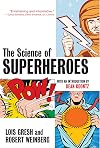
What an absolutely FUN read The Science of Superheroes turned out to be! Lois H. Gresh & Robert E. Weinberg took several big name superheroes like Superman, Batman, The Flash, Ant Man, Aquaman, and the X-Men (just to name a few) and discussed in-depth their powers, origin stories, narrative continuity, and whether there was any basis in scientific fact for their superpowers. There were great recommendations both throughout the book and in the footnotes (ya'll know I love a book with show more excellent footnotes). They also went to great lengths to give a detailed, thorough history of comics in general which made this an altogether well-rounded and researched book. (I've read some so-called 'scientific' nonfiction that couldn't hold a candle to the amount of work that Gresh & Weinberg obviously put in for this book.) Another huge bonus was the extensive appendix which also included biographies and q&a responses with several popular 'current' writers of comics. (Am I gushing? I can't help it that I love a good set of biographical facts organized in an orderly fashion.) At any rate, whether you're a pop culture fan, comic aficionado, superhero movie nerd, or really into researched footnotes this is sure to fit the bill and be an excellent choice for a cozy autumn evening. 10/10 show less
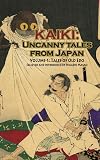
With haunted houses and haunted fishing poles, sinister monks and a battle of wills with a ghost, samurais and serving girls, these nine stories and one short manga are not always horrific, often enigmatic, and always a delight. Add a Lafcaido Hearn essay on “The Value of the Supernatural in Fiction” and a very useful introduction on the permutations, tradition, and history of Japanese weird fiction, and this is a definite must read for those interested in the supernatural tale of Japan show more or even just non-Anglophone weird fiction.
The tales all have some connection with Edo – though many stories are not set there – and range in age from 1776 to 2005. Some are retellings of classic Japanese ghost stories, some are influenced by European and American horror stories, and some are entirely original.
“In a Cup of Tea”, Lafcaido Hearn – Hearn’s retelling of the Japanese tale “A Young Man’s Face Appears in a Cup at a Tea Shop”. Masao notes Hearn brought out the “tale’s fantastic and nonsensical nature by editing out the last parts”.
“The Chrysanthemum Pledge”, Ueda Akinari – An old tale from the classic 1776 collection of Japanese weird fiction, Tales of Moonlight and Rain. It celebrates the virtues of loyalty and not hanging out with “superficial” people.
“Three Old Tales of Terror”, Kyōgoku Natsuhiko – Three shorter stories all titled with questions: “Who Made Them?”, “What Does He Want?”, and “Where Had She Been?” and definitely in the tradition of enigmatic Japanese weird fiction
“The Futon Room”, Miyabe Miyuki – A serving girl, replacing her dead sister’s position, wonders what horror awaits her in her new job.
“Here Lies a Flute”, Okamoto Kidō – Editor Higashi Masao implies this 1925 story bears the influence of W. W. Jacobs’ “The Monkey’s Paw”.
“The Face in the Hearth”, Tanaka Kōtarō – An enigmatic story on the dangers of being impolite? It involves a mysterious monk.
“Visions of Beyond”, Kōda Rohan -- As Robert Weinberg and Higashi Masao note in the book’s introductions, this story is not at all horrific and mostly a long piece on the intricacies of Japanese river fishing: the different fish to be caught and the techniques for doing so and the admonition that the goal of fishing is to enjoy and contemplate the whole experience, not necessarily catch fish.
“The Inō Residence, Or, The Competition with a Ghost”, Inagaki Taruho -- A thoroughly delightful tale paced in a way that’s very surprising for Western sensibilities. The translator notes for the story say that the story is based on the 18th century narrative An Account of Inō and the Spirit, and several Japanese authors have done versions of it.
“Through the Wooden Gate”, Yamamoto Shūgorō -- In his introductory notes, Masao says this belongs to a subgenre of Japanese supernatural stories known as “kidnapped deity” stories.
“Three Eerie Tales of Dark Nights”, Sugiura Hinako – A brief manga.
As usual with Kurodahan Press publications, the book comes with plentiful footnotes explaining relevant aspects of Japanese culture and history as they are alluded to in the stories. show less
The tales all have some connection with Edo – though many stories are not set there – and range in age from 1776 to 2005. Some are retellings of classic Japanese ghost stories, some are influenced by European and American horror stories, and some are entirely original.
“In a Cup of Tea”, Lafcaido Hearn – Hearn’s retelling of the Japanese tale “A Young Man’s Face Appears in a Cup at a Tea Shop”. Masao notes Hearn brought out the “tale’s fantastic and nonsensical nature by editing out the last parts”.
“The Chrysanthemum Pledge”, Ueda Akinari – An old tale from the classic 1776 collection of Japanese weird fiction, Tales of Moonlight and Rain. It celebrates the virtues of loyalty and not hanging out with “superficial” people.
“Three Old Tales of Terror”, Kyōgoku Natsuhiko – Three shorter stories all titled with questions: “Who Made Them?”, “What Does He Want?”, and “Where Had She Been?” and definitely in the tradition of enigmatic Japanese weird fiction
“The Futon Room”, Miyabe Miyuki – A serving girl, replacing her dead sister’s position, wonders what horror awaits her in her new job.
“Here Lies a Flute”, Okamoto Kidō – Editor Higashi Masao implies this 1925 story bears the influence of W. W. Jacobs’ “The Monkey’s Paw”.
“The Face in the Hearth”, Tanaka Kōtarō – An enigmatic story on the dangers of being impolite? It involves a mysterious monk.
“Visions of Beyond”, Kōda Rohan -- As Robert Weinberg and Higashi Masao note in the book’s introductions, this story is not at all horrific and mostly a long piece on the intricacies of Japanese river fishing: the different fish to be caught and the techniques for doing so and the admonition that the goal of fishing is to enjoy and contemplate the whole experience, not necessarily catch fish.
“The Inō Residence, Or, The Competition with a Ghost”, Inagaki Taruho -- A thoroughly delightful tale paced in a way that’s very surprising for Western sensibilities. The translator notes for the story say that the story is based on the 18th century narrative An Account of Inō and the Spirit, and several Japanese authors have done versions of it.
“Through the Wooden Gate”, Yamamoto Shūgorō -- In his introductory notes, Masao says this belongs to a subgenre of Japanese supernatural stories known as “kidnapped deity” stories.
“Three Eerie Tales of Dark Nights”, Sugiura Hinako – A brief manga.
As usual with Kurodahan Press publications, the book comes with plentiful footnotes explaining relevant aspects of Japanese culture and history as they are alluded to in the stories. show less

This is a really annoying book. There's an interesting story going on, with Jack managing to deal with a whole new set of foes with very different angles - but for me, the preponderance of male gaze and straight-out sex blocked the story from sight. Males are very lightly described - size, maybe hair color. Every woman is either described in detail, lingering on her curves, or is designated "ugly". And nearly every woman is obsessed with having sex, with Jack or anyone else available. One of show more the exceptions, Cassandra, is deliberately (by Jack's plan/author's fiat) dressed in extremely sexy outfits...each of which is also lovingly described. Honestly, it gets really boring. Jack's clever machinations (both of which I figured out before he told his allies what they were - but they are clever) are completely overshadowed by the focus on sexy women. A Logical Magician was bad enough, this one is worse. I won't be reading any other books by him. show less

Weird Tales is remembered as the great fantasy/horror (predominantly horror) magazine of the pulp era which published work by H. P. Lovecraft, Robert Howard, Clark Ashton Smith, C. L. Moore, Manly Wade Wellman, Seabury Quinn and many more writers from that period, some now widely reprinted and read, others now nearly forgotten (though since this anthology was compiled, a number of the ones its introduction describes as forgotten have been revived.) The book's format is a bit unusual in that show more it includes one story from each of the 32 years the magazine was published, providing a much wider chronological range, and a wider variety of authors, than other anthologies based on similar material. The overall tendency of the collection (like the magazine itself) tends toward the darker horror end of the horror/fantasy spectrum, and I tend to prefer the lighter fantasy side, or at least tales in which the heroes defeat the horrors. Nonetheless, there are a number of good and unfamiliar stories here. show less
Lists
Awards


You May Also Like


Associated Authors
Statistics
- Works
- 114
- Also by
- 46
- Members
- 4,961
- Popularity
- #5,056
- Rating
- 3.6
- Reviews
- 67
- ISBNs
- 159
- Languages
- 7
- Favorited
- 1