
Roberta Gately
Author of Lipstick in Afghanistan
About the Author
Series
Works by Roberta Gately
Footprints in the Dust: Nursing, Survival, Compassion, and Hope with Refugees Around the World (2018) 21 copies, 2 reviews
Associated Works
Reader's Digest Select Editions 2011 v04 #316: Never Look Away / Promise Me / Lipstick in Afghanistan / I Still Dream About You (2011) 6 copies
Livros Condensados: A Peste Genesis | Sair De Desconhecido | Sem Retorno | Baton No Afeganistão (2011) — Author — 3 copies
Livros Condensados: Passo em falso | De batom no Afeganistão | Teatro do medo | O pomar (2012) — Contributor — 1 copy
Tagged
Common Knowledge
- Gender
- female
Members
Reviews
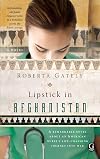
Afghanistan continues to capture our imagination here in this country. It is a world away and so very different. And yet people are people no matter where or how they live. Customs and lifestyles might be different but those are ultimately superficial differences. Certainly there are terrible people like the Taliban, driven to impose their unforgiving and restrictive views on everyone around them regardless of the cost in human terms. But not all Afghanis are Taliban although certainly the show more vast majority of them have been adversely touched by this zealotry by now.
Lipstick in Afghanistan is a novel that shows the resilience and strength of the Afghani people through the eyes of Elsa, an American nurse aid worker whose story intertwines with the local people. Elsa was raised without much but even as a teenager, she wants to give back, horrified, moved, and captivated by photos of war refugees. This drives her to become a nurse as an adult and she works for two years in a Boston ER before being eligible to apply for aid work. She is sent to Afghanistan, to Bamiyan to help out in the hospital. It is there that Elsa comes in close contact with the harsh realities of war, things for which even her time in a busy ER did not prepare her. But she also makes friends and starts to understand local customs, becoming particularly close to Parween, a young, widowed Afghani woman who speaks English thanks to her late husband's teaching. Elsa defies the rules about aid workers and soldiers fraternizing as she meets, befriends, and finally falls in love with an American soldier stationed in Bamiyan also. Despite seeing the fallout of war so closely, Elsa naively believes there to be no further danger, at least not any danger for her despite what her lieutenant tells her.
Elsa's underpriviledged upbringing in the States is woven through the narrative of her time in Afghanistan and while this background helps explain her drive to serve, as a plot thread, it really pales in comparison to the lives of the everyday people in Bamiyan, ultimately becoming fairly insignificant. The tragedy and sadness that so many endured and continue to endure pervades the tale of Elsa and Parween's friendship. Elsa and Mike's burgeoning relationship lends a lighter air to the narrative but the speed with which it occurs seems a bit underdeveloped in the plot. Lipstick as a talisman between friends is an interesting concept and combined with it as a small sign of insurrection against the Taliban, it is a powerful symbol.
Gately herself spent time working for an aid group in Afghanistan and she has drawn a grittily realistic picture of the devastation and hardship that has followed in the footsteps of war. It is clear that she admired the people she met in the country as her portrayals of her important, named Afghani characters is wholly sympathetic. The writing is at times a little clunky and simplistic but on the whole, this is an engaging story and one that humanizes. Readers looking for more novels set in the Middle East will enjoy this one, as will those in care-giver professions. show less
Lipstick in Afghanistan is a novel that shows the resilience and strength of the Afghani people through the eyes of Elsa, an American nurse aid worker whose story intertwines with the local people. Elsa was raised without much but even as a teenager, she wants to give back, horrified, moved, and captivated by photos of war refugees. This drives her to become a nurse as an adult and she works for two years in a Boston ER before being eligible to apply for aid work. She is sent to Afghanistan, to Bamiyan to help out in the hospital. It is there that Elsa comes in close contact with the harsh realities of war, things for which even her time in a busy ER did not prepare her. But she also makes friends and starts to understand local customs, becoming particularly close to Parween, a young, widowed Afghani woman who speaks English thanks to her late husband's teaching. Elsa defies the rules about aid workers and soldiers fraternizing as she meets, befriends, and finally falls in love with an American soldier stationed in Bamiyan also. Despite seeing the fallout of war so closely, Elsa naively believes there to be no further danger, at least not any danger for her despite what her lieutenant tells her.
Elsa's underpriviledged upbringing in the States is woven through the narrative of her time in Afghanistan and while this background helps explain her drive to serve, as a plot thread, it really pales in comparison to the lives of the everyday people in Bamiyan, ultimately becoming fairly insignificant. The tragedy and sadness that so many endured and continue to endure pervades the tale of Elsa and Parween's friendship. Elsa and Mike's burgeoning relationship lends a lighter air to the narrative but the speed with which it occurs seems a bit underdeveloped in the plot. Lipstick as a talisman between friends is an interesting concept and combined with it as a small sign of insurrection against the Taliban, it is a powerful symbol.
Gately herself spent time working for an aid group in Afghanistan and she has drawn a grittily realistic picture of the devastation and hardship that has followed in the footsteps of war. It is clear that she admired the people she met in the country as her portrayals of her important, named Afghani characters is wholly sympathetic. The writing is at times a little clunky and simplistic but on the whole, this is an engaging story and one that humanizes. Readers looking for more novels set in the Middle East will enjoy this one, as will those in care-giver professions. show less
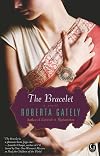
THE BRACELET begins with Abby, a UN aid worker witnessing what she believes to be a murder on her last night of training in Geneva. As Abby arrives in Pakistan to begin her UN work at the vaccination clinic, she finds that she can't get the woman who dies or the bracelet she was wearing out of her mind or her dreams. Abby ends up taking the UN job after two upheavals in her life. First, her job at a hospital in New Orleans is gone when Hurricane Katrina destroys the hospital. Then she starts show more a new life in Boston and when the man she expects to marry dumps her in an email, she believes the best thing for her is to focus on those with bigger problems than hers. She has no idea how big the problems she will face in Pakistan will be. Once there, Abby tries to focus on her work at the clinic, but after learning about the horrors of human trafficking and meeting with the victims, she begins to wonder if the woman who died in Geneva was one of the many unnamed victims.
With the murder of the young woman happening at the beginning of the book, you are instantly drawn in to the story. I was intrigued by the setting, the characters, and their individual stories. Once Abby arrives in Pakistan, the fast pace of the story kept me turning the pages all the way to the end.
The characters were well developed and I was able to create pictures of them in my mind,especially Nick the NY Times journalist, Najeela, the local UN worker, Hana, the housekeeper and Imtiaz, the sleezy uncle of Najeela. Each of the characters were essential to the story and the author doesn't bog the story down with unnecessary details or people to make it confusing.
Unfortunately, this story tells the horrors of human trafficking and the cases can be tough to read. But, the author takes care to share their realities with dignity and empathy. It is clear the author knows the ins and outs of this world-wide problem. I have to admit that I was pretty ignorant to the extent of human trafficking. Living in the privileged world makes these issues and the people suffering, invisible to us. You will want to learn more about this horrific crime after reading this novel.
Even though I figured out the connection between the murder in Geneva, Abby, and Pakistan, it didn't hasten my journey through the story and the chase to find the bad guys. I was intent on seeing them all brought to justice. Unfortunately, the reality is that there are millions suffering unimaginable horrors for years and it is likely that while I was reading this book, another child or woman was sold to a man that will continue the horror. Like the book said, the women who are in these situations believe there are not enough tears in her eyes or prayers to save her. I would like to believe that, through this book and the telling of their stories, we can begin to save them. show less
With the murder of the young woman happening at the beginning of the book, you are instantly drawn in to the story. I was intrigued by the setting, the characters, and their individual stories. Once Abby arrives in Pakistan, the fast pace of the story kept me turning the pages all the way to the end.
The characters were well developed and I was able to create pictures of them in my mind,especially Nick the NY Times journalist, Najeela, the local UN worker, Hana, the housekeeper and Imtiaz, the sleezy uncle of Najeela. Each of the characters were essential to the story and the author doesn't bog the story down with unnecessary details or people to make it confusing.
Unfortunately, this story tells the horrors of human trafficking and the cases can be tough to read. But, the author takes care to share their realities with dignity and empathy. It is clear the author knows the ins and outs of this world-wide problem. I have to admit that I was pretty ignorant to the extent of human trafficking. Living in the privileged world makes these issues and the people suffering, invisible to us. You will want to learn more about this horrific crime after reading this novel.
Even though I figured out the connection between the murder in Geneva, Abby, and Pakistan, it didn't hasten my journey through the story and the chase to find the bad guys. I was intent on seeing them all brought to justice. Unfortunately, the reality is that there are millions suffering unimaginable horrors for years and it is likely that while I was reading this book, another child or woman was sold to a man that will continue the horror. Like the book said, the women who are in these situations believe there are not enough tears in her eyes or prayers to save her. I would like to believe that, through this book and the telling of their stories, we can begin to save them. show less
The effects of years of war and conflict are poignantly portrayed in this debut novel. Drawing on her own experience as a nurse and aid worker in Afghanistan and other developing countries, the author creates a vivid believable story of the ethical and cultural dilemmas aid workers in third world countries face. She shows the strength and resilience necessary for the Afghanistan people to overcome and suppress the fears inherent in living in a war zone and instead find hope and the will to show more continue. The two main characters, one an aid nurse, the other a young local women give insight into the oppression and dominance Afghanistan women face and the empowering nature of friendship. Through their eyes the author contrasts the worst of humanity with the best and demonstrates the vast difference between the two cultures. The weakest part of the book was the love story; it just didn’t seem to fit Elsa’s character or the story in general. In summary, a great light read that’s well written and easy to read. I recommend to those who like reading about strong women, the effects of war, Afghanistan or enjoy a good story.
Review previously posted at: www.princetonbookreview.com show less
Review previously posted at: www.princetonbookreview.com show less
Lipstick in Afghanistan doesn’t make any pretense of being factual and it’s a darn good thing. The back cover promises it is “inspired by experiences as a nurse in third world war zones.” I can’t remember when I read a more heavy-handed book. It’s almost as if (wait for it…) the author colored all the Key Symbols in with bright red lipstick. Like, for example, well, lipstick. Lipstick is Female Connection and Beauty and Freedom in an Oppressive-to-Women World. Lipstick, all show more that? Really?
Oh my.
The Poignant Moments seem painted in lipstick, too. The American soldier sneaking in to make love to our main character in…a burkah? No one noticed that the soldier, described as magnificently tall with blazing blue eyes, is taller than, say the average tiny Afghan woman in a burkah? And the lovemaking is really going to be all-that with our main character taking a bath only every third day, a main character who occasionally finds a deadly scorpion in her bed? And, most unbelievable of all, is our main character and her Afghan friend traveling to a nearby village to check out whether or not a school should be built there. No one bothered to ask the American soldiers (or probably anyone else in a hundred-mile radius) whether the Taliban were located there. Boom. Boom. Our Afghan friend is gone, along with the heroic American soldier (husband and father of two, eagerly awaiting his return home in two months!) attempting to rescue her.
(By the way, I am giving nothing away. Believe you me, I am saving you hours of agony reading this book.) show less
Oh my.
The Poignant Moments seem painted in lipstick, too. The American soldier sneaking in to make love to our main character in…a burkah? No one noticed that the soldier, described as magnificently tall with blazing blue eyes, is taller than, say the average tiny Afghan woman in a burkah? And the lovemaking is really going to be all-that with our main character taking a bath only every third day, a main character who occasionally finds a deadly scorpion in her bed? And, most unbelievable of all, is our main character and her Afghan friend traveling to a nearby village to check out whether or not a school should be built there. No one bothered to ask the American soldiers (or probably anyone else in a hundred-mile radius) whether the Taliban were located there. Boom. Boom. Our Afghan friend is gone, along with the heroic American soldier (husband and father of two, eagerly awaiting his return home in two months!) attempting to rescue her.
(By the way, I am giving nothing away. Believe you me, I am saving you hours of agony reading this book.) show less
You May Also Like


Associated Authors
Statistics
- Works
- 7
- Also by
- 5
- Members
- 195
- Popularity
- #112,376
- Rating
- 3.4
- Reviews
- 22
- ISBNs
- 25
- Languages
- 1