
George Levine
Author of Darwin Loves You: Natural Selection and the Re-enchantment of the World
About the Author
George Levine is professor emeritus of English at Rutgers University, founder and former director of the Rutgers Center for Cultural Analysis, and a visiting professor at New York University. His many books include Darwin and the Novelists, Darwin Loves You, and Darwin the Writer.
Image credit: from Rutgers University faculty page
Works by George Levine
Dying to Know: Scientific Epistemology and Narrative in Victorian England (2002) 11 copies, 1 review
The Cambridge Companion to George Eliot (2nd completed edition) (2001) — Editor; Contributor — 9 copies
Constructions of the Self (Center for the Critical Analysis of Contemporary Culture) (1992) 8 copies
Associated Works
Silas Marner | Lifted Veil | Brother Jacob (1973) — Introduction, some editions — 356 copies, 4 reviews
Darwin's Plots: Evolutionary Narrative in Darwin, George Eliot and Nineteenth-Century Fiction (1983) — Foreword, some editions — 126 copies, 1 review
Tagged
Common Knowledge
- Legal name
- Levine, George Lewis
- Birthdate
- 1931-08-27
- Gender
- male
- Education
- New York University (BA)
Minnesota State University (MA, PhD) - Occupations
- professor (English | Rutgers University)
- Relationships
- Recchio, Thomas (dissertation advisee)
- Nationality
- USA
- Birthplace
- New York, New York, USA
- Map Location
- USA
Members
Reviews

George Levine's book here is one of the three to have the most influence on me and my scholarship. Something that frustrates me about the field of Victorian literature and science is how focused it is on disciplines and discoveries: people write about evolution and literature (Levine included), astronomy and literature, thermodynamics and literature, geology and literature. Much of this work is great, but to only pursue this kind of work neglects the fact that science is more than a series show more of discoveries that scientists pick over to employ in their novels-- it's an epistemology and an orientation towards truth.
Levine's book is probably the most prominent monograph that looks at the Victorian scientist in literature from a general epistemological perspective rather than as embodiments of particular disciplines. Levine examines how self-abnegation figures into epistemology beginning in the 1830s, both within literature and within the work of actual scientists, drawing on the writing of scientists such as Tyndall who claimed “a self-renunciation that has something lofty in it… is often enacted in the private experience of the true votary of science” (qtd. in Levine 4). Levine does not examine any specific discipline, but examines both scientists and scientist-like figures during the Victorian period to see how self-abnegation functions as a narrative: how does science create a narrative of self-abnegation, and how do literary narratives incorporate self-abnegation?
This is important (Levine argues, and I agree) because the Victorian realist novel's very project is about finding epistemologies. Levine argues that “the problem of how to find things out, of uncovering what is hidden, is pervasive in Victorian fiction” (148). He goes on to note that there is a “remarkable consistency with which ‘truth’ is registered in Victorian fiction as the most fundamental of Victorian values” (149), citing novels as diverse as Bleak House, Jane Eyre, Great Expectations, Middlemarch, Adam Bede, Vanity Fair, and Shirley. Drawing on these works, Levine says that the practice of realism “suggest[s] how central to the Victorian novel was the enterprise of knowledge seeking and truth telling, how often plots turn on the power of protagonists to develop the proper temper and state of mind to allow realistic confrontations with the ‘object’—what one might see as the acquisition of the proper ‘method’” (149). And our ways of telling truths and seeking knowledge have a moral dimension: he says in a discussion of Sartor Resartus that “the ethical and the epistemological are, in the nineteenth century, sanctioned by the same values” (70).
There's a lot to like in Levine, in that in his focus on what novels aim to do moralistically, he highlights a lot of what I like about realist novels, especially those by George Eliot and Elizabeth Gaskell. (Though Dying to Know doesn't mention Gaskell, which feels to me its a glaring omission. But then it would.) This is the best sort of literary criticism: the kind that leads you to return to familiar texts with a greater understanding of what makes you like them so much. I really must get around to properly reading his The Realistic Imagination: English Fiction from Frankenstein to Lady Chatterley (1981) someday, which Dying to Know continues the project of. show less
Levine's book is probably the most prominent monograph that looks at the Victorian scientist in literature from a general epistemological perspective rather than as embodiments of particular disciplines. Levine examines how self-abnegation figures into epistemology beginning in the 1830s, both within literature and within the work of actual scientists, drawing on the writing of scientists such as Tyndall who claimed “a self-renunciation that has something lofty in it… is often enacted in the private experience of the true votary of science” (qtd. in Levine 4). Levine does not examine any specific discipline, but examines both scientists and scientist-like figures during the Victorian period to see how self-abnegation functions as a narrative: how does science create a narrative of self-abnegation, and how do literary narratives incorporate self-abnegation?
This is important (Levine argues, and I agree) because the Victorian realist novel's very project is about finding epistemologies. Levine argues that “the problem of how to find things out, of uncovering what is hidden, is pervasive in Victorian fiction” (148). He goes on to note that there is a “remarkable consistency with which ‘truth’ is registered in Victorian fiction as the most fundamental of Victorian values” (149), citing novels as diverse as Bleak House, Jane Eyre, Great Expectations, Middlemarch, Adam Bede, Vanity Fair, and Shirley. Drawing on these works, Levine says that the practice of realism “suggest[s] how central to the Victorian novel was the enterprise of knowledge seeking and truth telling, how often plots turn on the power of protagonists to develop the proper temper and state of mind to allow realistic confrontations with the ‘object’—what one might see as the acquisition of the proper ‘method’” (149). And our ways of telling truths and seeking knowledge have a moral dimension: he says in a discussion of Sartor Resartus that “the ethical and the epistemological are, in the nineteenth century, sanctioned by the same values” (70).
There's a lot to like in Levine, in that in his focus on what novels aim to do moralistically, he highlights a lot of what I like about realist novels, especially those by George Eliot and Elizabeth Gaskell. (Though Dying to Know doesn't mention Gaskell, which feels to me its a glaring omission. But then it would.) This is the best sort of literary criticism: the kind that leads you to return to familiar texts with a greater understanding of what makes you like them so much. I really must get around to properly reading his The Realistic Imagination: English Fiction from Frankenstein to Lady Chatterley (1981) someday, which Dying to Know continues the project of. show less
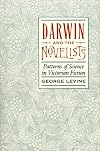
Levine is my academic grandfather-- that is to say, he was my dissertation director's dissertation director. But he also is one of the critics responsible (the others are Gillian Beer and Sally Shuttleworth) for creating the subfield of Victorian literature and science back in the 1980s, and so I owe him a lot. Like Beer, Levine mentions Darwin in his title, but he's less interested in evolutionary patterns than her: Darwin and the Novelists focuses more on the task of science, on science show more as a way of thinking and interacting with the world.
For example, his discussion of Austen's Mansfield Park argues that Fanny enacts a pre-Darwinian ideal of scientific observation: "Austen's heroines learn to see clearly by curbing their desires, and by so doing they can then see those desires more clearly" (62). As he points out, there's some hypocrisy in this approach, which is perhaps easier to see in the context of novel than in science itself. Darwin, though, did not believe in this disinterested approach: "Darwin complained about the view that geologists should observe and not theorize. 'How odd it is,' he remarks, 'that anyone should not see that all observation must be for or against some view if it is to be of any service'" (101).
How to carry out effective observation is the key problem of science, but it becomes even more pressing when the domain of observation is the realm of the human. This problem (I think Levine would argue and, if not, I definitely would) is tackled by the realist novel. Darwin's project (and problem) was "to transform his peculiar subject, organic life, including-- especially-- human life, into material for scientific observation and investigation. The power science exercised over nature, by virtue of its extension of knowledge, was to extend over human beings themselves.... [T]he human subject becomes equivalent to the planetary or the geological" (211). It is this attempt to extend science into the human realm that the nineteenth century sees as either so liberating or so threatening, and which novelists like Gaskell, Eliot, Collins, Hardy, Wells, Griffith, and more I'm sure attempt to grapple, both directly and indirectly. Levine's work brilliantly opens up a path for discussion that many (including myself) are still attempting to follow. show less
For example, his discussion of Austen's Mansfield Park argues that Fanny enacts a pre-Darwinian ideal of scientific observation: "Austen's heroines learn to see clearly by curbing their desires, and by so doing they can then see those desires more clearly" (62). As he points out, there's some hypocrisy in this approach, which is perhaps easier to see in the context of novel than in science itself. Darwin, though, did not believe in this disinterested approach: "Darwin complained about the view that geologists should observe and not theorize. 'How odd it is,' he remarks, 'that anyone should not see that all observation must be for or against some view if it is to be of any service'" (101).
How to carry out effective observation is the key problem of science, but it becomes even more pressing when the domain of observation is the realm of the human. This problem (I think Levine would argue and, if not, I definitely would) is tackled by the realist novel. Darwin's project (and problem) was "to transform his peculiar subject, organic life, including-- especially-- human life, into material for scientific observation and investigation. The power science exercised over nature, by virtue of its extension of knowledge, was to extend over human beings themselves.... [T]he human subject becomes equivalent to the planetary or the geological" (211). It is this attempt to extend science into the human realm that the nineteenth century sees as either so liberating or so threatening, and which novelists like Gaskell, Eliot, Collins, Hardy, Wells, Griffith, and more I'm sure attempt to grapple, both directly and indirectly. Levine's work brilliantly opens up a path for discussion that many (including myself) are still attempting to follow. show less

This book is a collection of essays and excerpts covering the ongoing debate between science and the humanities especially in regards to educational goals.This particular collection was meant to be a text for college composition courses in the '60s, hence the discussion questions. By the halfway point I was caught up in the debate and, while some of the selections didn't do much for me, it turned out that the whole was greater than the sum of its parts. The Asimov story (from [I, Robot]) was show more amusing side by side with the serious essays. show less
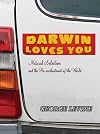
George Levine, literary critic and author of Darwin and the Novelists, attempts to answer the question of the lack of meaning of life after god is replaced by nature red in tooth and claw. Levine claims that it is in nature that re-enchants our disenchanted lives and Darwin shows this in his writing.
Levine's prose is beautiful, easy-to-follow and funny. An intelligent reader can easily follow his line of argument.
Levine's prose is beautiful, easy-to-follow and funny. An intelligent reader can easily follow his line of argument.
Lists
Awards


You May Also Like


Associated Authors
Statistics
- Works
- 25
- Also by
- 5
- Members
- 477
- Popularity
- #51,682
- Rating
- 4.2
- Reviews
- 9
- ISBNs
- 66
- Languages
- 2